Artwork
Title page, An History of the Civill Warres of England
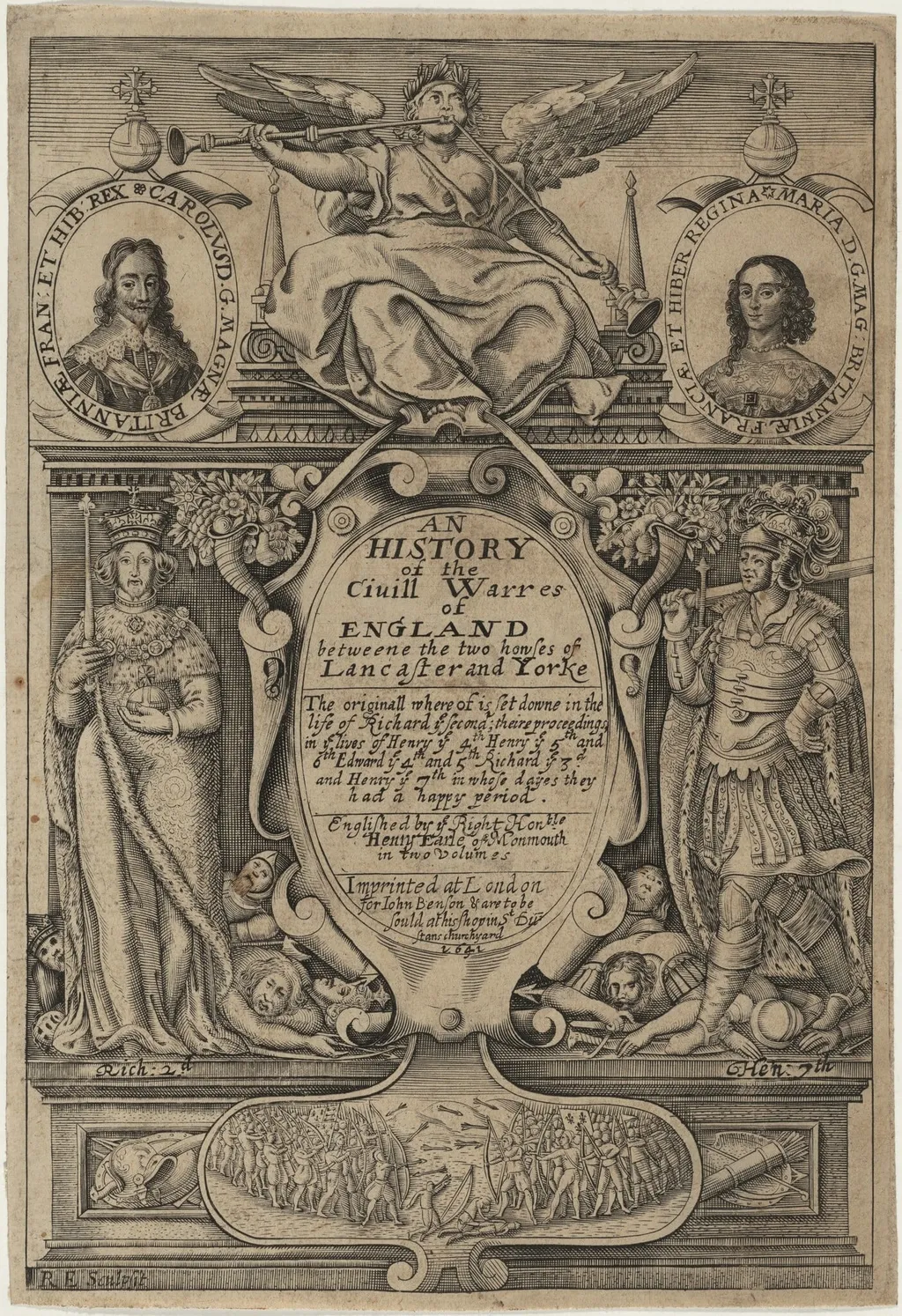
Title page, An History of the Civill Warres of England is an ink print by the Baroque artist Renold Elstrack. It is held in the collection of the National Gallery of Art.
About this work
Overview
The medium—metal engraving—demands precision, reflecting the care taken in its production and the importance assigned to the publication.
This 1641 engraving serves as the title page for 'An History of the Civill Warres of England,' produced by Renold Elstrack. Executed in fine black lines on a pale ground, it combines textual presentation with symbolic imagery to frame the historical narrative within a formal, authoritative visual structure. The medium—metal engraving—demands precision, reflecting the care taken in its production and the importance assigned to the publication.
Subject & Meaning
The composition centers on the English Civil War, represented through allegorical and literal elements. Winged figures uphold the crown and scepter, suggesting royal authority under threat. Four portraits of men in elaborate attire likely depict key political or military figures, while surrounding battle scenes ground the symbolism in concrete conflict. The arrangement implies a tension between sovereignty and civil strife, framing the war as both a political and moral crisis.
Technique & Style
Rendered through metal engraving, the image relies on incised lines to create contrast and detail. The sharp, controlled strokes define armor, jewels, and facial features with remarkable clarity. Small-scale scenes are densely packed, requiring meticulous handwork. The absence of tone or wash emphasizes linearity, characteristic of early 17th-century printmaking, where clarity and legibility were prioritized over atmospheric effects.
History & Provenance
Created in 1641, the engraving was produced during a period of escalating political tension in England, just before open warfare erupted. As a printed frontispiece, it was likely intended for a published account of the conflict, possibly commissioned by a royalist or parliamentary sympathizer. Its survival in institutional collections suggests early recognition of its documentary and artistic value within the print culture of the era.
Context
In the early 1640s, printed images played a vital role in shaping public perception of political events. Engravings like this one were among the few visual media capable of wide distribution, making them tools of propaganda and historical record. The use of classical allegory alongside contemporary figures aligns with broader European traditions of political printmaking, where symbolism legitimized narrative authority.
Legacy
Elstrack’s title page remains a significant example of early modern English print culture, illustrating how visual rhetoric supported historical documentation. Its detailed craftsmanship and symbolic structure influenced later illustrated histories. Though not widely reproduced today, it endures in archives as a testament to the intersection of art, politics, and print in the lead-up to civil conflict.
Artist & collection
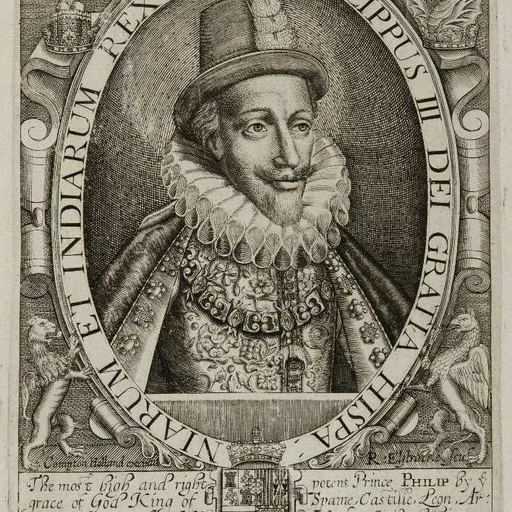

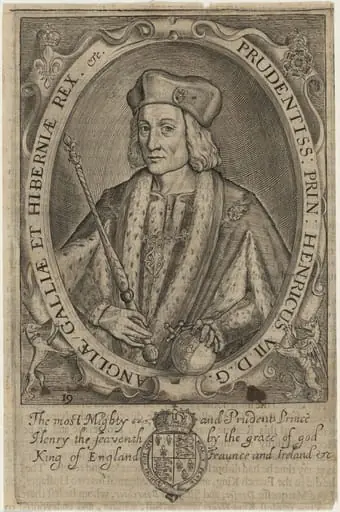
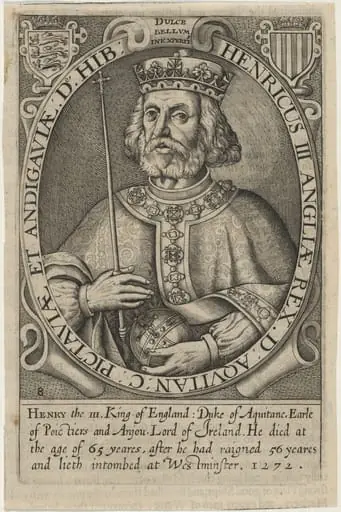
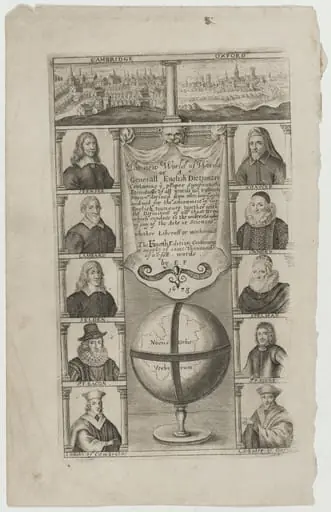 Title Page to The New World of Words or A General English Dictionary
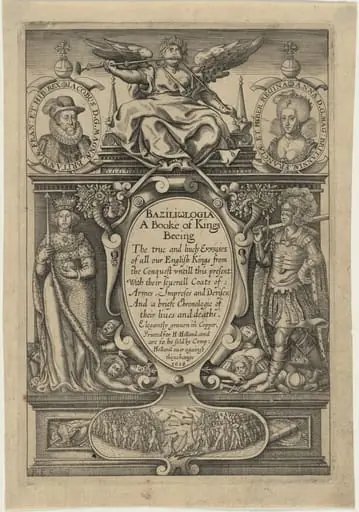 Title page, Baziliologia
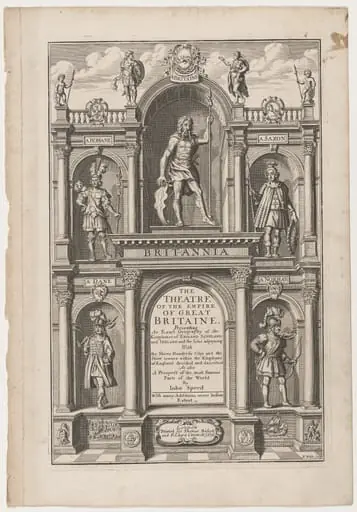 Title Page to "The Theatre of the Empire of Great Britaine" by John Speed
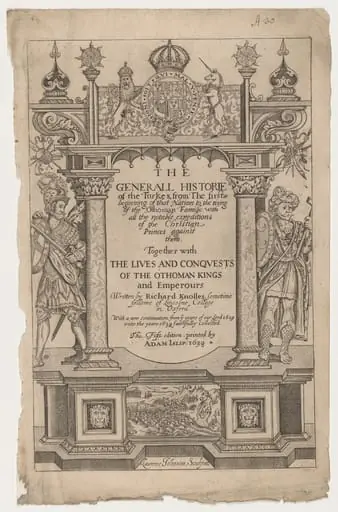 Title Page for R. Knolles Generall Historie of the Turkes
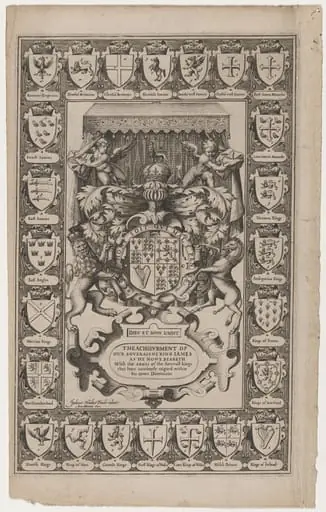 Title Page for the Achievement of our Soveraigne King James
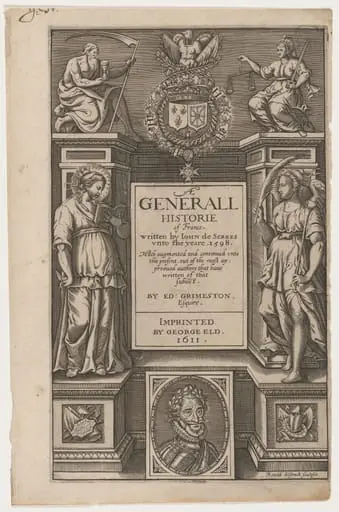 Title Page. Jean de Serres, Generall Historie of France
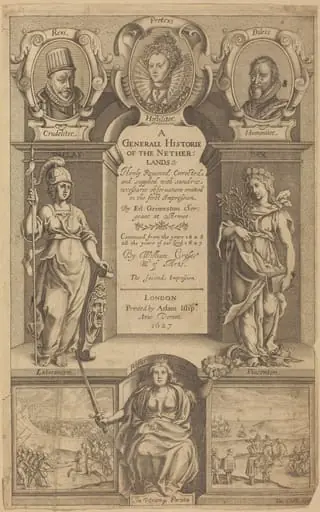 Frontispiece
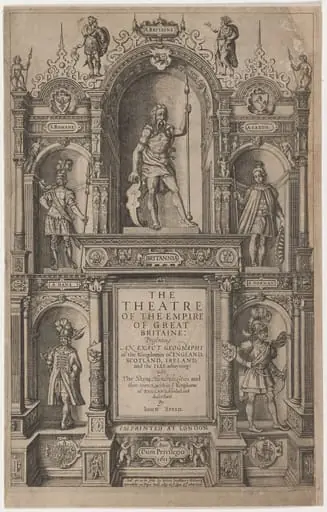 Title Page to "The Theatre of the Empire of Great Britaine" by John Speed