Artwork
Title Page. Jean de Serres, Generall Historie of France
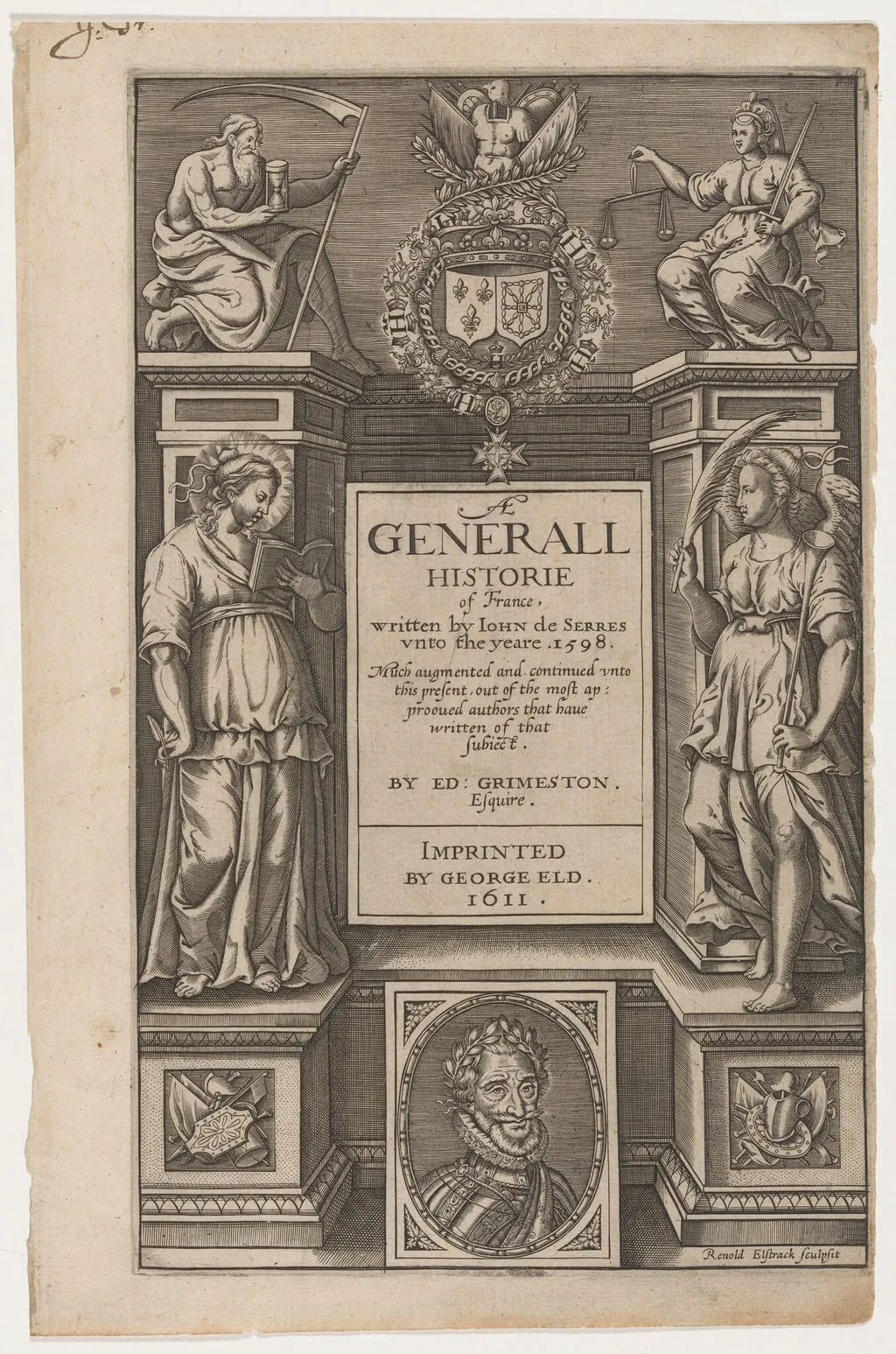
Title Page. Jean de Serres, Generall Historie of France is an ink print by the Renaissance artist Renold Elstrack. It dates from 1598 and is held in the collection of the National Gallery of Art.
About this work
On the right, two women stand—one with a spear and shield, the other with a scroll and staff.
This print shows four figures standing in arched frames, each holding different objects. On the left, a bearded man sits reading while holding a scroll and staff. Next to him, a robed figure holds a book open. On the right, two women stand—one with a spear and shield, the other with a scroll and staff. In the center, a coat of arms sits above the title text.
The title reads *"A Generall Historie of France"* and credits an author named John de Serres. The bottom notes it was printed in 1611 by George Eld. The figures likely stand for ideas or virtues, common in Renaissance art.
Look up engraving to see how artists like this carved detailed images into metal plates.
Overview
This 1598 engraving by Renold Elstrack serves as the title page for Jean de Serres's historical work, printed in London in 1611 by George Eld. It features four allegorical figures arranged within arched niches, flanking a central coat of arms and the book’s title. The composition blends textual authority with symbolic imagery, typical of early modern printed books designed to convey intellectual prestige through visual rhetoric.
Subject & Meaning
The four figures represent abstract virtues tied to historical scholarship: a bearded scholar with a scroll and staff likely symbolizes wisdom or historiography; the robed figure holding an open book suggests learning or record-keeping. The two women, one armed with spear and shield, the other with scroll and staff, may embody defense of truth and the transmission of knowledge. Together, they frame the narrative of French history as both noble and intellectually grounded.
Technique & Style
Executed in fine-line engraving, the image displays precise incisions on a metal plate, allowing for intricate detailing of drapery, facial features, and architectural elements. The figures are rendered in a restrained, linear manner, typical of late 16th-century Northern European printmaking. The use of arched frames and symmetrical composition reflects classical influences, aligning with Renaissance ideals of order and harmony in visual design.
History & Provenance
The engraving was created in 1598 for Jean de Serres’s French historical text, later published in English translation by George Eld in 1611. Elstrack, a Dutch engraver active in London, was known for his work on scholarly publications. The inclusion of his name and the printer’s mark confirms the collaborative nature of early modern book production, where visual and textual elements were carefully coordinated for elite audiences.
Context
In late 16th-century Europe, printed histories often employed allegorical imagery to legitimize their authority. This title page aligns with a broader trend of using classical and personified figures to elevate secular scholarship, mirroring the humanist revival of antiquity. The English edition’s publication reflects growing interest in continental historiography among literate English readers during the early Stuart period.
Legacy
As a representative example of early modern book illustration, this engraving illustrates how print culture merged textual scholarship with visual symbolism. Its formal structure influenced subsequent title pages in historical and political texts, reinforcing the association between intellectual endeavor and allegorical representation. Though not widely reproduced today, it remains a key artifact in the history of printed knowledge.
Artist & collection

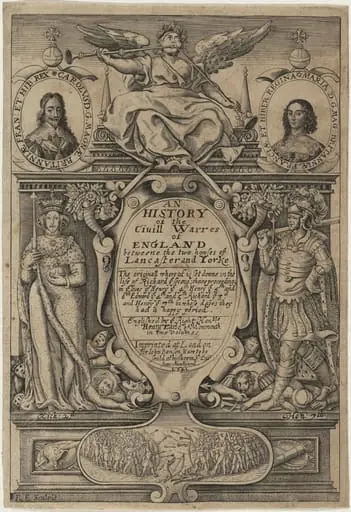 Title page, An History of the Civill Warres of England
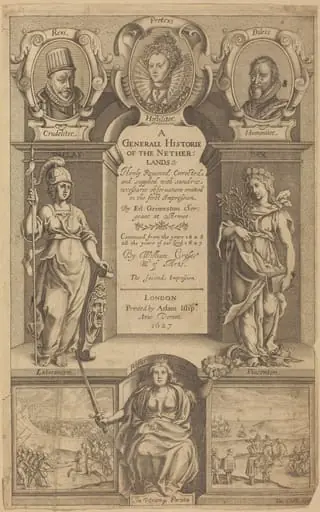 Frontispiece
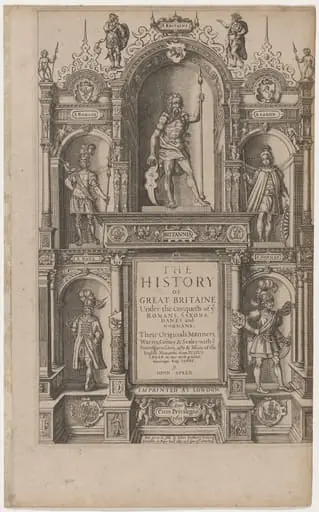 Title Page to "The History of Great Britaine" by John Speed
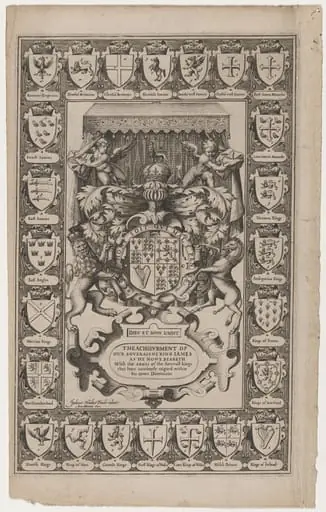 Title Page for the Achievement of our Soveraigne King James
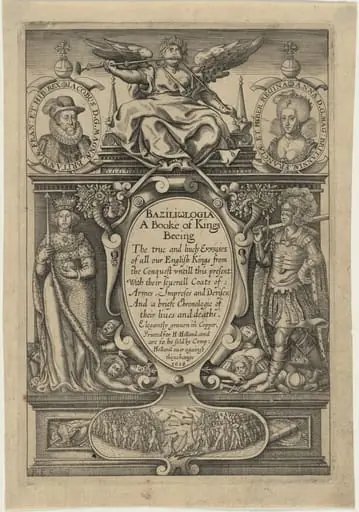 Title page, Baziliologia
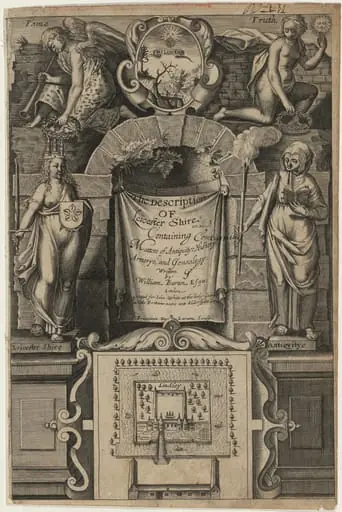 Frontispiece to William Burton, Description of Leicestershire
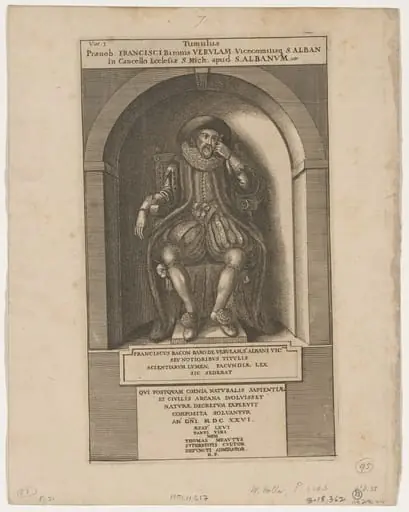 Francis Bacon in a Niche
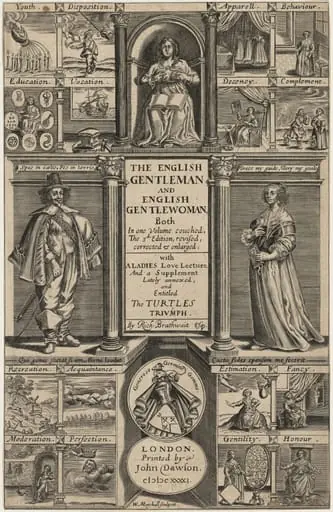 Title page to Richard Brathwait, English Gentleman and English Gentlewoman
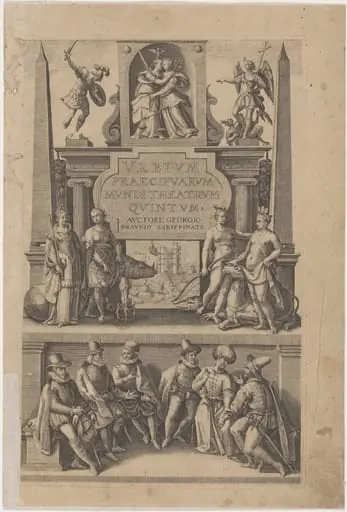 Title Page to Urbium Praecipuarum Mundi Theatrum Quintum
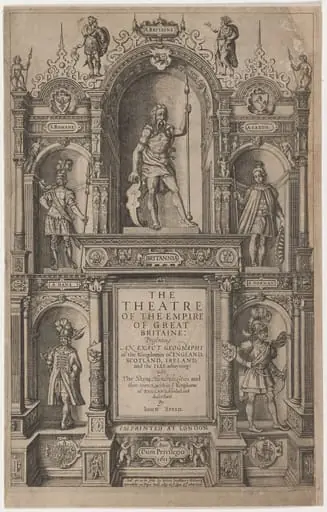 Title Page to "The Theatre of the Empire of Great Britaine" by John Speed
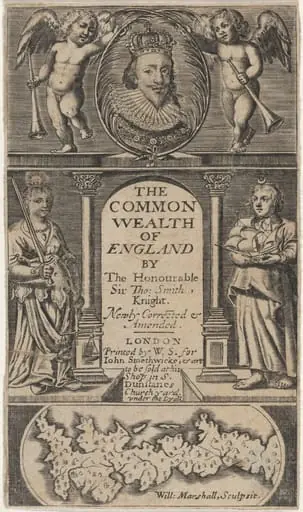 Title Page to Sir Thomas Smith, The Commonwealth of England
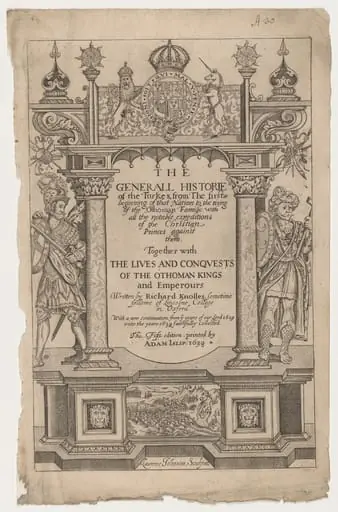 Title Page for R. Knolles Generall Historie of the Turkes