Artwork
Title Page. English Catechisme by John Mayer
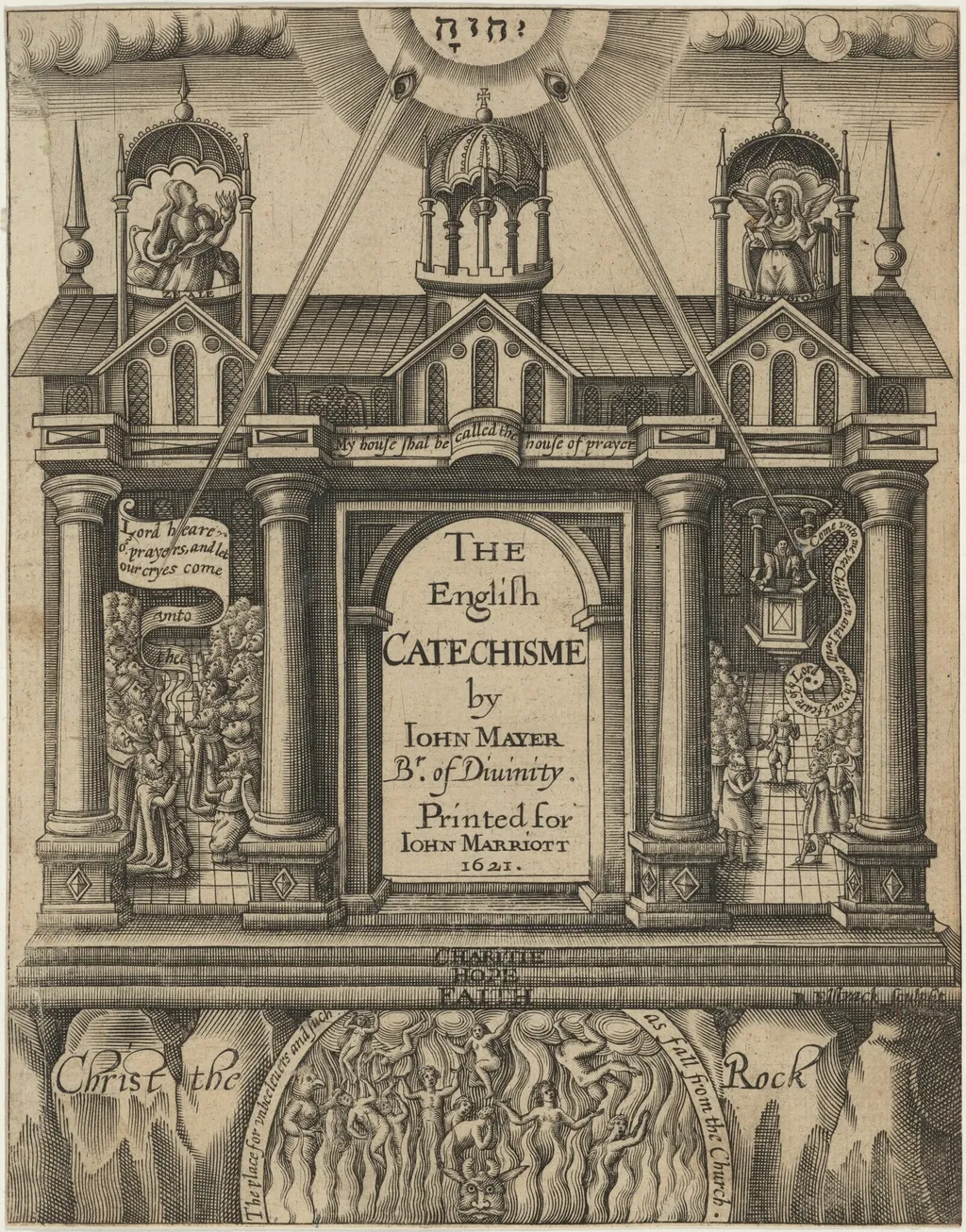
Title Page. English Catechisme by John Mayer is an ink print by the Baroque artist Renold Elstrack. It dates from 1621 and is held in the collection of the National Gallery of Art.
About this work
Overview
Executed entirely in black ink through fine linear incisions, it functions as both a decorative frontispiece and a visual introduction to the religious text.
This 1621 engraving serves as the title page for John Mayer's English Catechisme, produced by Renold Elstrack. Executed entirely in black ink through fine linear incisions, it functions as both a decorative frontispiece and a visual introduction to the religious text. The composition is structured with architectural grandeur, emphasizing solemnity and authority through intricate line work and balanced symmetry.
Subject & Meaning
The design centers on a classical building crowned with a cross, symbolizing divine foundation. Flanking columns support the structure, while smaller vignettes depict prayerful figures and celestial beings, reinforcing themes of devotion and heavenly guidance. Inscriptions such as 'Christ the Rock' explicitly link the architecture to theological doctrine, framing the catechism as a spiritual edifice built on faith.
Technique & Style
Elstrack employed the engraving technique, incising fine lines into a metal plate to create tonal depth and texture. The absence of color heightens the precision of the linework, with hatching and cross-hatching modeling forms and casting subtle shadows. The meticulous detail reflects the craftsmanship typical of early 17th-century English printmaking, where clarity and symbolic weight were prioritized over ornamentation.
History & Provenance
Created in 1621, the engraving was produced for a widely distributed religious text during a period of heightened interest in Protestant instruction. As a printed frontispiece, it would have accompanied copies distributed across England. Its survival in multiple institutional collections suggests it was valued both as a devotional object and as an example of contemporary print art.
Context
This work emerged during the early Stuart era, when the Church of England sought to standardize religious education. The catechism’s visual presentation aligns with broader trends in Protestant publishing, where imagery reinforced doctrinal clarity without invoking Catholic iconography. The architectural symbolism reflects humanist ideals adapted to Puritan sensibilities, favoring order and moral clarity over excess.
Legacy
Elstrack’s engraving stands as a representative example of early Jacobean book illustration, demonstrating how print technology extended theological messaging beyond text. Its formal precision influenced later religious publications, and its survival in archives offers insight into how visual language was used to legitimize and elevate Protestant instruction in early modern England.
Artist & collection

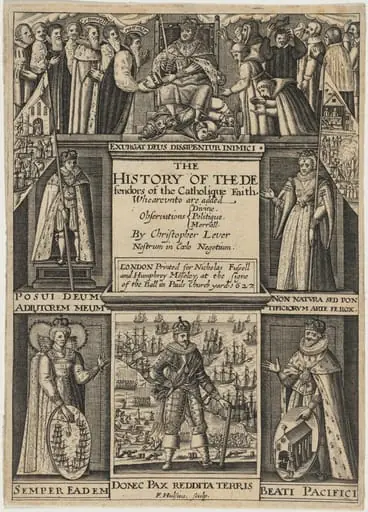 Title Page to History of the Defenders of theCatholic Faith, by Christopher Lever
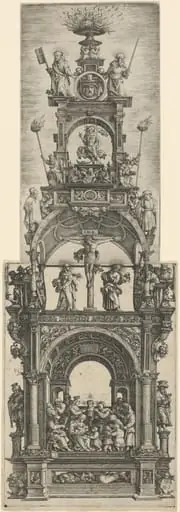 Triumphal Altar with Stages in the Life of Christ
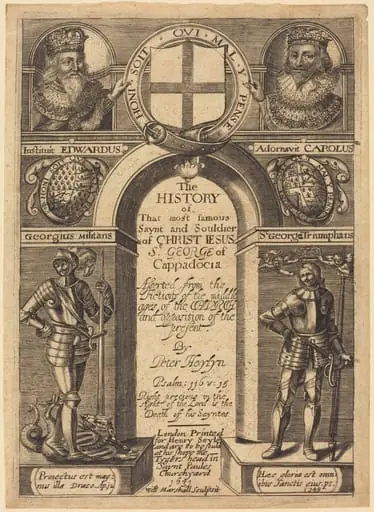 Frontispiece for Peter Heylyn's "The History of St. George of Cappadocia"
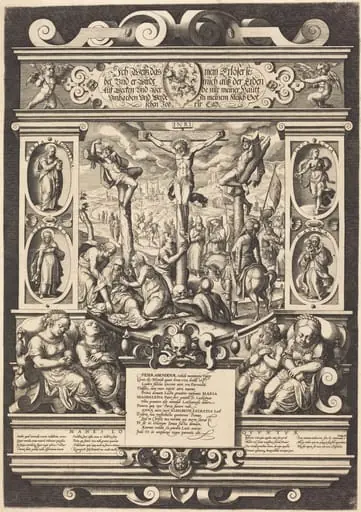 Funeral Monument to the Daughters of Feuerabend
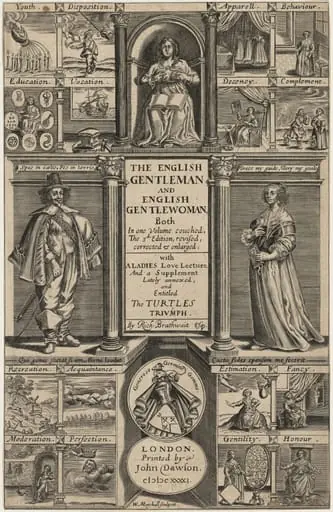 Title page to Richard Brathwait, English Gentleman and English Gentlewoman
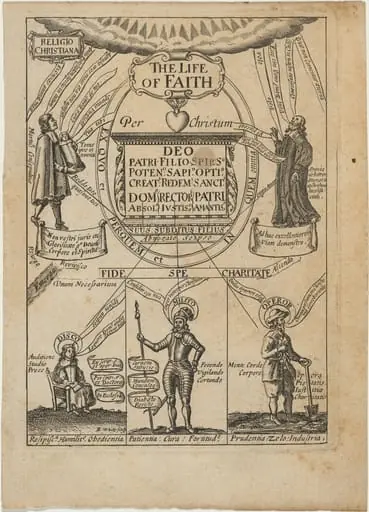 Title Page to The Life of Faith by Richard Baxter
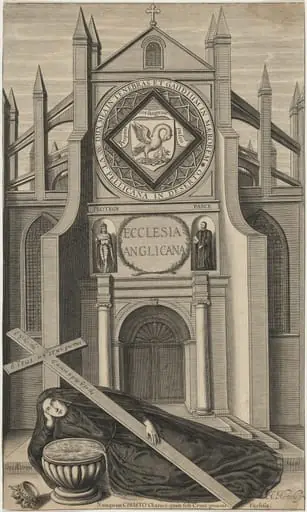 Title Page for Ecclesia Anglicana, by J. Ganden
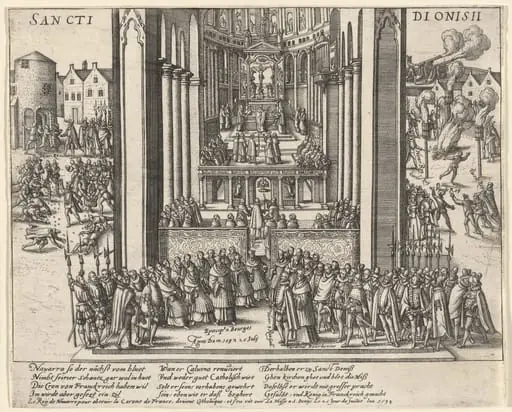 Composite Image Depicting Actions of Henri IV, King of France, upon His Abjuration of the Protestant Faith
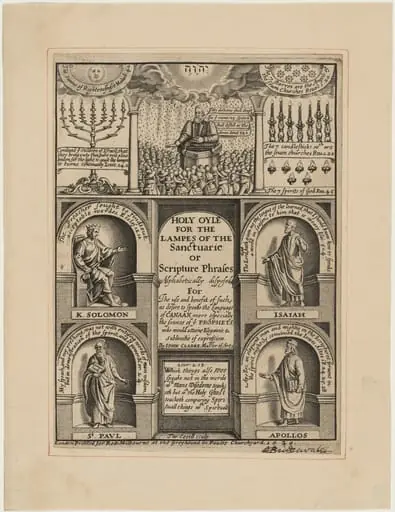 Title Page for Holy Oyle for the Lampes of the Sanctuarie, John Clarke