Artwork
Triumphal Altar with Stages in the Life of Christ
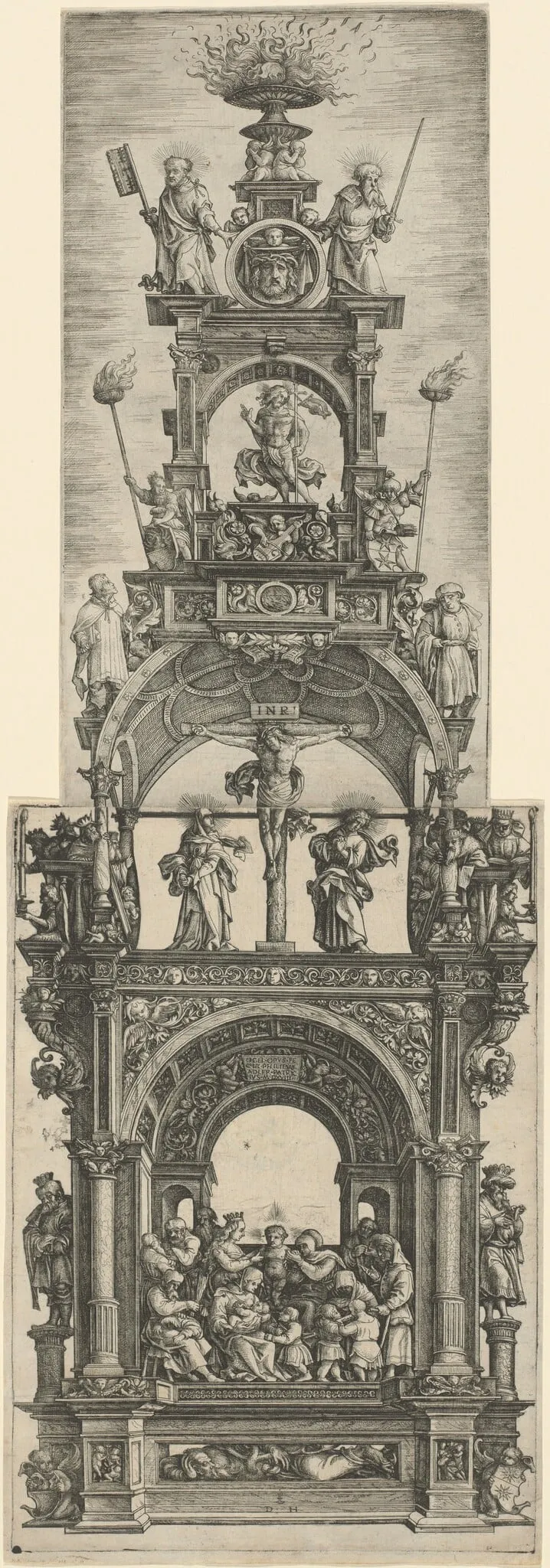
Triumphal Altar with Stages in the Life of Christ is an ink print by the Renaissance artist Daniel Hopfer. It dates from 1518 and is held in the collection of the National Gallery of Art.
About this work
Overview
Triumphal Altar with Stages in the Life of Christ is a two-sheet etching created by Daniel Hopfer around 1518. Executed on iron plates, a medium Hopfer adapted from his steel plate armor production background, the print combines etched lines with open biting to achieve varied tonal effects.
Subject & Meaning
The print depicts a multi-layered religious scene on a towering, ornate altar. Figures and scenes from the Life of Christ are arranged in stages, culminating in a central crowned saint at the top and a crucifixion scene below, conveying a narrative progression of Christian theology.
Technique & Style
Hopfer utilized sharp, precise etched lines and open biting to create deep shadows and intricate textures, evoking a carved stone appearance. The technique allowed for expressive contrasts, with fine details such as scrollwork and small figures adding depth to the composition.
History & Provenance
Daniel Hopfer, a pivotal yet historically overlooked German artist, pioneered etching in printmaking around 1500. This work showcases his innovation with iron plates, distinguishing it from his contemporaneous woodcut productions.
Legacy
Triumphal Altar with Stages in the Life of Christ contributed significantly to establishing etching as a viable commercial printmaking practice, influencing the development of print publishing in the early 16th century.
Artist & collection

Artist
Daniel Hopfer (c. 1470 – 1536) was a German artist who is widely believed to have been the first to use etching in printmaking, at the end of the 15th century. He also worked in woodcut. Although his etchings were…

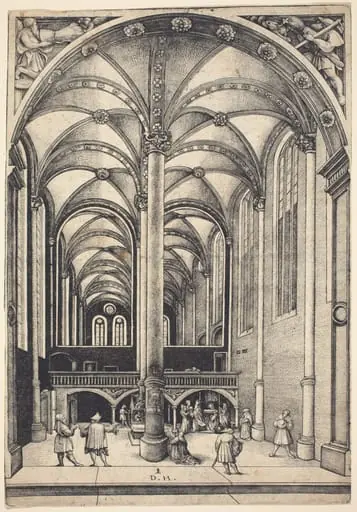 Interior of the Church of Saint Maria Magdalena with the Parable of the Offering of the Widow
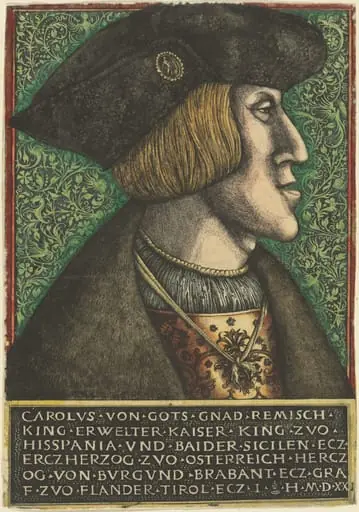 Emperor Charles V
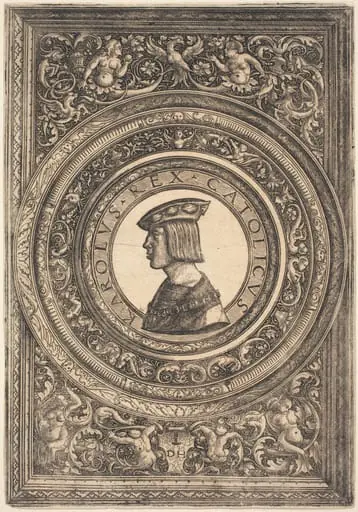 Emperor Charles V
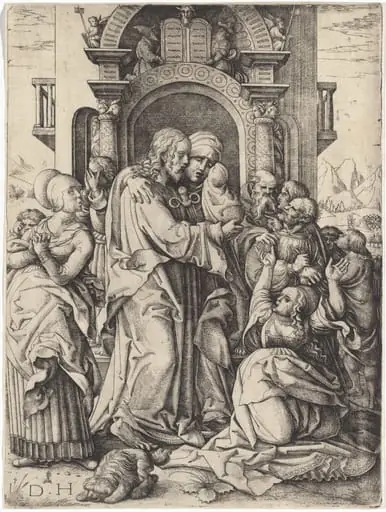 The Virgin Mary Taking Leave of Christ
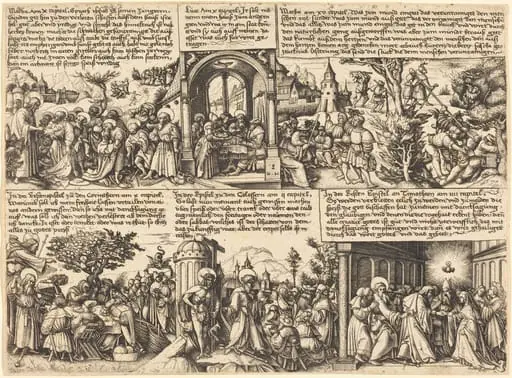 Jesus Christ Giving the Mission to the Apostles and Other New Testament Scenes
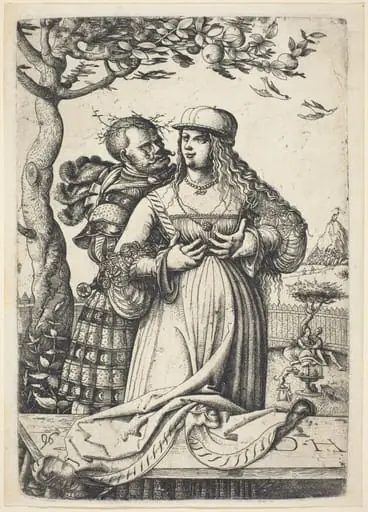 Soldier Embracing a Woman
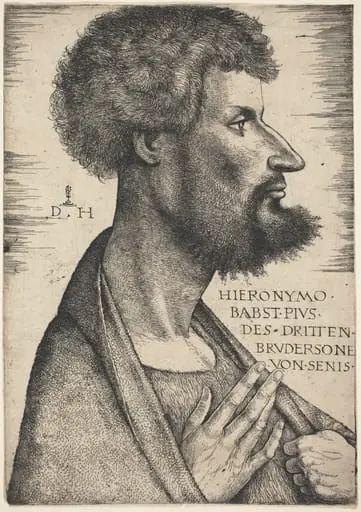 Girolamo da Siena
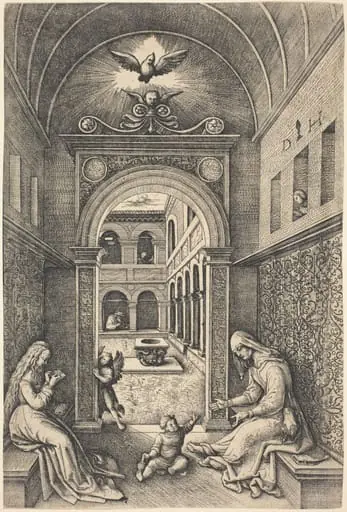 The Virgin and Child with Saint Anne by a Portal
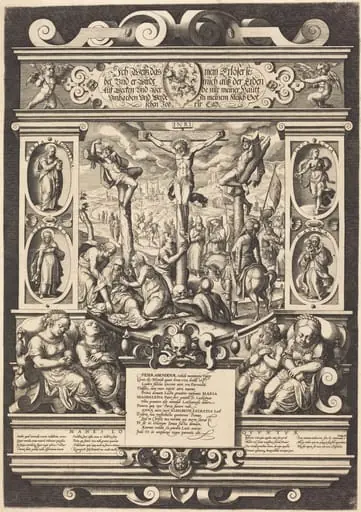 Funeral Monument to the Daughters of Feuerabend
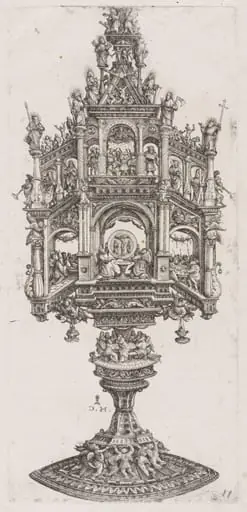 A Monstrance
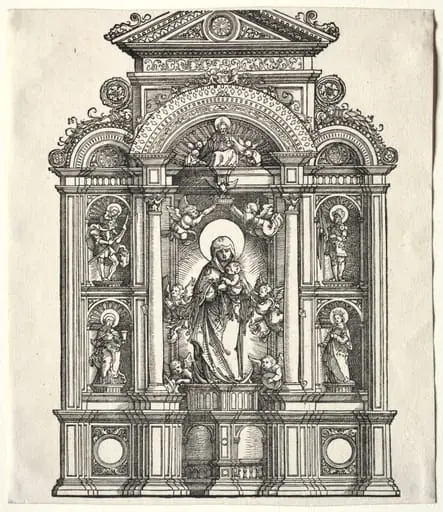 Great Altar with the Virgin, in a border with SS. Christopher, George, Barbara, Catherine
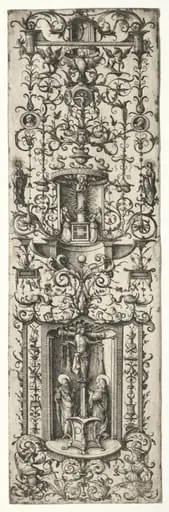 Ornamental fillet with the crucifixion and the virgin and child
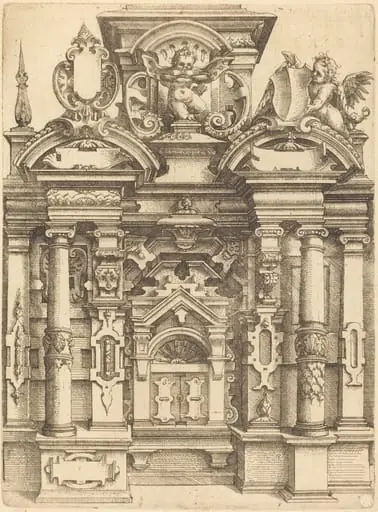 Triumphal Doorway
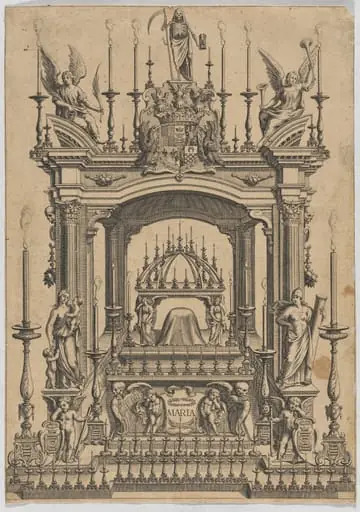 Catafalque for an Unknown Woman Named Maria
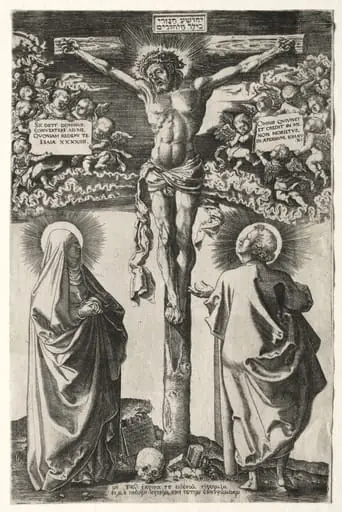 Christ on the cross between the virgin and St. John
 Catafalque for the Funeral of Giulio Thieni, Marquis of Scandiano
 Triumphal Arch for Lotharius II