Artwork
Sat pescăresc cu biserică (Tudor Vladimirescu)
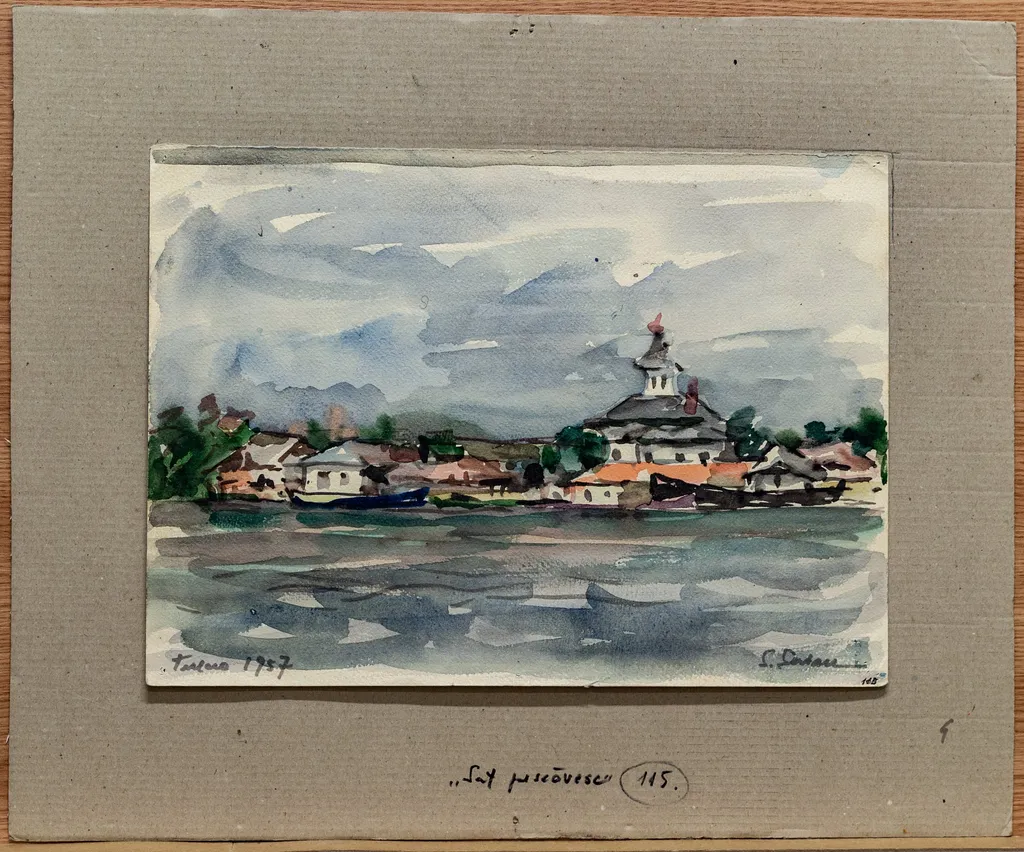
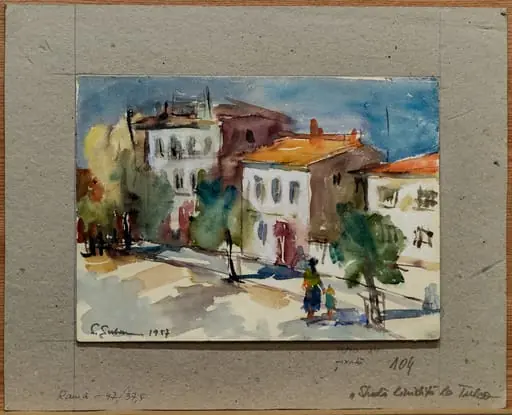
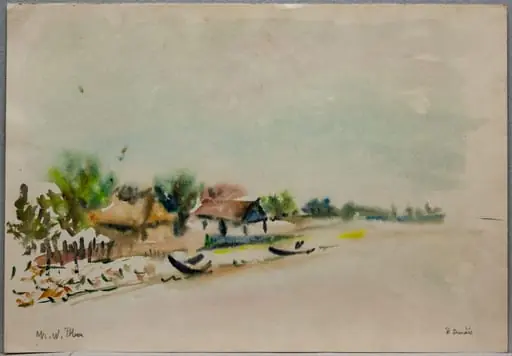
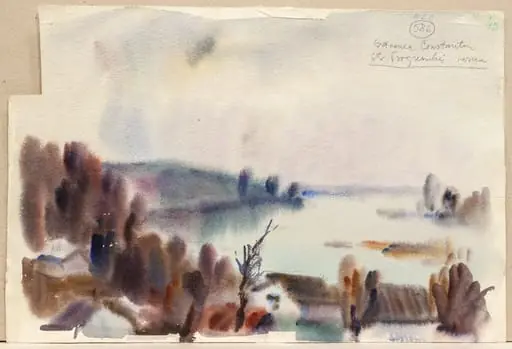
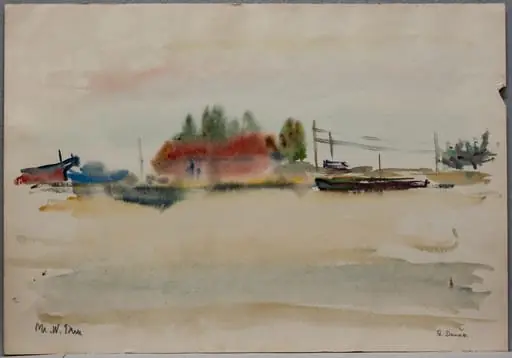
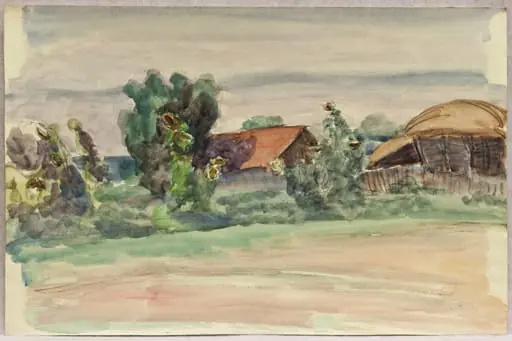
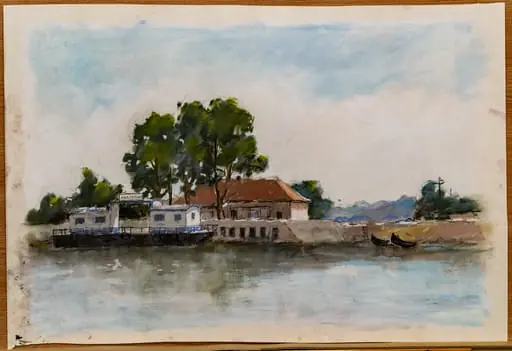
Sat pescăresc cu biserică (Tudor Vladimirescu) is a print by Silvia Șerban. It is held in the collection of the Gavrila Simion Eco-Museum Research Institute Tulcea. The painting portrays a quiet fishing settlement nestled beside a body of water, with a church rising as the central architectural feature.
About this work
Overview
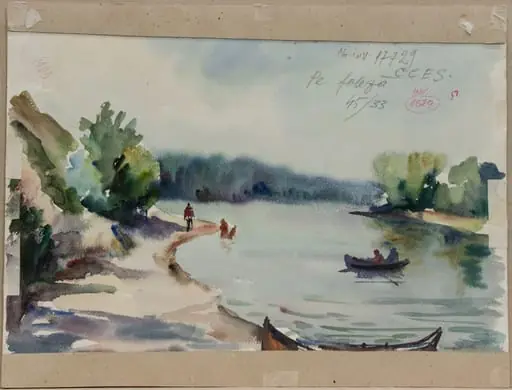
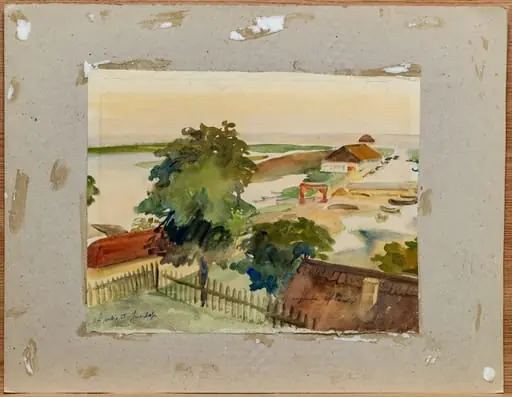
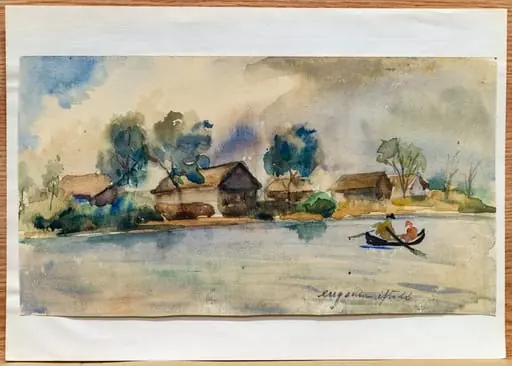
The painting portrays a quiet fishing settlement nestled beside a body of water, with a church rising as the central architectural feature. Cloud-covered skies and still waters contribute to a muted, contemplative tone. Trees and modest dwellings frame the shoreline, while a few boats rest along the edge, suggesting daily rhythms undisturbed by drama or movement.
Subject & Meaning
The scene captures a rural Romanian village, where the church symbolizes spiritual and communal stability amid the natural environment. The absence of human figures emphasizes solitude and timelessness, reinforcing the quiet dignity of everyday life. The architecture of the church anchors the composition, implying faith as a quiet pillar of the community.
Technique & Style
The artist employs soft tonal transitions to render the cloudy sky and reflective water, creating a sense of atmospheric depth. Light is diffused rather than sharply defined, avoiding dramatic contrasts. Brushwork is restrained, favoring smooth blends that enhance the stillness of the landscape without drawing attention to technique itself.
History & Provenance
The work is attributed to Tudor Vladimirescu, though historical records about its creation are limited. It likely dates to the late 19th or early 20th century, a period when Romanian artists increasingly turned to local landscapes as subjects of cultural identity. The painting’s provenance traces to regional collections before entering public ownership.
Context
During the time of its creation, Romanian art was shifting from romanticized historical themes toward depictions of everyday rural life. This painting aligns with that trend, reflecting a broader interest in vernacular architecture and quiet naturalism. It stands apart from urban or heroic narratives, offering instead an intimate view of provincial existence.
Legacy
Though not widely exhibited, the painting contributes to a lesser-known strand of Romanian landscape painting that prioritizes serenity over spectacle. Its influence is seen in later regional artists who favored subdued palettes and unembellished scenes. References to the artist’s use of light, particularly in the works of Șerban and Silvia, suggest a shared sensitivity to atmospheric mood.
Artist & collection
Artist
Silvia Șerban made prints and paintings of streets, houses, and people in Tulcea in the 1960s–70s.
Museum
Gavrila Simion Eco-Museum Research Institute Tulcea
Continue through works from the same source collection.