Artwork
La Partizani
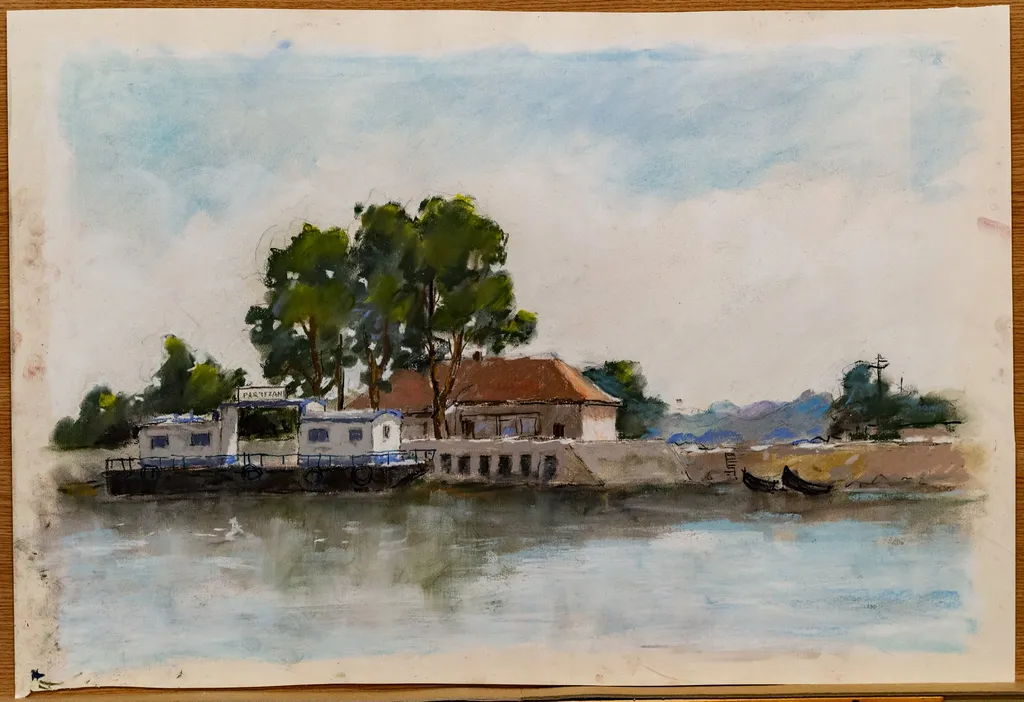
La Partizani is a print by Bogdan Pietriș. It is held in the collection of the Gavrila Simion Eco-Museum Research Institute Tulcea.
About this work
Overview
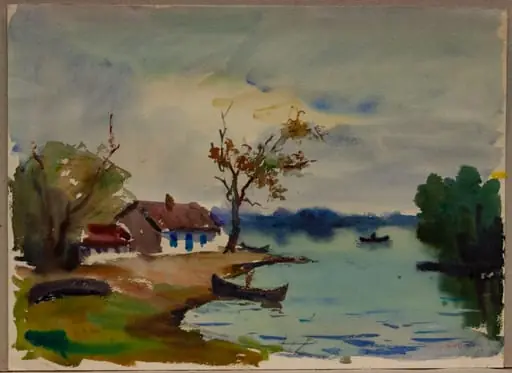
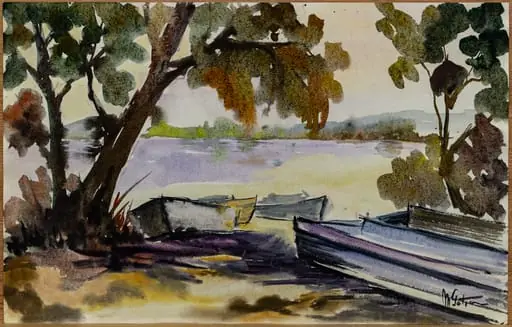
The brushwork is loose and suggestive, avoiding fine detail, and the palette is restrained, limited to muted greens, browns, and blues.
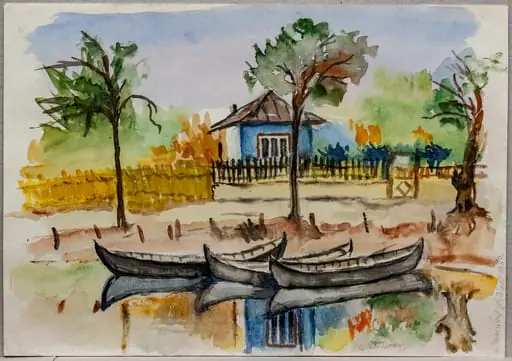
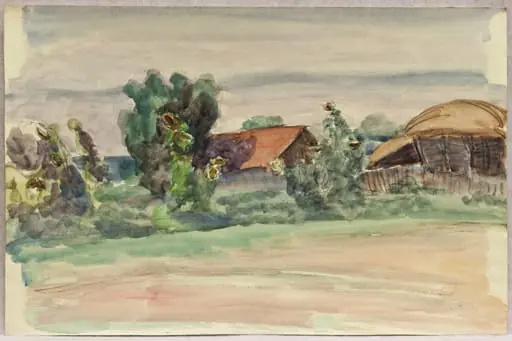
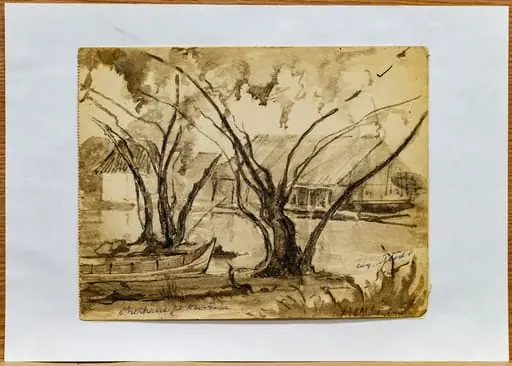
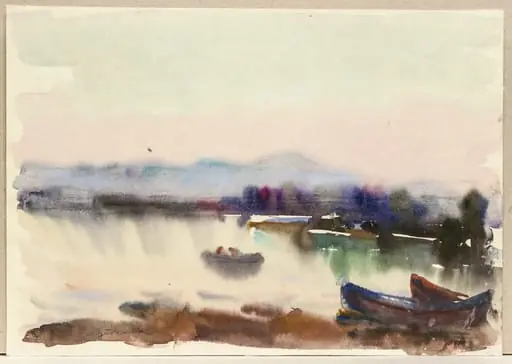
This small painting depicts a tranquil riverside setting with a modest structure bearing the inscription 'La Partizani.' The scene includes a dense tree, several moored boats, and still water under a pale sky. The brushwork is loose and suggestive, avoiding fine detail, and the palette is restrained, limited to muted greens, browns, and blues. The overall impression is one of quiet observation rather than polished finish.
Subject & Meaning
The subject is a quiet, unremarkable waterside location, likely a local spot rather than a celebrated landmark. The presence of the sign 'La Partizani' suggests a functional or communal space, perhaps a dockside establishment. The absence of human figures and the subdued tones emphasize solitude and stillness, inviting contemplation of everyday environments often overlooked in more dramatic compositions.
Technique & Style
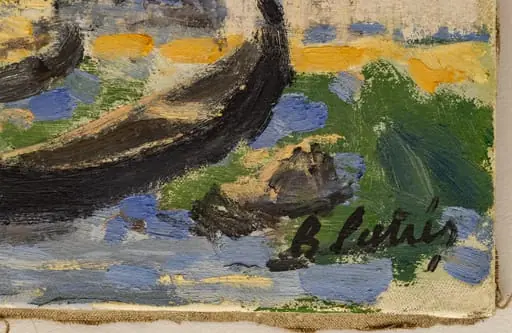
The artist employs a rapid, sketch-like technique with thin, fluid brushstrokes that convey form without definition. Colors are applied with minimal blending, preserving the spontaneity of the gesture. The lack of detail in the architecture, foliage, and water reflects an interest in capturing atmosphere over precision, aligning with practices common in informal, on-site studies rather than studio finished works.
History & Provenance
The painting’s origin is not documented in public records, and its creator remains unidentified. Its title and visual language suggest a possible connection to Eastern European rural or riverine life, though no definitive provenance has been established. The work appears to have been preserved as a personal or regional study rather than a commercially produced piece.
Context
This work fits within a broader tradition of modest, observational paintings made outside formal academic settings. Similar quiet scenes of local landscapes and waterways were often created by amateur artists or regional painters documenting their surroundings. The style echoes informal practices found in ethnographic collections, where daily life was recorded with simplicity and directness.
Legacy
Though not widely exhibited or studied, the painting contributes to a quieter strand of 20th-century visual culture—works that value immediacy over grandeur. Its preservation in institutions like the Museum of Ethnography suggests recognition of its value as a cultural artifact, reflecting ordinary life through unadorned visual language.
Artist & collection
Artist
Bucharest-based painter and printmaker Bogdan Pietriș put down quiet, everyday scenes on paper and canvas.
Museum
Gavrila Simion Eco-Museum Research Institute Tulcea
Continue through works from the same source collection.