Artwork
Animals of the Holy Land
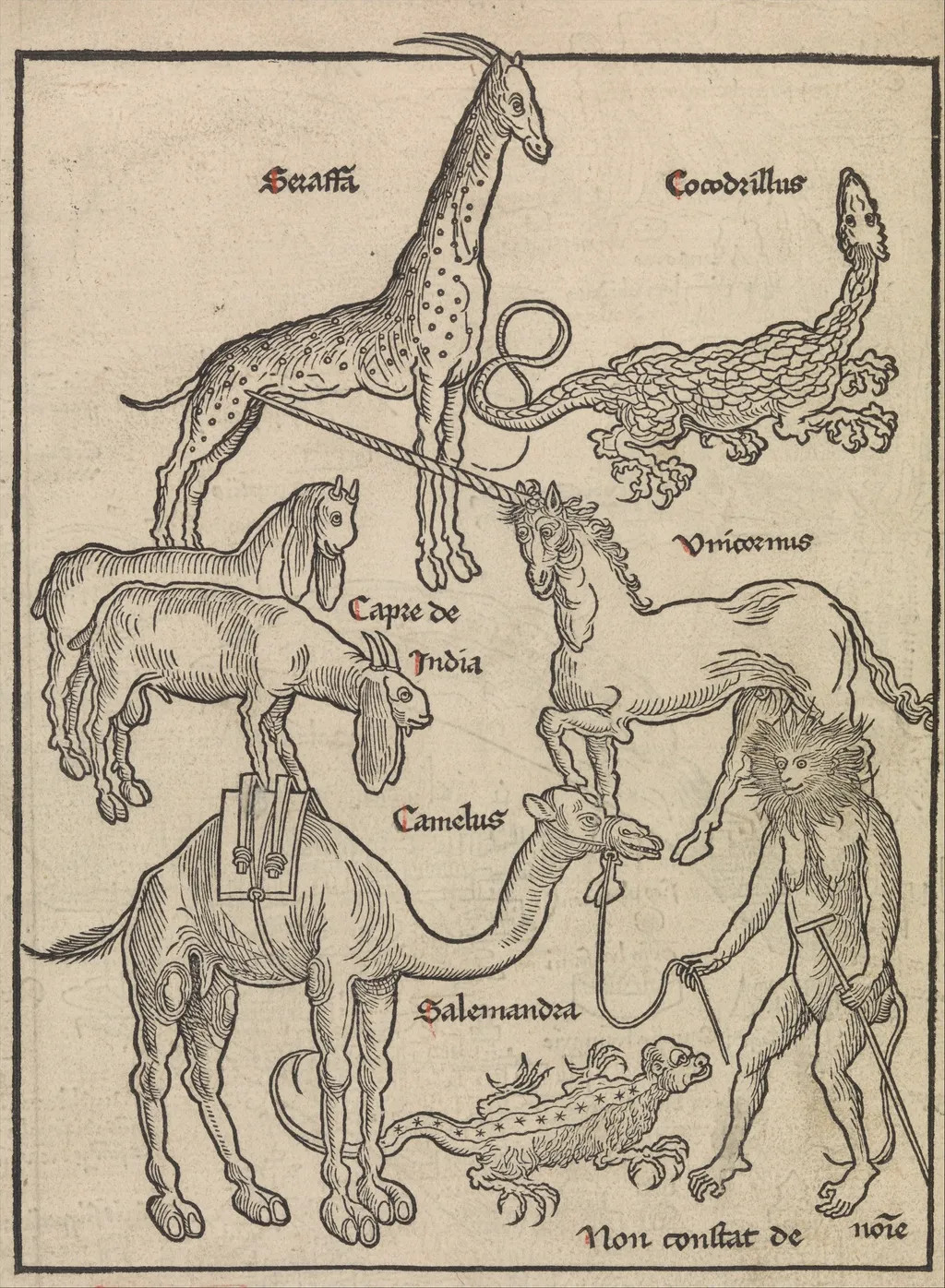
Animals of the Holy Land is an unspecified painting by the Northern Renaissance artist Erhard Reuwich. It dates from 1494 and is held in the collection of the Metropolitan Museum of Art.
About this work
This image shows a collection of animals, including a camel, a goat, and a lion.
This image shows a collection of animals, including a camel, a goat, and a lion. They are drawn in black ink on a beige background. The animals are labeled with their names in Latin.
The drawing is detailed and shows the textures of the animals' fur and skin. The camel has a long neck and a hump on its back. The goat has curved horns and a beard. The lion has a shaggy mane and a long tail.
The image is a detailed illustration of animals from the Holy Land. It was created by Erhard Reuwich in 1486. To learn more about the artist's techniques, look up chiaroscuro.
Overview
Created in 1494 by Erhard Reuwich, a Dutch woodcut designer active in Mainz, this ink drawing records a selection of animals associated with the Holy Land. Rendered in black ink on a light beige ground, each figure is identified by a Latin label. The composition includes a camel, a goat and a lion, each rendered with attention to fur, skin and anatomical detail.
Subject & Meaning
The work functions as a naturalistic catalogue of species encountered on Reuwich’s pilgrimage to Jerusalem, offering viewers a visual inventory of the region’s fauna. By pairing each animal with its Latin name, the drawing serves both as a scientific record and as a devotional reminder of the biblical and cultural landscape of the Holy Land.
Technique & Style
Reuwich employs fine line work and cross‑hatching to suggest texture, especially in the camel’s hump, the goat’s curved horns, and the lion’s mane. The use of chiaroscuro—subtle gradations of ink density—creates a modest sense of volume, while the overall composition reflects the Northern Renaissance’s interest in accurate observation and detailed illustration.
History & Provenance
After its creation, the drawing entered a series of printed folios documenting the flora, fauna and topography of the Holy Land, which were circulated among European patrons. The piece eventually became part of the Metropolitan Museum of Art’s collection, where it is preserved as a representative example of Reuwich’s travel‑inspired oeuvre.
Context
Reuwich’s *Animals of the Holy Land* belongs to a broader tradition of pilgrimage literature that combined textual description with visual representation. Produced during the late 15th‑century Northern Renaissance, the image reflects contemporary scholarly interest in natural history and the desire to convey distant lands to a European audience through precise, illustrated accounts.
Artist & collection
Artist
Erhard Reuwich (Dutch: Reeuwijk) was a Dutch artist, as a designer of woodcuts, and a printer, who came from Utrecht but then worked in Mainz.

 The Northern Celestial Hemisphere
![The Triumphal Chariot of Maximilian I (The Great Triumphal Car) [plate 3 of 8], by Albrecht Dürer](https://artifactworldgallery.com/img/albrecht-durer--the-triumphal-chariot-of-maximilian-i-the-great-triumphal-ca--2a87fc011039500b-w320.webp) The Triumphal Chariot of Maximilian I (The Great Triumphal Car) [plate 3 of 8]
The Triumphal Chariot of Maximilian I (The Great Triumphal Car) [plate 3 of 8] The Jester
![The Triumphal Chariot of Maximilian I (The Great Triumphal Car) [plate 7 of 8], by Albrecht Dürer](https://artifactworldgallery.com/img/albrecht-durer--the-triumphal-chariot-of-maximilian-i-the-great-triumphal-ca--ca892ffdfd4d048f-w320.webp) The Triumphal Chariot of Maximilian I (The Great Triumphal Car) [plate 7 of 8]
The Triumphal Chariot of Maximilian I (The Great Triumphal Car) [plate 7 of 8]![The Triumphal Chariot of Maximilian I (The Great Triumphal Car) [plate 4 of 8], by Albrecht Dürer](https://artifactworldgallery.com/img/albrecht-durer--the-triumphal-chariot-of-maximilian-i-the-great-triumphal-ca--c3101b959fdb629d-w320.webp) The Triumphal Chariot of Maximilian I (The Great Triumphal Car) [plate 4 of 8]
The Triumphal Chariot of Maximilian I (The Great Triumphal Car) [plate 4 of 8] Allegory of the Meeting of Pope Paul II and Emperor Frederick III
![Animals from an Ancient Wall Painting [Plate III], by Italian 16th Century](https://artifactworldgallery.com/img/italian-16th-century--animals-from-an-ancient-wall-painting-plate-iii--14d3e3b797914853-w320.webp) Animals from an Ancient Wall Painting [Plate III]
Animals from an Ancient Wall Painting [Plate III]![Animals from an Ancient Wall Painting [Table II], by Italian 16th Century](https://artifactworldgallery.com/img/italian-16th-century--animals-from-an-ancient-wall-painting-table-ii--fdc669e7ba8752d4-w320.webp) Animals from an Ancient Wall Painting [Table II]
Animals from an Ancient Wall Painting [Table II]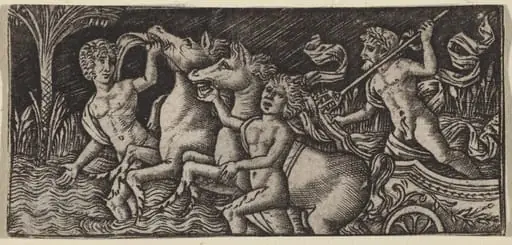 The Triumph of Neptune
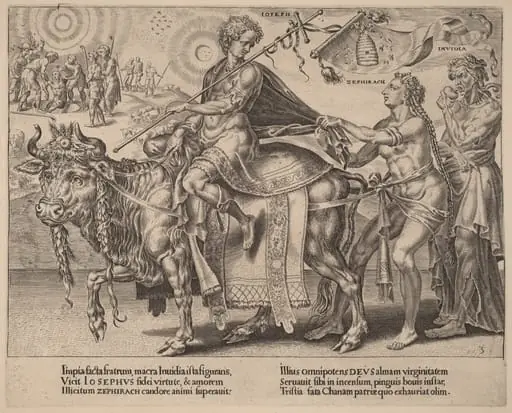 The Triumph of Joseph
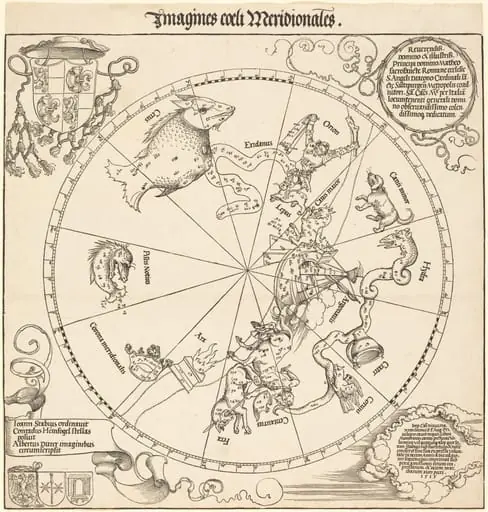 The Southern Celestial Hemisphere
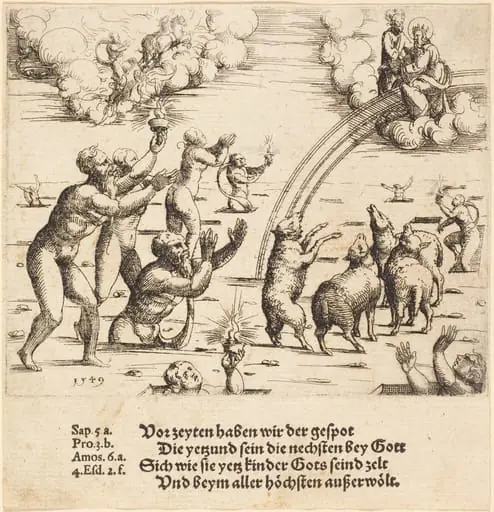 The Last Judgment