Artwork
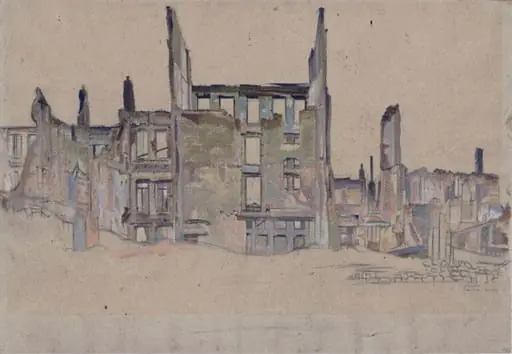
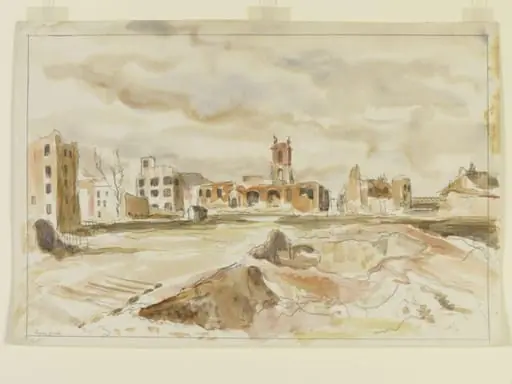
Chelsea Old Church, after destruction by a German bomb in an air raid on the night of 16th/17th April 1941
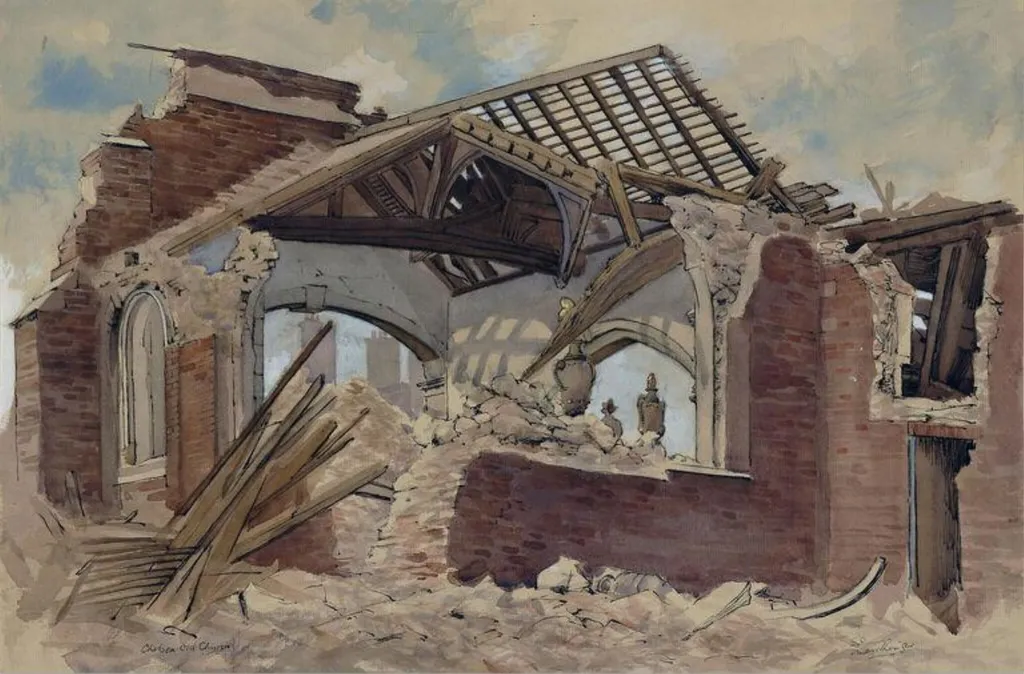
Chelsea Old Church, after destruction by a German bomb in an air raid on the night of 16th/17th April 1941 is a watercolor work on paper by the British Romanticist artist Ernest Thesiger. It dates from 1941 and is held in the collection of the Victoria and Albert Museum.
About this work
Overview
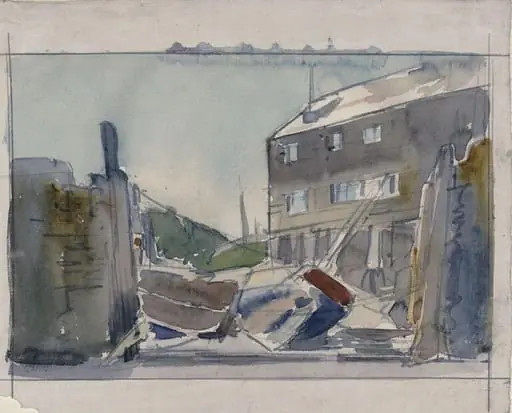
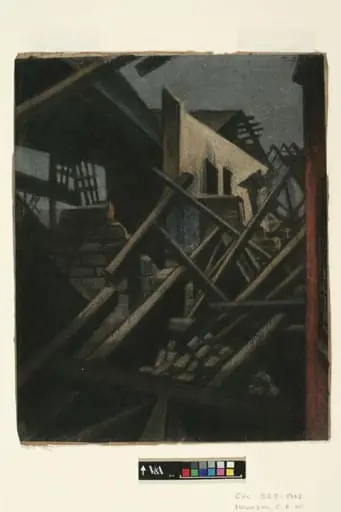
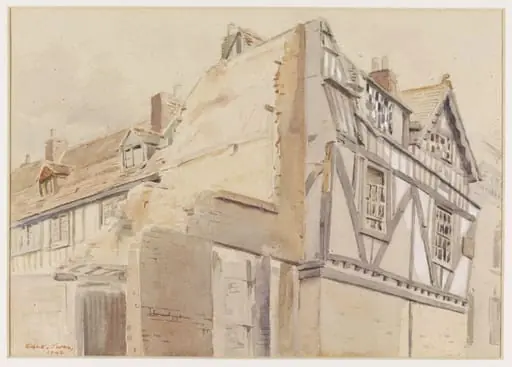
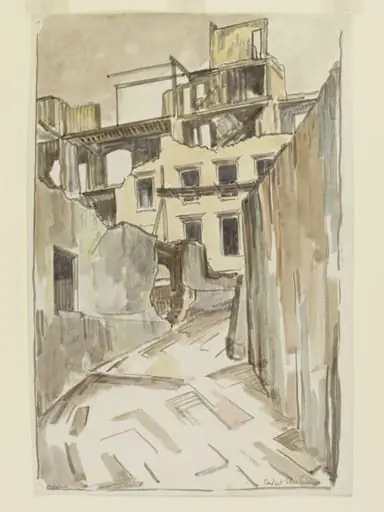
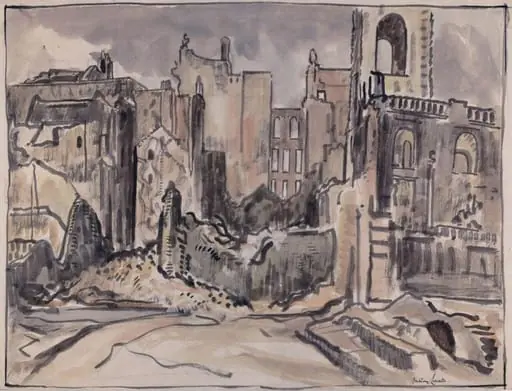
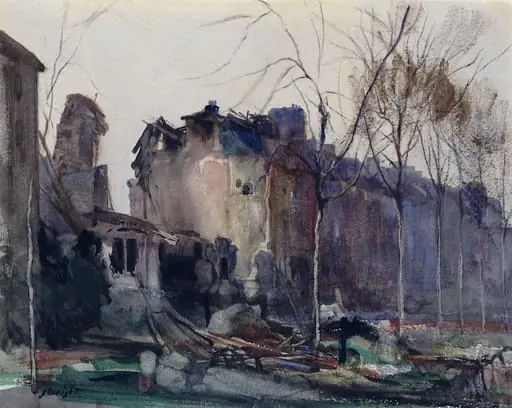
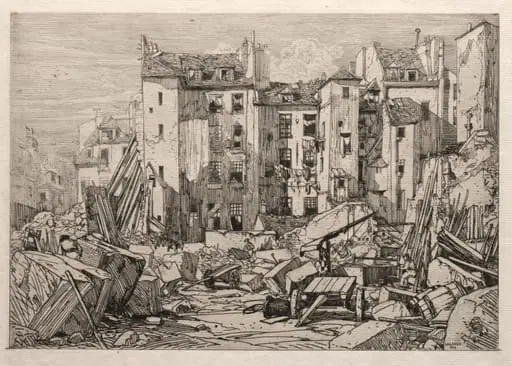
This watercolour captures the interior of Chelsea Old Church shortly after it was damaged by a German bomb during a nighttime air raid in April 1941.
This watercolour captures the interior of Chelsea Old Church shortly after it was damaged by a German bomb during a nighttime air raid in April 1941. The scene is rendered in loose, fluid brushwork that conveys both the immediacy of the destruction and the quiet stillness that followed. The artist focused on the interior space, emphasizing structural collapse and the intrusion of natural light through the breaches in the walls.
Subject & Meaning
The painting documents the physical aftermath of wartime violence on a historic place of worship. The ruined arches, fallen beams, and scattered debris speak to the vulnerability of cultural landmarks during conflict. Sunlight filtering through the openings suggests a quiet, almost solemn continuity—nature persisting amid human-made ruin, without overt sentimentality.
Technique & Style
Executed in watercolour, the work employs rapid, unrefined strokes that avoid polish in favor of emotional immediacy. The pale blue sky and washed-out light contrast with the darker, chaotic masses of rubble. The transparency of the medium allows underlying pencil lines to remain visible, reinforcing the sense of a sketch made on-site or soon after the event.
History & Provenance
The watercolour was created in the immediate aftermath of the April 1941 bombing, likely by an artist present in London during the Blitz. It entered the collection of the Victoria and Albert Museum, where it remains as part of its documentation of wartime Britain. Its preservation reflects an institutional effort to record the impact of aerial bombardment on architectural heritage.
Context
The bombing of Chelsea Old Church occurred during a sustained campaign of aerial attacks on London, targeting both infrastructure and symbolic sites. Many churches, already fragile from age, were especially vulnerable. This work is one of many visual records produced during the war that sought to preserve the appearance of damaged landmarks before restoration or demolition.
Legacy
The watercolour endures as a quiet testament to the material cost of war on urban history. It contributes to a broader visual archive of British wartime damage, offering a restrained, observational perspective rather than a propagandistic one. Its presence in a national collection ensures continued public access to this moment of loss and resilience.
Artist & collection
Artist
Ernest Thesiger left a single watercolor behind: *Chelsea Old Church, after destruction by a German bomb in an air raid on the night of 16th/17th April 1941*.