Artwork
Boesinghe Farm
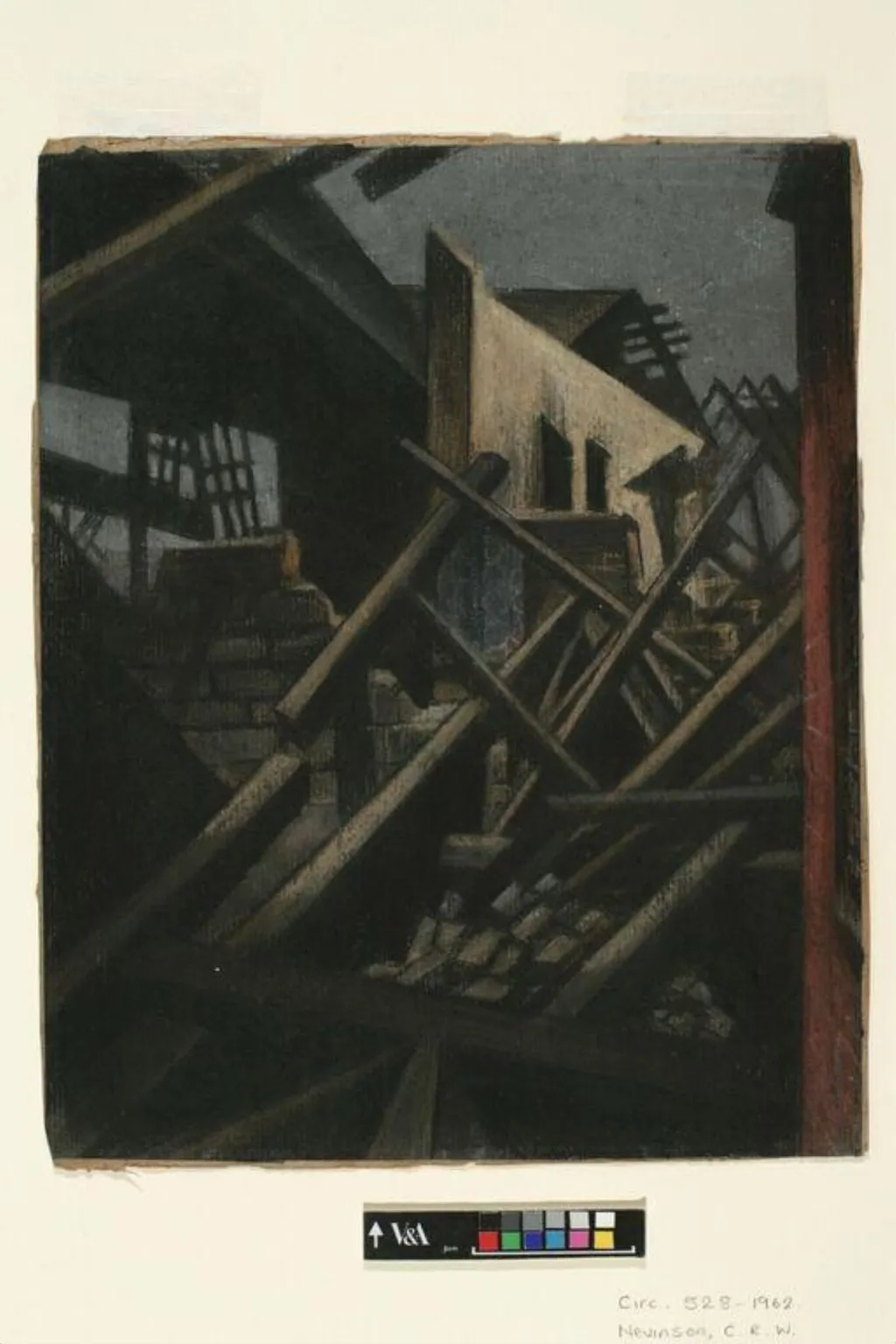
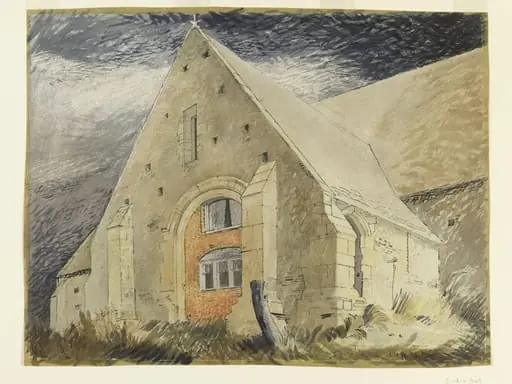
Boesinghe Farm is a watercolor work on paper by the Impressionist artist Christopher Richard Wynne Nevinson. It dates from 1916 and is held in the collection of the Victoria and Albert Museum.
About this work
As a British war artist, he recorded the damage done to Belgian towns during World War I.
C.R.W. Nevinson painted *Boesinghe Farm* in 1916 using watercolour. As a British war artist, he recorded the damage done to Belgian towns during World War I. He focused on broken houses and the shadows they cast.
The picture shows deep contrasts between light and dark. Nevinson used pastels to sharpen those shadows. The sharp diagonals create a sense of tension and loneliness.
Look up Nevinson, Christopher Richard Wynne next.
Overview
Boesinghe Farm is a watercolour painting created by C.R.W. Nevinson in 1916. It depicts a scene from World War I, showcasing the devastation inflicted upon the Belgian town of Boesinghe.
Subject & Meaning
The painting focuses on the destruction of a farm, highlighting the structural damage to buildings and the resulting shadows. Nevinson's work conveys a sense of desolation and tension, capturing the aftermath of conflict.
Technique & Style
Nevinson employed watercolour and pastel to achieve deep contrasts between light and dark. Diagonal strokes in the composition contribute to the overall atmosphere of unease and devastation.
Artist & collection
Artist
Christopher Richard Wynne Nevinson
British artist Christopher Nevinson painted scenes of World War I with direct, unflinching lines.

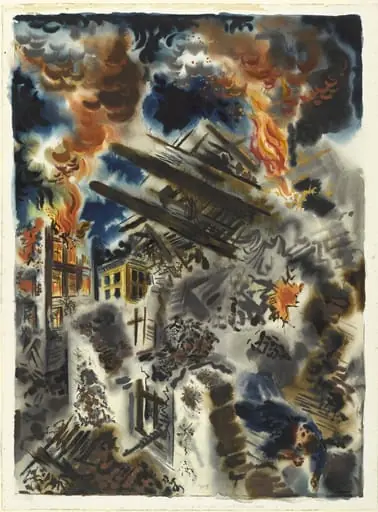 Untitled
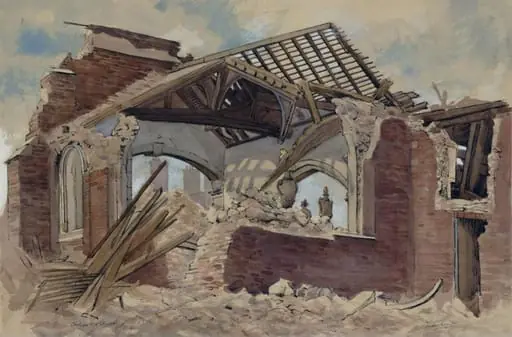 Chelsea Old Church, after destruction by a German bomb in an air raid on the night of 16th/17th April 1941
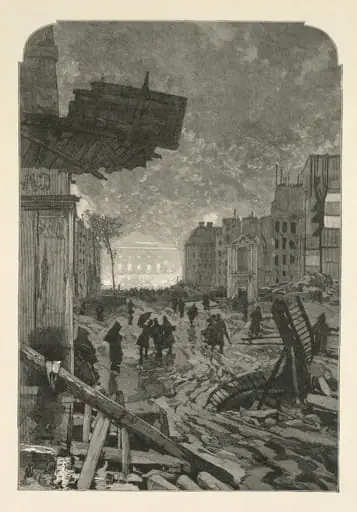 Demolition
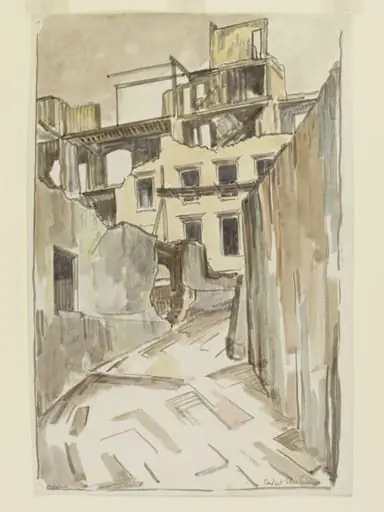 Conduit Street, corner of Saville Row, after bombing
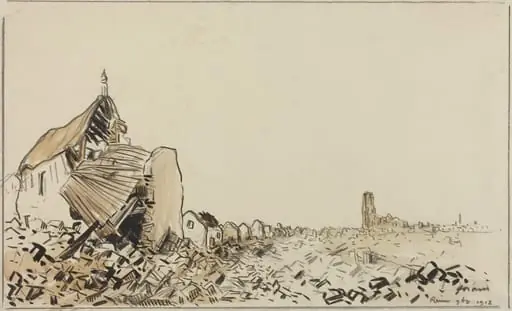 Reims 9bre 1918
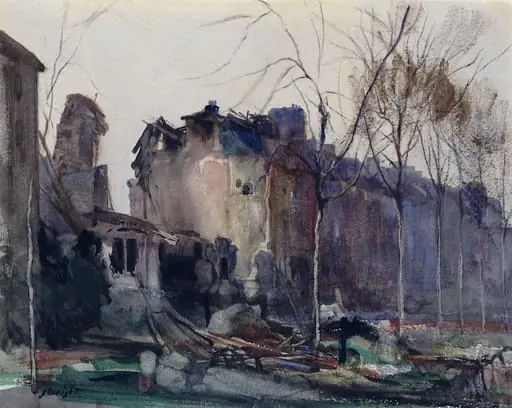 Warrington Crescent, 1918, after the Air Raid
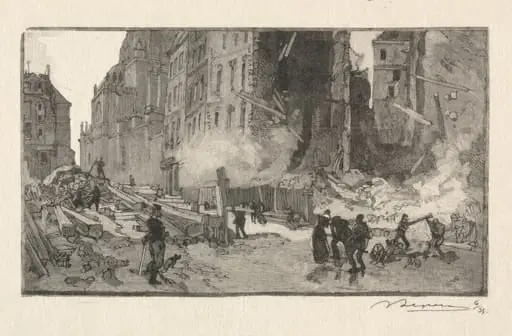 Place Gerson and Rue Restot
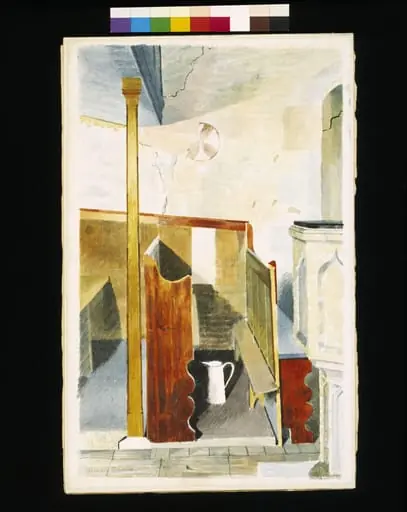 Interior of SS Peter and Paul, Little Saling, Essex
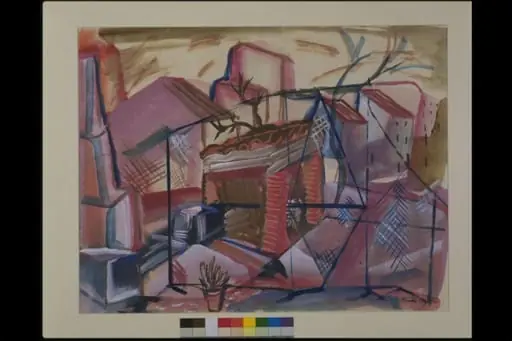 In Perspective (En Perspective)
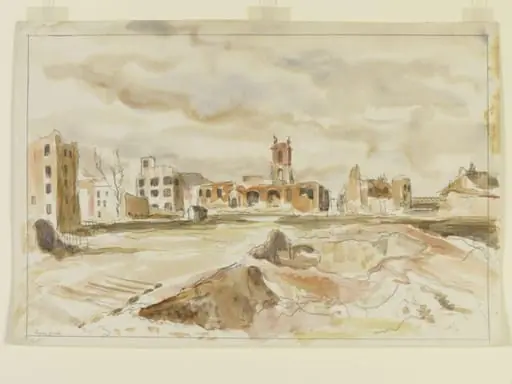 St. Giles, Cripplegate after bombing
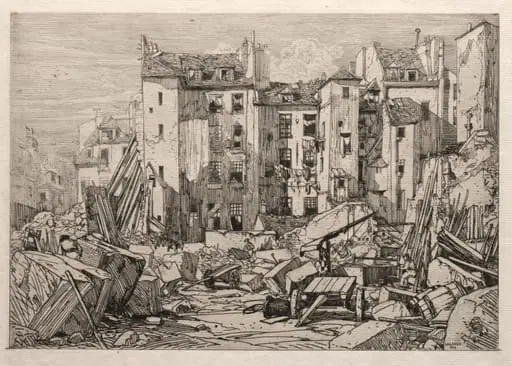 Demolition of Old Houses in Paris
 Tithe Barn, Great Coxwell, Berkshire