Artwork
Untitled
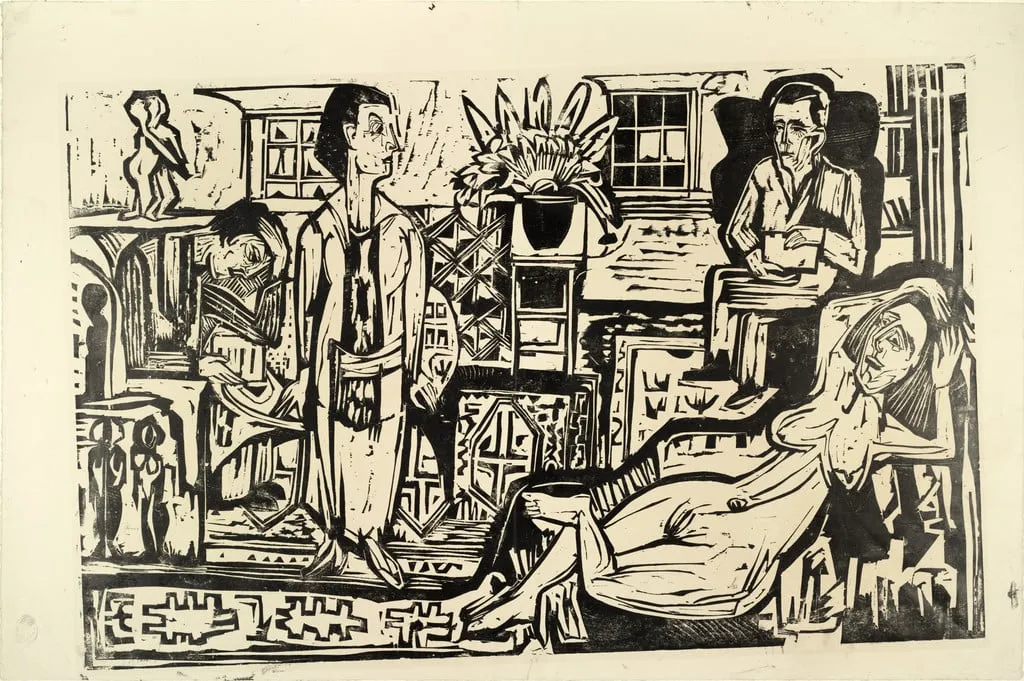
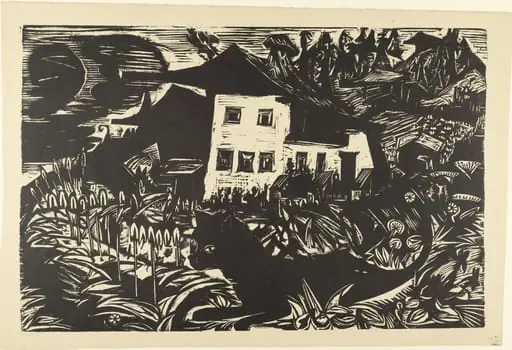
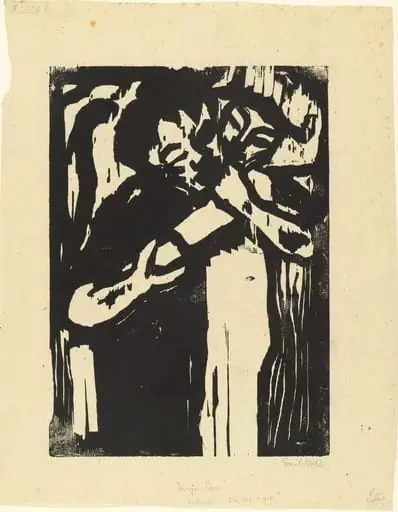
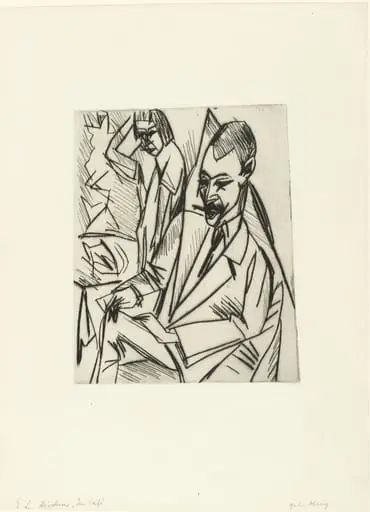
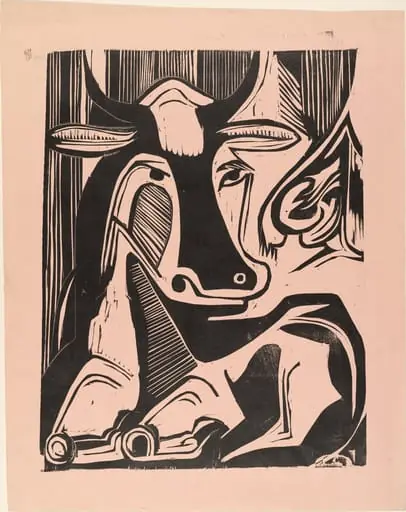
Untitled is an ink print by Ernst Ludwig Kirchner. It dates from 1924 and is held in the collection of the Museum of Modern Art.
About this work
Overview
The work reflects his ongoing exploration of domestic life, rendered not as serene but as psychologically layered, with figures caught in unspoken tension.
Created in 1924, this woodcut by Ernst Ludwig Kirchner is a quiet yet charged interior scene. As a printmaker deeply invested in the expressive potential of line and form, Kirchner used the woodcut medium to distill complex emotional states into stark visual contrasts. The work reflects his ongoing exploration of domestic life, rendered not as serene but as psychologically layered, with figures caught in unspoken tension.
Subject & Meaning
Four figures inhabit a confined interior: a man holds a child, another reads at a table, a woman reclines on a couch, and an infant lies swaddled. The arrangement suggests familial intimacy, yet the rigid postures and lack of interaction imply emotional distance. The room’s cluttered walls, adorned with mask-like forms, introduce an undercurrent of unease, hinting at inner turmoil or the weight of psychological burden beneath ordinary domesticity.
Technique & Style
Kirchner employed the woodcut process to emphasize sharp, angular lines and bold negative space. By carving away areas to leave white, he created contrast that defines form without detail. Faces and limbs are reduced to essential contours, evoking a sense of immediacy and rawness. The heavy black outlines and sparse modeling flatten spatial depth, amplifying the feeling of confinement and psychological pressure within the scene.
History & Provenance
Produced during Kirchner’s later years in Davos, Switzerland, this work emerged after his 1915 mental collapse and subsequent retreat from urban life. Though he continued creating, his reputation in Germany was systematically dismantled by the Nazi regime, which confiscated and publicly ridiculed his art as 'degenerate.' This print, like many others, was likely removed from public institutions, surviving only through private holdings or exile.
Context
Kirchner’s work in the 1920s reflects a shift from the exuberant energy of his Die Brücke years to a more introspective tone. Influenced by his isolation and the cultural decay he perceived in postwar Europe, his imagery grew denser and more somber. The mask-like wall decorations echo his earlier interest in non-Western art and primitivism, now repurposed as symbols of psychological fragmentation rather than vitality.
Legacy
This woodcut exemplifies Kirchner’s enduring contribution to modern printmaking: transforming a traditional technique into a vehicle for emotional expression. Though overshadowed in his time by political persecution, his formal innovations—bold line, compressed space, psychological intensity—later influenced postwar artists seeking to convey inner states through simplified, non-naturalistic forms.
Artist & collection
Artist
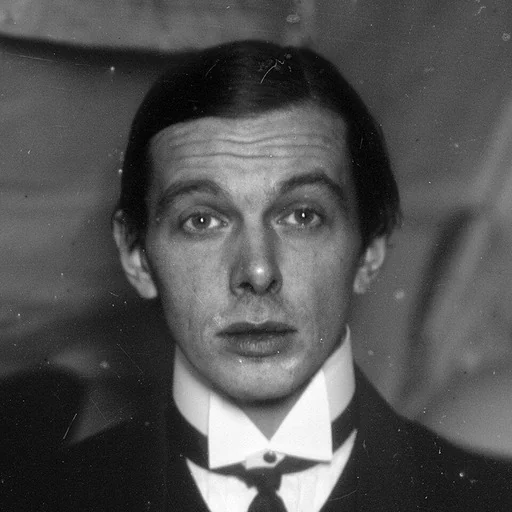
Ernst Ludwig Kirchner (6 May 1880 – 15 June 1938) was a German expressionist painter and printmaker.

![Dance Hall Bellevue [obverse], by Ernst Ludwig Kirchner](https://artifactworldgallery.com/img/ernst-ludwig-kirchner--dance-hall-bellevue-obverse--d1e14aac4297c69e-w320.webp)
![Nude Figure [reverse], by Ernst Ludwig Kirchner](https://artifactworldgallery.com/img/ernst-ludwig-kirchner--nude-figure-reverse--4b135f0364753e98-w320.webp)
![Two Nudes [obverse], by Ernst Ludwig Kirchner](https://artifactworldgallery.com/img/ernst-ludwig-kirchner--two-nudes-obverse--eb3914183f0bc96d-w320.webp)
![Dancing Couple in the Snow [reverse], by Ernst Ludwig Kirchner](https://artifactworldgallery.com/img/ernst-ludwig-kirchner--dancing-couple-in-the-snow-reverse--87ca007d7c05b553-w320.webp)