Artwork
The Fall of Man
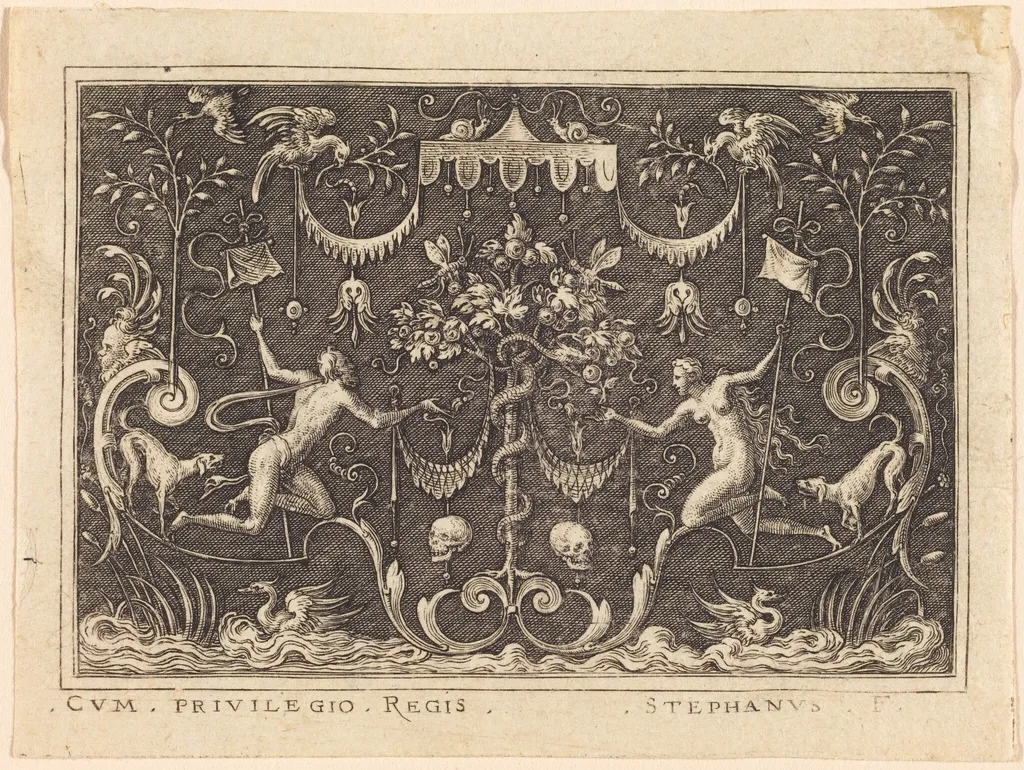
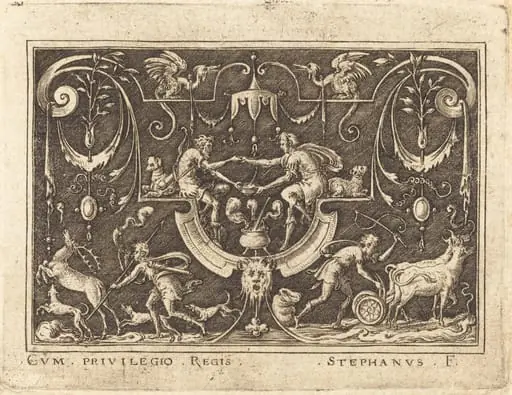
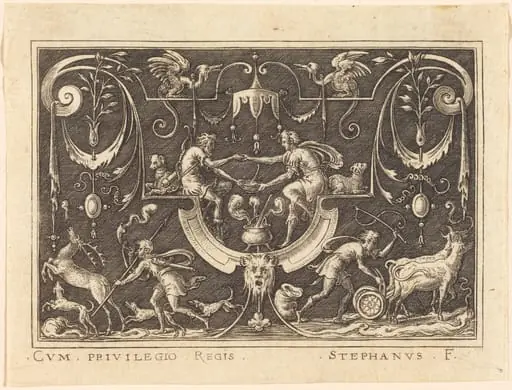
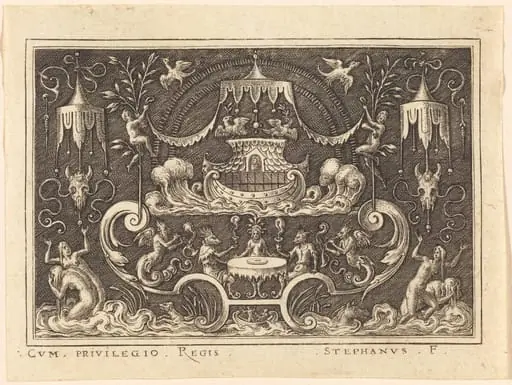
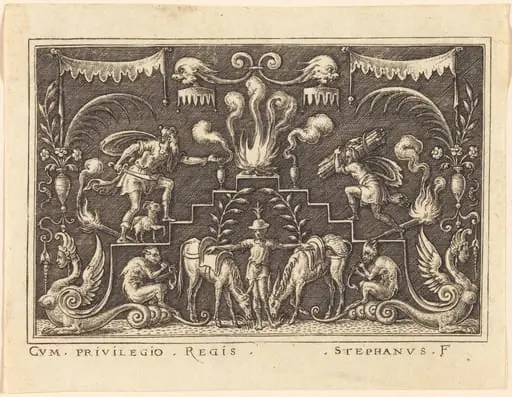
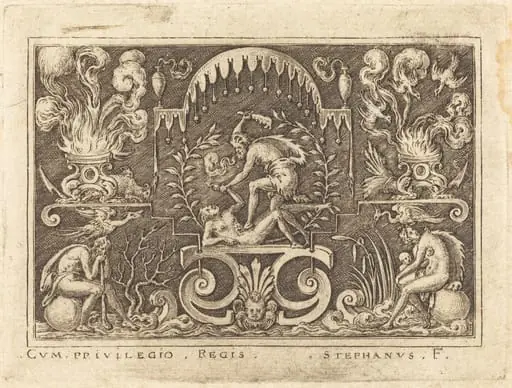
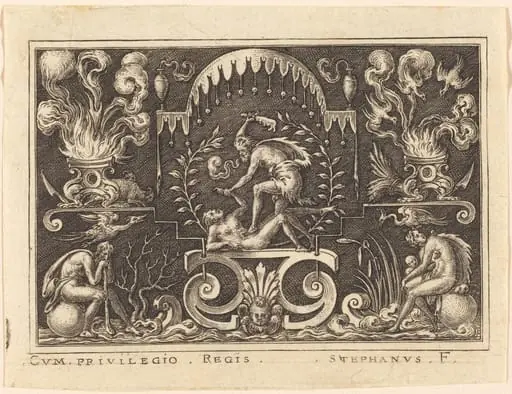
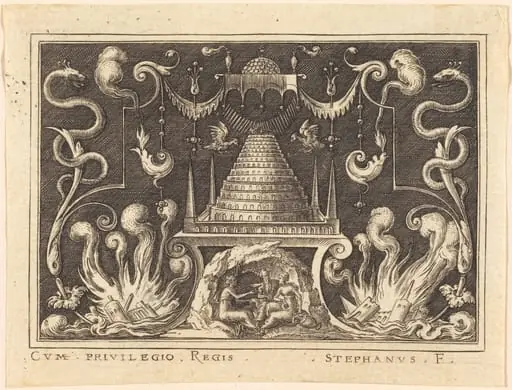
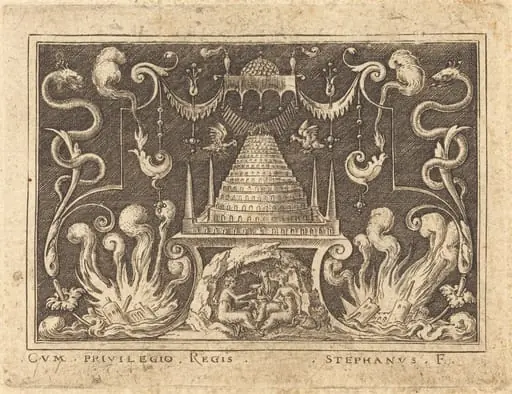
The Fall of Man is an ink print by the Renaissance artist Etienne Delaune. It dates from 1551 and is held in the collection of the National Gallery of Art.
About this work
Overview
Created in 1551 by Étienne Delaune, The Fall of Man is a black-and-white engraving depicting the biblical moment of humanity's expulsion from Eden. Executed entirely through incised lines on metal, the print captures a dense, intricate scene without color, relying on fine cross-hatching and delicate contours to suggest form, depth, and texture across its entire surface.
Subject & Meaning
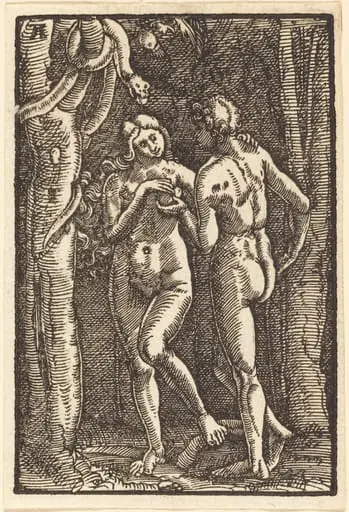
Eve offers the branch to Adam, both figures gazing downward in quiet recognition of their transgression.
The scene portrays Adam and Eve in the Garden of Eden, moments after taking the forbidden fruit. Eve offers the branch to Adam, both figures gazing downward in quiet recognition of their transgression. Surrounding them are symbolic elements—skulls hint at mortality, exotic animals suggest the natural world’s corruption, and distant architecture implies the loss of divine harmony, reinforcing themes of fallen grace and consequence.
Technique & Style
Delaune employed the engraving technique, carving fine lines into a copper plate to create the image. Each detail—from the texture of feathers to the curl of vines and the ridges of crowns—was meticulously incised by hand. The absence of color heightens the focus on line and tone, allowing subtle gradations of light and shadow to emerge through the density and direction of the etched marks.
History & Provenance
Produced in France during the mid-16th century, the print reflects the influence of Italian Mannerism and the growing popularity of printmaking as a medium for disseminating complex religious imagery. Delaune, trained as a goldsmith, brought precision from metalwork into his engravings. The work was likely circulated among collectors and scholars, valued for its technical mastery and theological depth.
Context
In the wake of the Reformation, visual depictions of biblical narratives were scrutinized and reimagined across Europe. Delaune’s engraving aligns with Northern European traditions of detailed, symbolic storytelling in prints, contrasting with the more monumental styles of Italian painting. Its intricate composition catered to an educated audience familiar with theological allegory and classical motifs.
Legacy
The Fall of Man stands as an example of how engraving could convey complex narratives with extraordinary detail, influencing later printmakers in both technique and iconography. Though not widely reproduced today, it remains a testament to the skill of 16th-century French artisans and the role of prints in shaping religious and moral discourse before the age of mechanical reproduction.
Artist & collection