Artwork
The Backplate of a Suit of Parade Armor
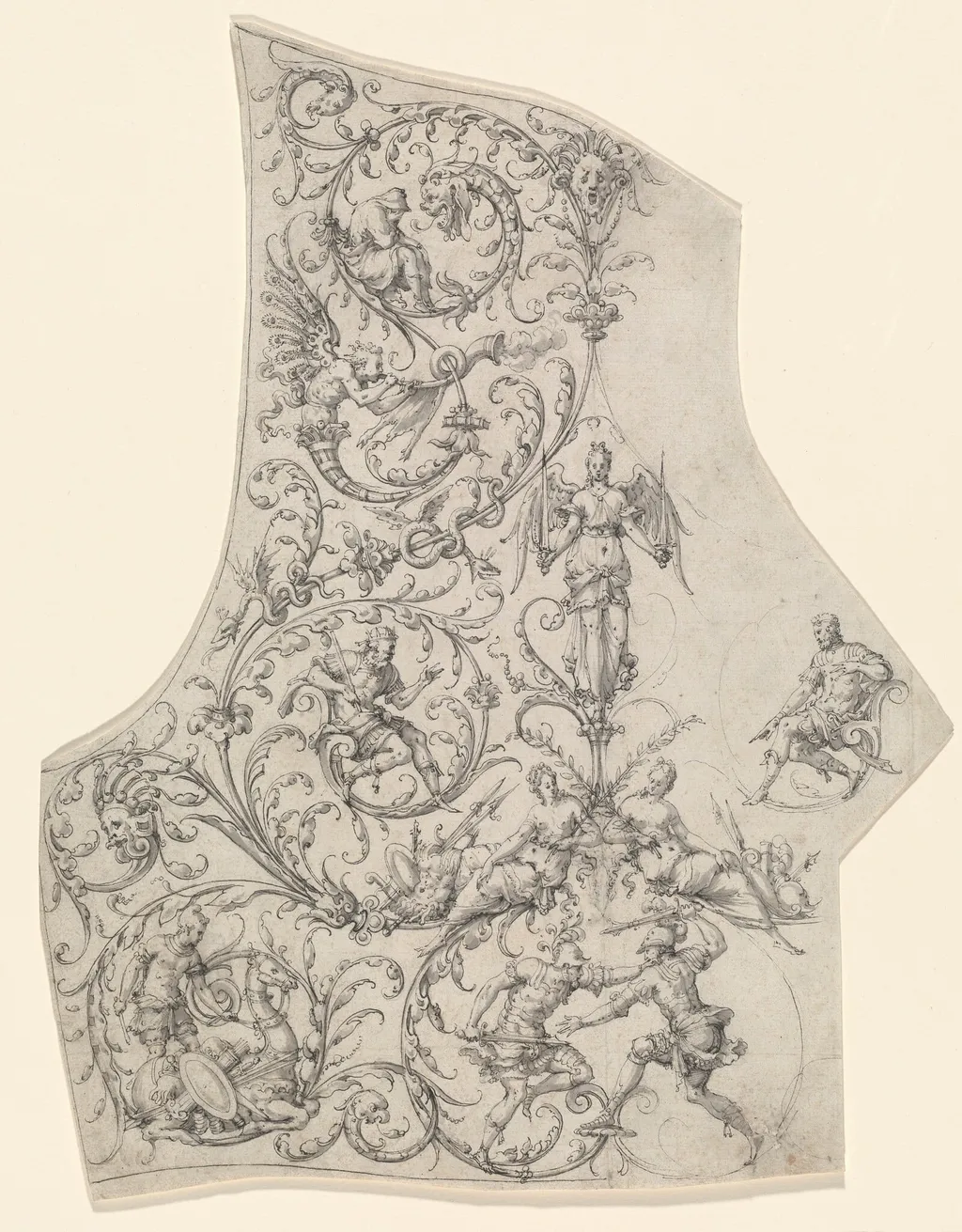
The Backplate of a Suit of Parade Armor is an ink drawing by the Renaissance artist Etienne Delaune. It dates from 1557 and is held in the collection of the National Gallery of Art.
About this work
Overview
Etienne Delaune’s drawing, dated around 1557, depicts a decorative backplate intended for a ceremonial suit of armor. Executed on laid paper, the composition is filled with intricate, swirling motifs that occupy the entire surface, creating a dense ornamental field that would have been applied to the rear of a parade cuirass.
Subject & Meaning
The design incorporates a variety of miniature figures—riders on horses, winged beings, and floating silhouettes—interwoven with vegetal scrollwork. These elements serve both a narrative function, suggesting heroic or mythological themes, and an aesthetic one, providing visual richness appropriate for the display purposes of a parade armor.
Technique & Style
Delaune employed pen ink for the fine linear network, complemented by a subtle gray wash that adds tonal depth without overwhelming the intricate detail. Traces of black chalk appear in the background, while the laid paper’s faint grid texture contributes a tactile quality, enhancing the overall delicacy of the composition.
History & Provenance
The drawing originates from mid‑sixteenth‑century France, a period when Delaune was active as a goldsmith and designer for the royal court. Though the original armor has not survived, the sketch survives as a testament to the collaborative process between artists and armorers in the Renaissance.
Context
During the Renaissance, decorative armor functioned as a mobile showcase of wealth and artistic taste. Designs such as Delaune’s backplate reflect the era’s fascination with elaborate surface ornamentation, merging martial equipment with the visual language of courtly pageantry and classical allegory.
Artist & collection


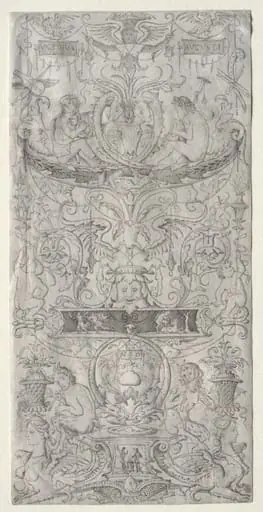 Panel of Ornament Inscribed Victoria Augusta
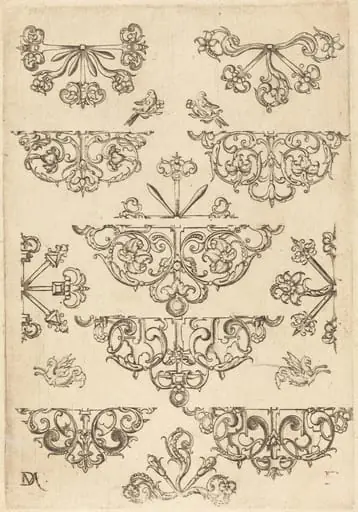 Twelve Studs
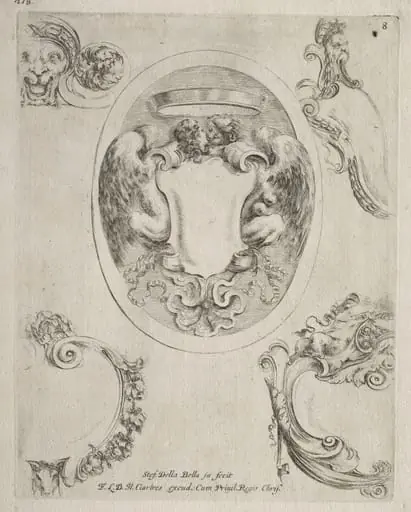 Collection of Various Caprices and New Designs of Cartouches and Ornaments: No 8
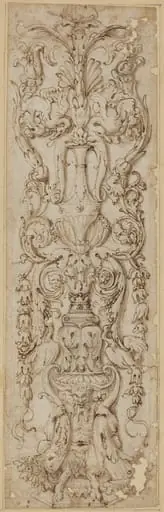 Grotesque with a Satyr
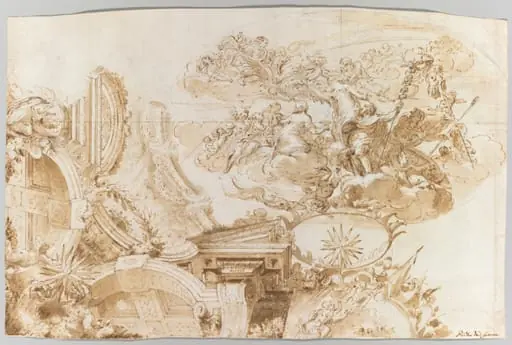 The Apotheosis of Romulus: Design for a Ceiling
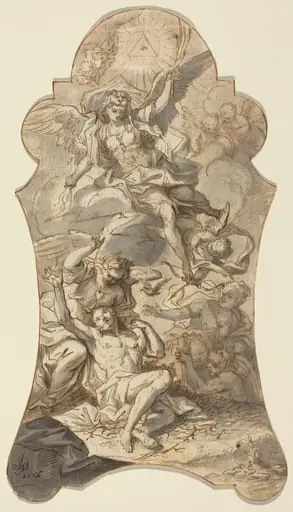 The Holy Angels Protecting a Hermit from Evils
 Ornament Panel: Two Sphinxes and Two Children Holding Palms
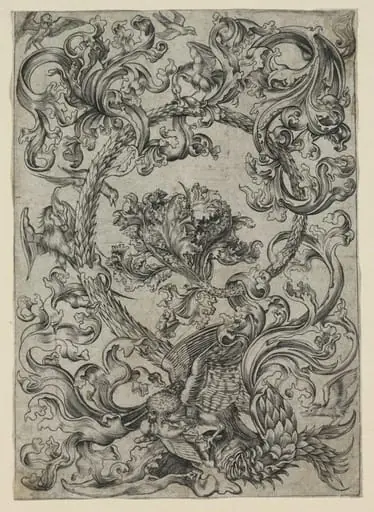 Ornamental Foliage, with an Owl and other Birds
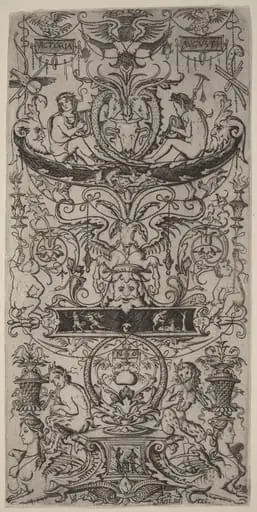 Ornament Panel: Victoria Augusta
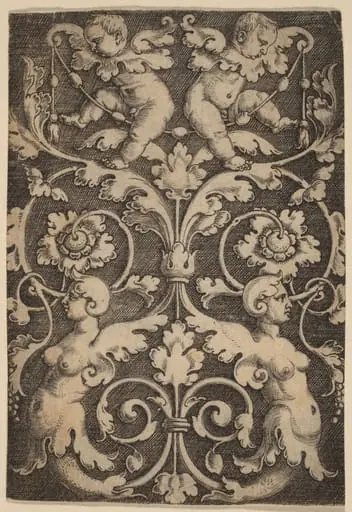 Upright Ornament with Two Sirens
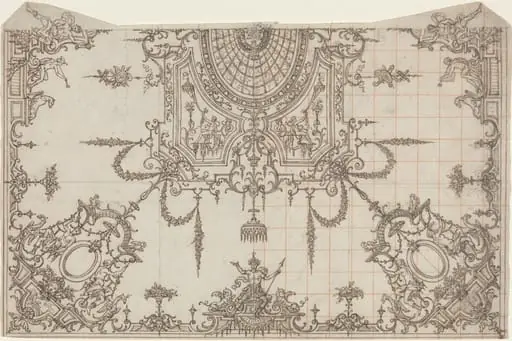 An Elaborate Ceiling with Trellises and Seated Figures
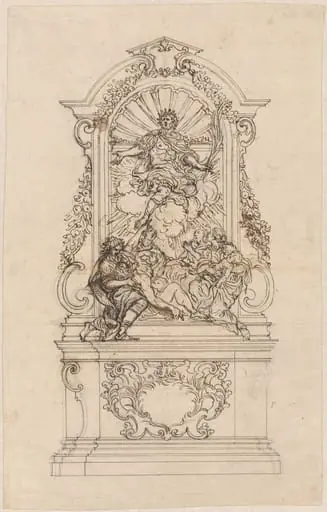 A Reliquary of Saint Sigismondo