Artwork
Sacrifice of Abraham
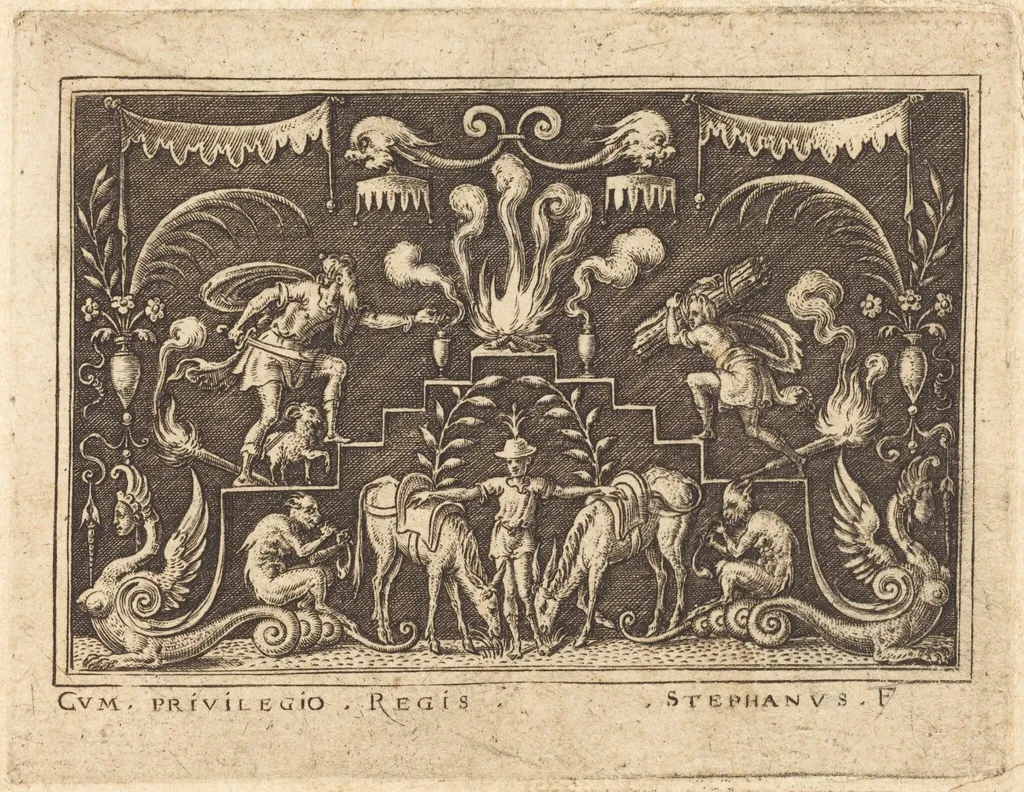
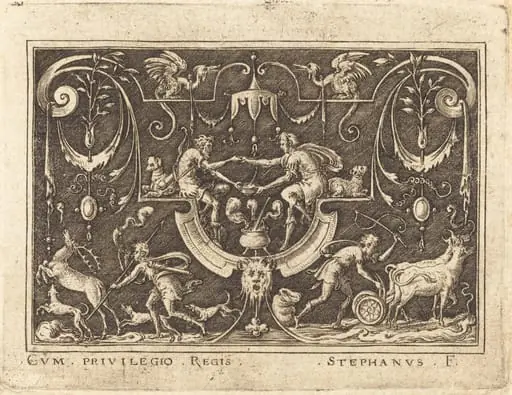
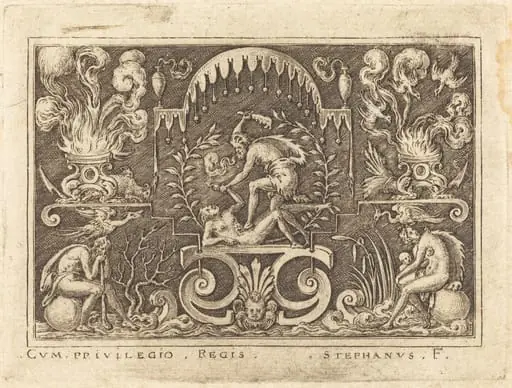
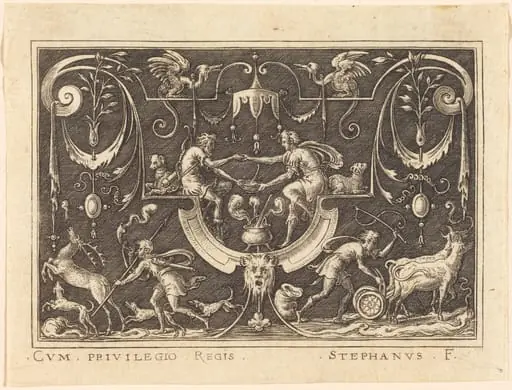
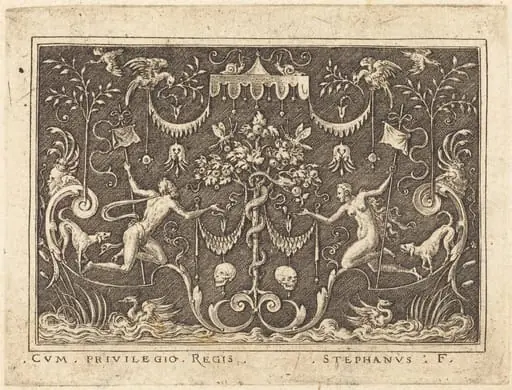
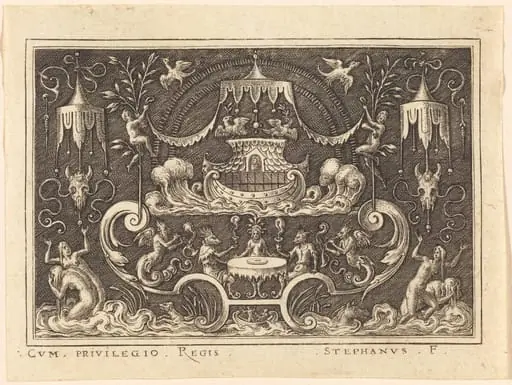
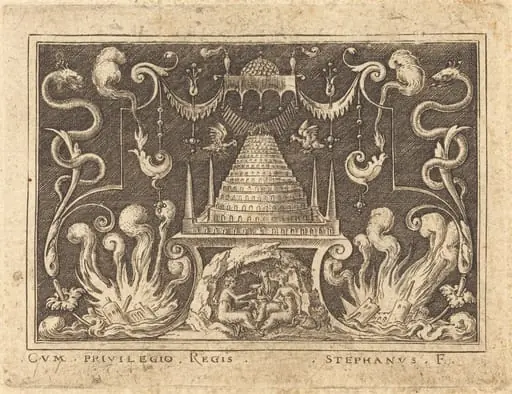
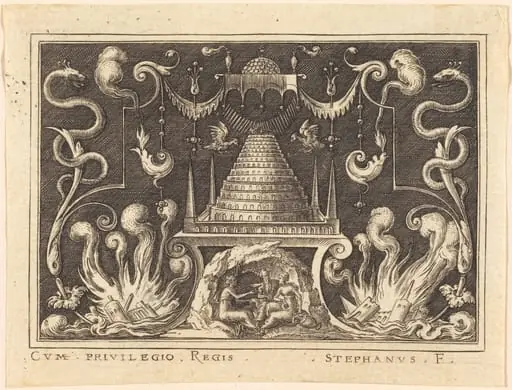
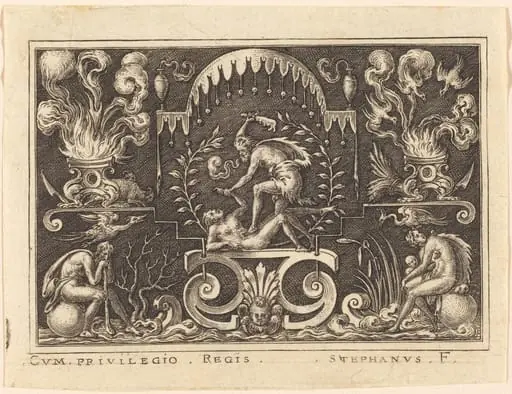
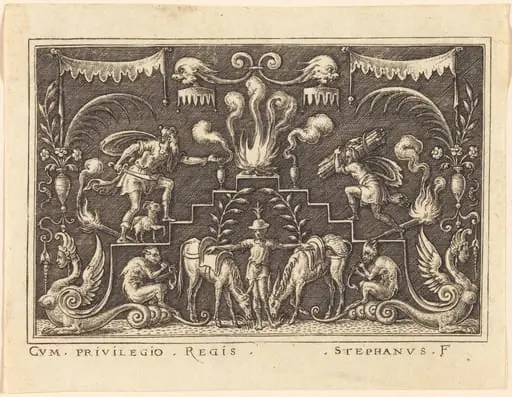
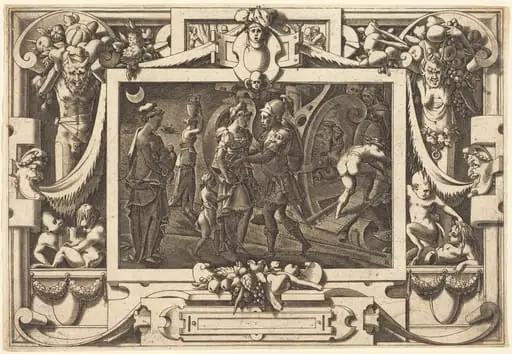
Sacrifice of Abraham is an ink print by the Renaissance artist Etienne Delaune. It dates from 1551 and is held in the collection of the National Gallery of Art.
About this work
Overview
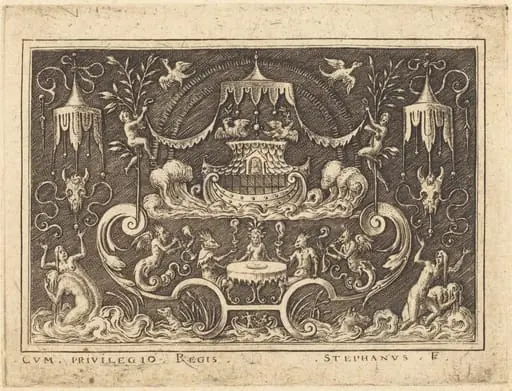
Etienne Delaune’s 1551 engraving titled “Sacrifice of Abraham” presents a densely populated tableau rendered in black and white.
Etienne Delaune’s 1551 engraving titled “Sacrifice of Abraham” presents a densely populated tableau rendered in black and white. Central to the composition is a hat‑clad figure positioned between a ram and a bull, while a winged being hovers overhead. To the left a soldier with a spear and a dog, and to the right a trumpet‑blowing winged creature, frame the dramatic moment amid swirling clouds and ornamental foliage.
Subject & Meaning
The scene depicts the biblical episode in which Abraham prepares to offer his son Isaac, a narrative traditionally enriched with symbolic elements. The inclusion of multiple animals, soldiers, and celestial figures expands the episode beyond its literal story, suggesting themes of obedience, divine intervention, and the cosmic significance of sacrifice within a Renaissance theological context.
Technique & Style
Executed entirely through line engraving, Delaune achieves depth and texture by varying the density of cross‑hatching and employing sharp, precise strokes. The absence of color is compensated by intricate shading that models forms and creates atmospheric effects such as smoke and cloud, while decorative scrollwork and vegetal motifs border the image, characteristic of mid‑16th‑century Northern European print design.
History & Provenance
Created in 1551, the print belongs to Delaune’s mature period, during which he produced a series of religious works for a market of collectors and devotional users. Surviving copies are held in several European libraries and museums, indicating the work’s circulation among learned circles and its role in disseminating biblical narratives through the print medium.
Artist & collection