Artwork
The Triumph of Bacchus
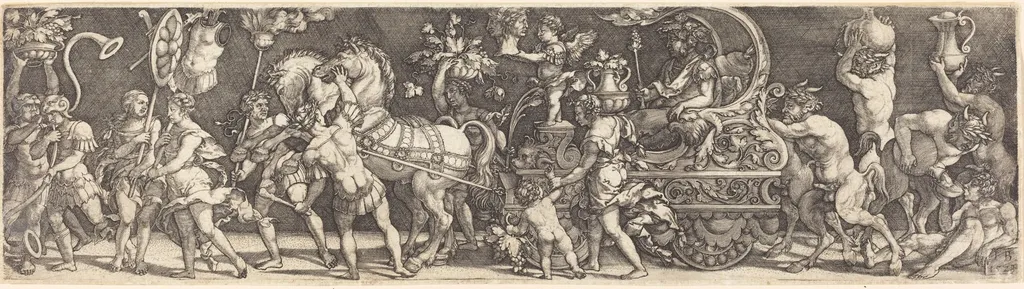
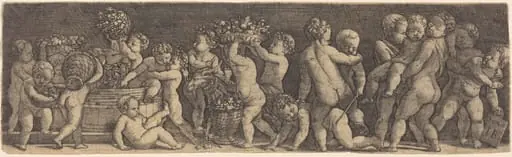
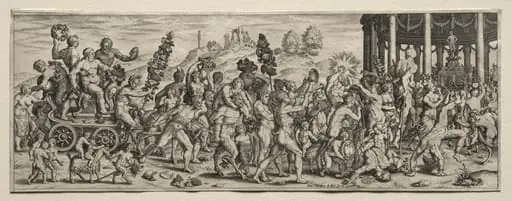
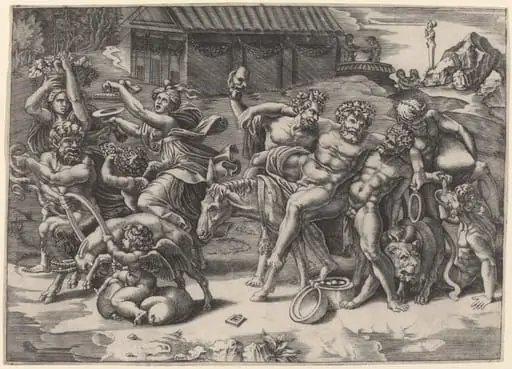
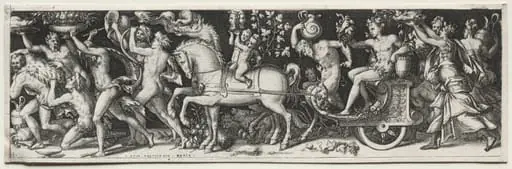
The Triumph of Bacchus is an ink print by the Renaissance artist Master IB. It dates from 1528 and is held in the collection of the National Gallery of Art.
About this work
Overview
The engraving titled The Triumph of Bacchus, executed in 1528 by the printmaker known as Master IB, presents a dynamic mythological scene. Rendered entirely in black‑and‑white line work, the composition captures a festive procession centered on the Roman god of wine as he rides a chariot drawn by two spirited horses.
Subject & Meaning
At the heart of the image, Bacchus commands a celebratory parade, surrounded by revelers who dance, play instruments, and brandish foliage and wine vessels. The inclusion of both human participants and animal companions underscores the god’s association with abundance, communal joy, and the transformative power of wine in classical lore.
Technique & Style
Master IB employs intricate hatching and cross‑hatching to convey texture, from the musculature of the rearing horses to the delicate leaves and jugs held by the figures. The engraving’s dense line work creates a sense of movement, while the careful modulation of tone enhances depth and highlights the energetic rhythm of the procession.
History & Provenance
Created in the early sixteenth century, the print reflects the period’s renewed interest in classical mythology and the technical possibilities of copperplate engraving. Although specific ownership records are scarce, the work is attributed to Master IB, an artist recognized for his precise and elaborate engraving practice, and it remains a reference point for studies of Renaissance printmaking.
Artist & collection