Artwork
The Crayfish of Longchamps
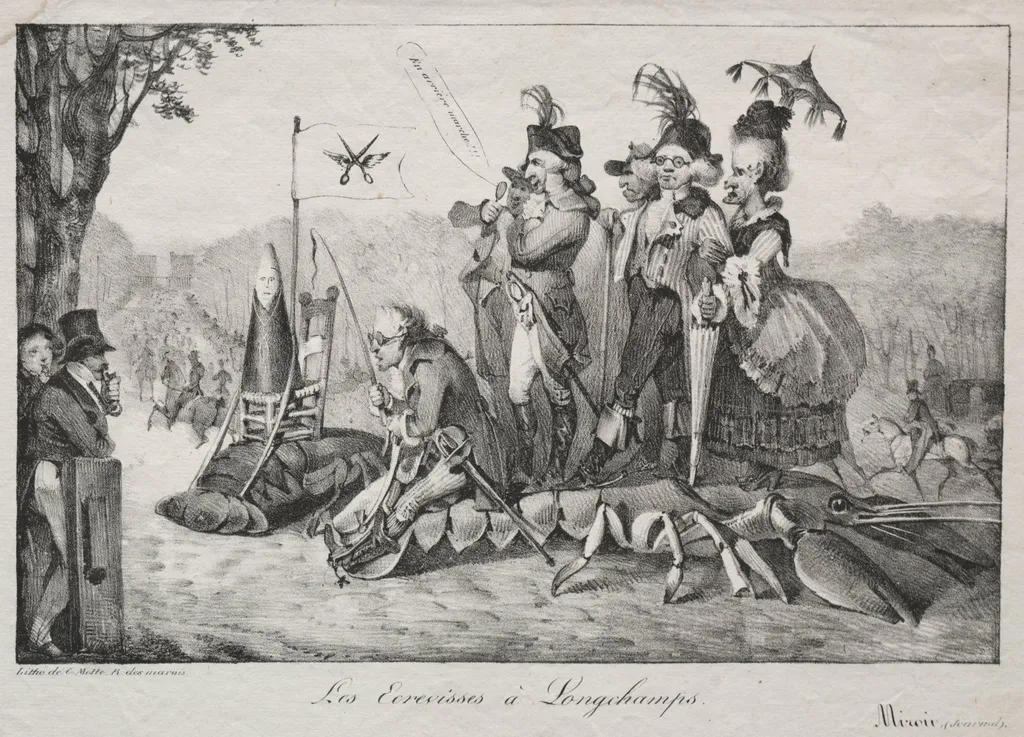
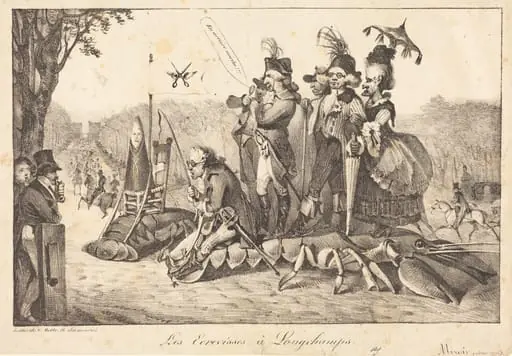
The Crayfish of Longchamps is a print by the Romanticist artist Eugène Delacroix. It dates from 1822 and is held in the collection of the Cleveland Museum of Art.
About this work
Overview
The Crayfish of Longchamps, created by Eugène Delacroix in 1822, is an early work exemplifying the French Romantic movement's emphasis on expressive energy. This print captures a chaotic, costumed gathering with elements of disorder and whimsy.
Subject & Meaning
The scene depicts a tumultuous, fancily dressed crowd with some in animal costumes, amidst flags, feathers, and background elements like a boat and tree. The title suggests a satirical or humorous commentary on a specific location, Longchamps, portraying its inhabitants in absurd, chaotic behavior.
Technique & Style
Characterized by loose, quick lines, the work adopts a somewhat cartoonish approach, prioritizing dynamic movement and emotional expression over meticulous detail, aligning with Delacroix's Romantic inclination and influences from Rubens and Venetian Renaissance painters.
History & Provenance
Dating to 1822, this piece falls within Delacroix's early period, foreshadowing the dramatic and romantic themes that would define his mature artistic voice. Specific provenance details are not provided in the available information.
Context
Emerging from the French Romantic school, The Crayfish of Longchamps reflects a broader artistic shift away from Neoclassical precision towards more expressive and emotionally charged works, with Delacroix at the forefront of this movement.
Artist & collection
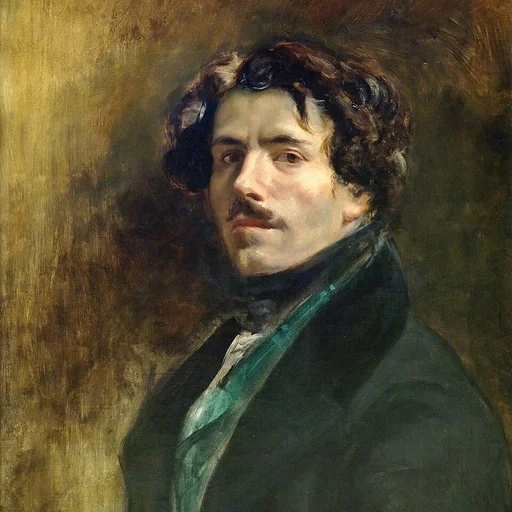
Artist
Ferdinand Victor Eugène Delacroix ( DEL-ə-krwah, -KRWAH; French: ; 26 April 1798 – 13 August 1863) was a French Romantic artist who was regarded as the leader of the French Romantic school.

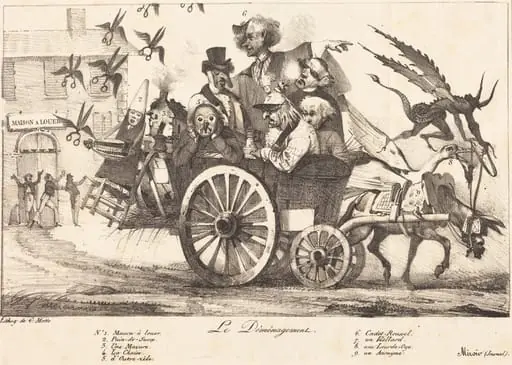 Le Déménagement de la Censure
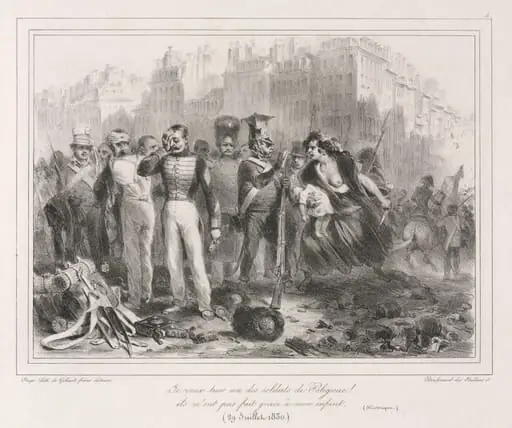 Album of 1831: I want to kill one of Polignac's soldiers. They did not spare my child (Historic)
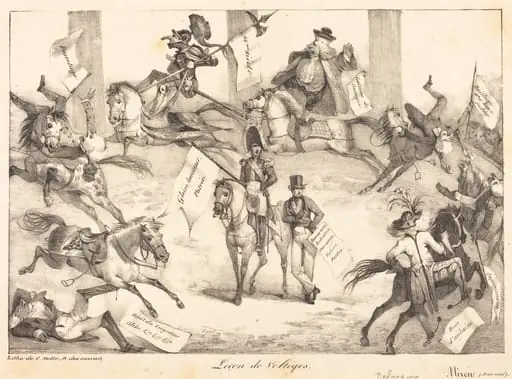 Leçon de Voltiges (Trick Riding)
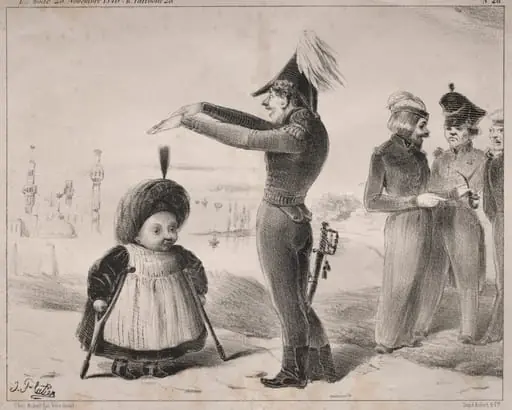 Laissez venir à moi les petits enfants
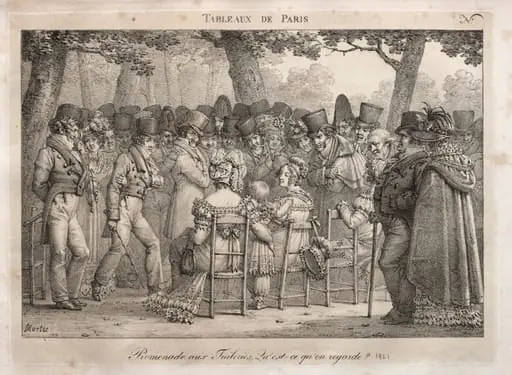 Promenade in the Tuileries. What are they looking at?
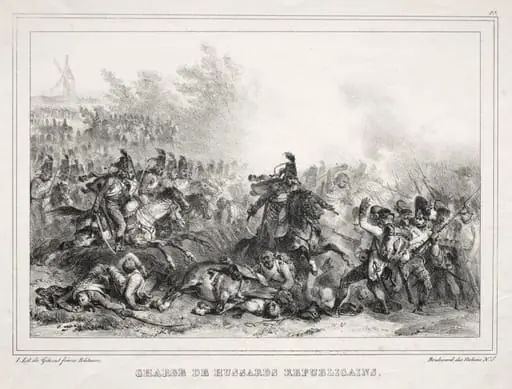 Album pour 1833: Charge de Hussards Républicains
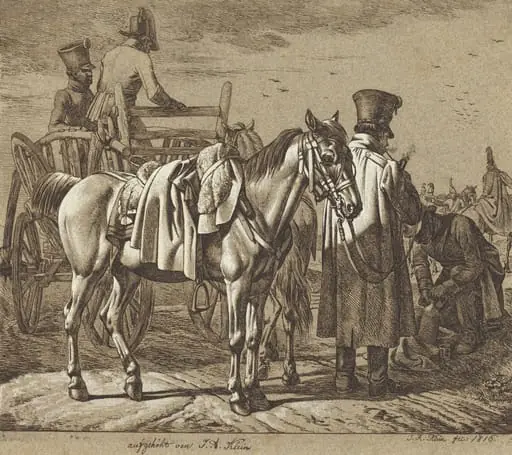 Horse with Soldiers Smoking Pipe/Military Scene
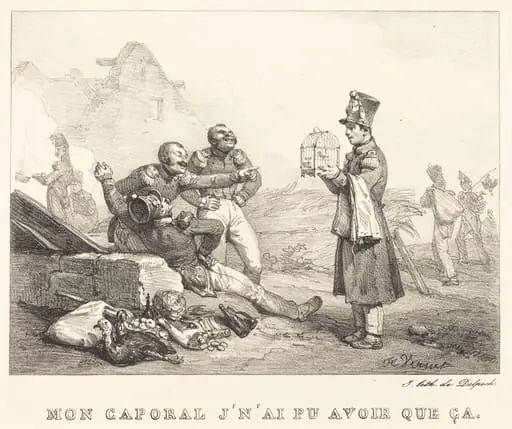 Mon Caporal, Je n'ai pu avons que ça
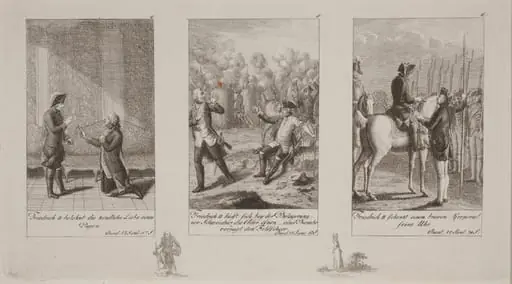 Anecdotes of King Frederik II
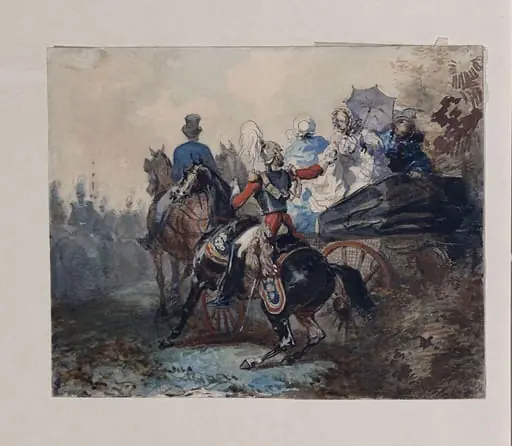 Life Guards at a Review in Windsor Park
 Bonaparte Reviewing the Consular Guard (La Revue du Quintidi)
 Les Ecrevisses à Longchamps