Artwork
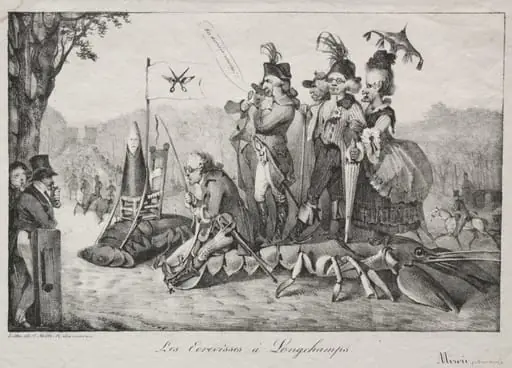
Les Ecrevisses à Longchamps
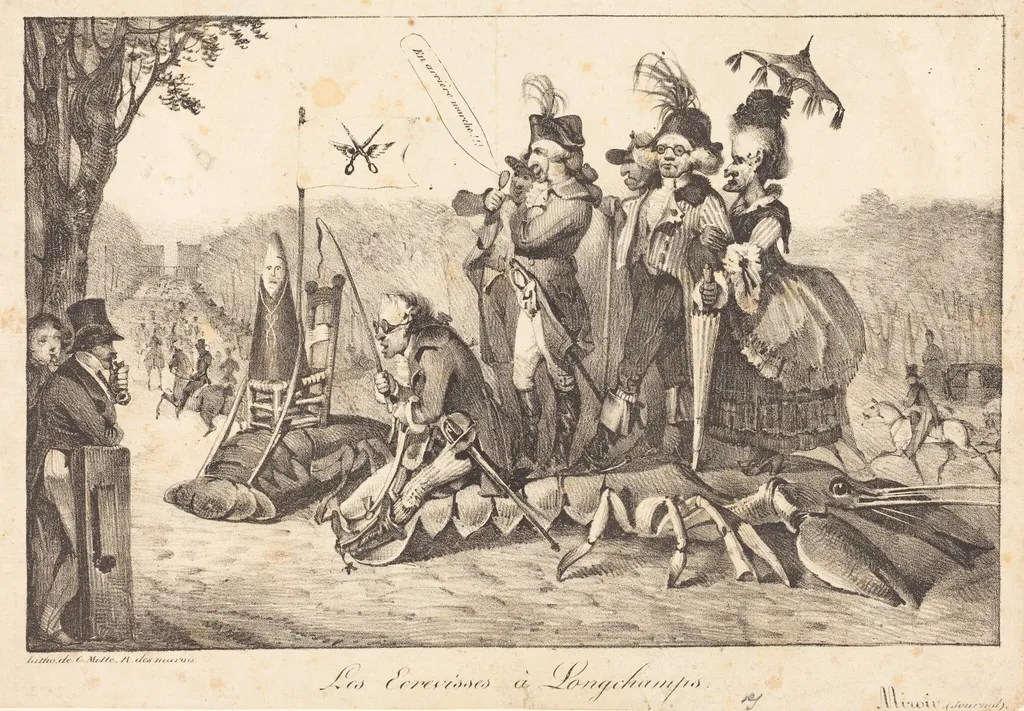
Les Ecrevisses à Longchamps is an ink print by the Romanticist artist Eugène Delacroix. It dates from 1822 and is held in the collection of the National Gallery of Art.
About this work
Overview
Les Ecrevisses à Longchamps is a lithograph created by Eugène Delacroix in 1822, exemplifying the French Romantic movement's emphasis on expressive and dynamic compositions.
Subject & Meaning
The lithograph depicts a chaotic scene of elegantly dressed individuals in a state of commotion, with peculiar poses and accessories, suggesting a humorous take on a disrupted upscale event, as hinted by the title.
Technique & Style
Delacroix employed quick, sketchy lines in the lithograph, conveying a sense of liveliness and disorder, characteristic of his preference for expressive movement over classical precision.
History & Provenance
Created in 1822, the work reflects Delacroix's influences from Rubens and Venetian Renaissance painters, aligning with his broader Romantic approach that prioritized emotional intensity over Neoclassical restraint.
Context
Les Ecrevisses à Longchamps was produced during a period when lithography was an emerging medium, allowing for the dissemination of artistic works beyond traditional painting. The technique, which involves drawing on stone plates, suited Delacroix's spontaneous and expressive style.
Legacy
While specific long-term impacts of *Les Ecrevisses à Longchamps* are not widely documented, it contributes to Delacroix's body of work that influenced subsequent generations of artists in embracing emotional depth and dynamic movement in their compositions.
Artist & collection
Artist
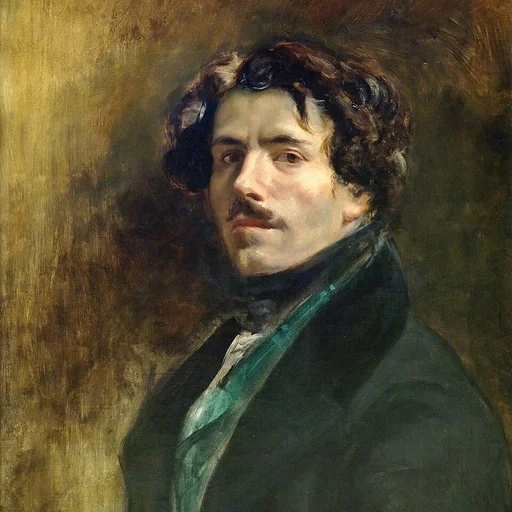
Ferdinand Victor Eugène Delacroix ( DEL-ə-krwah, -KRWAH; French: ; 26 April 1798 – 13 August 1863) was a French Romantic artist who was regarded as the leader of the French Romantic school.

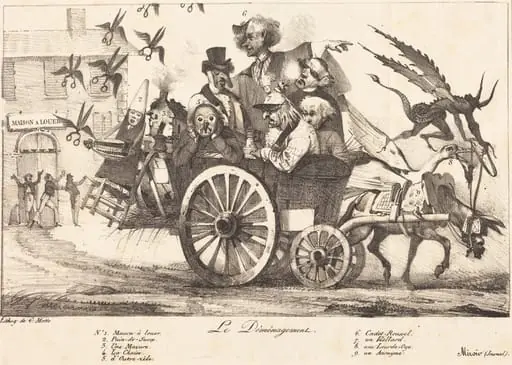 Le Déménagement de la Censure
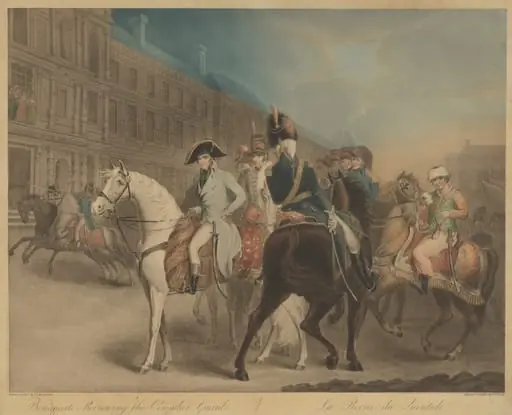 Bonaparte Reviewing the Consular Guard (La Revue du Quintidi)
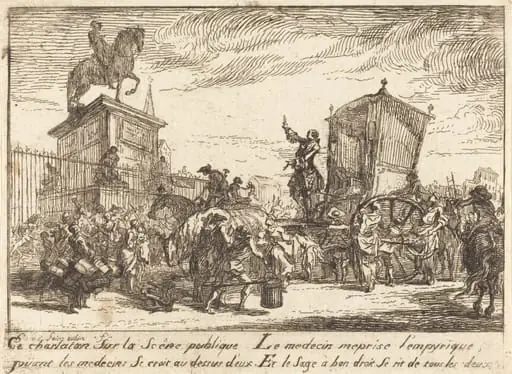 The Charlatan (Le charlatan)
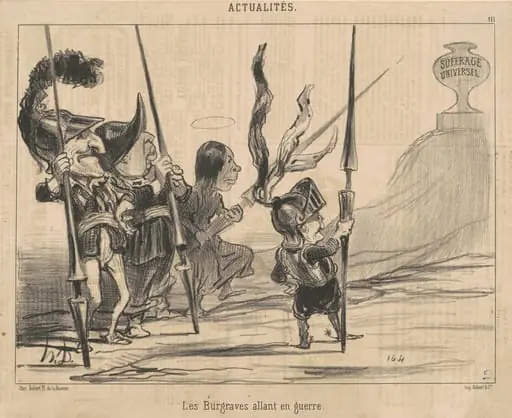 Les burgraves allant en guerre
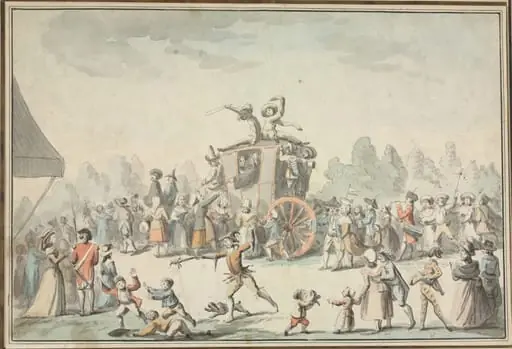 Scène de Carnaval
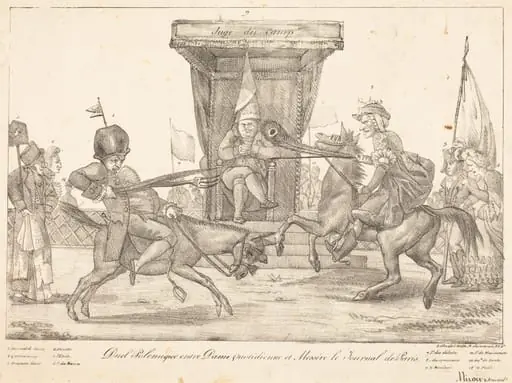 Duel Polemique
 Master of His Excellency's Stables and Twenty Servants
 Life Guards at a Review in Windsor Park
 Leçon de Voltiges (Trick Riding)
 Anecdotes of King Frederik II
 Recruitment of Troops
 The Crayfish of Longchamps