Artwork
The Sister of Duguesclin
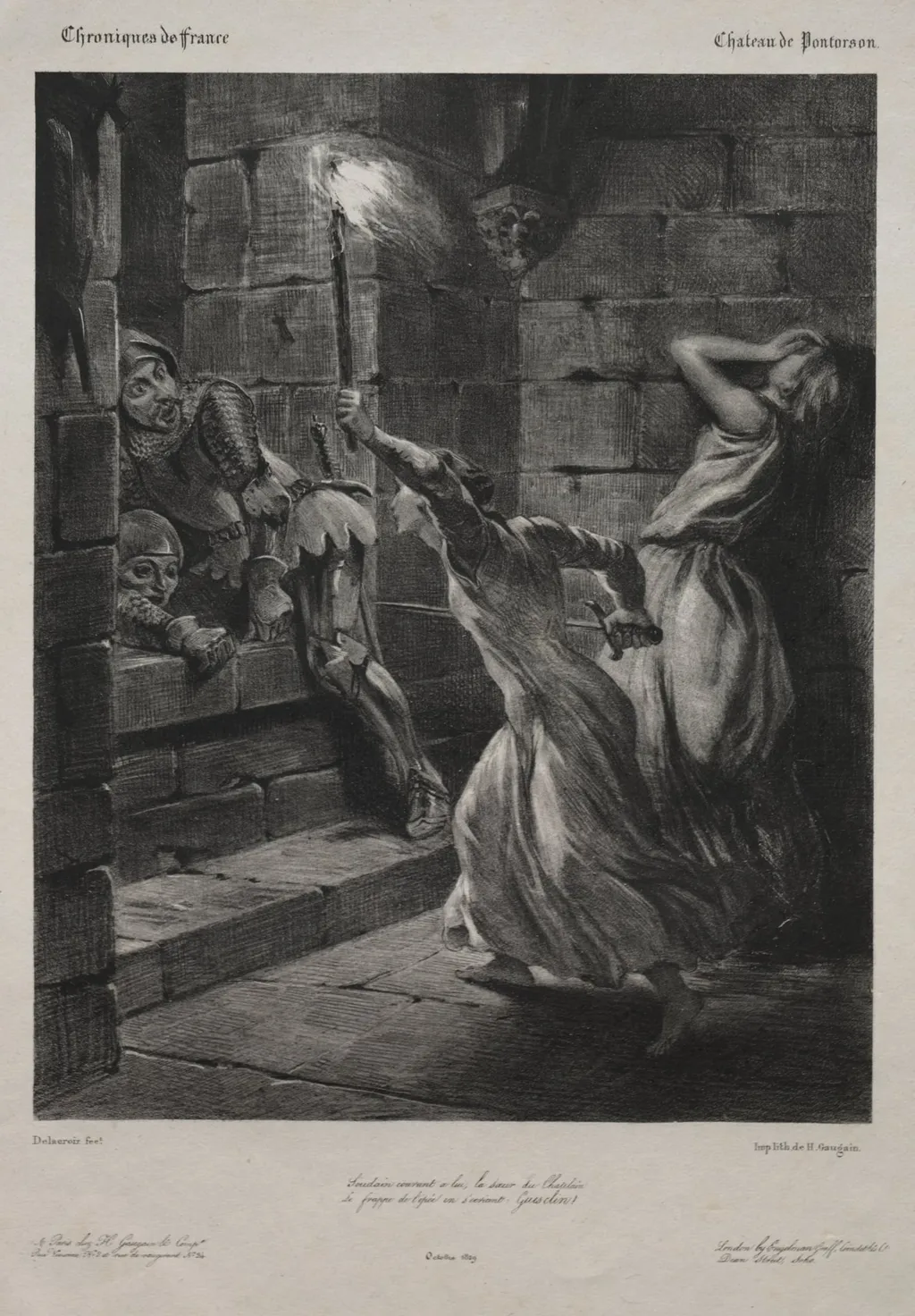
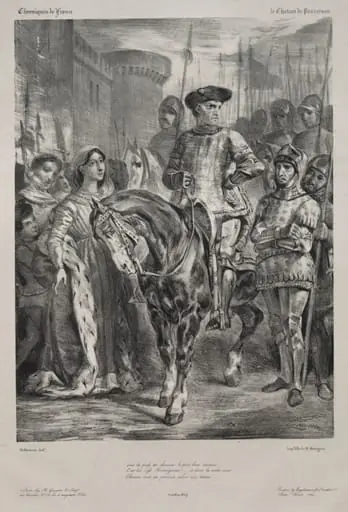
The Sister of Duguesclin is a print by the Romanticist artist Eugène Delacroix. It dates from 1829 and is held in the collection of the Cleveland Museum of Art.
About this work
Overview
Created in 1829, this print by Eugène Delacroix captures a moment of heightened emotion drawn from medieval legend.
Created in 1829, this print by Eugène Delacroix captures a moment of heightened emotion drawn from medieval legend. Though originally a painting, the print form allowed wider dissemination of its dramatic composition. Delacroix, a central figure in French Romanticism, used the subject to explore themes of urgency and moral conflict, aligning with his broader interest in emotional intensity over classical restraint.
Subject & Meaning
The scene depicts the sister of the French knight Bertrand du Guesclin fleeing with a torch, pursued by two armored guards on a bridge. Her desperate motion suggests she is attempting to warn someone or escape capture. The hidden faces of the soldiers amplify mystery and threat, while the torch symbolizes both danger and revelation. The narrative draws from chivalric tales, emphasizing personal sacrifice against institutional authority.
Technique & Style
Delacroix employed bold contrasts of light and shadow to heighten drama, with the torch serving as the sole source of illumination. The swirling folds of the woman’s robe convey motion, while the rigid armor of the men creates a stark visual counterpoint. Brushwork is loose and expressive, prioritizing emotional impact over anatomical precision. The dark, textured background enhances the sense of isolation and impending violence.
History & Provenance
The original painting was completed in 1829 and later reproduced as a print, contributing to its circulation among Romantic-era audiences. It entered the Cleveland Museum of Art’s collection through documented acquisition, where it remains part of their 19th-century European holdings. The print’s survival reflects the period’s interest in reproducing emotionally charged imagery for broader public engagement.
Context
Produced during a period of political unrest in France, the work resonated with contemporary anxieties about power, resistance, and individual agency. Delacroix’s choice of a medieval subject allowed him to address modern tensions indirectly. His stylistic departure from Neoclassicism—favoring color, movement, and psychological depth—aligned with Romanticism’s broader rejection of rigid formalism.
Legacy
Though less known than Delacroix’s larger works, this print exemplifies his ability to distill complex narratives into visually arresting compositions. It influenced later artists exploring emotional intensity through chiaroscuro and dynamic figures. Its presence in a major American museum underscores its role in transmitting Romantic ideals beyond France, shaping international perceptions of 19th-century narrative art.
Artist & collection
Artist
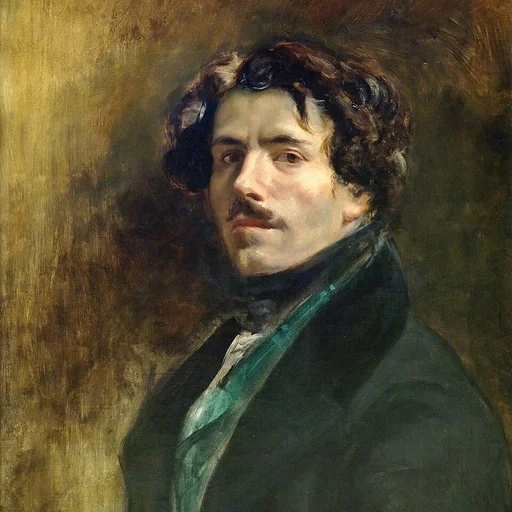
Ferdinand Victor Eugène Delacroix ( DEL-ə-krwah, -KRWAH; French: ; 26 April 1798 – 13 August 1863) was a French Romantic artist who was regarded as the leader of the French Romantic school.

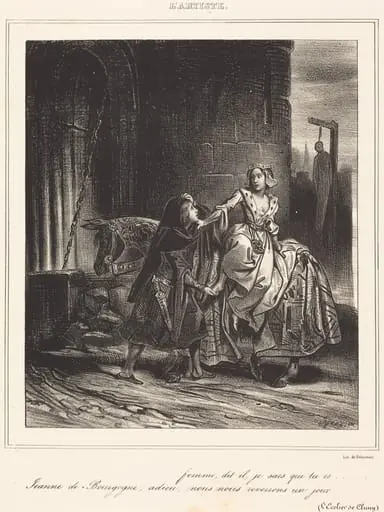 Jeanne de Bourgogne
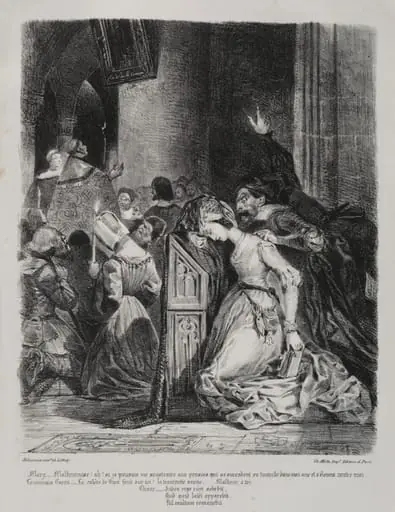 Illustrations for Faust: Marguerite at church
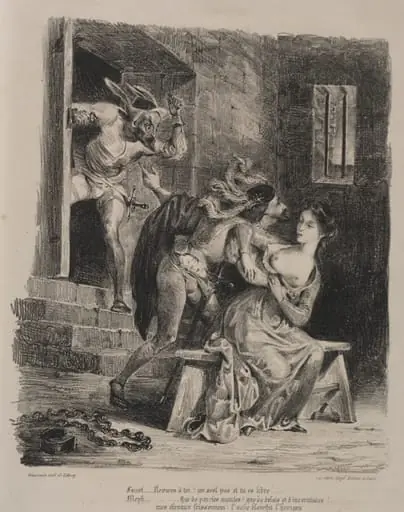 Illustrations for Faust: Faust in the prison of Marguerite
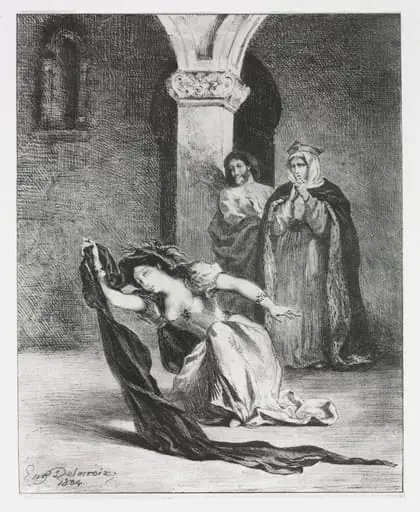 Hamlet: The Chant of Ophelia
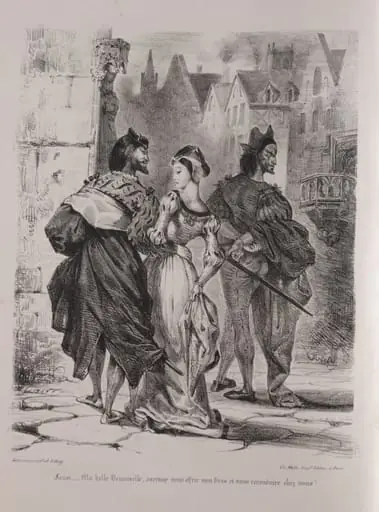 Illustrations for Faust: Faust seeks to allure Marguerite
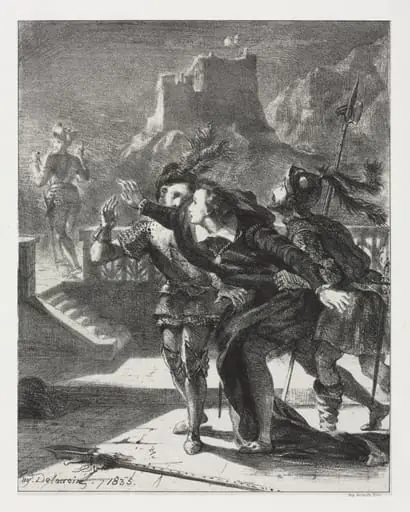 Hamlet: Hamlet Rushes to Follow the Ghost of His Father
 Martyrdom of St. Agatha
 ...alors, il s'approcha d'elle: Parody of van Dyck's Betrayal of Christ
 H Beard Print Collection
 Hamlet: The Death of Hamlet
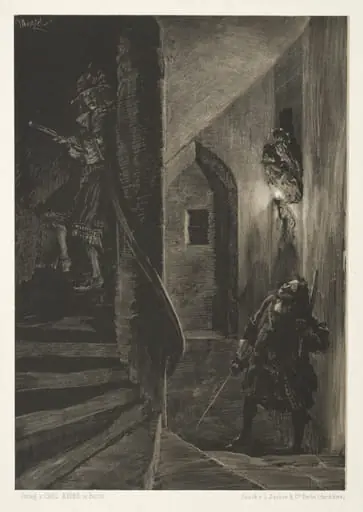 Essay on Stone with Brush and Scraper: Chase on the Winding Staircase
 Duguesclin