Artwork
Nativity
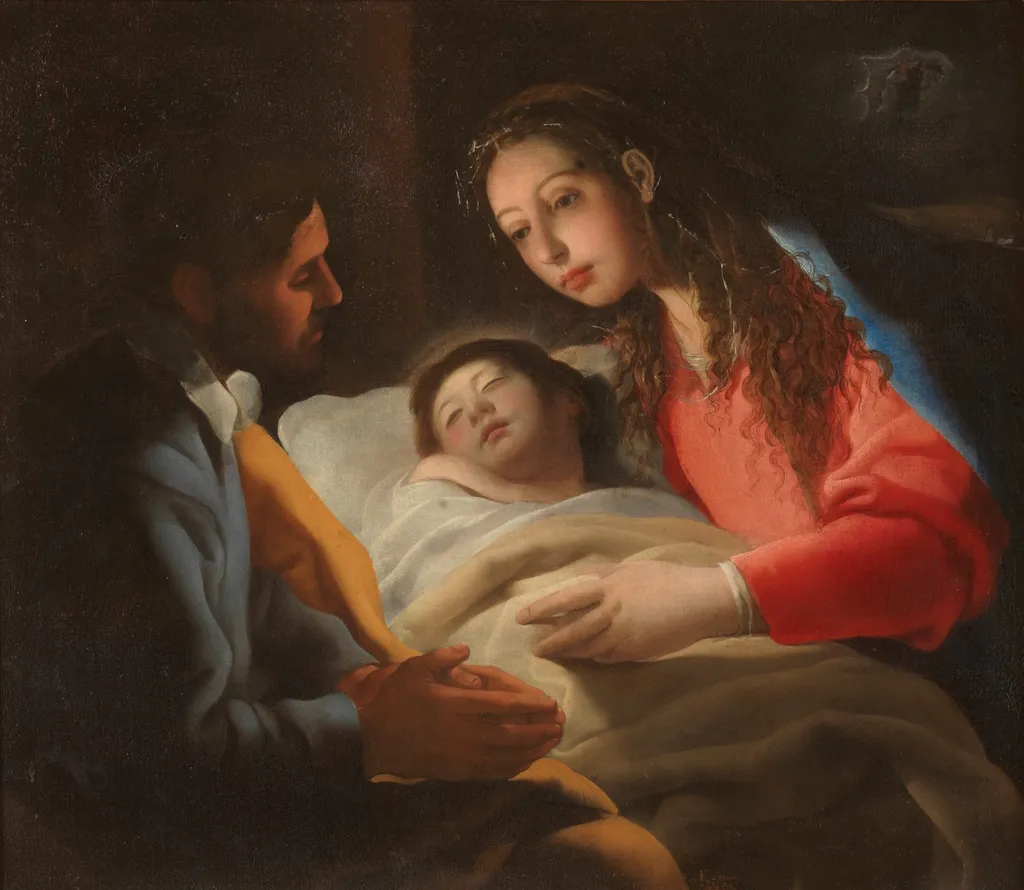
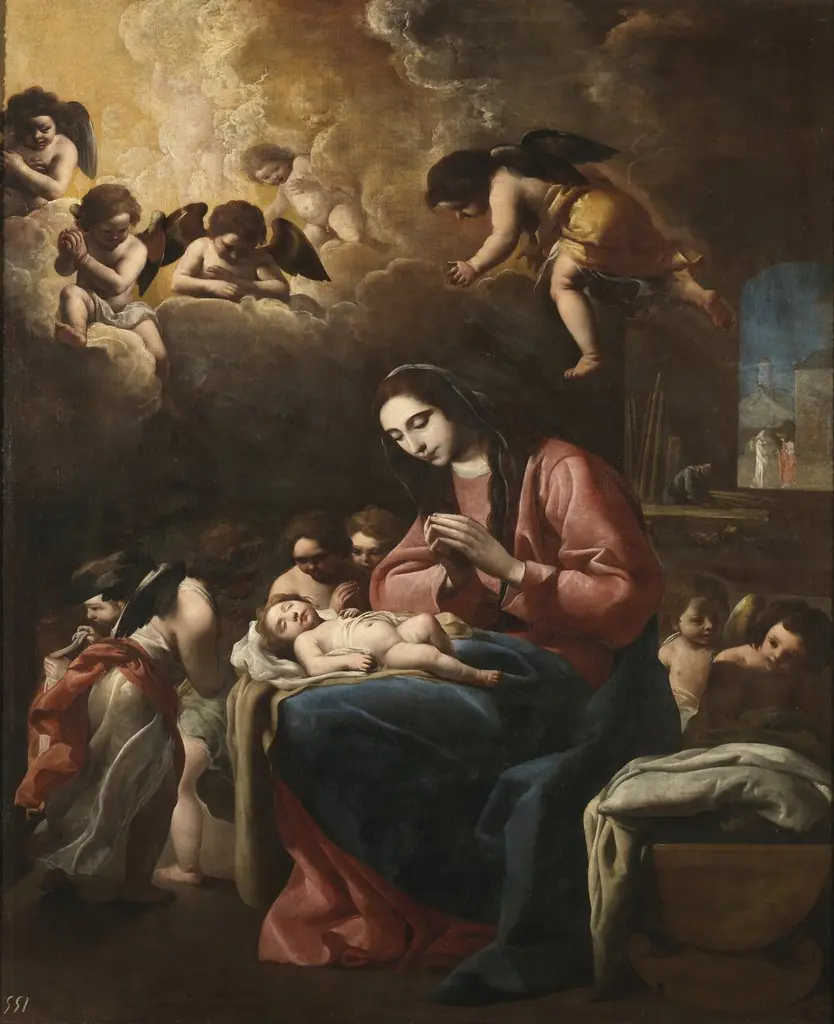
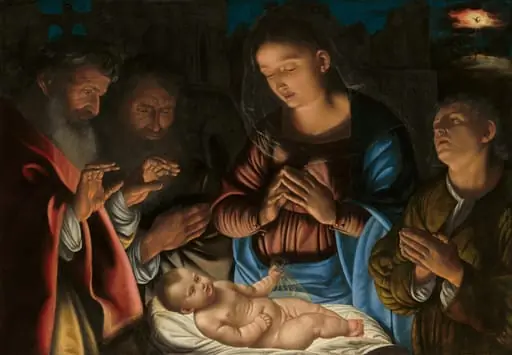
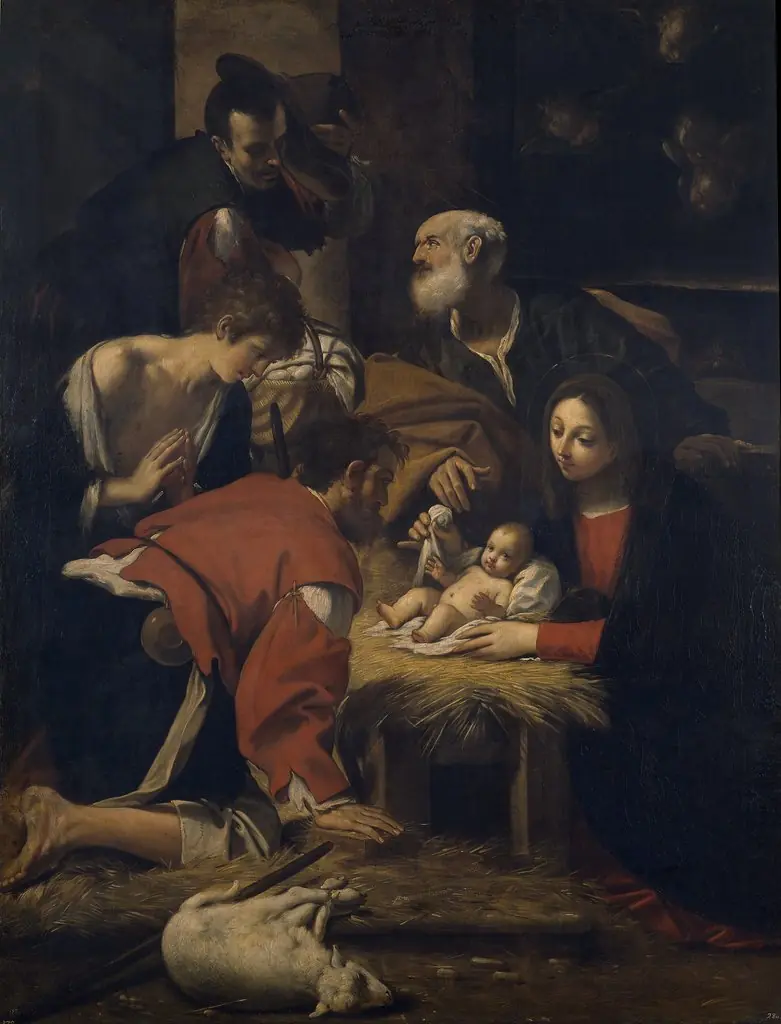
Nativity is an oil painting by the Early Baroque Italian artist Eugenio Caxés. It dates from 1610 and is held in the collection of the Museo del Prado.
About this work
Overview
The work resides in the collection of the Museo del Prado, where it is displayed as part of the early‑17th‑century Spanish religious repertoire.
Eugenio Caxés’ Nativity, executed in oil around 1610, presents a nocturnal scene centered on the infant Jesus. The composition is confined to three figures illuminated by a subdued light source, set against a predominantly dark backdrop that hints at a faint blue horizon. The work resides in the collection of the Museo del Prado, where it is displayed as part of the early‑17th‑century Spanish religious repertoire.
Subject & Meaning
The painting captures the intimate moment of the newborn Christ being cradled by a woman in a red garment, identified as the Virgin Mary, while a man in a dark robe, likely Saint Joseph, watches protectively. The tender handling of the child, whose pallid skin resembles marble, underscores themes of divine purity and maternal devotion within the Christian narrative of the Nativity.
Technique & Style
Caxés employs a pronounced chiaroscuro effect, allowing the illuminated faces of the mother and child to emerge from surrounding shadows. The contrast between the warm reds and the cool, almost blue, background creates a dramatic spatial depth. The smooth rendering of flesh and the subtle gradations of light demonstrate the artist’s command of oil paint to model volume and convey a contemplative atmosphere.
History & Provenance
Created in the early Baroque period, Nativity entered the Spanish royal collection before being transferred to the Museo del Prado in the 19th century. Documentation traces its ownership through the Habsburg and Bourbon courts, reflecting the painting’s status as a devotional object commissioned for private worship or a chapel setting.
Context
The work aligns with the Counter‑Reformation emphasis on emotionally resonant religious imagery, intended to inspire piety through intimate, accessible scenes. Caxés, active in Madrid, absorbed influences from Italian tenebrism while adapting them to Spanish tastes, contributing to a broader movement that favored stark lighting and focused narrative clarity in sacred art.
Own this work as a print
Artist & collection