Artwork
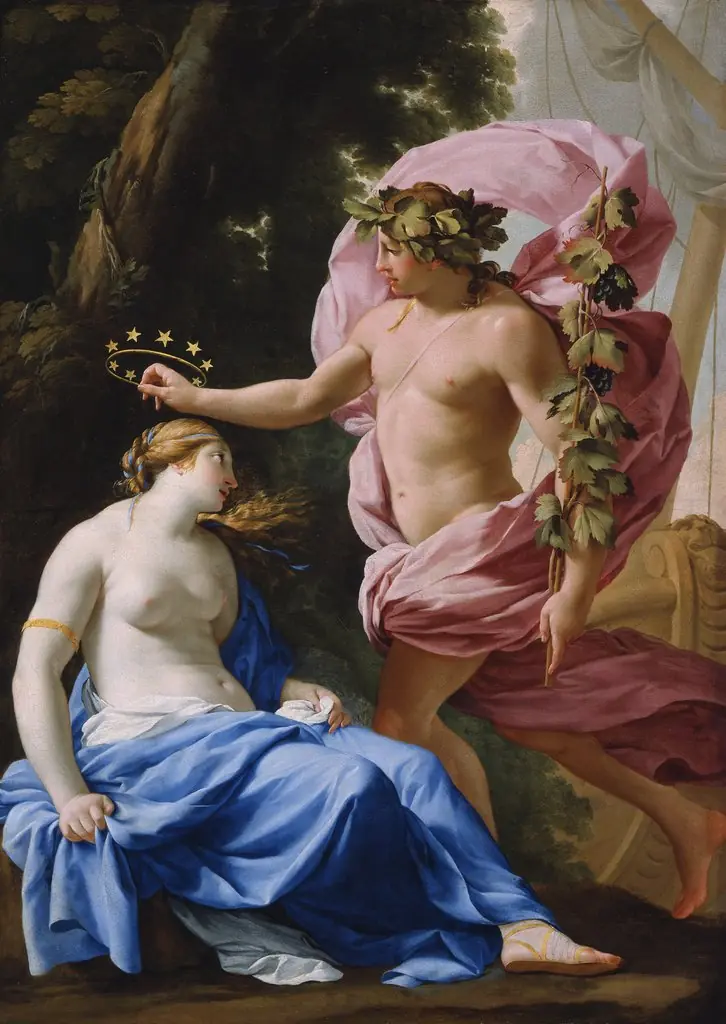
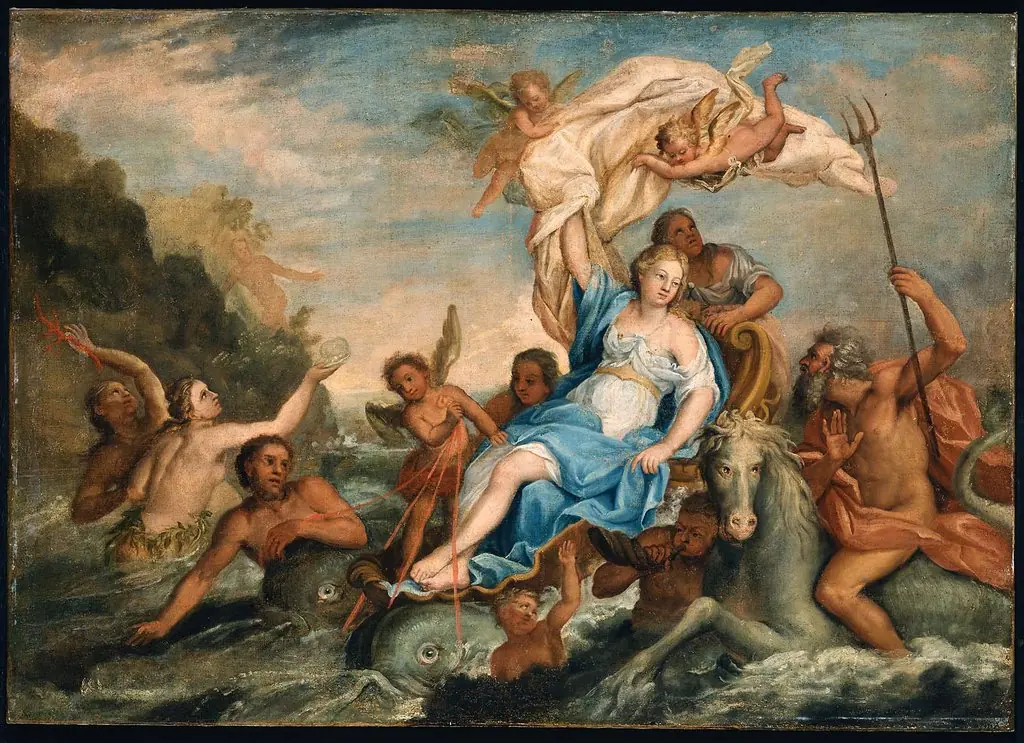
Marine Gods Paying Homage to Love
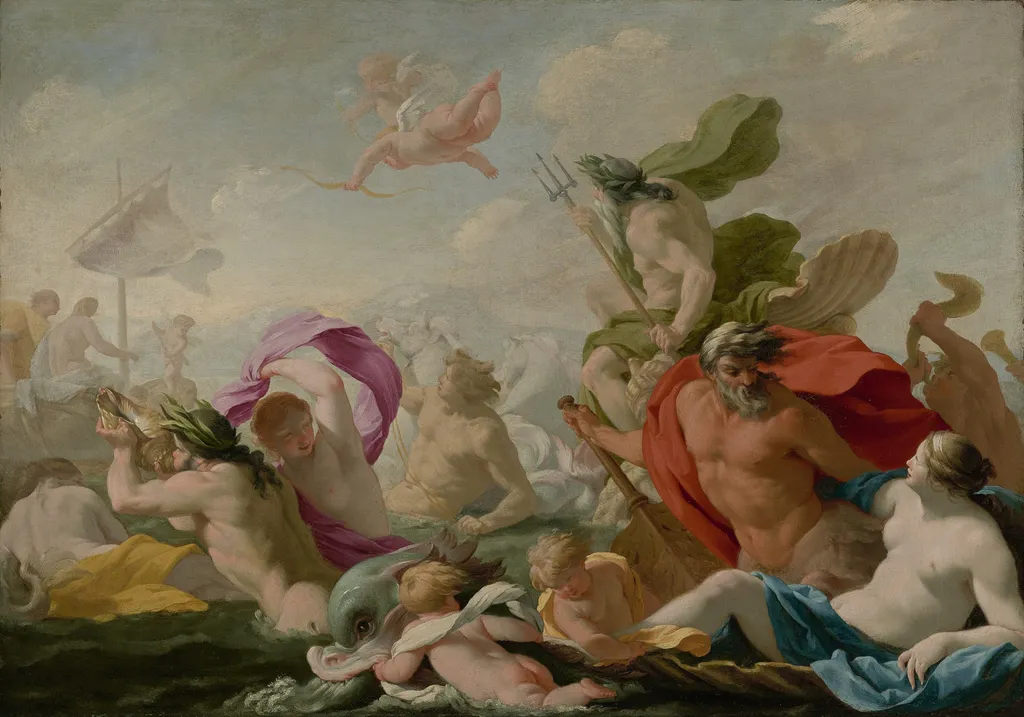
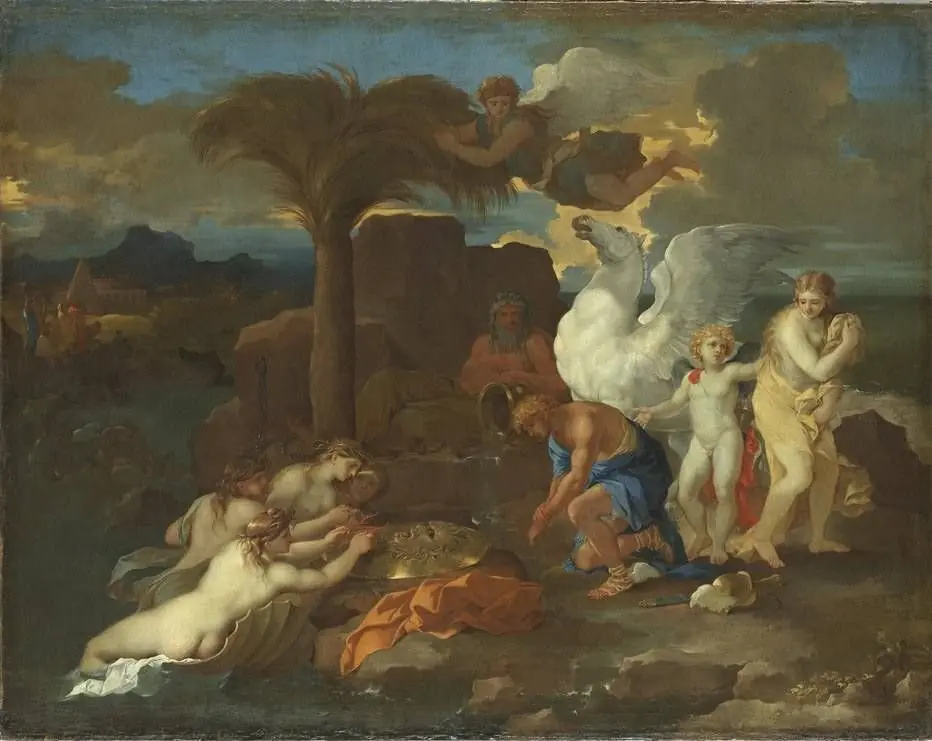
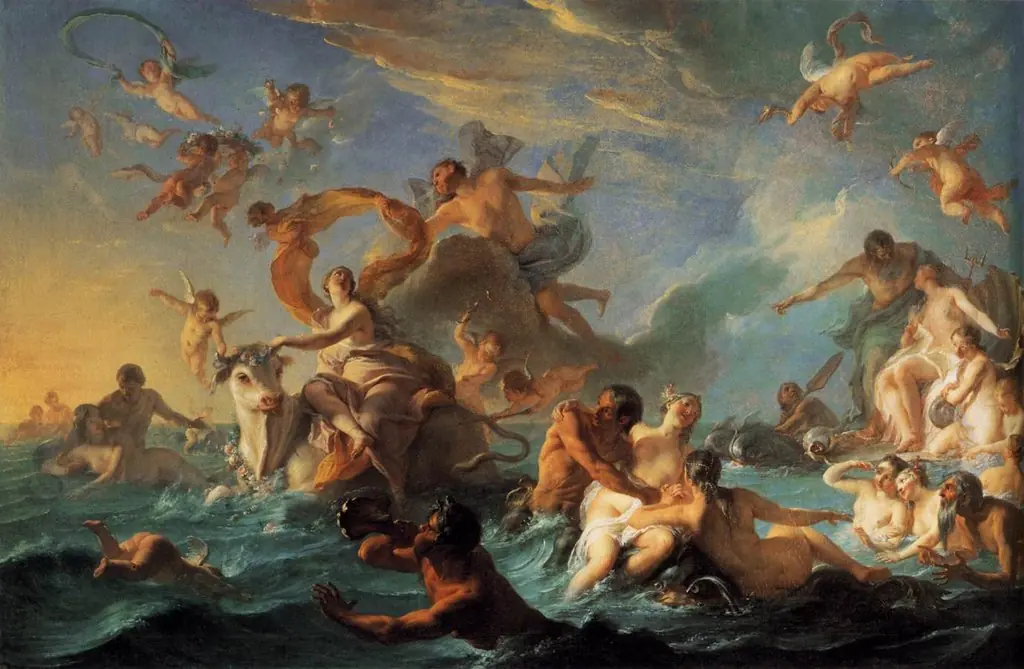
Marine Gods Paying Homage to Love is an oil painting by the French Classical Baroque artist Eustache Le Sueur. It dates from 1636 and is held in the collection of the J. Paul Getty Museum.
About this work
Overview
Set against a watery horizon and drifting clouds, the scene unfolds with a group of figures—some human, others fantastical—engaged in ritualistic homage.
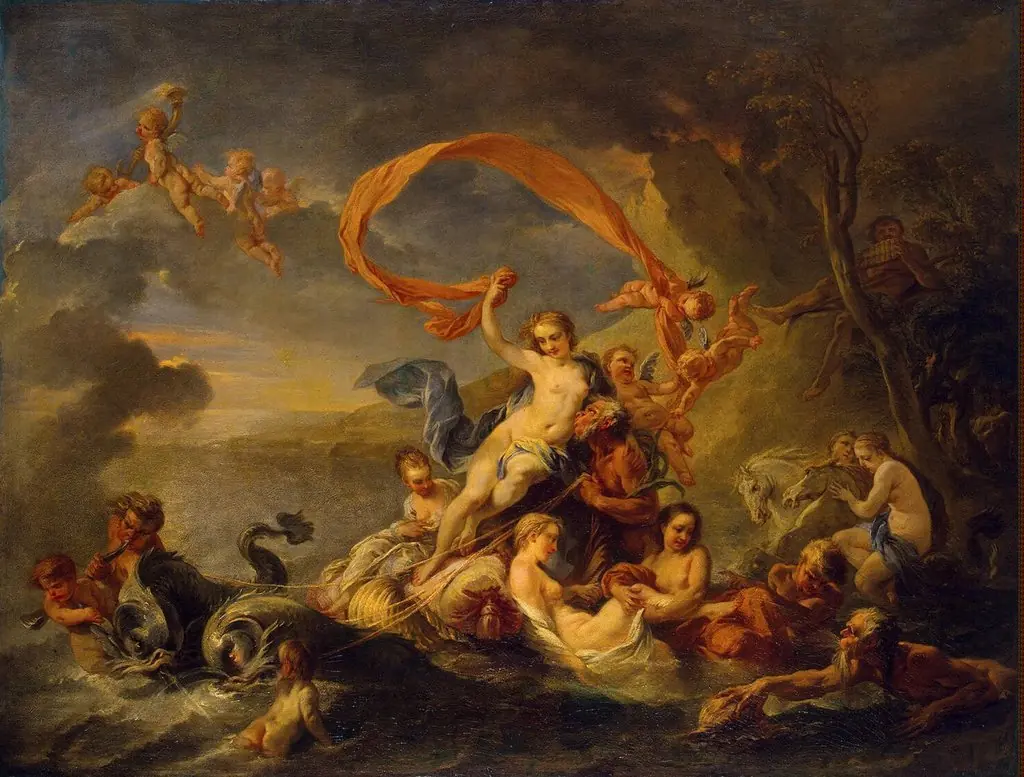
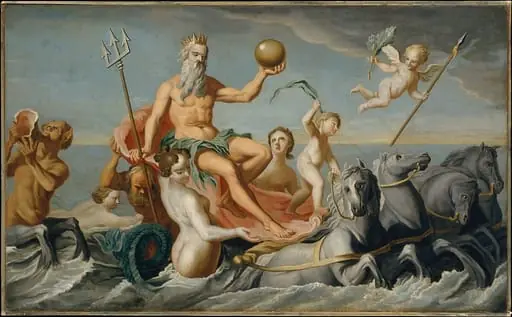
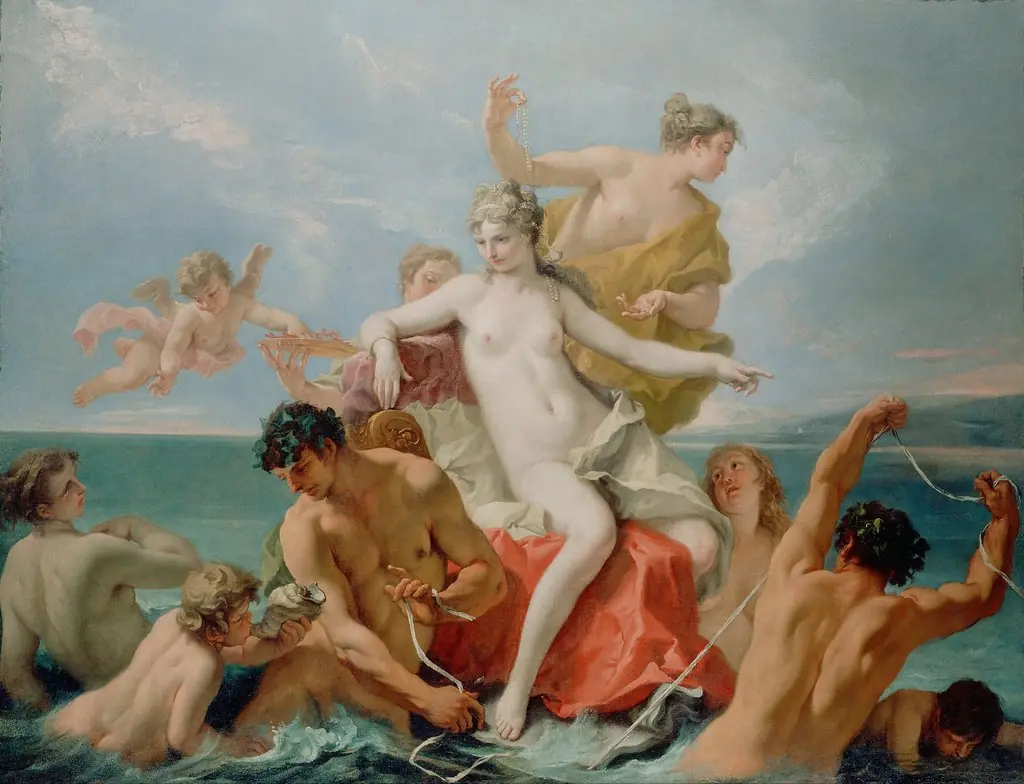
Painted in 1636 by Eustache Le Sueur, this oil-on-canvas work presents a mythological gathering centered on a bearded male figure holding a trident. Set against a watery horizon and drifting clouds, the scene unfolds with a group of figures—some human, others fantastical—engaged in ritualistic homage. The composition balances movement and stillness, drawing attention to the central figure through color and gesture.
Subject & Meaning
The central figure, likely Neptune or a sea deity, is surrounded by attendants offering symbols of the ocean—shells, fish, and musical instruments. The presence of children and women suggests a ceremonial procession, possibly honoring love as a unifying force within the marine realm. The scene reflects 17th-century interpretations of classical mythology, where divine figures embody natural and emotional forces.
Technique & Style
Le Sueur employs chiaroscuro to model forms with subtle gradations of light and shadow, enhancing the three-dimensionality of the figures. Vibrant red in the central figure’s cloak contrasts with cooler tones of water and sky, directing the viewer’s focus. Brushwork is refined yet fluid, capturing texture in fabric, skin, and aquatic elements without overt theatricality.
History & Provenance
Created during Le Sueur’s early career in Paris, the painting was likely commissioned for a private collector interested in mythological themes. It entered the J. Paul Getty Museum’s collection in the late 20th century, having passed through several European private holdings. Its survival in good condition reflects careful stewardship over centuries.
Context
Painted during the height of French classicism, the work aligns with contemporary interests in reimagining antiquity through refined, human-centered narratives. Le Sueur, influenced by Raphael and the Carracci, avoided the grandeur of Baroque spectacle in favor of intimate, lyrical compositions. This piece reflects a quieter, more poetic strand of mythological painting in mid-17th-century France.
Legacy
Though less widely known than Le Sueur’s religious works, this painting exemplifies his skill in blending classical subject matter with naturalistic detail. It remains a key example of how French artists adapted mythological themes to suit domestic and intellectual tastes, bridging Italian influences with emerging French sensibilities.
Own this work as a print
Artist & collection

Artist
Eustache Le Sueur or Lesueur was a French artist and one of the founders of the French Academy of Painting.