Artwork
Plate 37 from Schon News Modelbuch
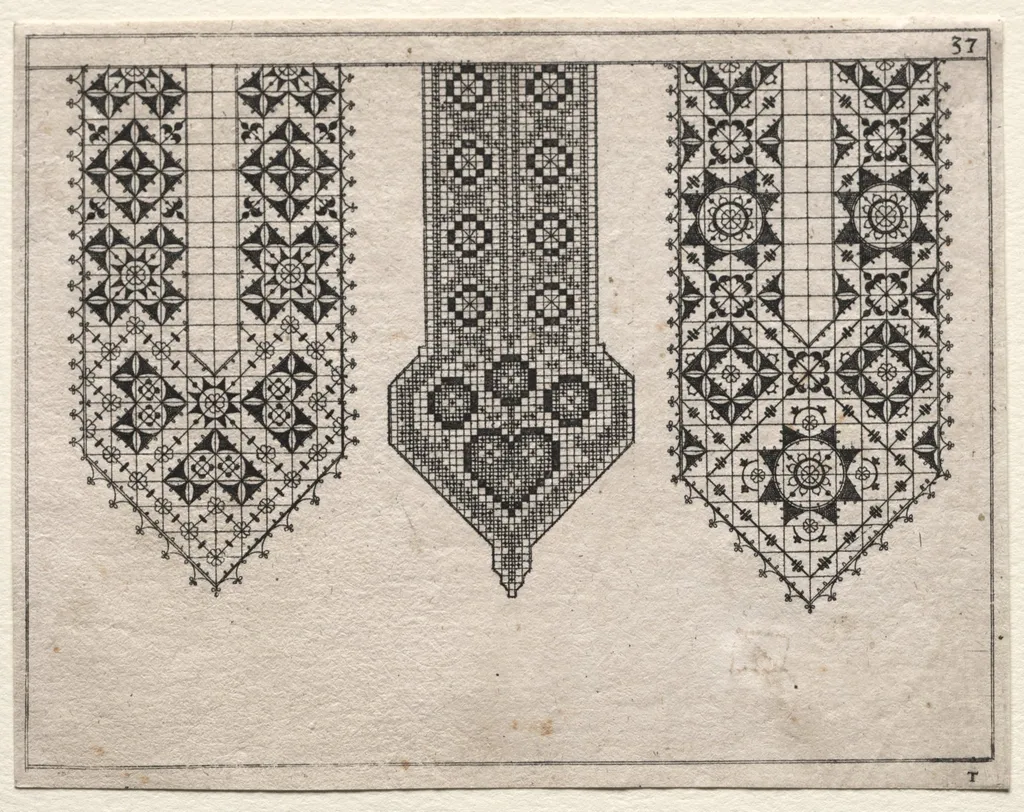
Plate 37 from Schon News Modelbuch is a print by the Renaissance artist Hans Sibmacher. It dates from 1597 and is held in the collection of the Cleveland Museum of Art.
About this work
Overview
Created in 1597 by Hans Sibmacher, Plate 37 is one of many engraved designs from the News Modelbuch, a collection of ornamental patterns used by artisans. It resides in The Cleveland Museum of Art as part of a larger archive of Renaissance decorative motifs. The plate presents a precise, grid-based composition, suggesting its function as a reference for textile or metalwork embellishment.
Subject & Meaning
These borders are composed of repeating geometric units—squares, diamonds, and stars—arranged with mathematical regularity.
The central heart shape, rendered in a checkerboard fill, serves as a focal point amid two vertical lace-like borders. These borders are composed of repeating geometric units—squares, diamonds, and stars—arranged with mathematical regularity. The heart may symbolize affection or devotion, but its primary role is structural: anchoring the symmetry while introducing subtle visual disruption through its contrasting pattern.
Technique & Style
Executed in black ink on a light ground, the plate employs fine, clean lines typical of Renaissance engraving. The high contrast and tight spacing of shapes create an illusion of depth and texture, mimicking woven or embroidered surfaces. Each element is meticulously aligned, reflecting the precision valued in craft manuals of the period, where clarity and reproducibility were essential.
History & Provenance
The plate originates from Sibmacher’s News Modelbuch, a printed pattern book intended for use by embroiderers, goldsmiths, and other craftsmen in late 16th-century Germany. Such books circulated widely among artisans, serving as standardized references. This specific plate was acquired by The Cleveland Museum of Art as part of a broader collection of early modern design sources.
Context
In the late Renaissance, pattern books like the News Modelbuch bridged the gap between artistic design and practical craft. They reflected growing demand for standardized ornamentation in domestic and ecclesiastical objects. Sibmacher’s work aligns with a broader European trend of systematizing decorative motifs, making intricate designs accessible beyond elite workshops.
Legacy
Plate 37 exemplifies how Renaissance artisans codified visual language for mass reproduction. Its geometric rigor influenced later decorative arts and remains a resource for historians studying the transmission of craft knowledge. Though not widely exhibited, it endures as a quiet testament to the precision and discipline of pre-industrial design practice.
Artist & collection

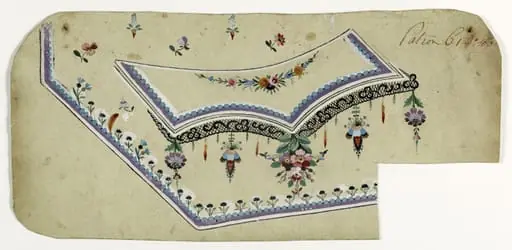 Gilet à la dentelle noire, projets de broderies de gilet, XVIIIème siècle
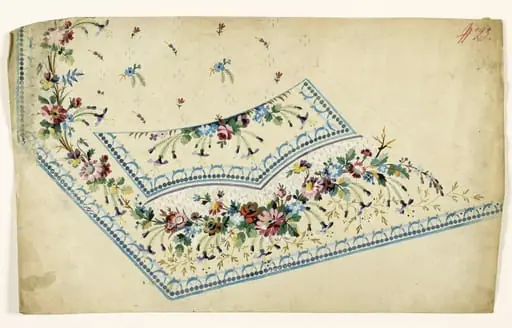 Composition de fleurs en guirlandes et en semis et frises de perles bleues, projets de broderies de gilet, XVIIIème siècle
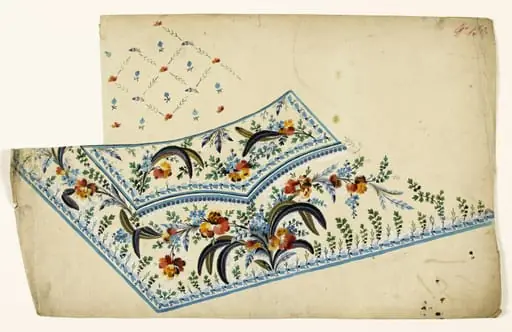 Composition de fleurs et de plumes en bouquets, frises de perles et de fleurs bleues, croisillons de plumes et de fleurs à semis de fleurs, projets de broderies de gilet, XVIIIème siècle
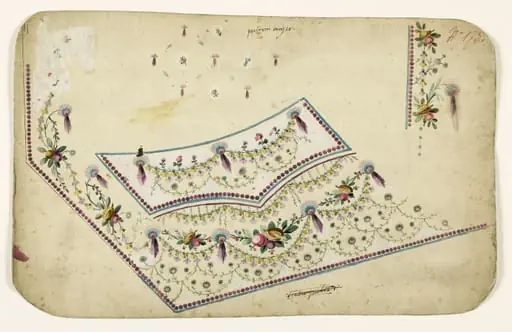 Composirion avec guirlandes de fleurs et de fruits exotiques, frises de perles violettes, projets de broderies de gilet, XVIIIème siècle
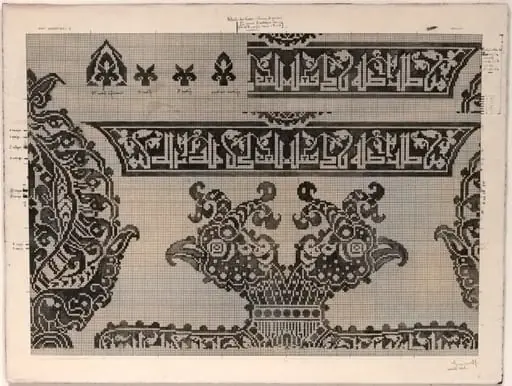 Schematic Drawing of Buyid Silk (1953.434)
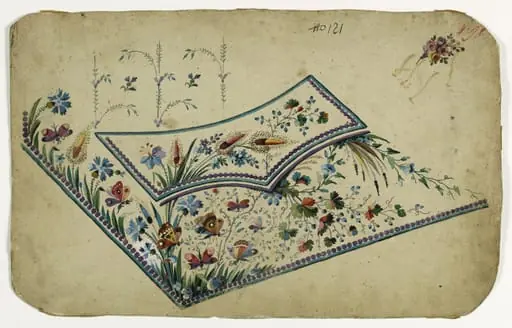 Gilet aux papillons multicolores, projets de broderies de gilet, XVIIIème siècle
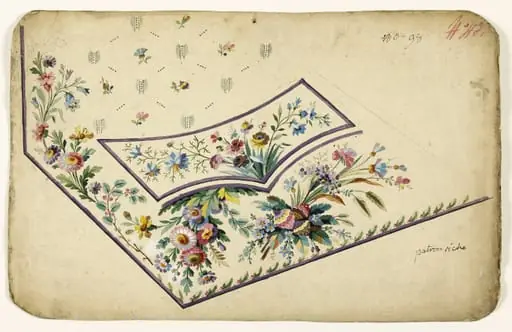 Composition de fleurs sauvages et fantaisistes en bouquets multicolores, projets de broderies de gilet, XVIIIème siècle
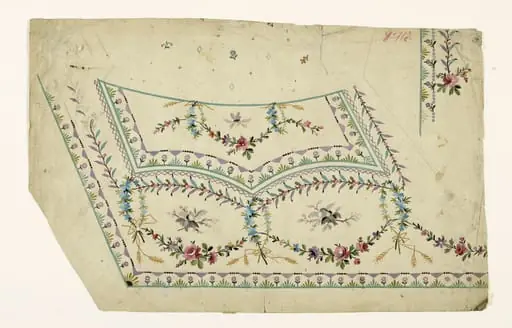 Scènes de becquées d'oiseaux dans des cartouches de fleurs et d'épis, frises de croisillons, de motifs géométriques et de fleurs stylisées, projets de broderies de gilet, XVIIIème siècle
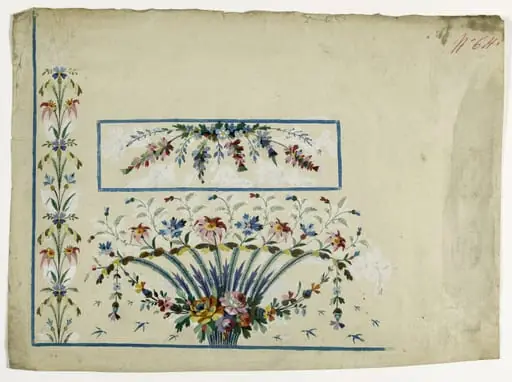 Gilet décor bouquet oeillets et églantines, projets de broderies de gilet, XVIIIème siècle
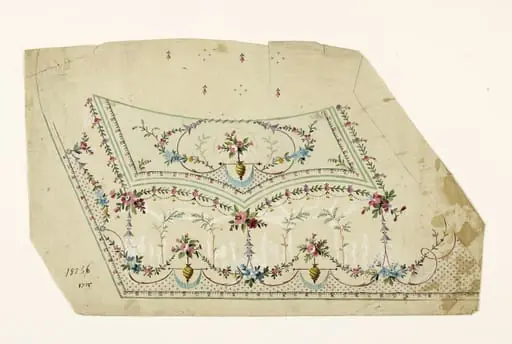 Composition de guirlandes de fleurs, de clochettes et de perles, motifs de culots torsadés et suspendus, projets de broderies de gilet, XVIIIème siècle
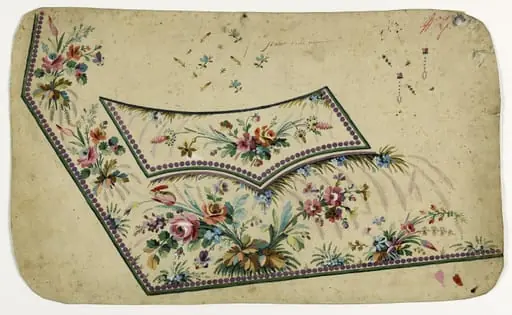 Gilet fleurs et perles mauves, projets de broderies de gilet, XVIIIème siècle
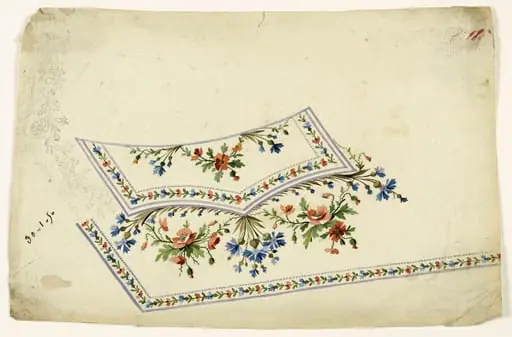 Composition florale de coquelicots et fleurs sauvages bleues, guirlandes de fleurs et frises de perles mauves, projets de broderies de gilet, XVIIIème siècle