Artwork
Christ Carried to the Tomb
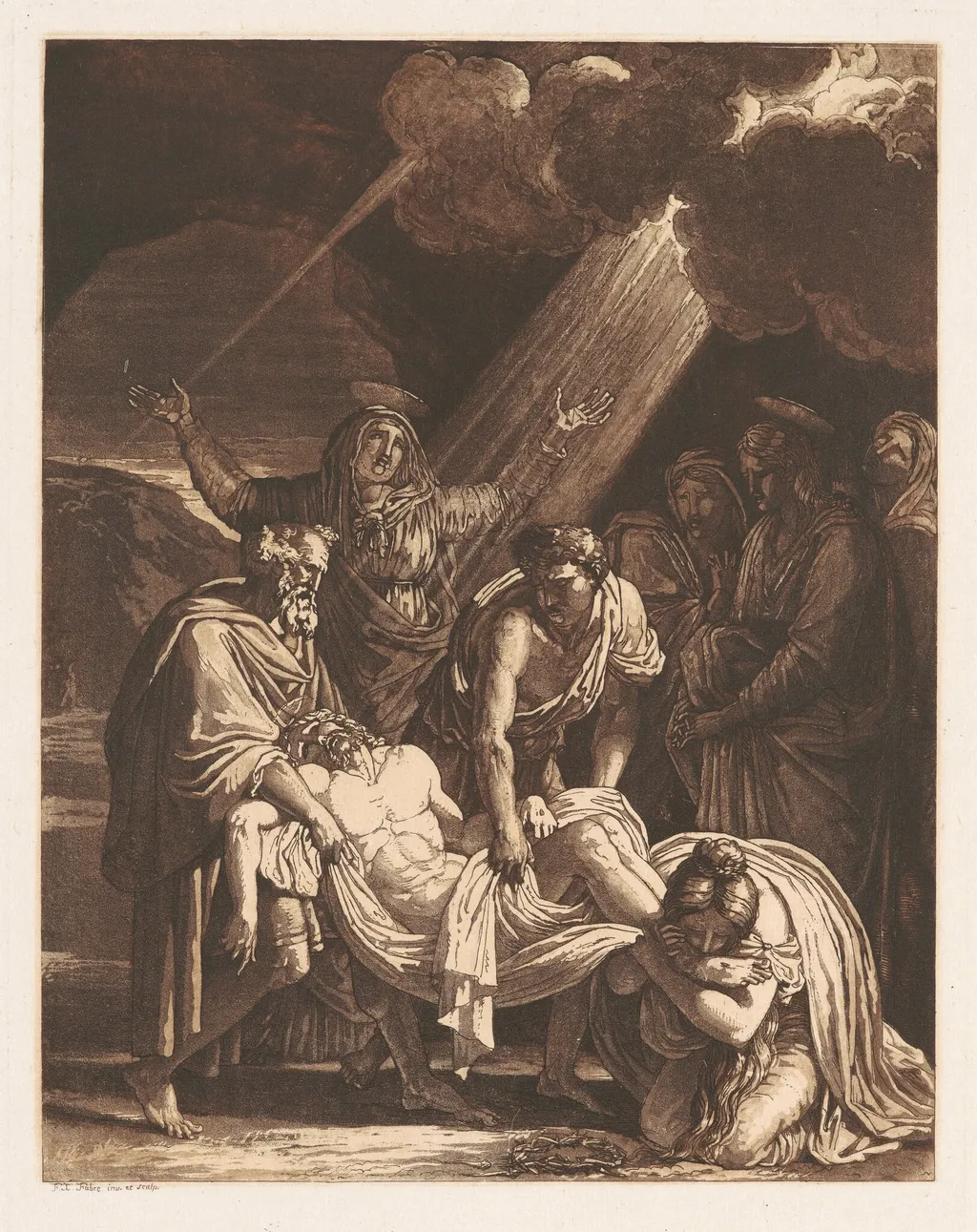
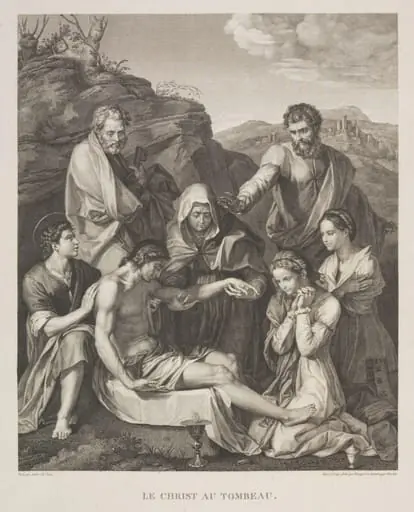
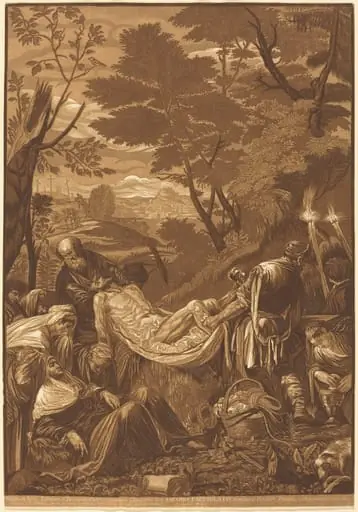
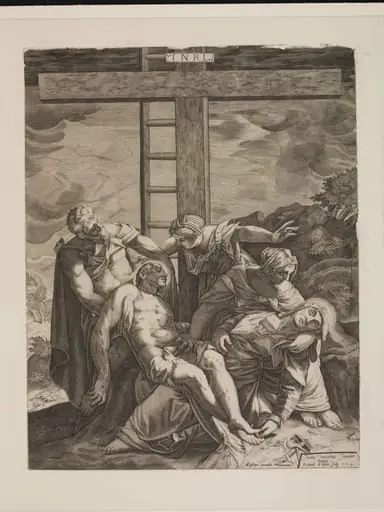
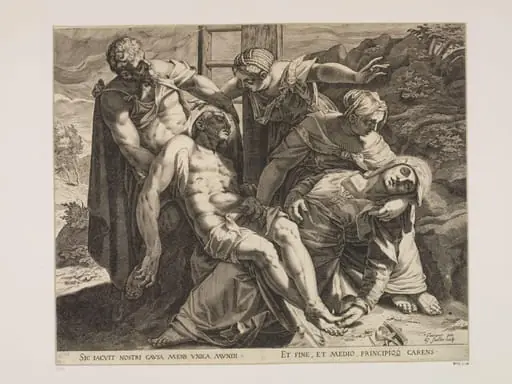
Christ Carried to the Tomb is an ink print by the Romanticist artist François-Xavier Fabre. It dates from 1810 and is held in the collection of the National Gallery of Art.
About this work
Overview
Created in 1810, *Christ Carried to the Tomb* is a print by François-Xavier Fabre, executed in etching and aquatint on wove paper.
Created in 1810, *Christ Carried to the Tomb* is a print by François-Xavier Fabre, executed in etching and aquatint on wove paper. The work belongs to the religious tradition in printmaking and reflects Fabre’s academic background, though it was produced during his extended residence in Florence. Its muted brown ink and tonal subtlety distinguish it from his earlier oil paintings, signaling a shift toward intimate, contemplative expression in his graphic work.
Subject & Meaning
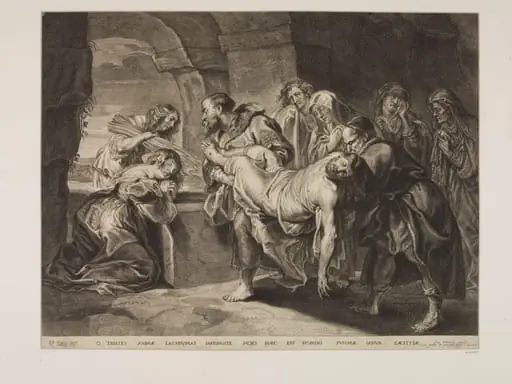
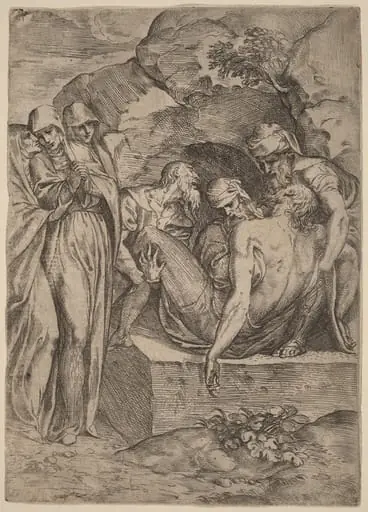
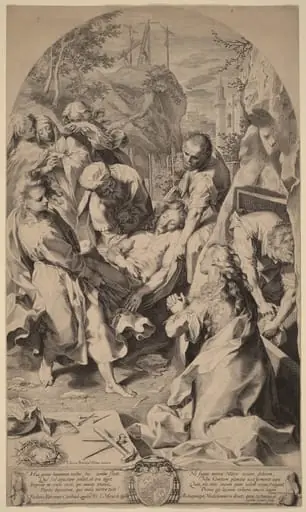
The scene depicts Christ’s body being borne to burial by a small group of mourners, rendered with restrained emotion. No dramatic gestures or overt sorrow dominate; instead, the focus lies in quiet dignity and collective grief. The composition avoids theatricality, aligning with a devotional tradition that values stillness and reverence over spectacle, inviting quiet reflection rather than emotional display.
Technique & Style
Fabre combined etching for precise line work with aquatint to achieve soft gradations of tone, creating a hazy, atmospheric effect. The brown ink enhances the somber mood, while the wove paper’s smooth surface allows delicate transitions between light and shadow. This technical approach, influenced by 18th-century French printmaking, prioritizes tonal harmony over bold contrast, reflecting a refined, almost meditative aesthetic.
History & Provenance
Fabre, a Prix de Rome winner in 1787, settled in Florence after his studies in Paris and became a respected figure in the city’s artistic circles. He produced this print during his decades-long stay in Italy, away from the French academic mainstream. Though documented in his oeuvre, the print’s early ownership remains unclear, suggesting it was likely circulated among collectors and artists rather than commissioned for public display.
Context
In early 19th-century Italy, religious imagery remained a significant subject for artists, even amid secularizing trends in France. Fabre’s work reflects a quiet continuity with Baroque devotional traditions, filtered through Neoclassical discipline. His time in Florence exposed him to Renaissance precedents, which may have influenced the composition’s balance and restraint, distinguishing it from more emotionally charged contemporary treatments of the same subject.
Legacy
Though not widely reproduced or exhibited in major collections, *Christ Carried to the Tomb* stands as a representative example of Fabre’s graphic output during his Italian years. It illustrates how academic training adapted to personal and geographic shifts, offering a subtle alternative to the grand historical narratives favored in Paris. The print remains a quiet testament to the endurance of religious themes in private, intimate art forms.
Artist & collection
Artist
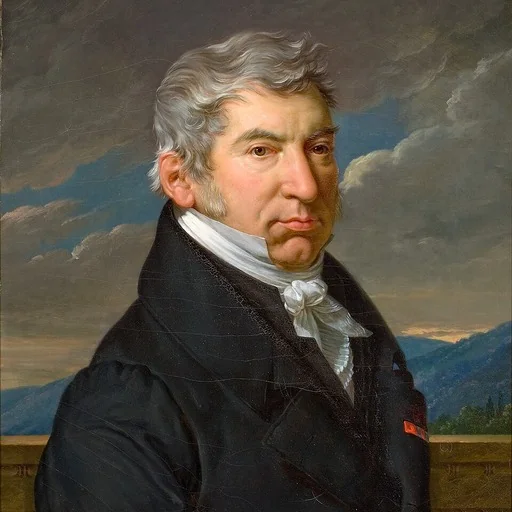
François-Xavier Fabre (French pronunciation: ; 1 April 1766 – 16 March 1837) was a French painter of historical subjects.

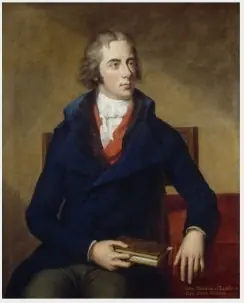 Portrait of John Henry, 2nd Marquis of Lansdowne
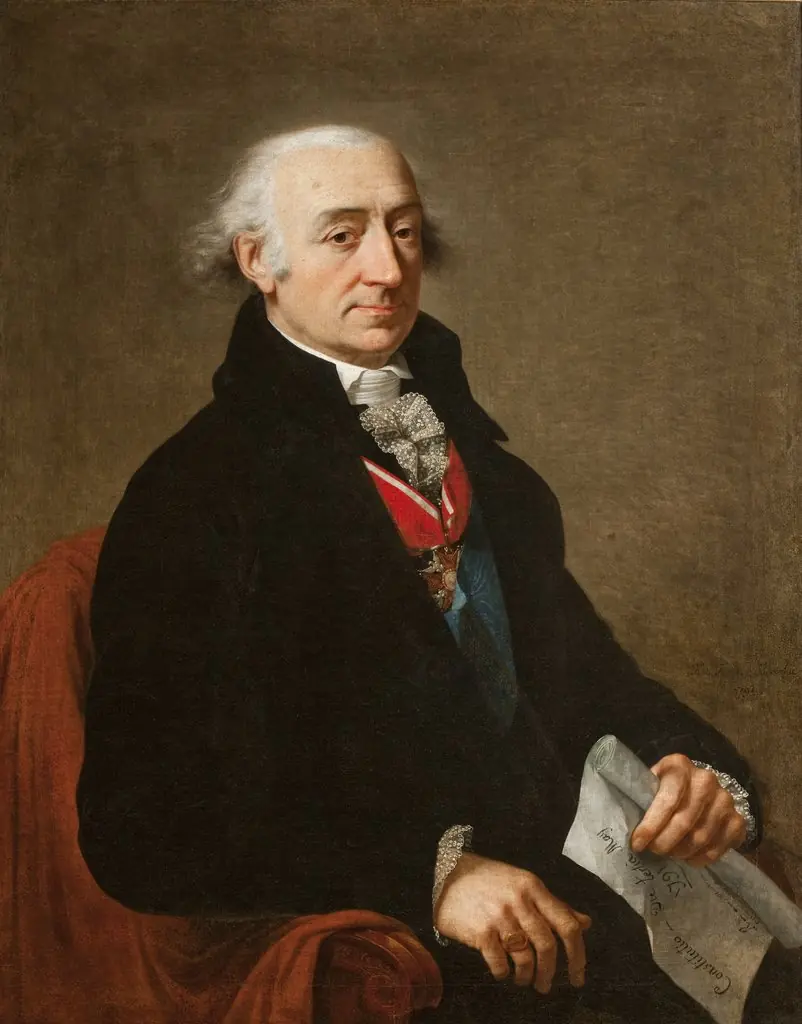 Portrait of Stanisław Małachowski (1736–1809)
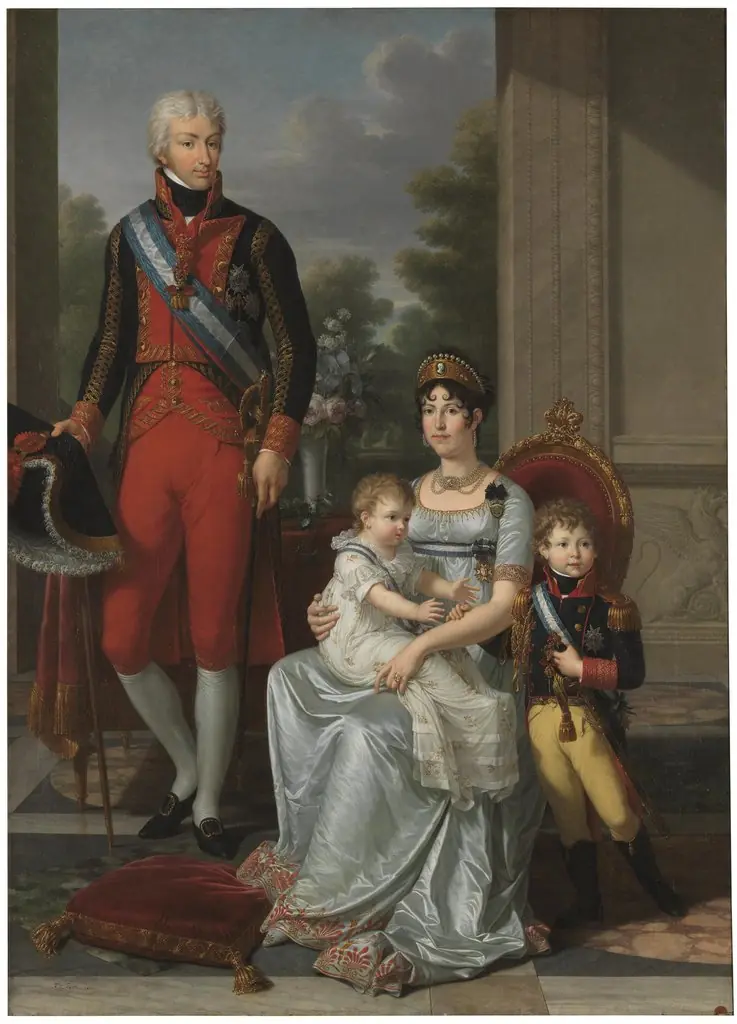 The Etrurian Royal Family
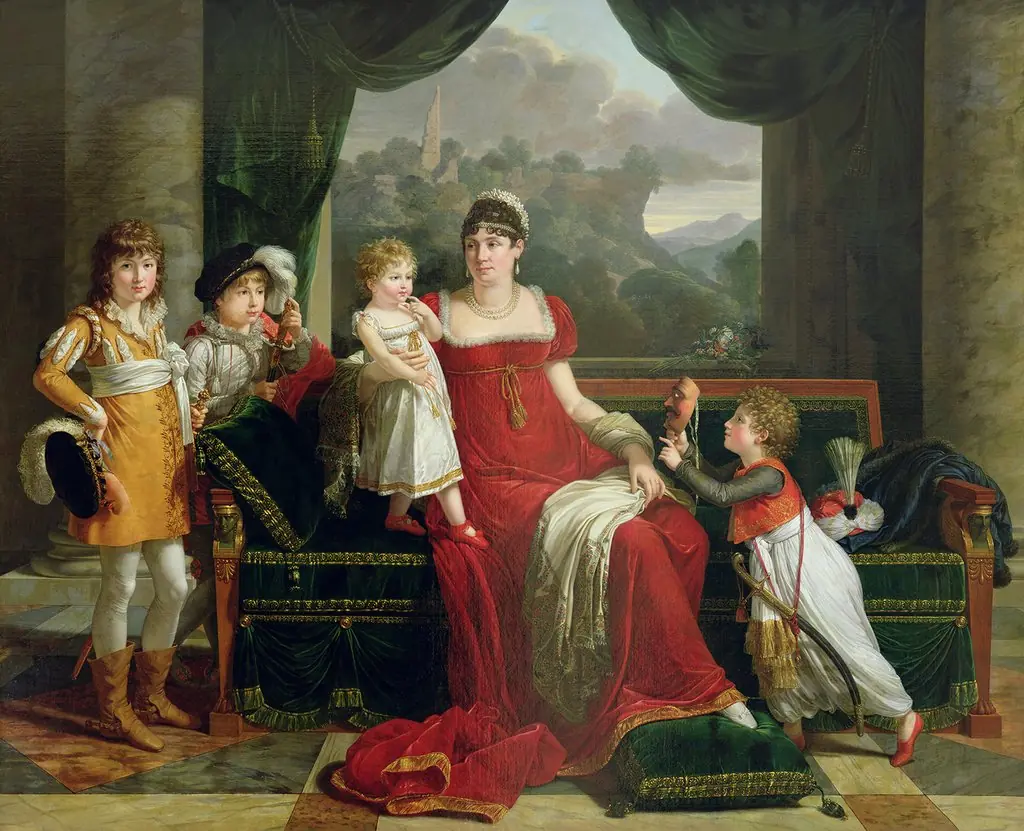 Portrait de la générale Clarke avec ses quatre enfants
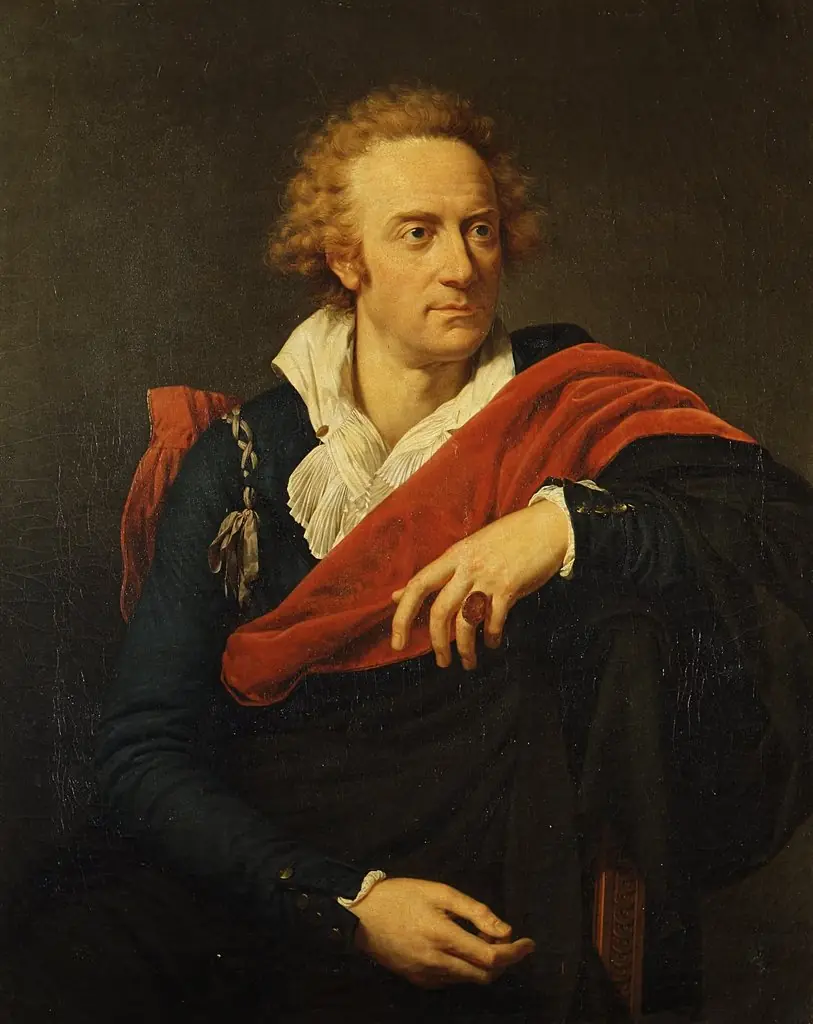 Portrait of Vittorio Alfieri
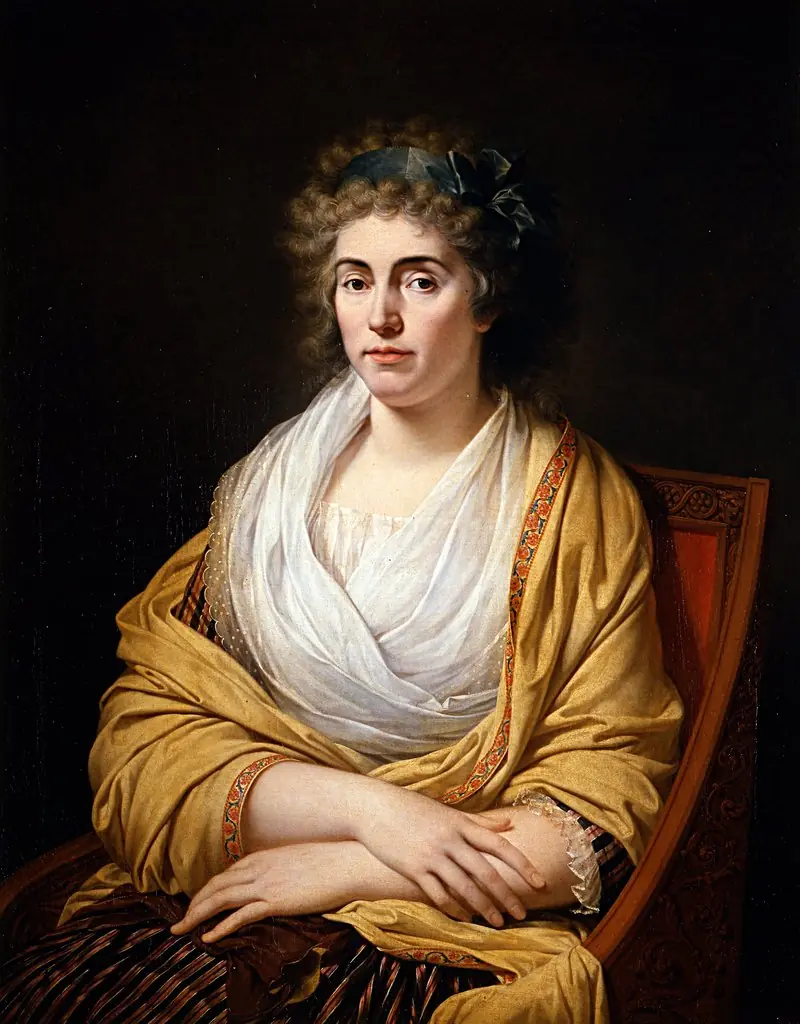 Portrait of Louise, wife of Bonnie Prince Charlie
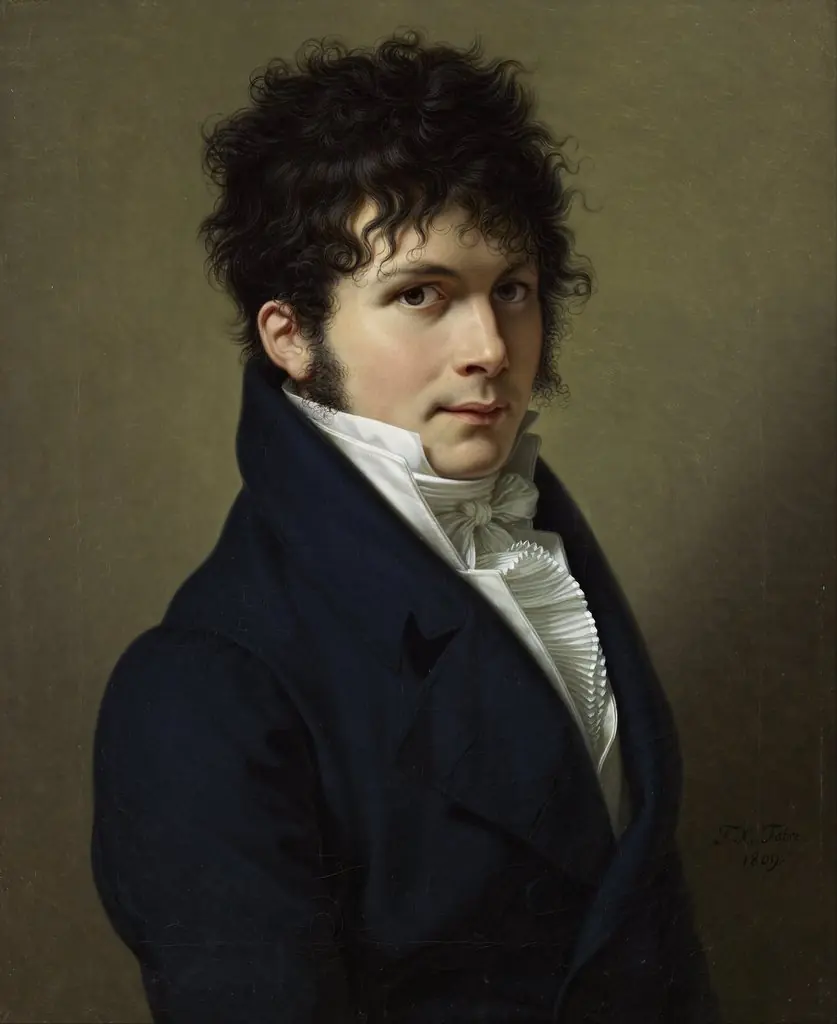 Portrait of a Man
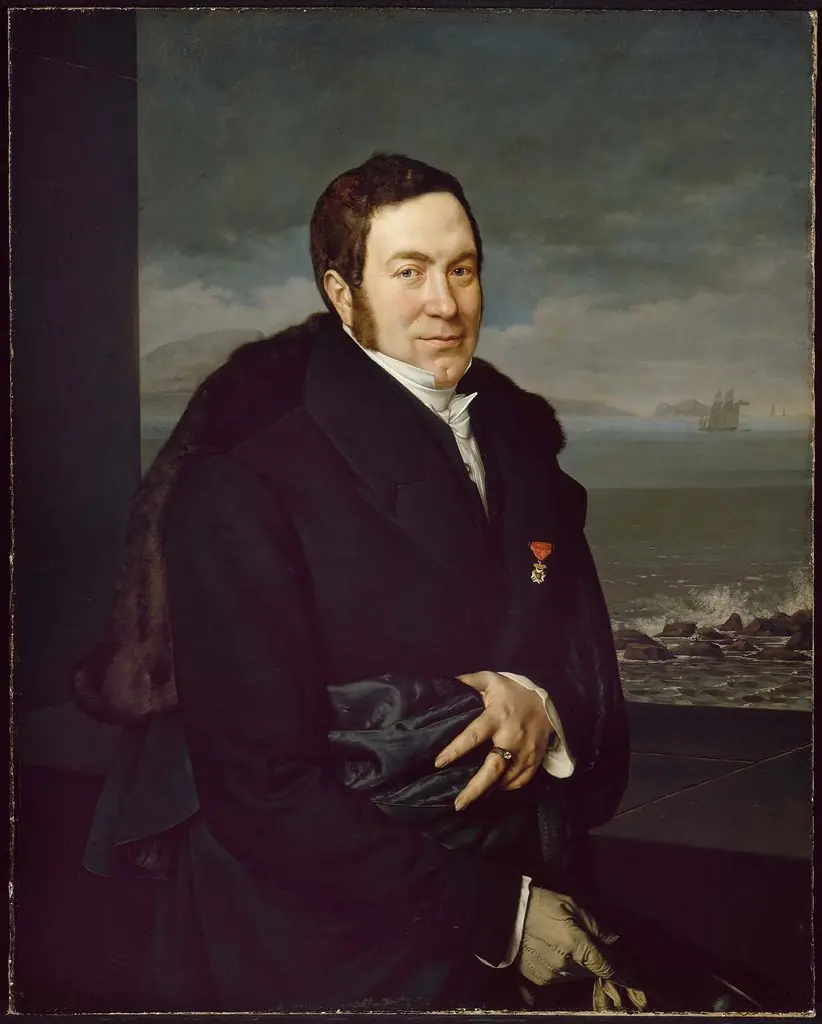 Portrait of a Man (Rosario Persico?)