Artwork
The Entombment
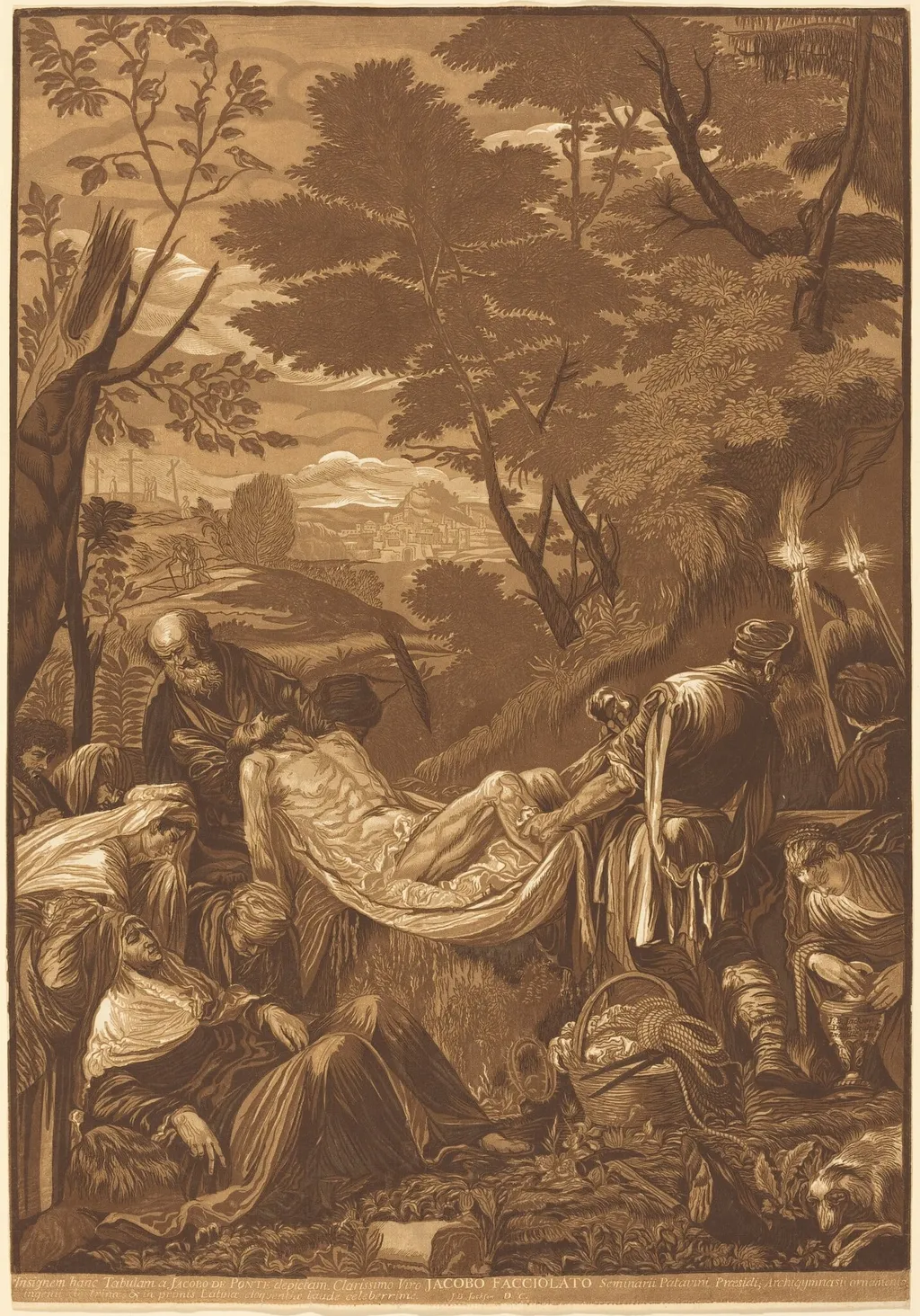
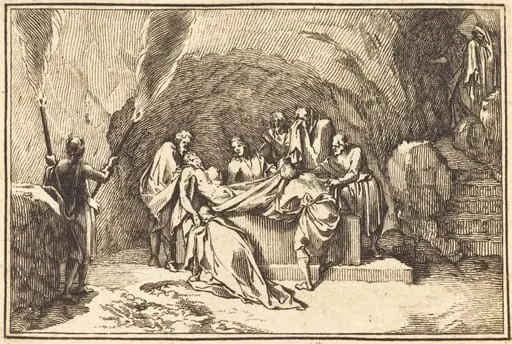
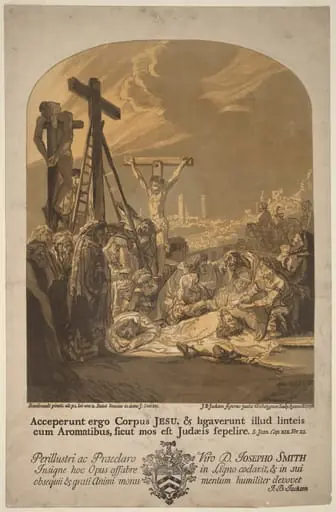
The Entombment is an ink print by the Baroque artist John Baptist Jackson. It dates from 1739 and is held in the collection of the National Gallery of Art.
About this work
Overview
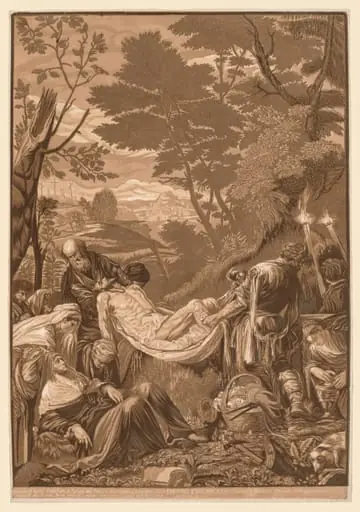
The Entombment is a chiaroscuro woodcut in browns, executed as a trial proof in 1739 by John Baptist Jackson, a British printmaker based in Paris and Venice.
Subject & Meaning
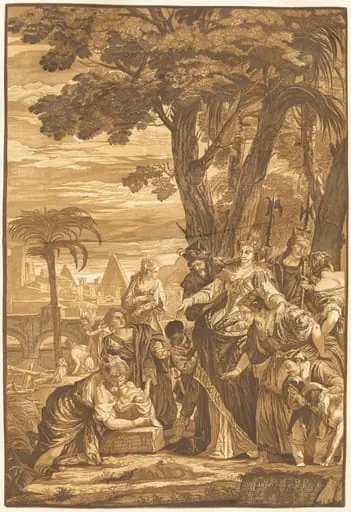
The print depicts a somber scene of a group burying a draped, cloth-wrapped body in a dense, twilight forest, with a distant hilltop town under a cloudy sky, evoking a sense of solemnity and collective effort.
Technique & Style
Jackson utilized innovative woodcut techniques, including subtle overprinting and heavy embossing, to achieve a deep, three-dimensional effect with rich browns and pronounced shadows, enhancing the emotional intensity of the scene.
History & Provenance
Created in 1739, this trial proof exemplifies Jackson's experimental approach within the chiaroscuro tradition, characteristic of his work in translating oil painting compositions into print.
Context
As a printmaker specializing in reproductions of oil paintings, Jackson's work, including The Entombment, facilitated broader access to artistic themes and techniques of his time, bridging the gap between original paintings and a wider audience.
Legacy
The Entombment contributes to the evolution of chiaroscuro in woodcut printing, demonstrating Jackson's contribution to the technical and aesthetic development of the medium in 18th-century Europe.
Artist & collection

Artist
John Baptist Jackson (1701–1780) was a British artist, a woodcut printmaker of the eighteenth century.

![The Marriage at Cana [left plate], by John Baptist Jackson](https://artifactworldgallery.com/img/john-baptist-jackson--the-marriage-at-cana-left-plate--22bae83d46cc40b5-w320.webp)