Artwork
George Villiers, 1st Duke of Buckingham
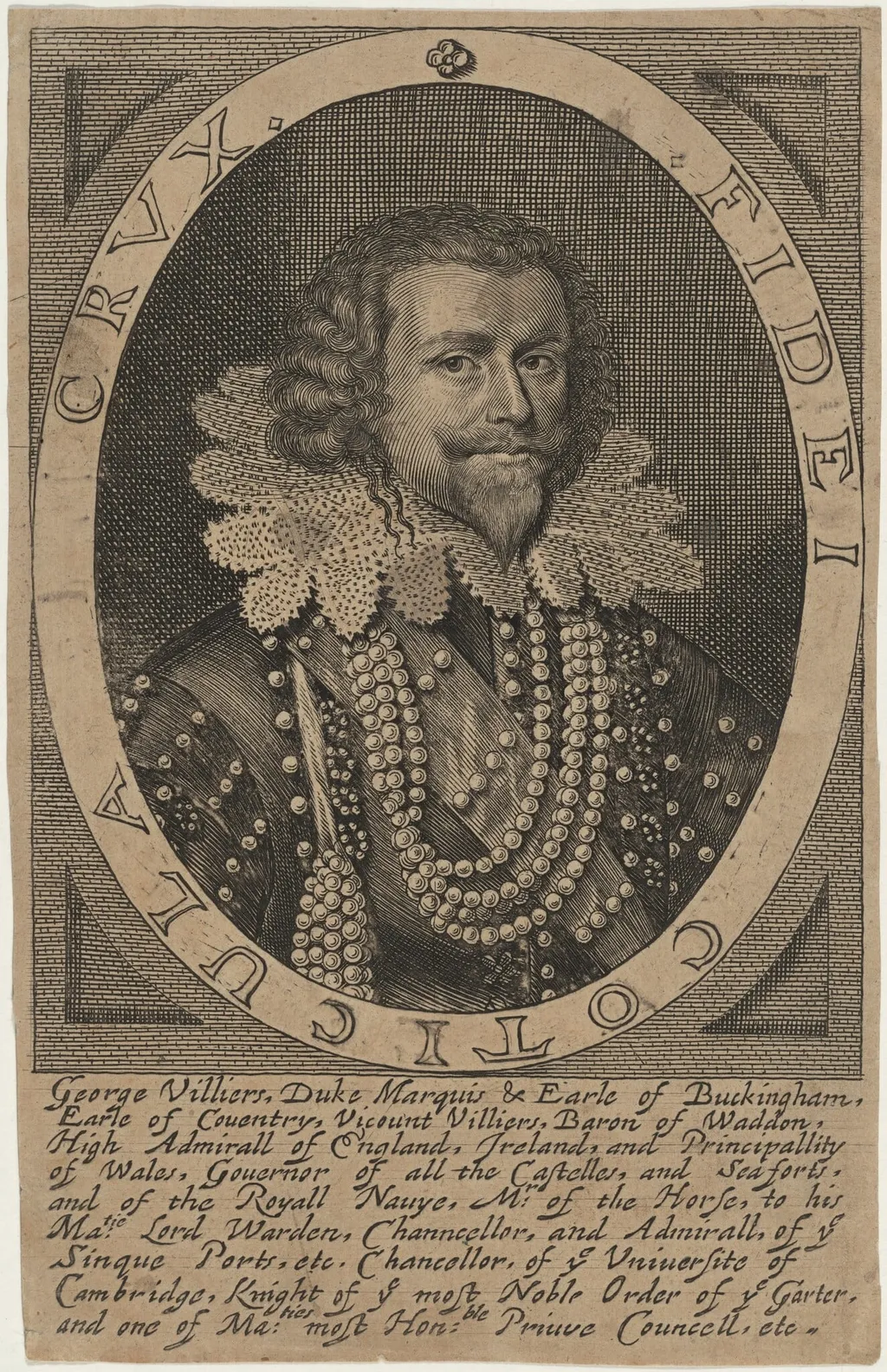
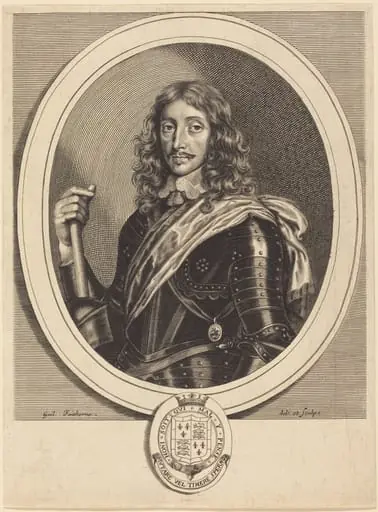
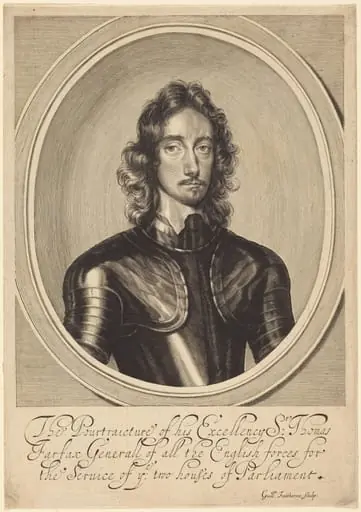
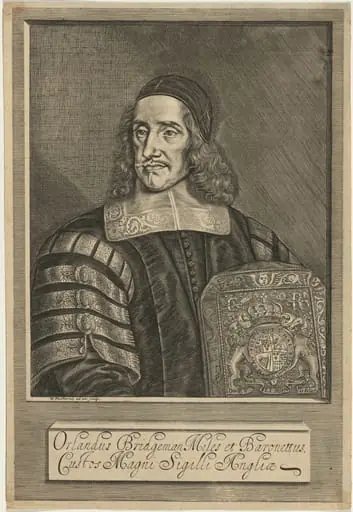
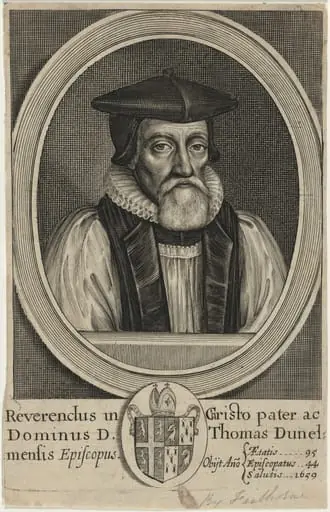
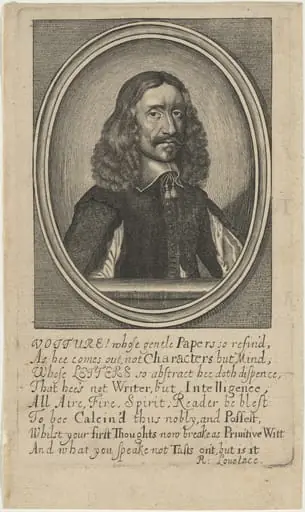
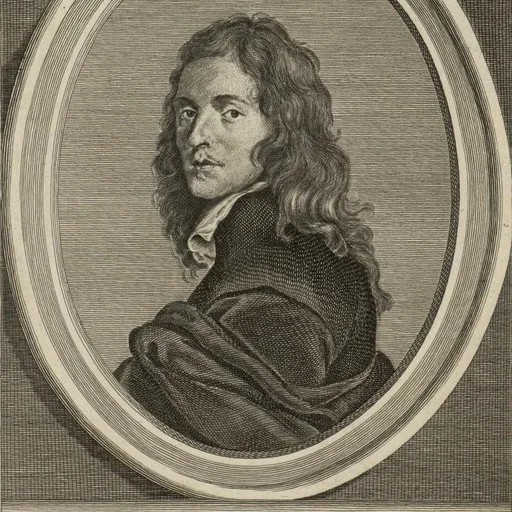
George Villiers, 1st Duke of Buckingham is an ink print by the Baroque artist William Faithorne. It dates from 1654 and is held in the collection of the National Gallery of Art.
About this work
Overview
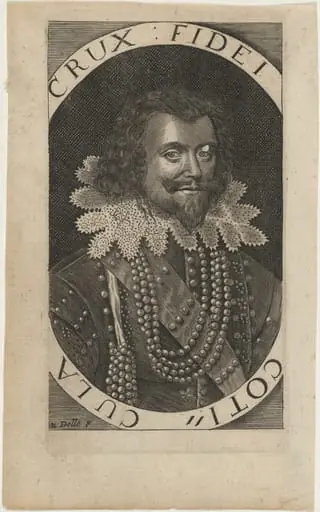
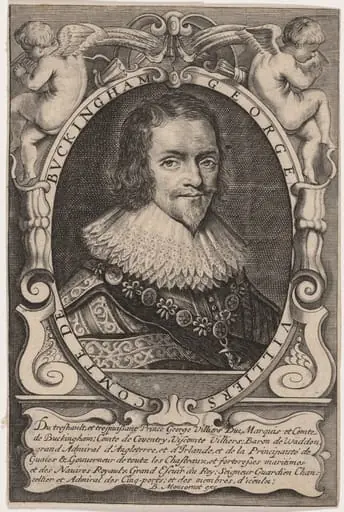
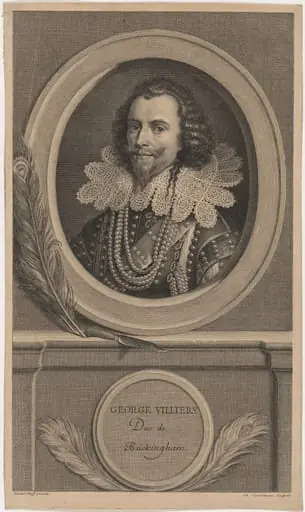
An engraved portrait of George Villiers, 1st Duke of Buckingham, produced by William Faithorne in 1654, captures the nobleman in formal attire.
An engraved portrait of George Villiers, 1st Duke of Buckingham, produced by William Faithorne in 1654, captures the nobleman in formal attire. Rendered in monochrome, the print emphasizes texture and precision through delicate line work. The composition centers the subject against a patterned background, framed by an inscribed border detailing his titles and name, typical of 17th-century portraiture in print.
Subject & Meaning
The portrait presents Buckingham as a figure of authority and refinement, his thick beard and solemn expression conveying gravitas. The ornate lace collar, rendered with minute dots, signals aristocratic status, while the surrounding inscription reinforces his political and social rank. The image functions as a visual credential, affirming his legacy during a period of political upheaval following his assassination in 1628.
Technique & Style
Faithorne employed fine, controlled engraving lines to model volume and texture, particularly in the face and collar. The background’s woven pattern and decorative frame are achieved through meticulous etching, contrasting with the smooth planes of skin. The use of cross-hatching and stippling creates subtle gradations of light and shadow, demonstrating the artist’s command of the burin and his adherence to the tradition of Flemish engraving.
History & Provenance
Created nearly three decades after Buckingham’s death, the engraving was likely commissioned to preserve his image amid shifting political tides. Faithorne, known for his portraits of English elites, produced this as part of a broader effort to document prominent figures of the Stuart era. The print circulated among collectors and institutions, serving both as commemoration and historical record.
Context
In mid-17th-century England, engraved portraits were vital for disseminating the likenesses of nobility beyond court circles. With the monarchy in flux after the Civil War, such images helped sustain the memory of controversial figures like Buckingham. Faithorne’s work reflects the enduring cultural value placed on visual representation as a tool of legacy, even for those whose political careers ended in scandal or violence.
Legacy
Faithorne’s engraving remains one of the most widely reproduced images of Buckingham, influencing later depictions in books and collections. Its technical precision set a standard for English portrait engraving, and its survival in multiple institutional holdings underscores its role as a key artifact in the visual documentation of early modern English aristocracy.
Artist & collection
Artist
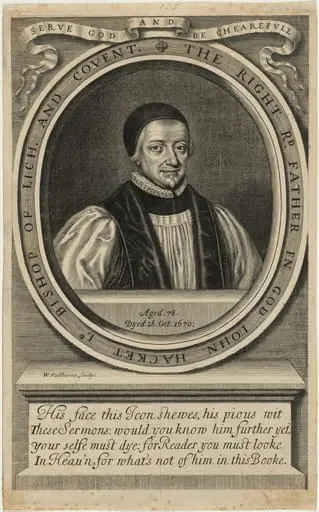
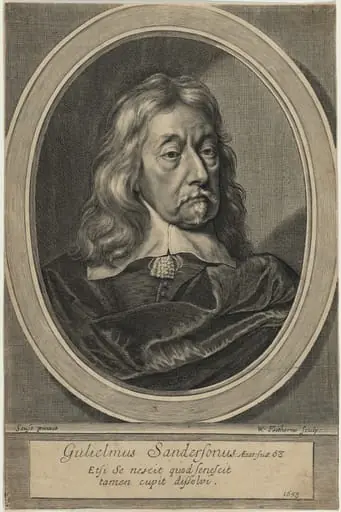
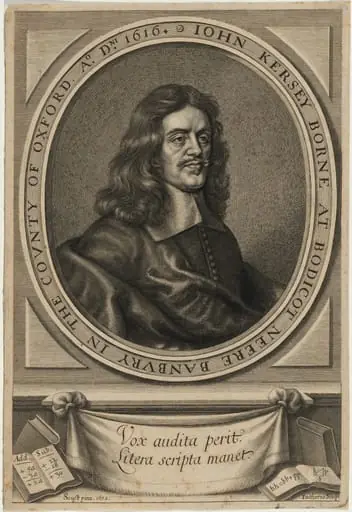
William Faithorne (1616–1691) was a British artist, born in Greater London.