Artwork
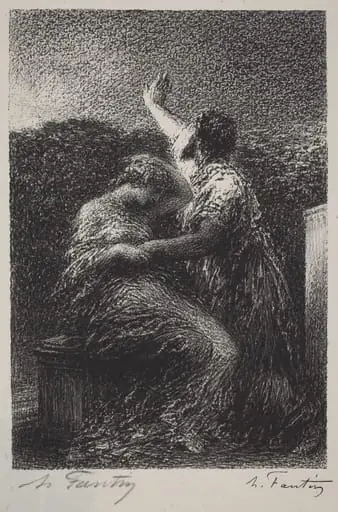
Le mage Baltajar et Fatime
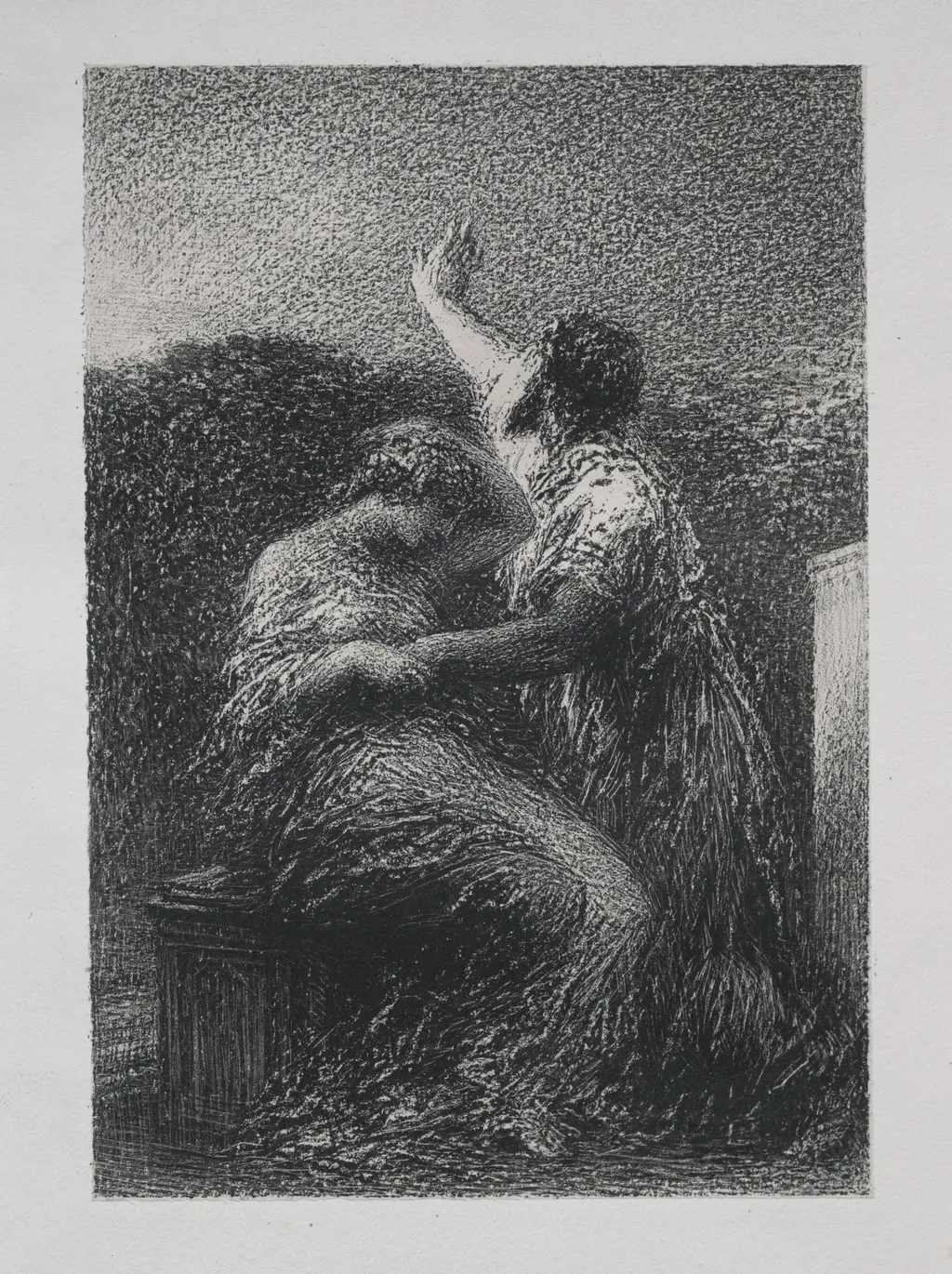
Le mage Baltajar et Fatime is a print by the Impressionist artist Henri Fantin-Latour. It dates from 1891 and is held in the collection of the Cleveland Museum of Art.
About this work
Overview
Executed with rapid, expressive lines, it retains the intimacy and observational precision characteristic of his draftsmanship.
Created in 1891, *Le mage Baltajar et Fatime* is a graphite and ink drawing by French artist Henri Fantin-Latour. Though best known for floral still lifes and group portraits of literary figures, this work departs into narrative territory, capturing a quiet, enigmatic moment between two figures. Executed with rapid, expressive lines, it retains the intimacy and observational precision characteristic of his draftsmanship.
Subject & Meaning
The drawing portrays Fatime, a woman with loose, flowing hair, seated in a relaxed yet alert posture, and the magician Baltajar, implied but not fully rendered. The tension in her posture suggests a suspended moment—perhaps after a spell, or before a revelation. The absence of clear narrative context invites interpretation, aligning the work with Symbolist interests in mystery and psychological suggestion rather than literal storytelling.
Technique & Style
Fantin-Latour employed swift, textured strokes to render Fatime’s hair and garments, avoiding smooth finishes in favor of a sketchlike immediacy. The background is rendered in soft, indistinct washes, deepening the sense of isolation. Light is suggested rather than modeled, with minimal contrast, creating a subdued atmosphere that emphasizes mood over detail. The unfinished quality enhances the sense of a fleeting, private encounter.
History & Provenance
The drawing entered the collection of the Cleveland Museum of Art in the 20th century, acquired as part of a broader interest in 19th-century French graphic works. Its provenance prior to museum acquisition remains undocumented, though its intimate scale and medium suggest it was likely a private study or preparatory work, not intended for public exhibition at the time of creation.
Context
Produced during a period when Fantin-Latour increasingly turned to literary and mythic themes, this drawing reflects broader Symbolist trends in French art—favoring ambiguity, emotional resonance, and poetic suggestion over realism. While contemporaries like Moreau and Redon pursued similar subjects with elaborate detail, Fantin-Latour’s approach here is restrained, emphasizing psychological nuance through minimal means.
Legacy
Though less known than his floral paintings, *Le mage Baltajar et Fatime* exemplifies Fantin-Latour’s versatility and his quiet engagement with Symbolist aesthetics. Its emphasis on atmosphere and psychological tension influenced later artists exploring the limits of drawing as a medium for narrative suggestion, contributing to a broader reevaluation of his graphic work in the 20th century.
Artist & collection
Artist
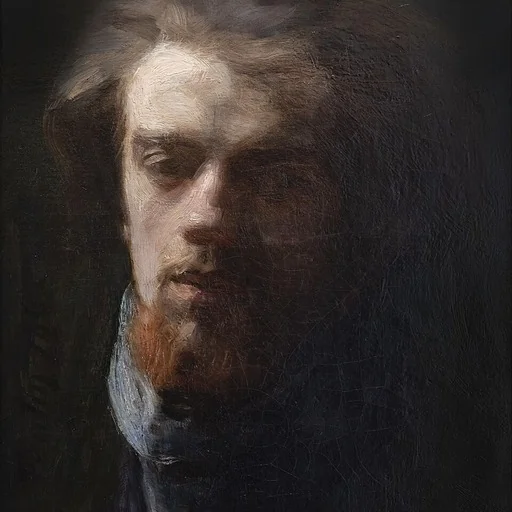
Ignace Henri Jean Theodore Fantin-Latour (French pronunciation: ; 14 January 1836 – 25 August 1904) was a French painter and lithographer best known for his flower paintings and group portraits of Parisian artists and writers.

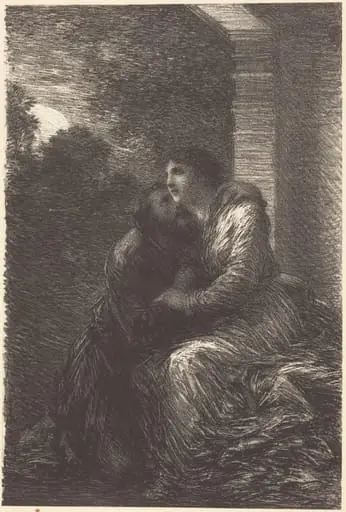 Love Scene from Act III of "Lohengrin"
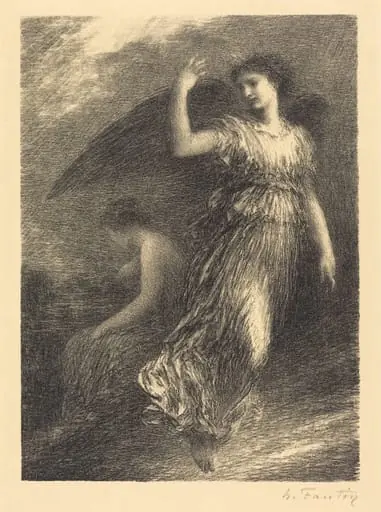 Debut from "Paradise and the Peri" (3rdplate )
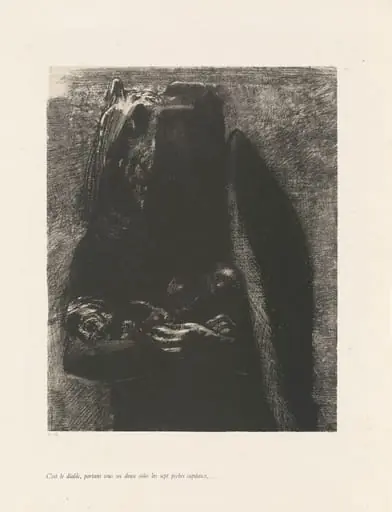 C'est le Diable
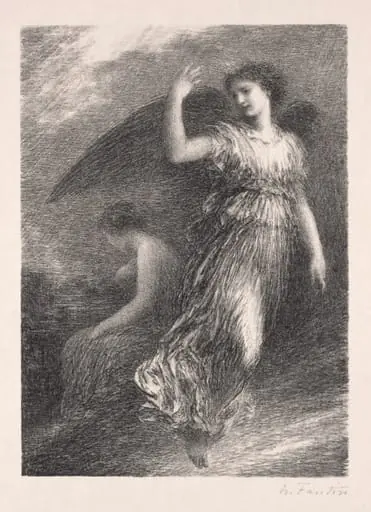 Le Paradis et la Peri - Debut
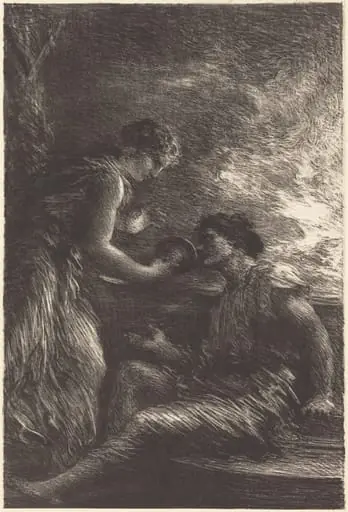 Sieglinde and Siegmund from Act I of "The Valkyrie"
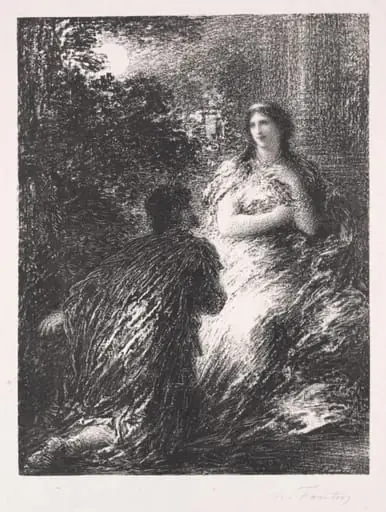 Duo des Troyens
 To Berlioz (Small Plate)
 Ariadne
 Debut from Paradise and the Peri (Second Plate)
 Parsifal, Act II: Evocation of Kundry
 Inspiration
 Le Mage Balthazar et Fatime