Artwork
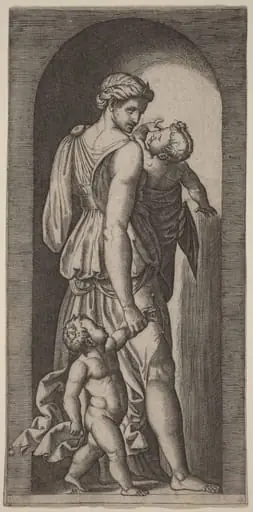
Figure of Charity
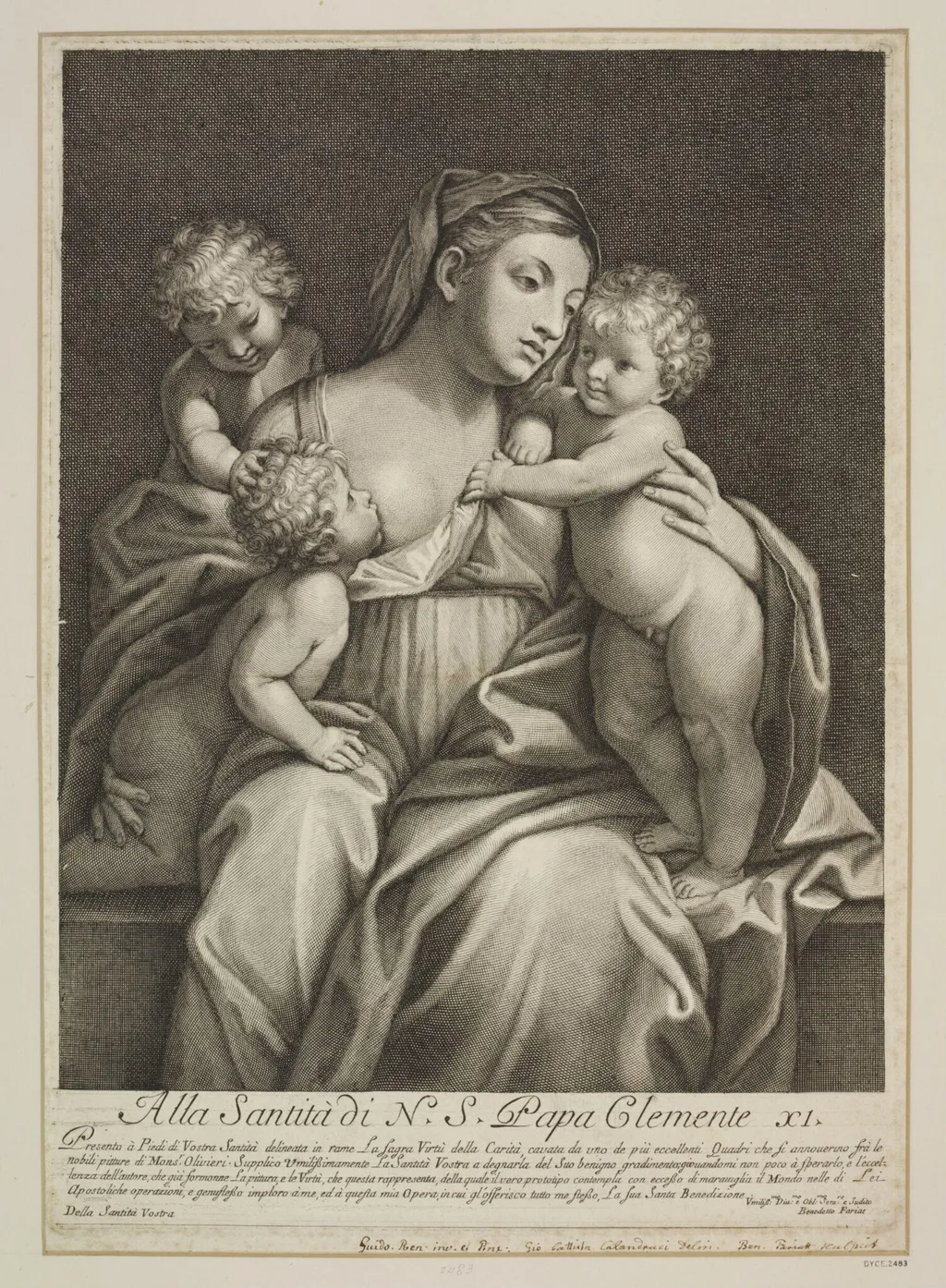
Figure of Charity is a print by Benoît Farjat. It dates from 1750 and is held in the collection of the Victoria and Albert Museum.
About this work
Overview
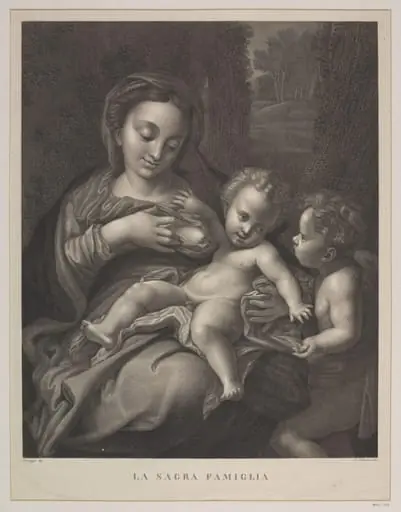
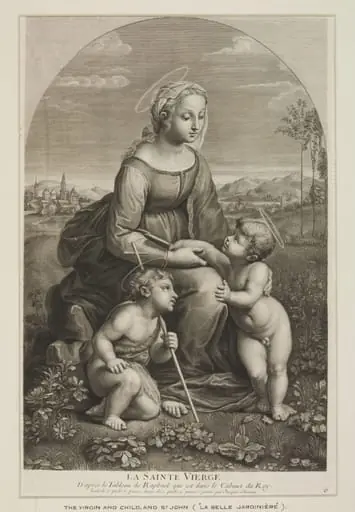
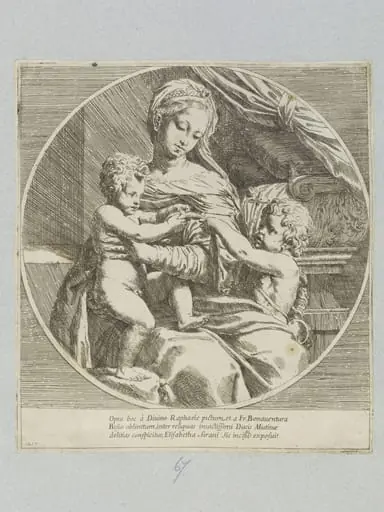
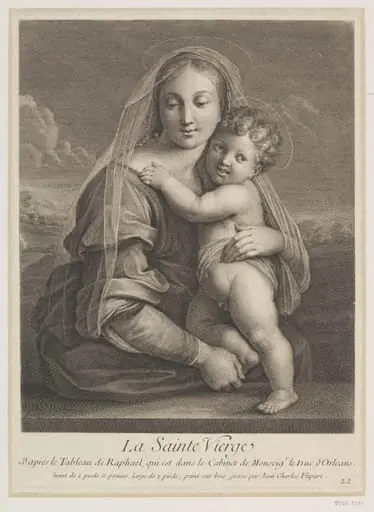
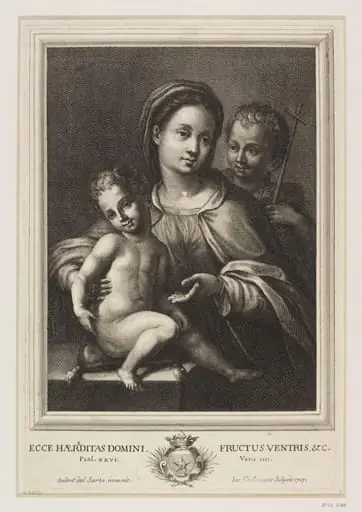
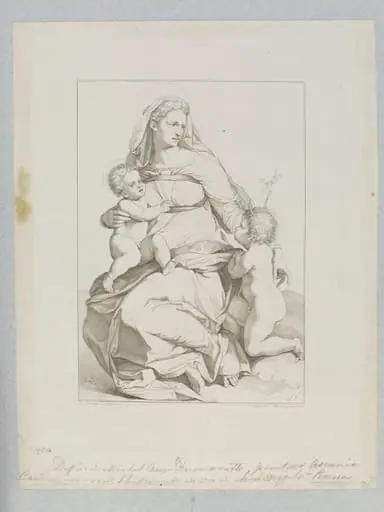
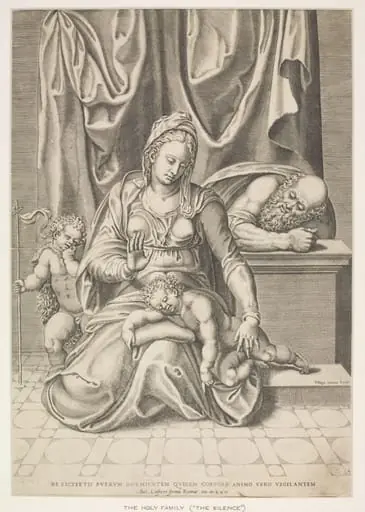
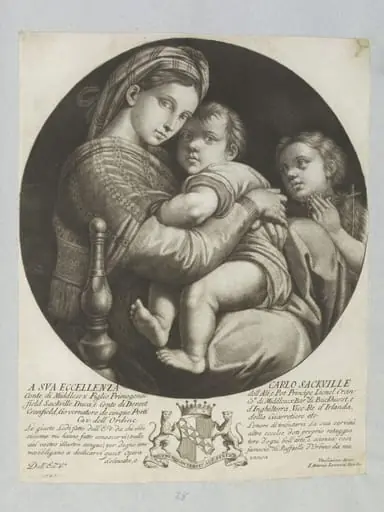
Figure of Charity is a mid‑18th‑century print executed on paper by the French engraver Benoît Farjat. Produced in 1750, the image follows a composition originally drawn by the Italian Baroque painter Guido Reni. The work presents a single female figure surrounded by three children, rendered in a restrained monochrome palette that emphasizes form and light.
Subject & Meaning
The central woman is commonly interpreted as an allegorical embodiment of Charity, a virtue traditionally shown caring for the young. She cradles one child in her right arm while two others frolic nearby, suggesting both nurture and generosity. Her serene expression and protective stance reinforce the moral message of benevolent guardianship.
Technique & Style
Farjat employed a chiaroscuro approach, using a limited range of grays to model volume and create dramatic contrast against a darker ground. The engraving’s fine line work delineates the draped garment and the children's bodies, while the subtle gradations of tone give the scene a three‑dimensional presence despite the absence of color.
History & Provenance
The print was issued in 1750, a period when reproductions of celebrated Italian compositions were popular among French collectors. Farjat, known for translating Italian designs into French prints, based this work on Reni’s earlier drawing. The piece has circulated in European collections since its release, appearing in several 19th‑century catalogues of prints.
Artist & collection
Artist
Benoît Farjat made prints in 17th–18th-century France, often turning religious virtues into etched figures.