Artwork
Loading Up
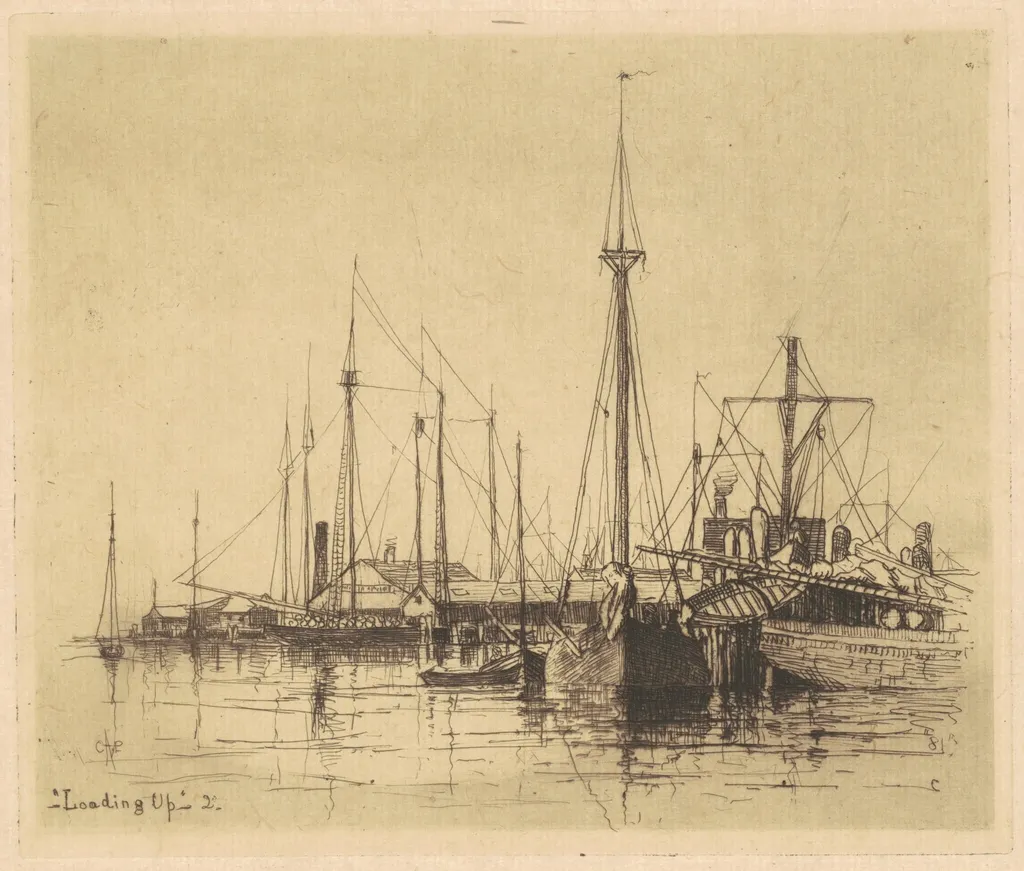
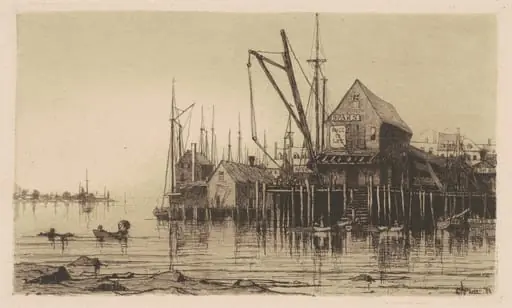
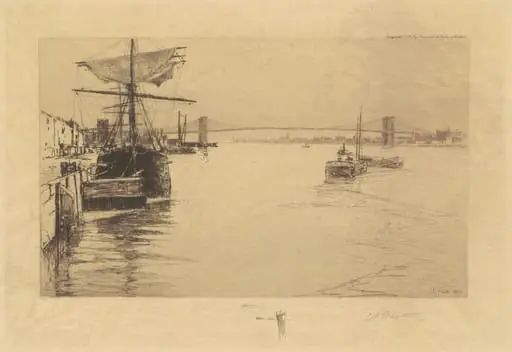
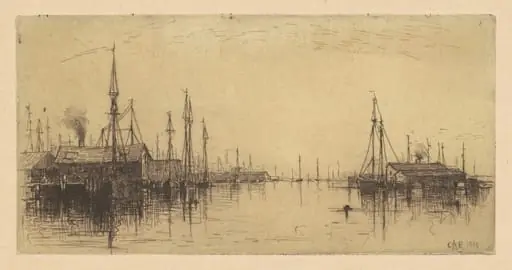
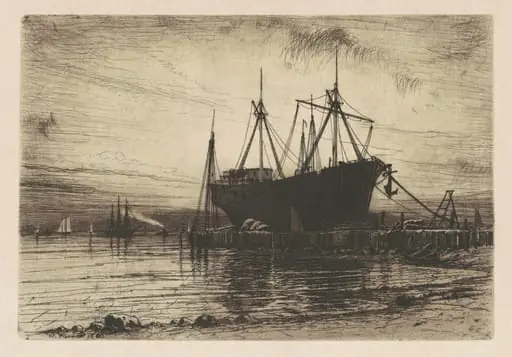
Loading Up is an ink print by the Impressionist artist Charles A. Platt. It dates from 1881 and is held in the collection of the National Gallery of Art.
About this work
Overview
The scene captures a moment of industrial activity, with figures and cargo visible on deck, suggesting preparation for departure.
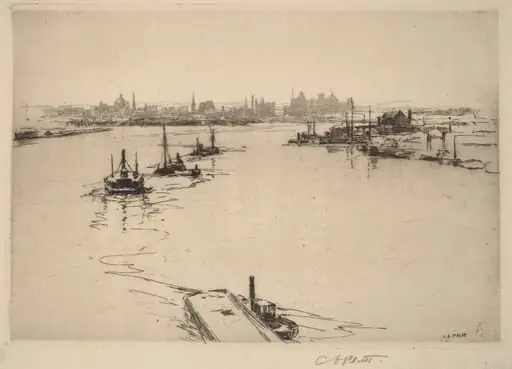
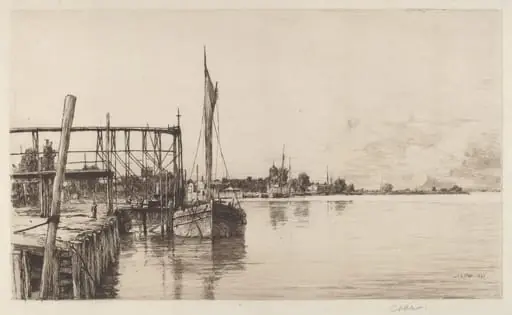
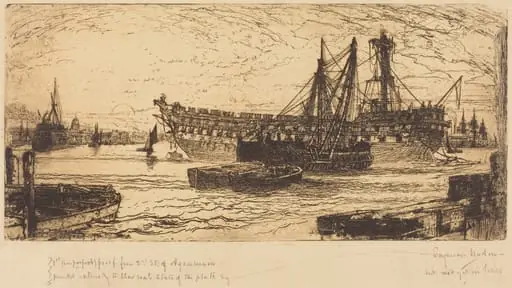
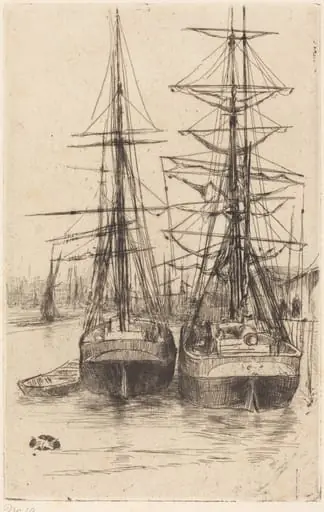
Created in 1881, Loading Up is an etching by Charles A. Platt, rendered in black ink on laid paper. The composition depicts three large vessels moored at a bustling pier, their masts and rigging densely detailed. The water beneath is suggested through rapid, angular lines, conveying motion and turbulence. The scene captures a moment of industrial activity, with figures and cargo visible on deck, suggesting preparation for departure.
Subject & Meaning
The title Loading Up points to the logistical labor of maritime commerce—ships being stocked with goods before long voyages. Platt focuses on the mechanical and human elements of this process: ropes, cranes, and figures moving across decks. There is no idealization; instead, the work presents a grounded view of 19th-century port activity, emphasizing function over spectacle, and the rhythm of labor in a growing global trade network.
Technique & Style
Platt employed etching to achieve a dynamic, sketch-like quality. Fine, irregular lines scratch across the plate to suggest texture—rigging, waves, and shadow. The loose handling conveys immediacy, as if the scene was observed in passing. Ink distribution creates contrast between the dark hulls and the lighter, fragmented surfaces of water and sky, enhancing the sense of movement and atmospheric tension.
History & Provenance
Made during Platt’s early career, this print reflects his time in Europe, where he studied architecture and printmaking. Though primarily known later for his architectural designs, this work reveals his engagement with everyday scenes of maritime life. Its survival as a single-sheet print suggests it was likely part of a private collection or artist’s portfolio, rather than a widely distributed publication.
Context
In the early 1880s, transatlantic shipping was expanding rapidly, and ports like those depicted were hubs of economic activity. Platt’s etching aligns with a broader trend among artists and illustrators documenting industrial progress. Unlike romanticized seascapes, this work captures the unvarnished reality of port operations, reflecting a shift toward realism in American print culture during the Gilded Age.
Legacy
Loading Up remains a modest but significant example of Platt’s graphic work, illustrating his ability to translate architectural precision into expressive line. While not widely exhibited, it contributes to understanding his artistic development before he turned fully to architecture. The print stands as a quiet record of late 19th-century maritime labor, preserved through the enduring medium of etching.
Artist & collection