Artwork
The Sacrifice of Isaac
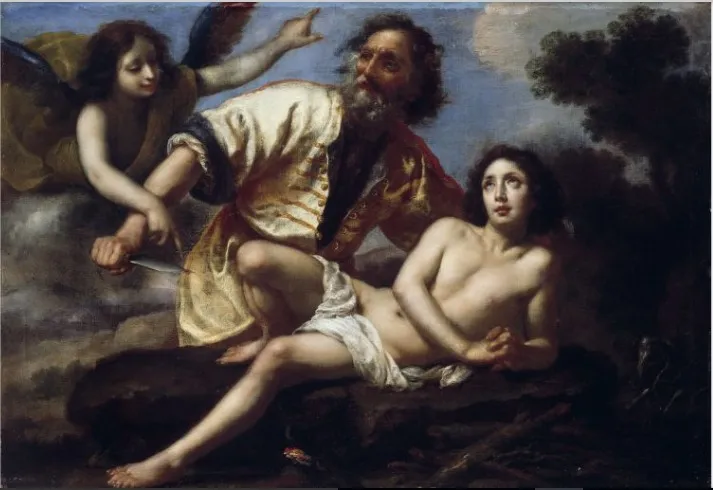
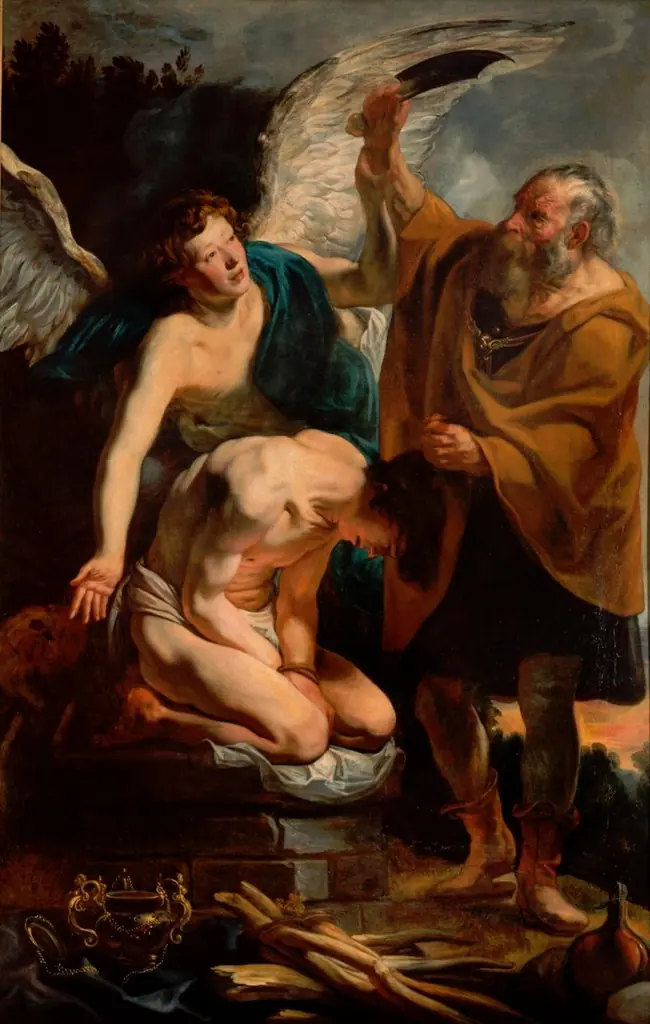
The Sacrifice of Isaac is an oil painting by the Early Baroque Italian artist Felice Ficherelli. It dates from 1640 and is held in the collection of the National Gallery of Ireland.
About this work
Overview
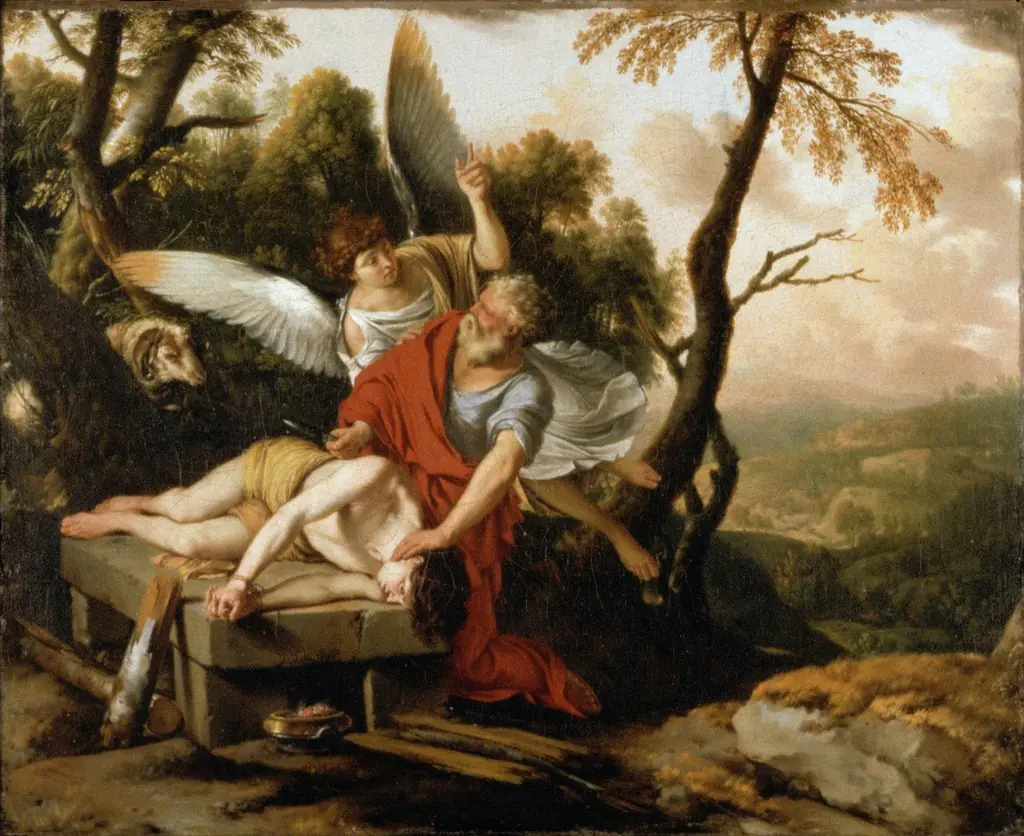
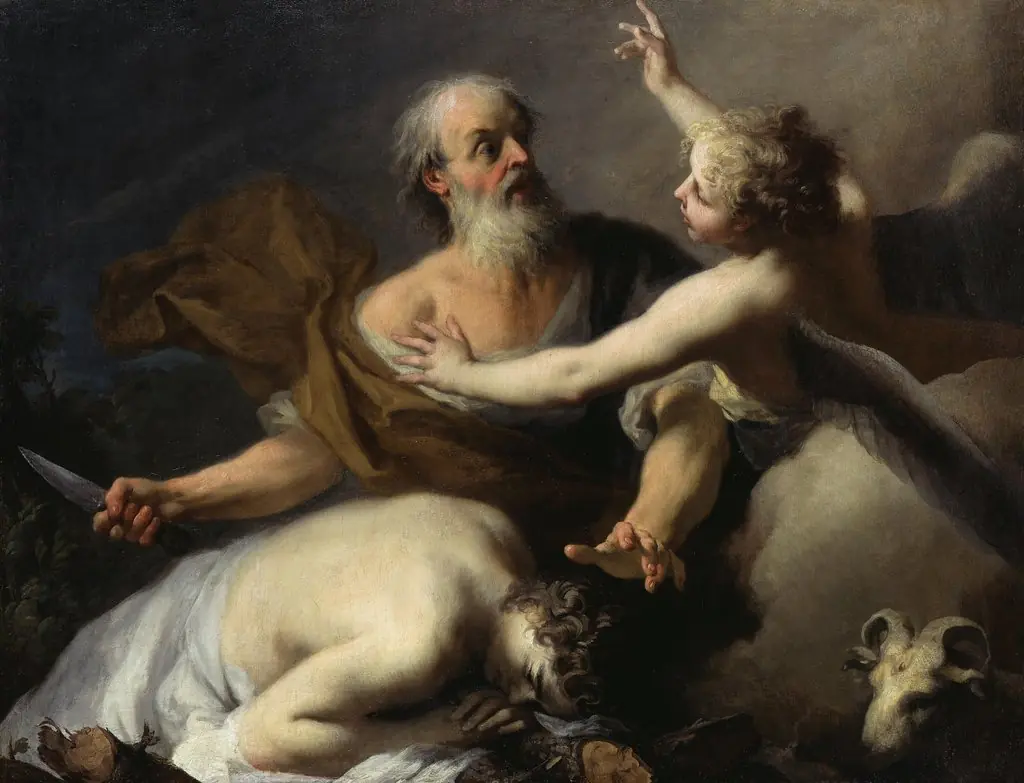
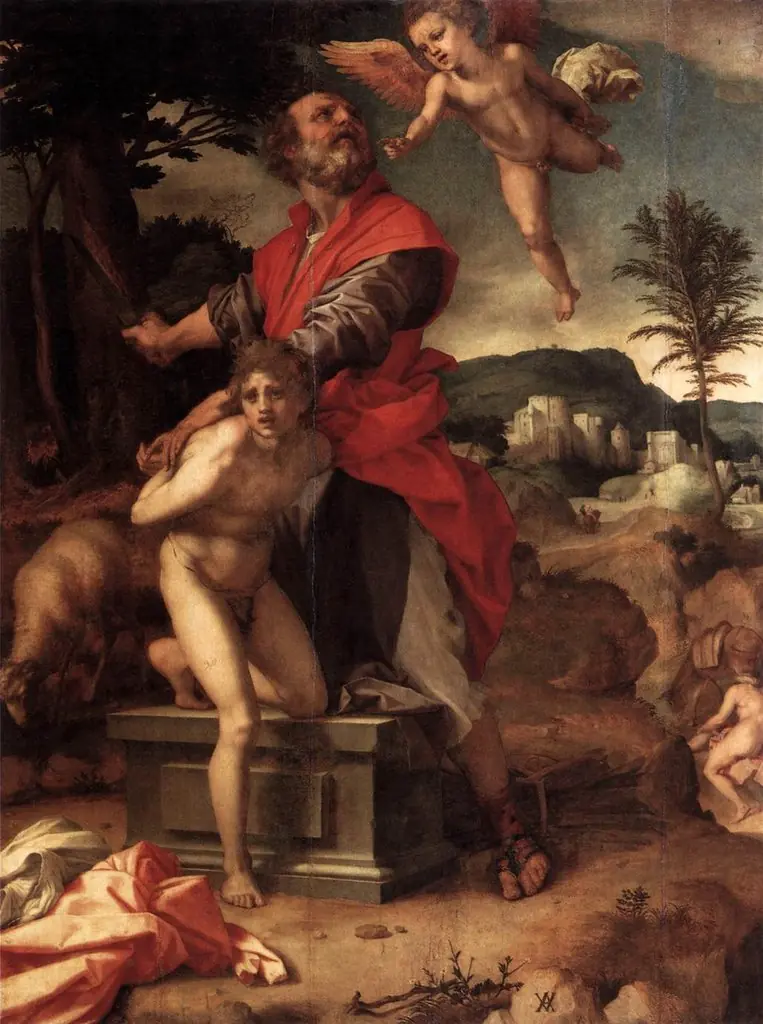
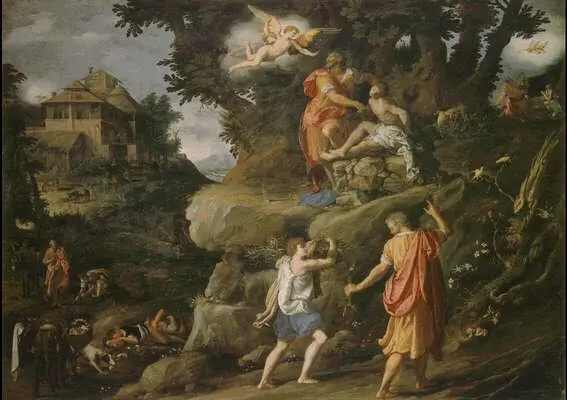
Felice Ficherelli’s 1640 oil painting, The Sacrifice of Isaac, resides in the National Gallery of Ireland. The work captures a moment of intense narrative tension, arranged on a rocky ledge beneath a storm‑filled sky. Three figures dominate the composition, their gestures and expressions conveying the drama of the biblical episode.
Subject & Meaning
At the centre, a bearded man in a white robe grips a knife to the throat of a younger, unclothed figure, evoking Abraham’s test of faith. To the left, an angelic presence in a yellow mantle extends a hand toward the older man, suggesting divine intervention that halts the impending sacrifice.
Technique & Style
Ficherelli employs pronounced chiaroscuro, juxtaposing deep shadows with illuminated forms to model the bodies and heighten the emotional stakes. The stark lighting sculpts the figures against the gloom of clouds and trees, while the textured brushwork conveys the ruggedness of the rock and the weight of the moment.
History & Provenance
Painted in the early Baroque period, the canvas entered the collection of the National Gallery of Ireland, where it remains on display. Its attribution to Ficherelli, a Tuscan painter active in the mid‑17th century, is supported by stylistic analysis and archival records linking the work to his known oeuvre.
Context
The composition reflects the era’s fascination with biblical martyrdom and the moral dilemmas it presents. By integrating a celestial messenger within a terrestrial setting, Ficherelli aligns his work with contemporary religious art that sought to dramatize scriptural narratives for devotional contemplation.
Artist & collection