Artwork
Blick ins Unendliche, Einzelfigur
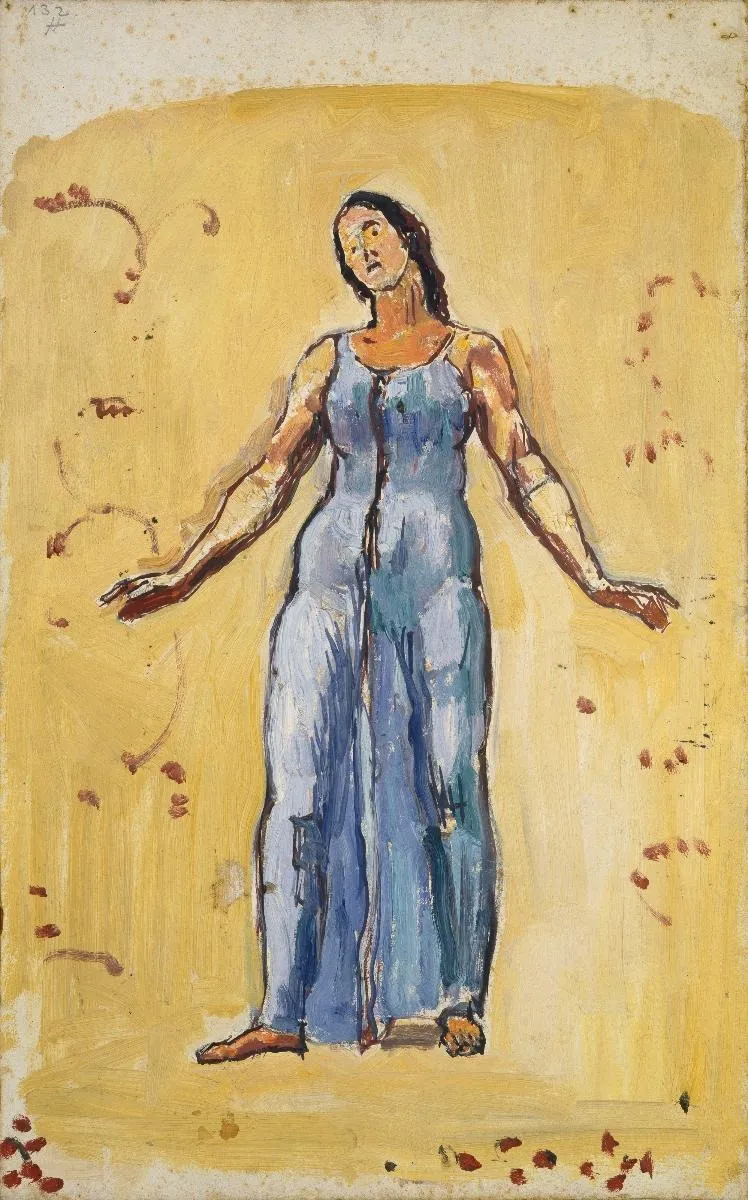
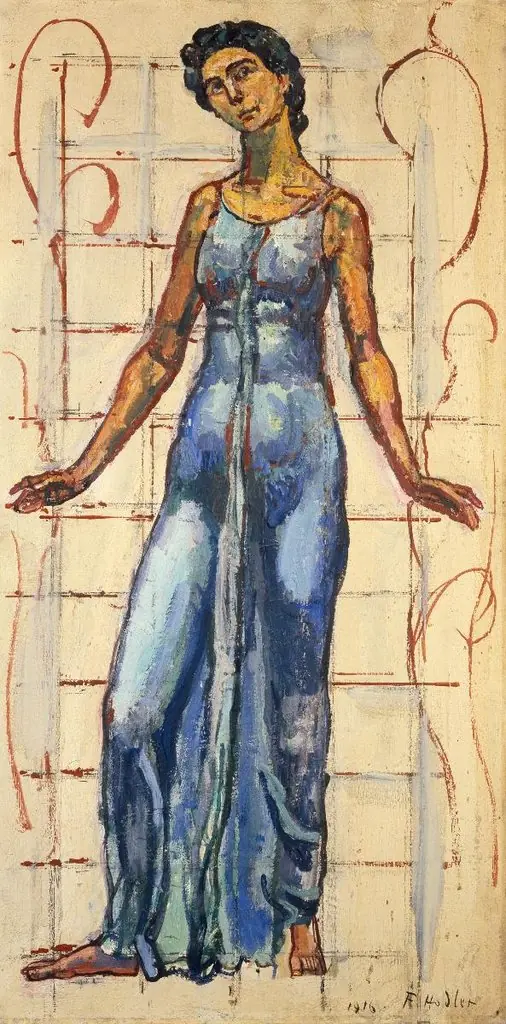
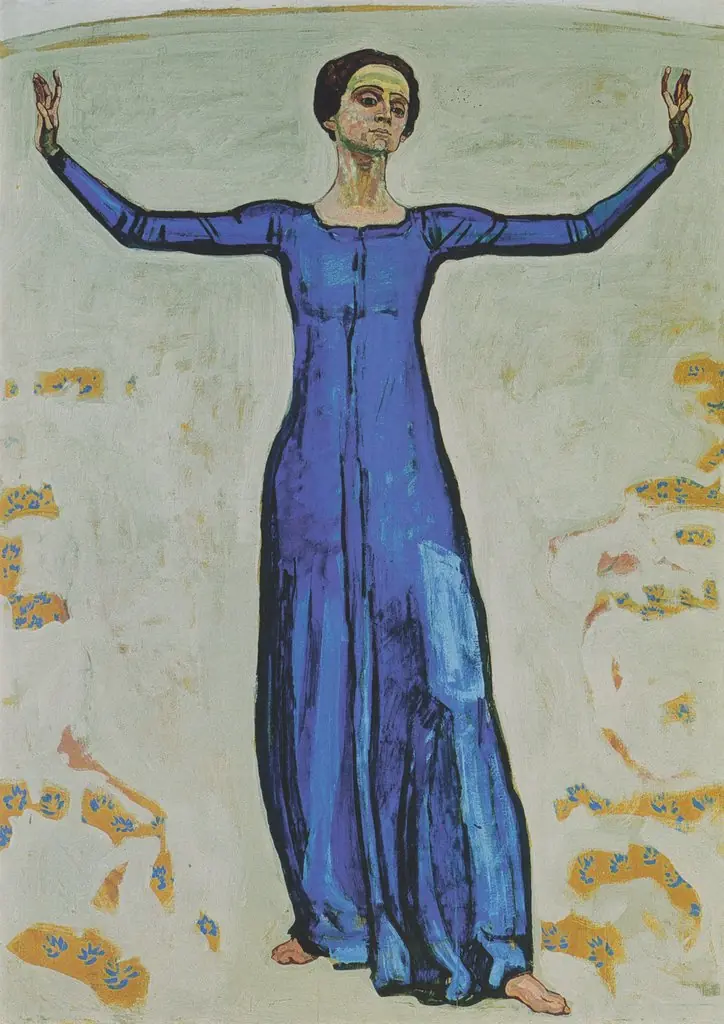
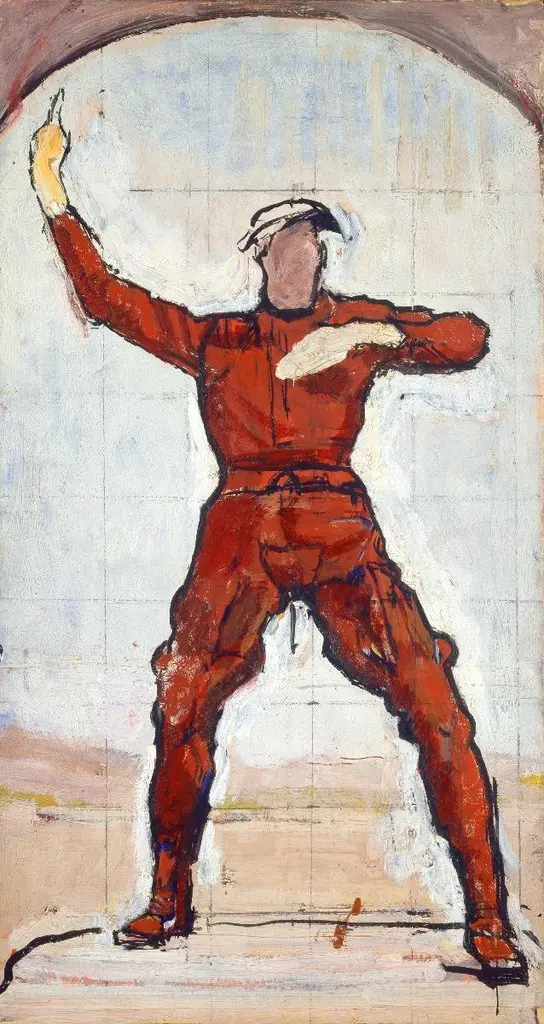
Blick ins Unendliche, Einzelfigur is an unspecified painting by the Art Nouveau artist Ferdinand Hodler. It dates from 1916 and is held in the collection of the Kunsthaus Zürich.
About this work
Overview
Painted in 1916 by Swiss artist Ferdinand Hodler, *Blick ins Unendliche, Einzelfigur* is a late work reflecting his mature Symbolist approach.
Painted in 1916 by Swiss artist Ferdinand Hodler, *Blick ins Unendliche, Einzelfigur* is a late work reflecting his mature Symbolist approach. Hodler moved away from naturalism toward stylized forms that conveyed inner states. This painting, part of the Kunsthaus Zürich collection, presents a solitary figure in a contemplative stance, embodying themes of introspection and transcendence through simplified composition and rhythmic structure.
Subject & Meaning
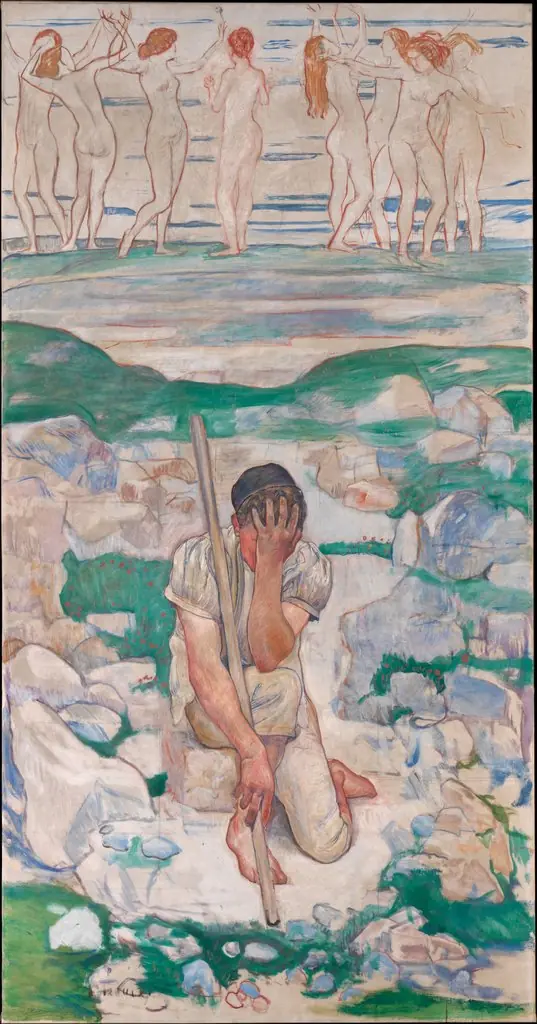
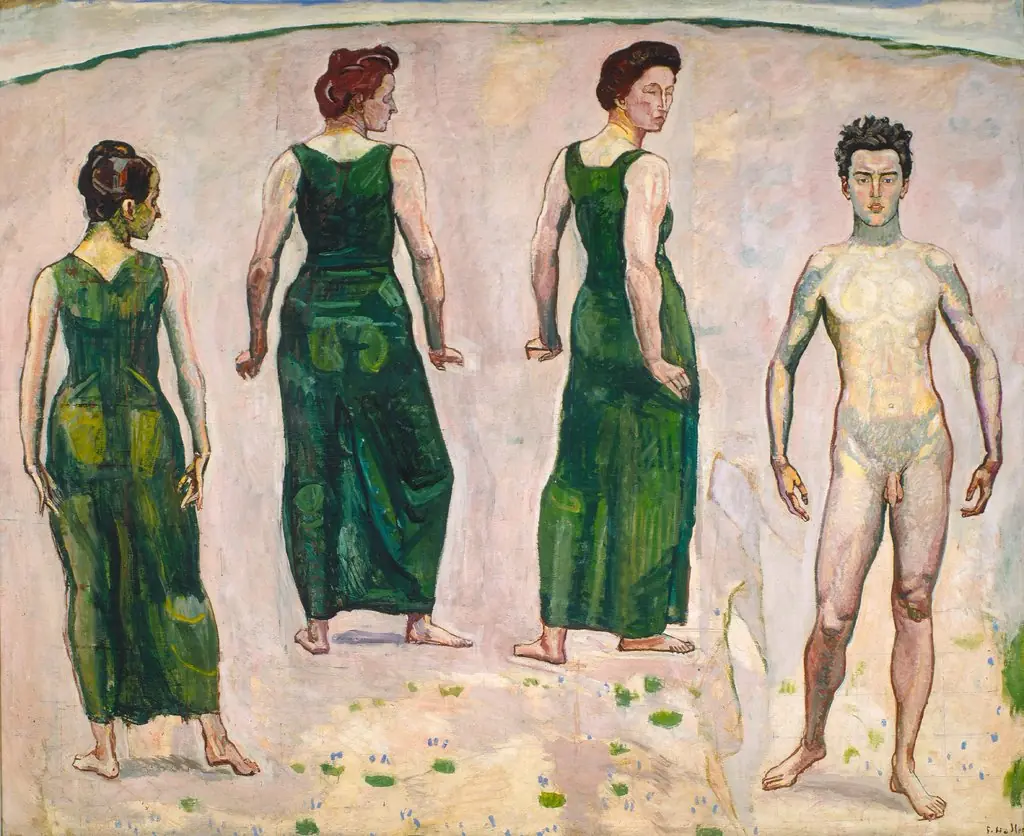
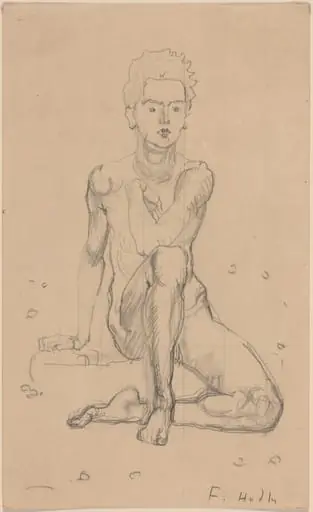
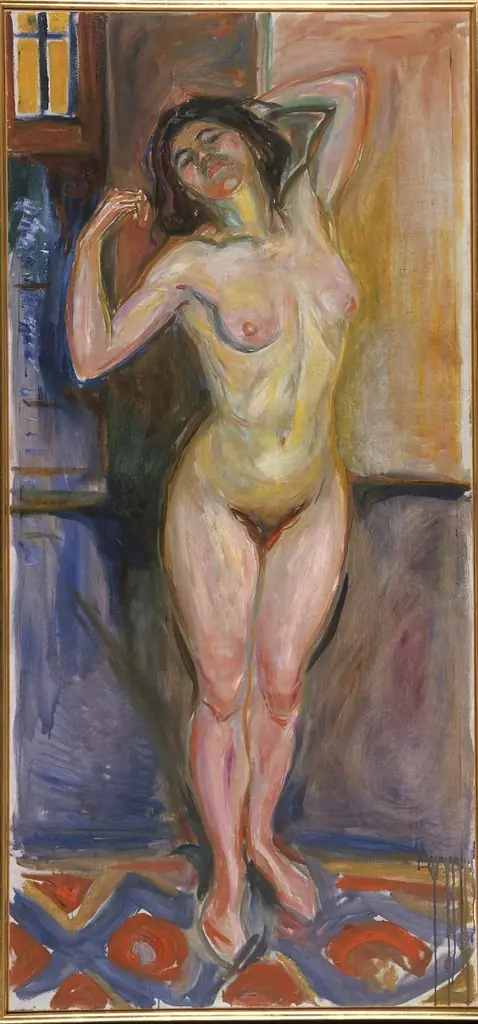
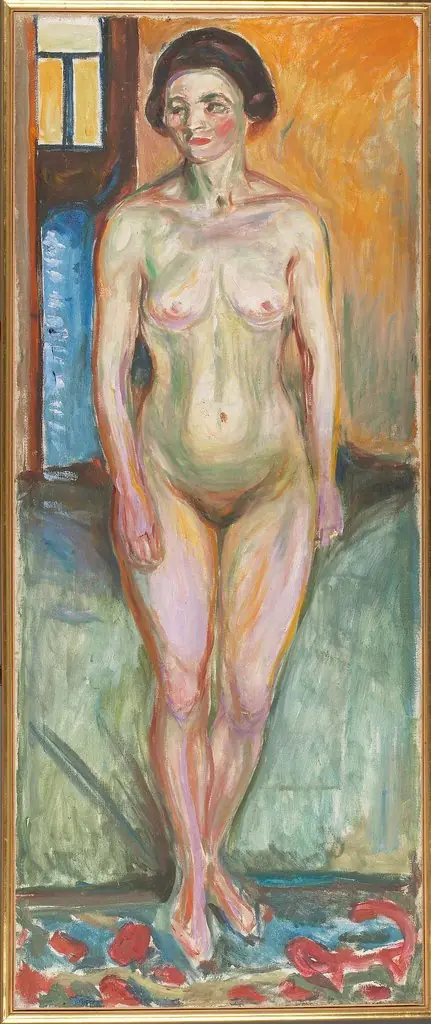
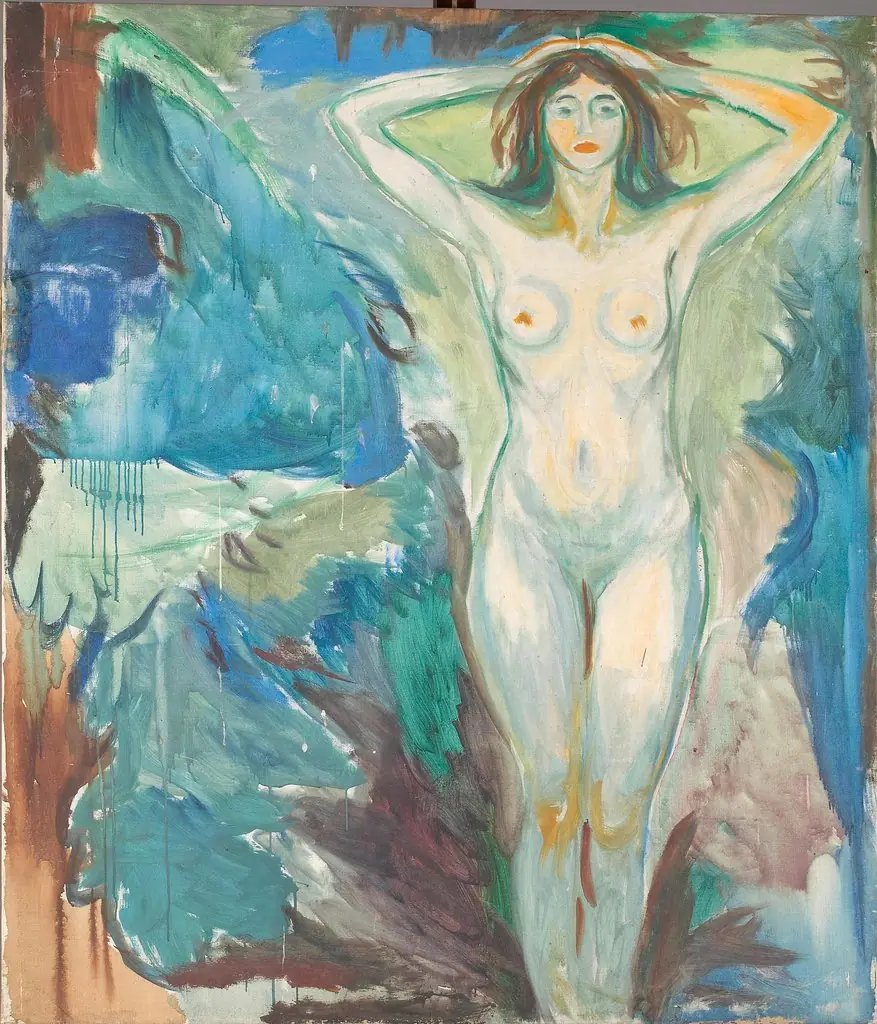
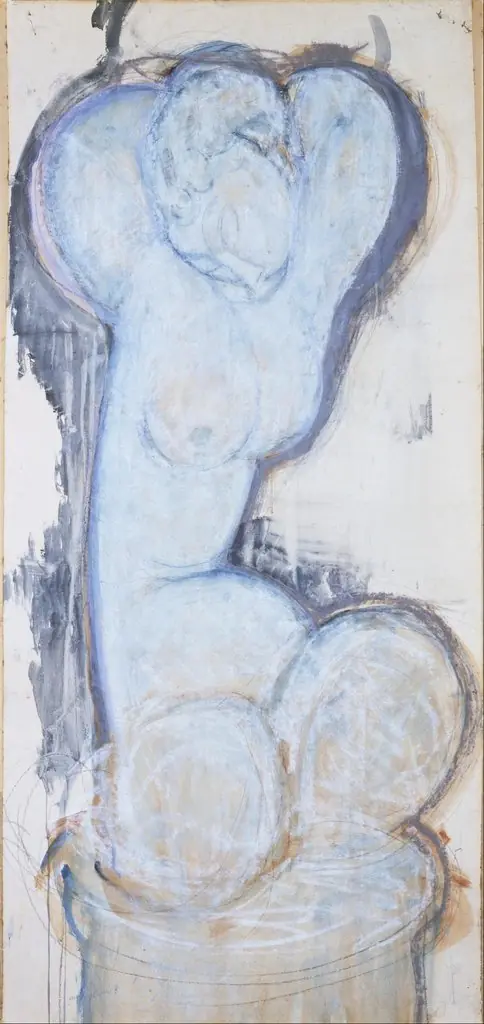
The painting features a lone woman, barefoot and with arms extended horizontally, her posture suggesting both stillness and potential motion. Her expression is inward, evoking a quiet confrontation with the infinite. Hodler’s choice of a solitary figure, devoid of context or narrative, invites reflection on solitude, spiritual yearning, and the human relationship to the unseen. The absence of detail emphasizes emotional resonance over literal representation.
Technique & Style
Hodler employed broad, deliberate brushwork and a restrained palette of deep blue and warm yellow to create a sense of harmony and tension. The figure’s form is simplified, with clean lines and minimal modeling, aligning with his concept of 'parallelism'—repeating shapes to suggest order and rhythm in nature and the psyche. The background’s uniform hue isolates the figure, enhancing its symbolic weight and reducing distractions from the emotional core.
History & Provenance
Created during the final years of Hodler’s life, the painting emerged amid the upheaval of World War I, a time when many artists turned inward to explore existential themes. It entered the Kunsthaus Zürich collection shortly after its completion, reflecting the institution’s early commitment to Swiss modernism. The work has remained in public ownership since, consistently displayed as a key example of Hodler’s symbolic phase.
Context
While often associated with Art Nouveau for its decorative linearity, Hodler’s work diverged from its ornamental tendencies, focusing instead on metaphysical abstraction. His 'parallelism' was a personal system, not a movement, rooted in Swiss intellectual traditions and influenced by Nietzschean thought. In this context, the painting reflects a broader European search for meaning beyond material reality, distinct from contemporary avant-garde trends.
Legacy
Hodler’s late works, including this one, influenced later Swiss modernists who sought to merge emotional depth with formal clarity. Though less known internationally than his contemporaries, his emphasis on symbolic structure and psychological presence laid groundwork for 20th-century figurative abstraction in German-speaking regions. The painting remains a touchstone for understanding how Swiss art engaged with universal themes during a period of global crisis.
Artist & collection
Artist
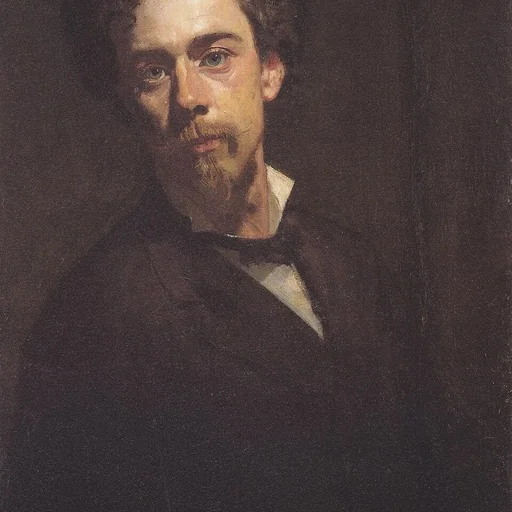
Ferdinand Hodler (March 14, 1853 – May 19, 1918) was a Swiss painter. He is one of the best-known Swiss painters of the nineteenth century. His early works were portraits, landscapes, and genre paintings in a realistic…