Artwork
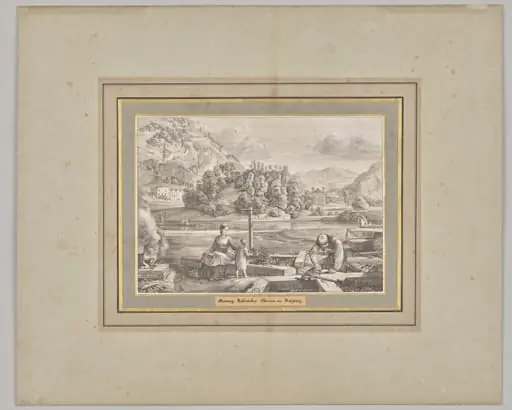
Friday. Meadow Plan in Front of Aigen Near Salzburg
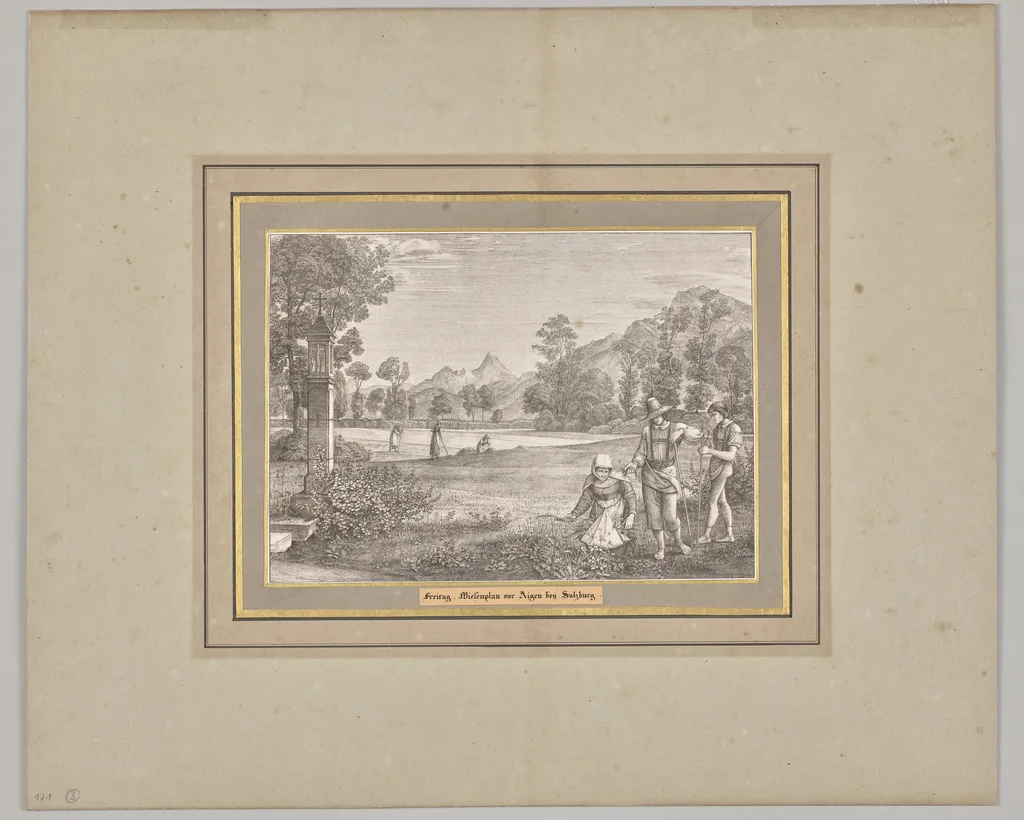
Friday. Meadow Plan in Front of Aigen Near Salzburg is a print by the Romanticist artist Ferdinand Olivier. It dates from 1820 and is held in the collection of the Cleveland Museum of Art.
About this work
Overview
Created in 1820 by Ferdinand Olivier, this black-and-white print depicts a tranquil rural scene near Aigen, just outside Salzburg.
Created in 1820 by Ferdinand Olivier, this black-and-white print depicts a tranquil rural scene near Aigen, just outside Salzburg. Executed as a lithograph, it captures a quiet moment in the Austrian countryside. The work is part of the collection at The Cleveland Museum of Art, where it represents early 19th-century European landscape drawing practices and the growing interest in everyday rural life.
Subject & Meaning
The scene portrays ordinary rural activity: a man and child near a stone well, another child resting on the grass, and distant figures tending fields. A solitary church tower marks the horizon, anchoring the composition in a specific place. There is no dramatic narrative—instead, the quietude of daily life is emphasized, reflecting a shift toward intimate, unidealized depictions of the countryside.
Technique & Style
Olivier employed lithography to render subtle tonal gradations in monochrome, capturing texture in grass, stone, and distant hills. The composition is balanced and restrained, with horizontal bands of land, sky, and terrain guiding the eye. Lines are precise yet soft, avoiding theatricality; the style aligns with early Romantic tendencies that favored observation over idealization.
History & Provenance
The print was made during Olivier’s travels in Austria, a period when he focused on topographical studies. It entered The Cleveland Museum of Art’s collection through documented acquisition, likely as part of a broader interest in European graphic arts from the early 1800s. Its provenance reflects the museum’s commitment to preserving works that document regional landscapes of the period.
Context
In the early 19th century, landscape subjects gained renewed attention across Europe, particularly in German-speaking regions. Artists like Olivier responded to Romantic ideals by documenting specific locales with fidelity. This print aligns with a broader movement that valued place, memory, and the quiet dignity of rural existence over grand historical or mythological themes.
Legacy
Though not widely exhibited, the print contributes to the understanding of how landscape drawing evolved from topographical record to expressive medium. Olivier’s work, including this piece, influenced later generations of artists who sought to capture the character of regional environments with sincerity rather than embellishment.
Artist & collection

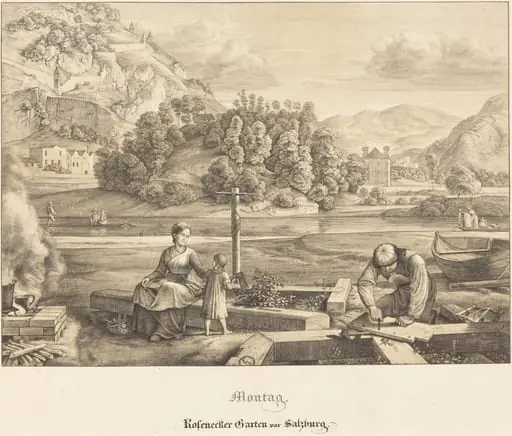 Montag - Rosenecker Garten vor Salzburg (Monday - Rosenecker Garden near Salzburg)
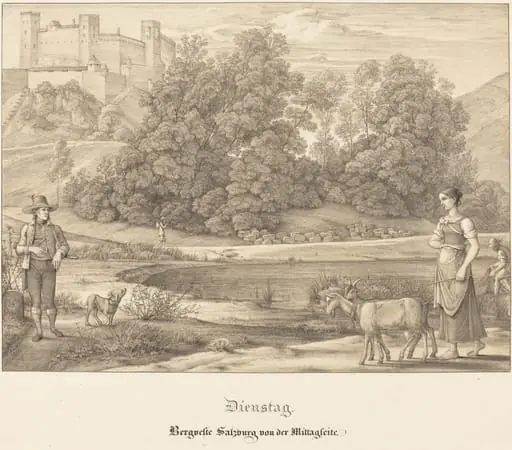 Dienstag - Bergveste Salzburg vor der Mittagseit (Tuesday - The Castle of Salzburg from the Noontime Side)
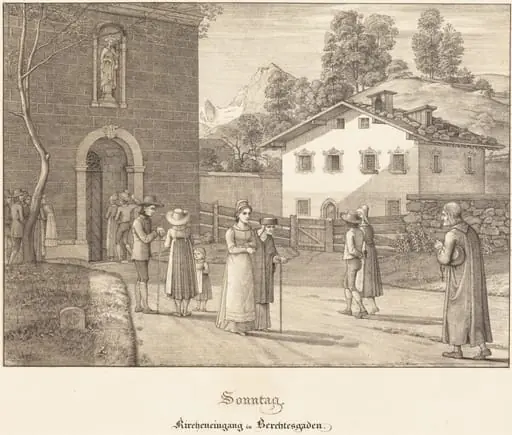 Sonntag - Kircheneingang in Berchtesgaden (Sunday - Going to Church near Berchtesgaden)
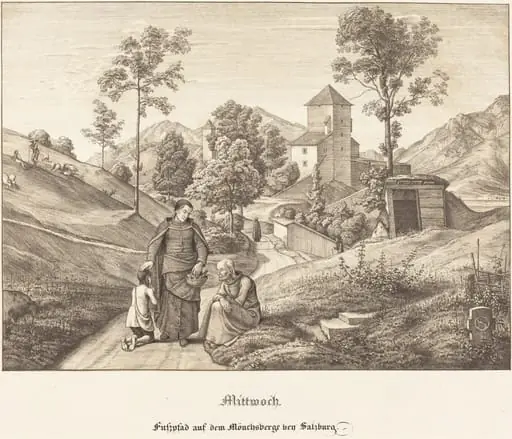 Mittwoch - Fusspfad auf dem Mönchsberge bey Salzburg (Wednesday - Footpath on the Mönchsberge near Salzburg)
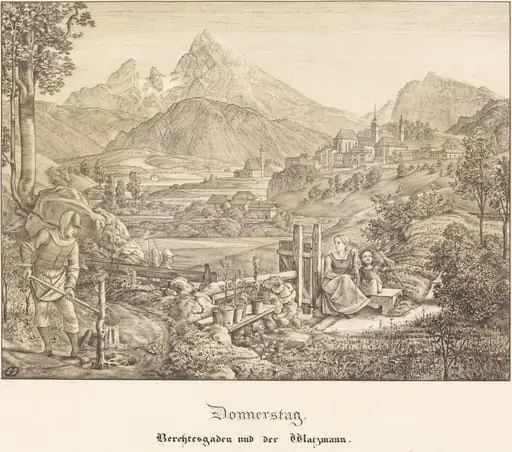 Donnerstag - Berchtesgaden und der Watzmann (Thursday - Berchtesgaden and the Watzmann Mountain)
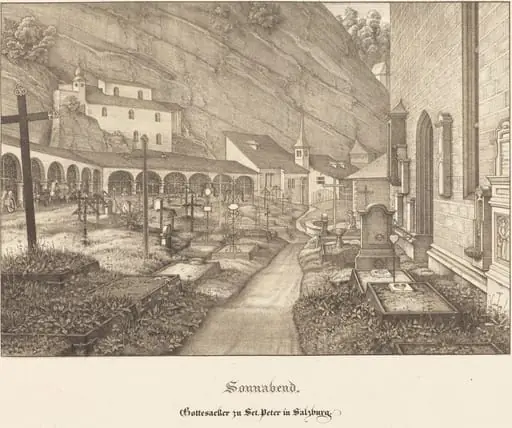 Sonnabend - Gottesacker zu St. Peter in Salzburg (Saturday - Graveyard of St. Peter's in Salzburg)
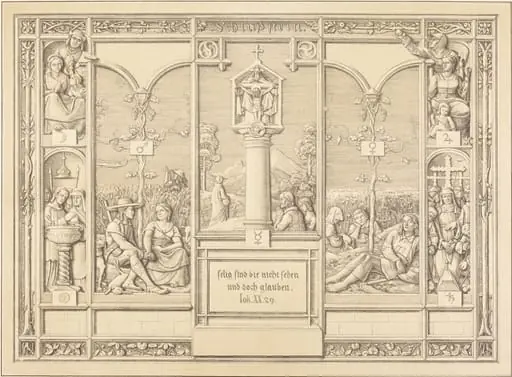 Tailpiece: Selig sind die nicht sehen und doch glauben (Blessed are those who do not
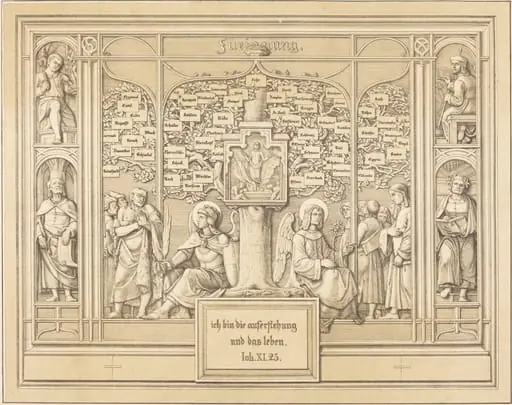 Dedication: Ich bin die Auferstehung und das Leben (I am the resurrection and the life)
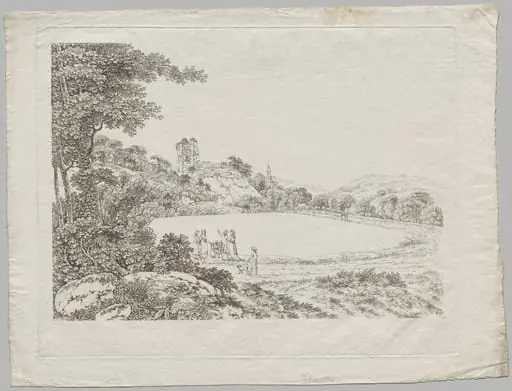 Landscape with Tharandt Castle Ruins
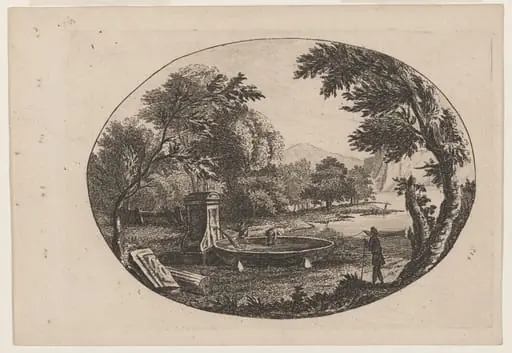 Wooded Landscape with Drinking Spout and Basin
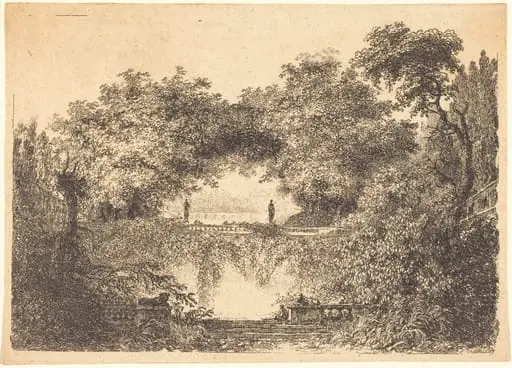 Le Petit Parc
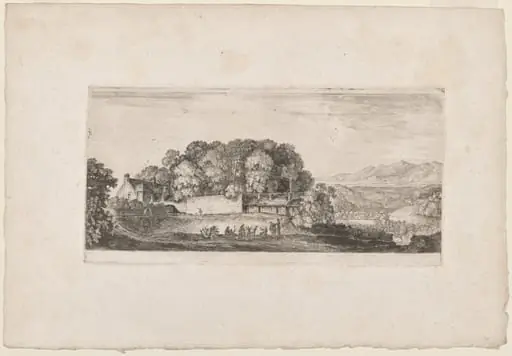 Hill-head, near Lasswade
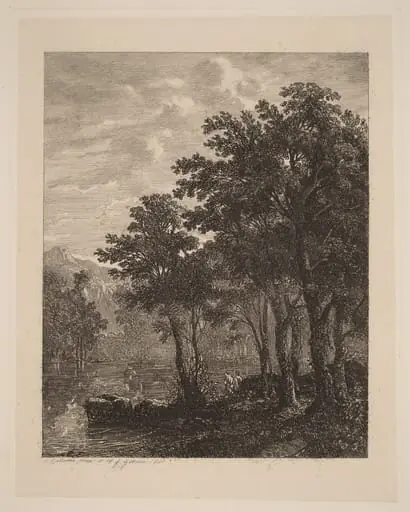 Trees by a River
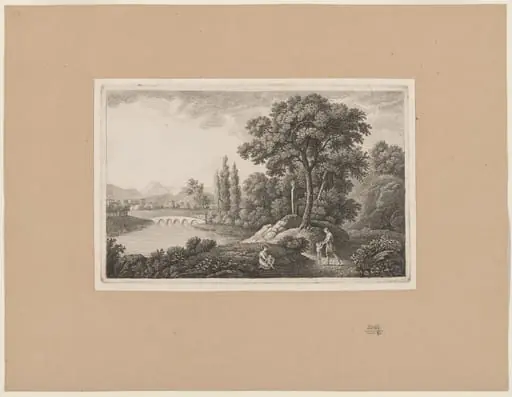 Classical Landscape with a Family by a River
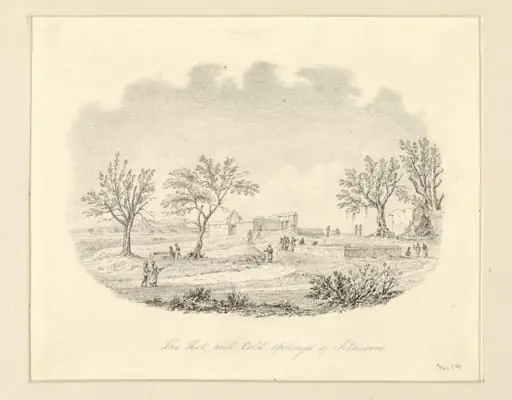 The hot and cold springs of Sitacoon
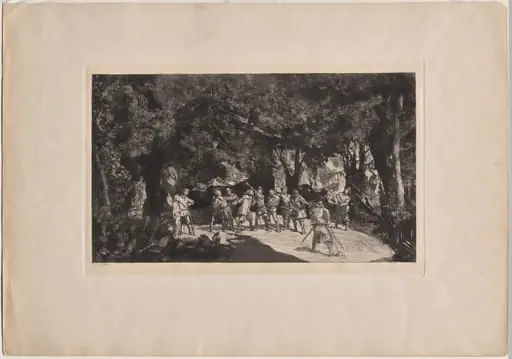 Simplicius among the Soldiers
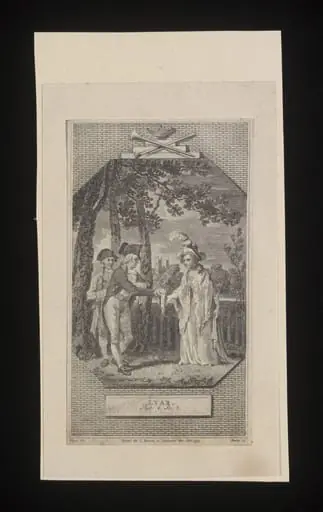 Lyar
Lyar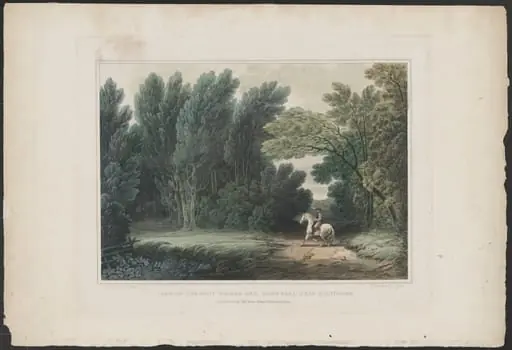 View of the Spot Where General Ross Fell, Near Baltimore
 Monday. Rosenecker Garden in Front of Salzburg
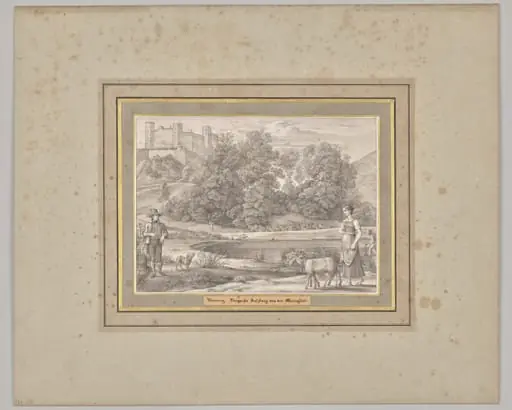 Tuesday. Bergveste Salzburg from the Midday Side