Artwork
The grave of Charles Dickens, Poets' Corner, Westminster Abbey
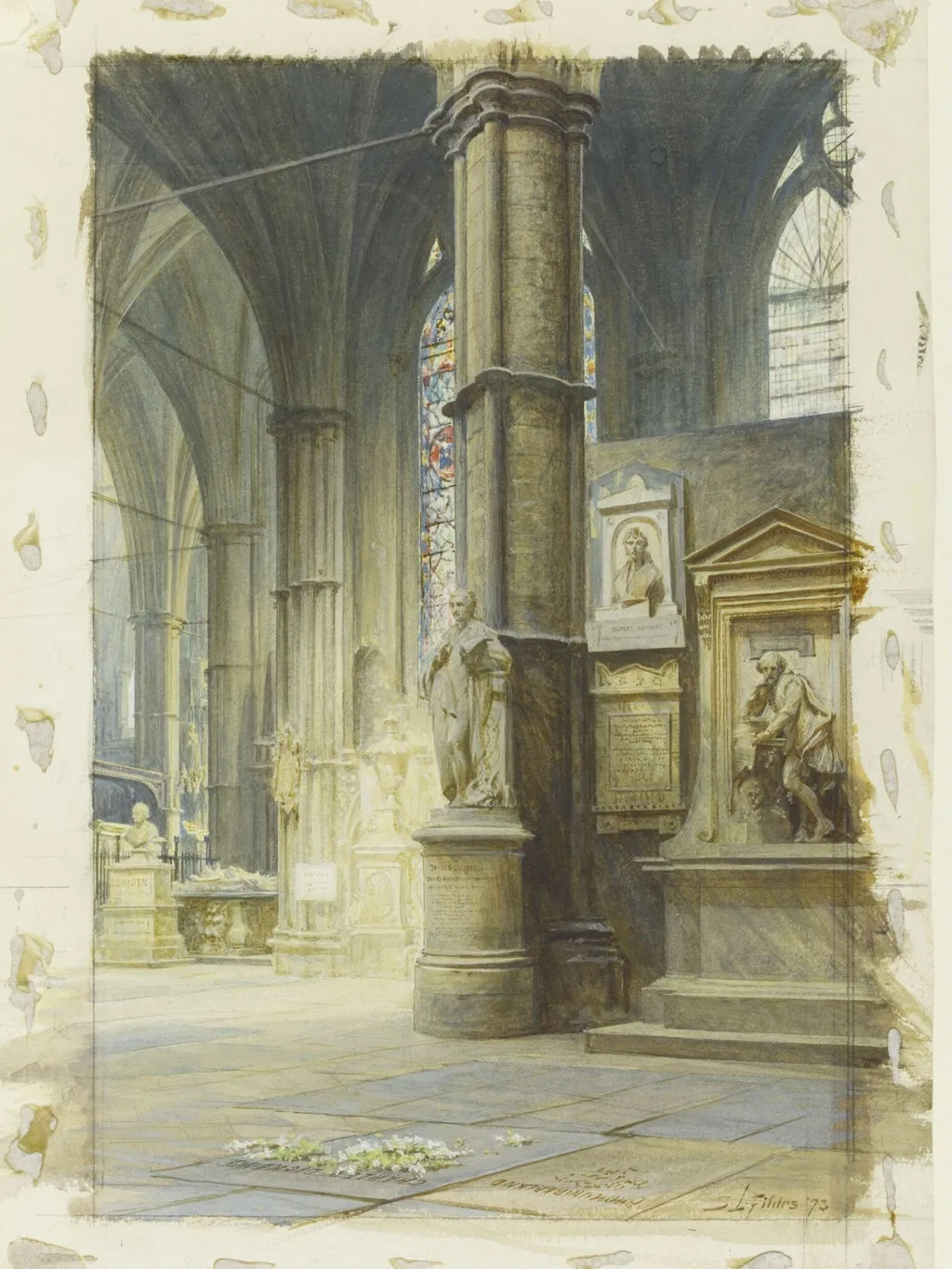
The grave of Charles Dickens, Poets' Corner, Westminster Abbey is a watercolor work on paper by the Impressionist artist Luke Fildes. It dates from 1873 and is held in the collection of the Victoria and Albert Museum.
About this work
Overview
A watercolour by Luke Fildes captures the quiet interior of Poets’ Corner in Westminster Abbey, focusing on Charles Dickens’s tomb. Rendered in muted greens and blues, the composition is structured around a central stone pillar that frames the memorial. The work was commissioned by Dickens’s biographer, John Forster, and later engraved for inclusion in his 1874 biography of the author.
Subject & Meaning
The tomb features two stone figures—one standing, one kneeling—surrounded by a modest arrangement of fresh flowers and weathered flooring.
The tomb features two stone figures—one standing, one kneeling—surrounded by a modest arrangement of fresh flowers and weathered flooring. A small portrait plaque on the memorial underscores Dickens’s literary stature. The scene’s stillness and careful maintenance suggest reverence rather than grandeur, reflecting the subdued public mourning for a writer who shaped Victorian culture without overt monumentality.
Technique & Style
Fildes employed transparent watercolour washes to suggest diffuse light filtering through stained glass, creating soft contrasts between shadow and illumination. The stone surfaces are rendered with delicate tonal gradations, while the scattered petals and worn flagstones add tactile realism. The composition avoids dramatic emphasis, favoring a contemplative, almost documentary tone.
History & Provenance
Commissioned in late 1873 by John Forster for his biography of Dickens, the painting was completed early in 1874 and subsequently engraved by J. Saddler for publication. Correspondence between Forster and Fildes, preserved in the National Art Library, confirms the collaborative process behind the illustration, linking the artwork directly to the literary commemoration of Dickens.
Context
At the time of its creation, Poets’ Corner was becoming a canonical site for national literary remembrance. Dickens’s burial there in 1870 marked a shift in cultural values, elevating the novelist to the same status as poets and dramatists. Fildes’s depiction aligns with this emerging tradition, presenting the grave as a place of quiet homage rather than imperial spectacle.
Legacy
The watercolour remains a key visual record of Dickens’s final resting place, anchoring his legacy within the physical space of Westminster Abbey. Its restrained aesthetic influenced later representations of literary memorials, emphasizing dignity through simplicity. The engraving’s inclusion in Forster’s biography ensured its wide circulation, embedding the image in public memory of the author.
Artist & collection
Artist
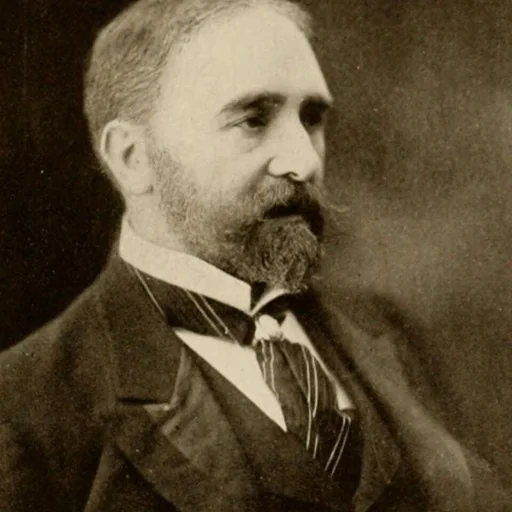
Sir Samuel Luke Fildes (3 October 1843 – 28 February 1927) was a British painter and illustrator born in Liverpool and trained at the South Kensington and Royal Academy Schools. He was the grandson of the political activist Mary Fildes.

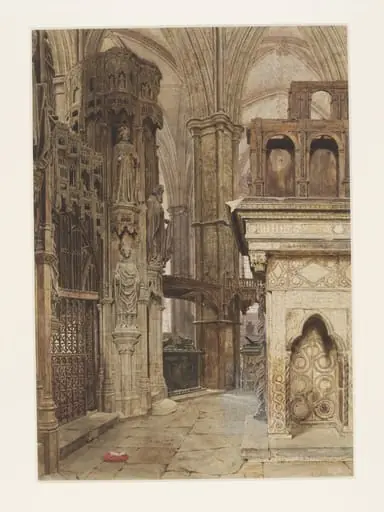 The East End of Edward the Confessor's Chapel and Tomb, As They Now Stand
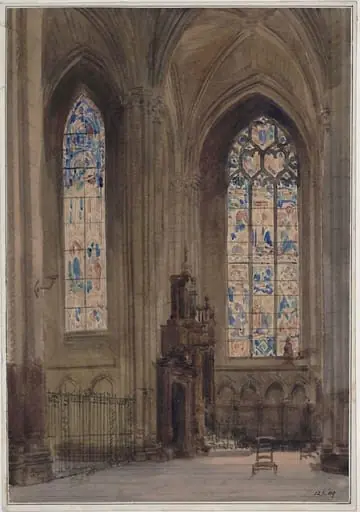 Chapel in the south transept of Rouen Cathedral
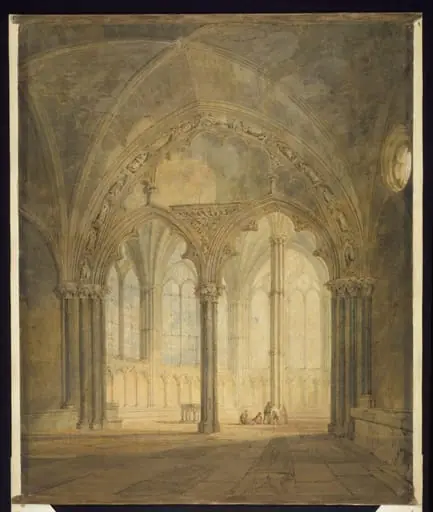 Entrance to the Chapter House, Salisbury Cathedral
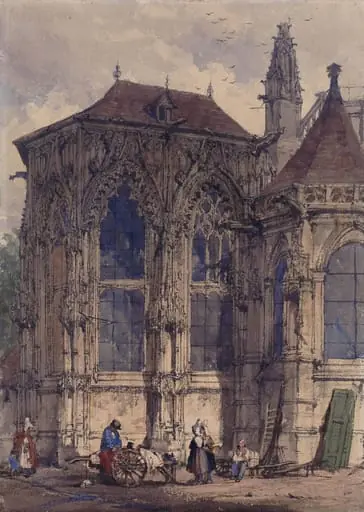 East End of the Church of St. Jacques, Dieppe
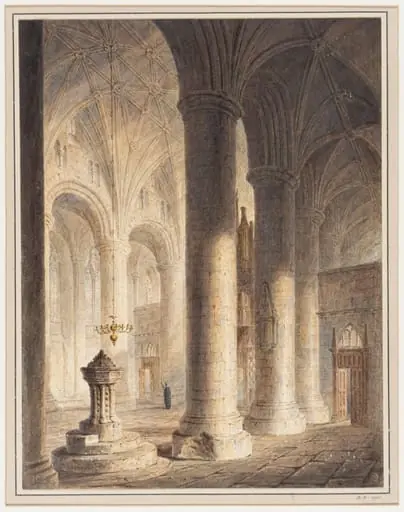 Tewkesbury Abbey
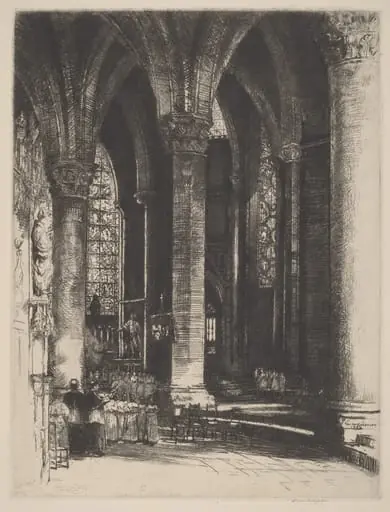 Interior of Chartres
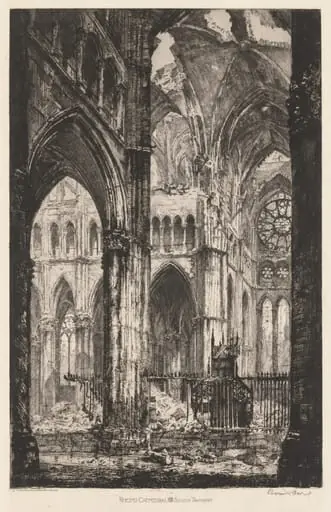 Rheims Cathedral, South Transept
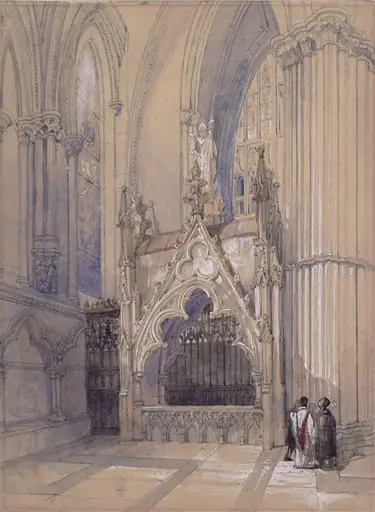 Monument of Archbishop Greenfield in the Eastern Aisle of the North Transept of York Minster
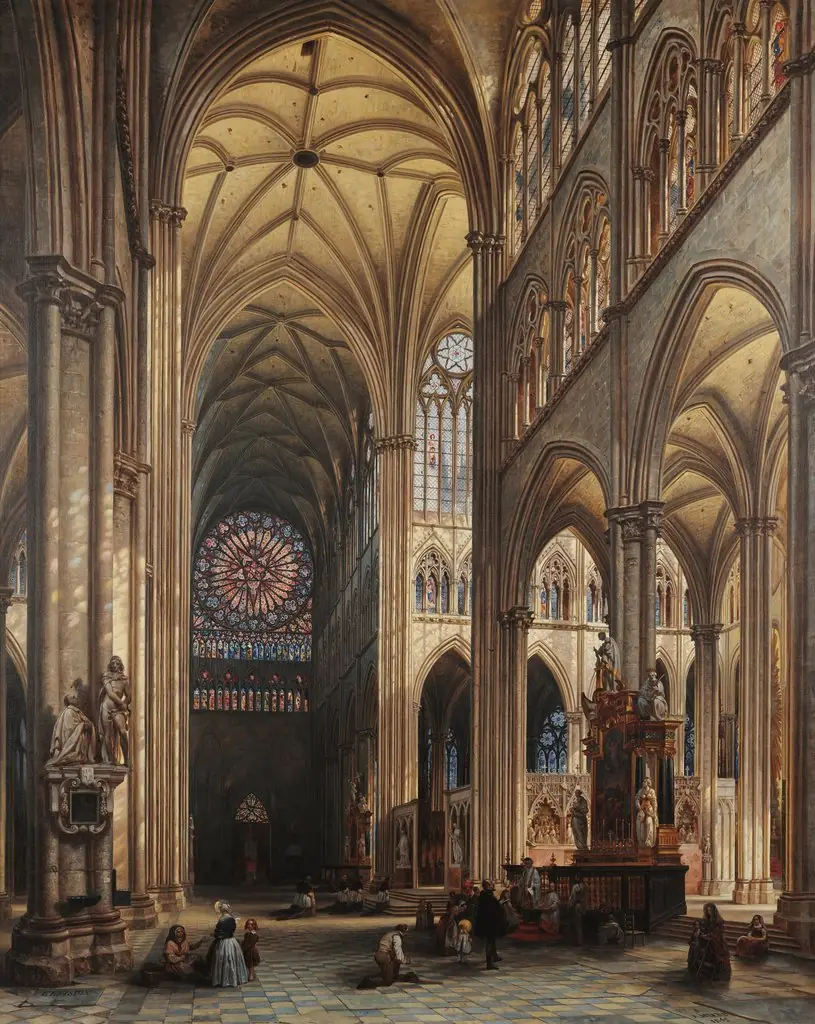 Interior of the Cathedral of Amiens
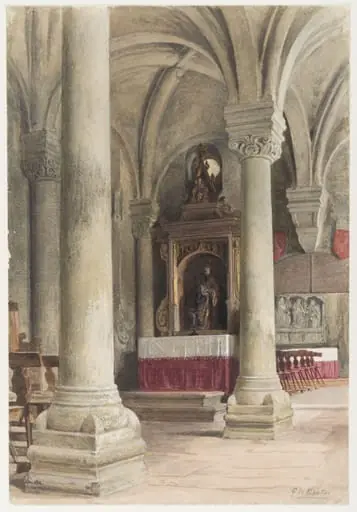 The Chapel of St Eucharius, Nuremberg
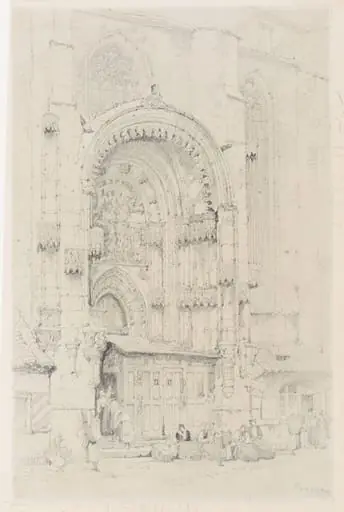 Prague Cathedral
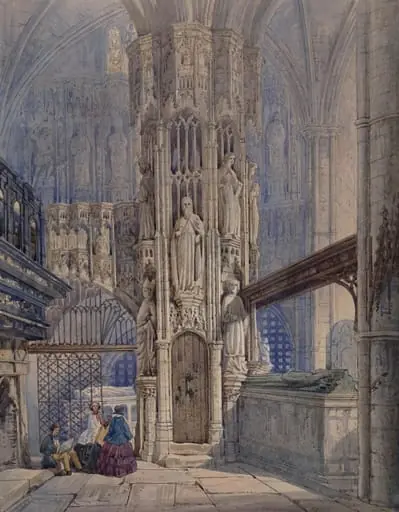 Edward the Confessor's Chapel, Westminster Abbey