Artwork
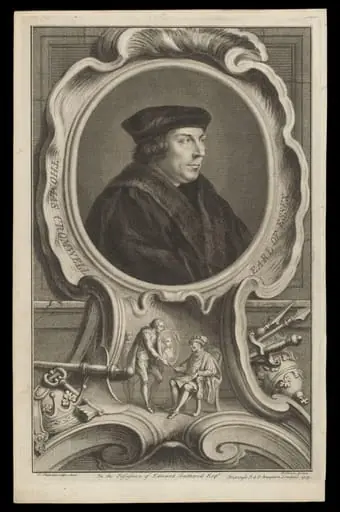
Thomas Cromwell, Earl of Essex
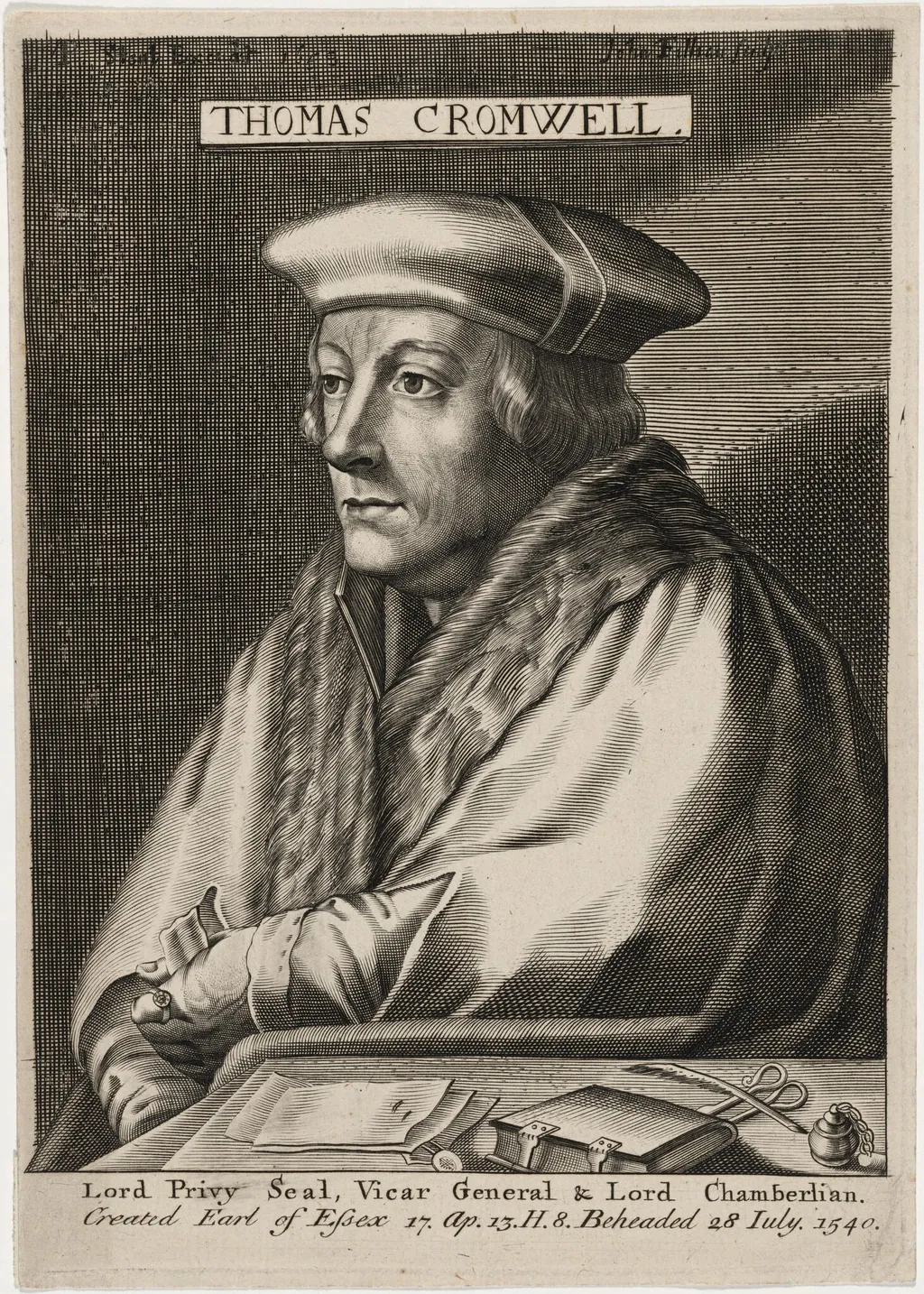
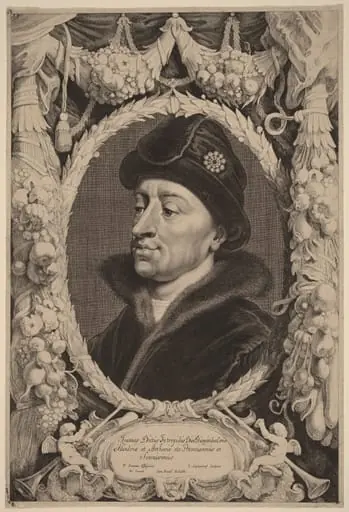
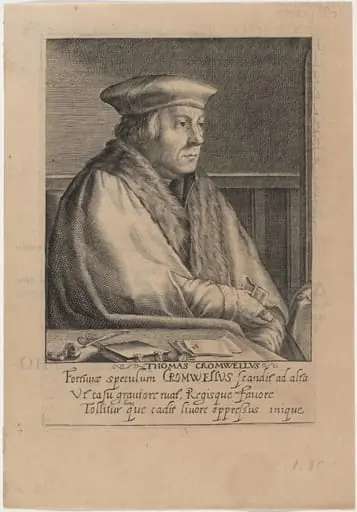
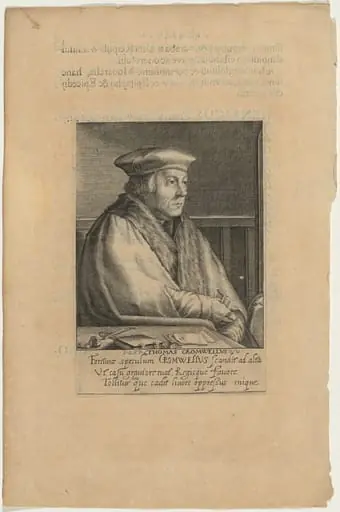
Thomas Cromwell, Earl of Essex is an ink print by the Baroque artist John Fillian. It dates from 1653 and is held in the collection of the National Gallery of Art.
About this work
The name "Thomas Cromwell" is written at the top, and the text below says he held important government jobs before being executed.
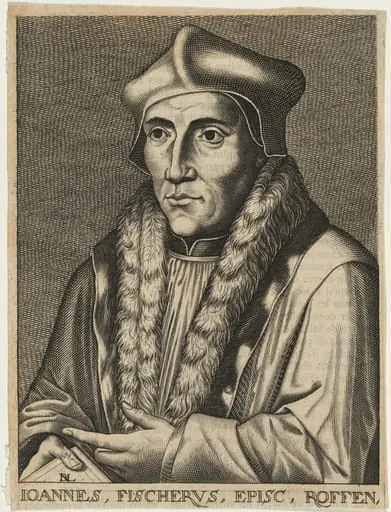
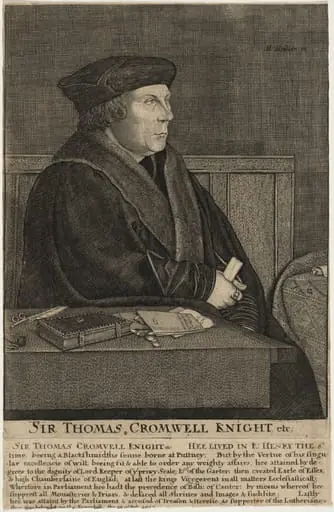
This is a black-and-white portrait of a serious-looking man in a dark cap and fur collar. His hands are clasped in front of him, and his face is turned slightly to the side. Below him, tiny tools like a hammer and a pair of pliers are drawn on a table, almost like a symbol.
The name "Thomas Cromwell" is written at the top, and the text below says he held important government jobs before being executed. This image was made in 1653, long after his death, as a kind of memorial.
If you like this style, look up engraving to see how artists use lines to create depth.
Overview
An engraving from 1653 by John Fillian depicts Thomas Cromwell, Earl of Essex, in monochrome. Created decades after his execution, the portrait serves as a posthumous tribute rather than a contemporary likeness. The image presents Cromwell in formal attire, with a dark cap and fur-lined collar, his hands folded before him. Below, small tools are delicately rendered on a surface, suggesting his administrative and legal roles. The composition is restrained, emphasizing solemnity over ornamentation.
Subject & Meaning
The portrait captures Cromwell not as a nobleman in ceremonial regalia, but as a statesman defined by function. The inclusion of miniature tools—hammer, pliers—symbolizes his role in shaping Tudor governance, particularly in legal and fiscal reform. His turned gaze and clasped hands convey quiet authority, avoiding overt grandeur. The inscription below confirms his high offices and violent end, framing the image as a commemorative record of a controversial figure whose influence outlasted his life.
Technique & Style
John Fillian employed fine, controlled lines typical of mid-17th-century engraving to model form and texture. The fur collar and fabric folds are rendered through dense cross-hatching, while the face is softened with subtle gradations. The tools beneath are rendered with precise, sharp strokes, contrasting with the smoother tones of the figure. The composition is tightly framed, focusing attention on the face and symbolic objects, reflecting the engraving’s function as a printed memorial rather than a commissioned portrait.
History & Provenance
Created in 1653, during the Interregnum, the engraving emerged in a period when public memory of Tudor figures was being reassessed. Cromwell, executed in 1540, had long been vilified by royalist circles but was viewed more neutrally by Parliamentarians. This print likely circulated among those sympathetic to his administrative legacy. Its production suggests a deliberate effort to preserve his image amid political upheaval, using print technology to reach a wider audience than painted portraits could.
Context
In the 1650s, England was under Puritan rule, and historical figures from the Tudor era were reevaluated through a lens of governance and reform. Cromwell’s role in dissolving monasteries and centralizing state power made him a polarizing symbol. This engraving reflects a growing interest in documenting state officials, not just monarchs. The tools beneath him align with contemporary ideals of merit-based administration, subtly positioning him as a pragmatist rather than a courtier.
Legacy
The engraving stands as one of the earliest printed representations of Cromwell to circulate widely after his death. It contributed to the visual vocabulary of Tudor statesmen in later historical texts. Though not based on a contemporary portrait, its symbolic language—tools, posture, inscription—became a template for subsequent depictions. Its endurance in collections reflects its role as a quiet, enduring artifact of how political memory was shaped through print.
Artist & collection