Artwork
Emperor Maximilian I
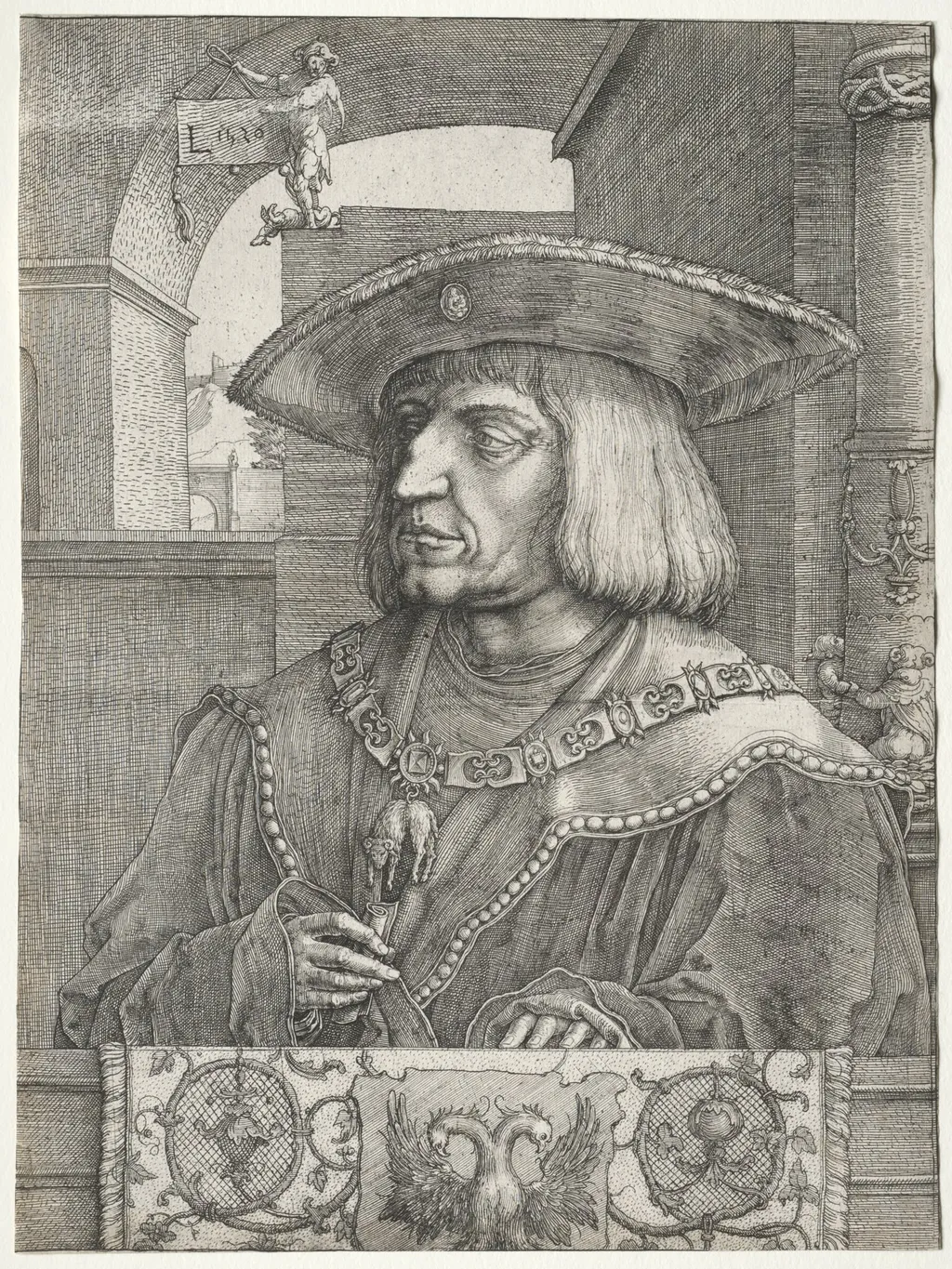
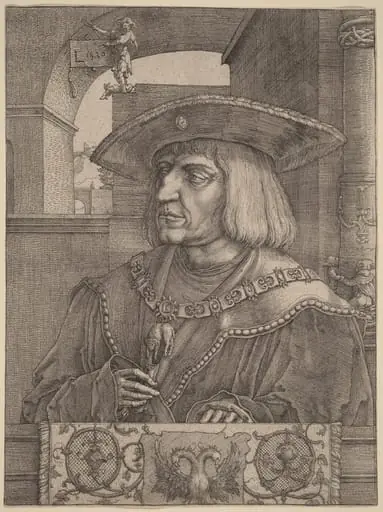
Emperor Maximilian I is a print by the Renaissance artist Lucas van Leyden. It dates from 1520 and is held in the collection of the Cleveland Museum of Art.
About this work
Overview
Executed with fine linear precision, the portrait emphasizes the emperor’s regal bearing through detailed rendering of his attire and accessories.
Created in 1520 by the Dutch artist Lucas van Leyden, this black-and-white engraving depicts Emperor Maximilian I, Holy Roman Emperor. Executed with fine linear precision, the portrait emphasizes the emperor’s regal bearing through detailed rendering of his attire and accessories. The work belongs to the collection of The Cleveland Museum of Art and reflects van Leyden’s reputation as a leading printmaker of his time, skilled in both woodcut and engraving techniques.
Subject & Meaning
The portrait presents Maximilian I in formal imperial attire: a broad-brimmed hat, a heavy chain of office, and an ornate collar signify his status. In his right hand, he holds a small object, possibly a key or seal, suggesting authority over governance or territory. The distant architecture behind him, crowned by a statue, evokes imperial legacy and permanence. The composition avoids overt symbolism, instead conveying power through restrained dignity and meticulous detail.
Technique & Style
Van Leyden employed fine-line engraving to achieve remarkable clarity and texture. The emperor’s fur-lined garments, intricate jewelry, and the texture of his hat are rendered with controlled, deliberate strokes. Shading is subtle, relying on line density rather than tone. The background is minimized, directing focus to the figure’s face and costume. This precision reflects the Northern Renaissance emphasis on realism and the artist’s command of the engraving medium.
History & Provenance
The engraving was produced in 1520, during Maximilian’s reign, likely as part of a broader effort to disseminate his image across the Holy Roman Empire. Van Leyden, based in the Low Countries, was known for producing portraits of prominent figures for elite audiences. The work entered the Cleveland Museum of Art’s collection in the 20th century, where it remains as a testament to early 16th-century print culture and imperial portraiture.
Context
In the early 1500s, engraved portraits served as tools of political representation, circulating among nobility and civic leaders. Van Leyden was among the first Dutch artists to elevate printmaking beyond reproduction into a respected artistic form. His work coincided with the rise of humanist ideals and the increasing use of visual media to assert authority, making this portrait part of a wider trend in Northern European visual propaganda.
Legacy
Lucas van Leyden’s engraving of Maximilian I exemplifies the technical sophistication achievable in printmaking during the Northern Renaissance. While not widely reproduced in modern times, it influenced later portrait engravers through its balance of realism and restraint. The work remains a key example of how print media could convey political presence without overt grandeur, shaping how rulers were visually represented in the decades that followed.
Artist & collection

Artist
Lucas van Leyden (1494 – 8 August 1533), was a Dutch painter and printmaker in engraving and woodcut. Lucas van Leyden was among the first Dutch exponents of genre painting and was a very accomplished engraver.

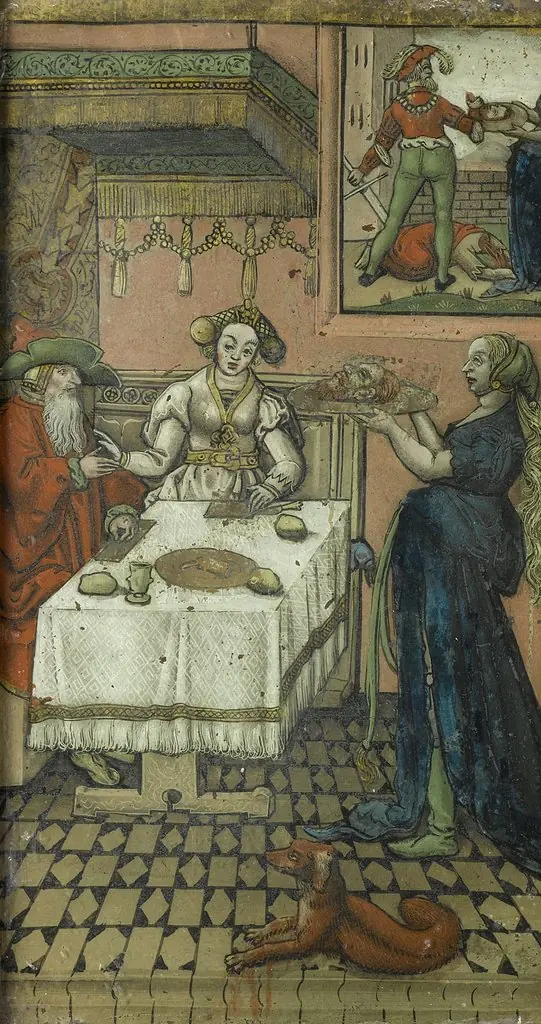 Salome with the head of St John the Baptist
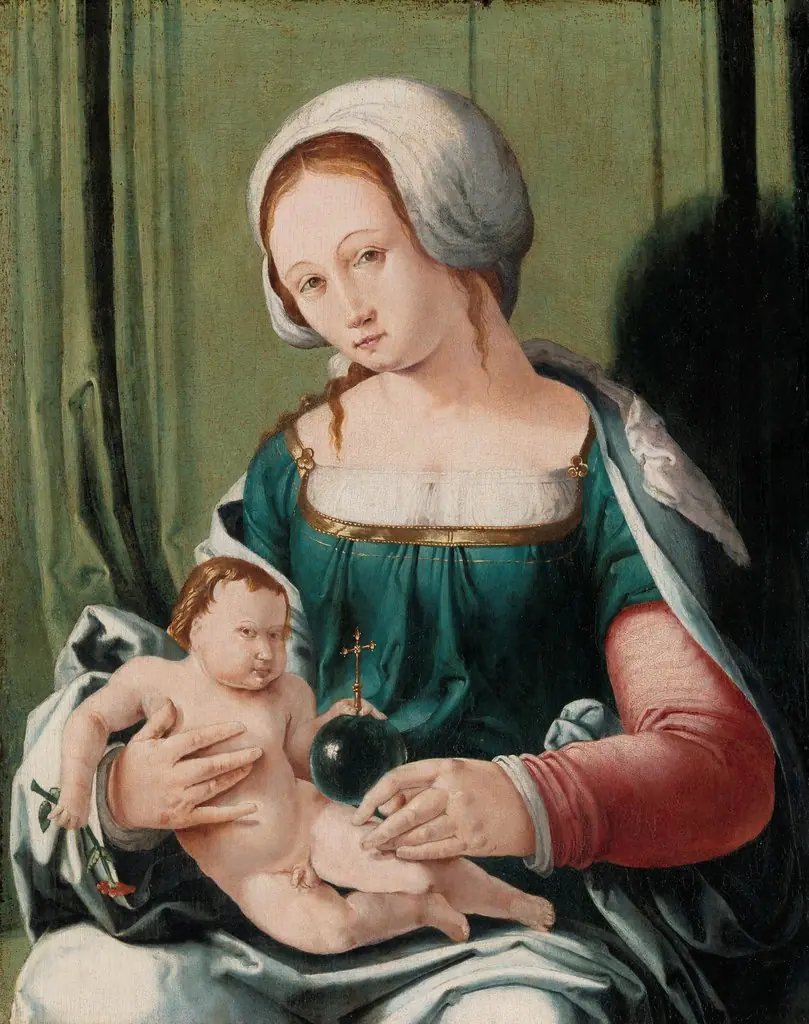 The Virgin and Child
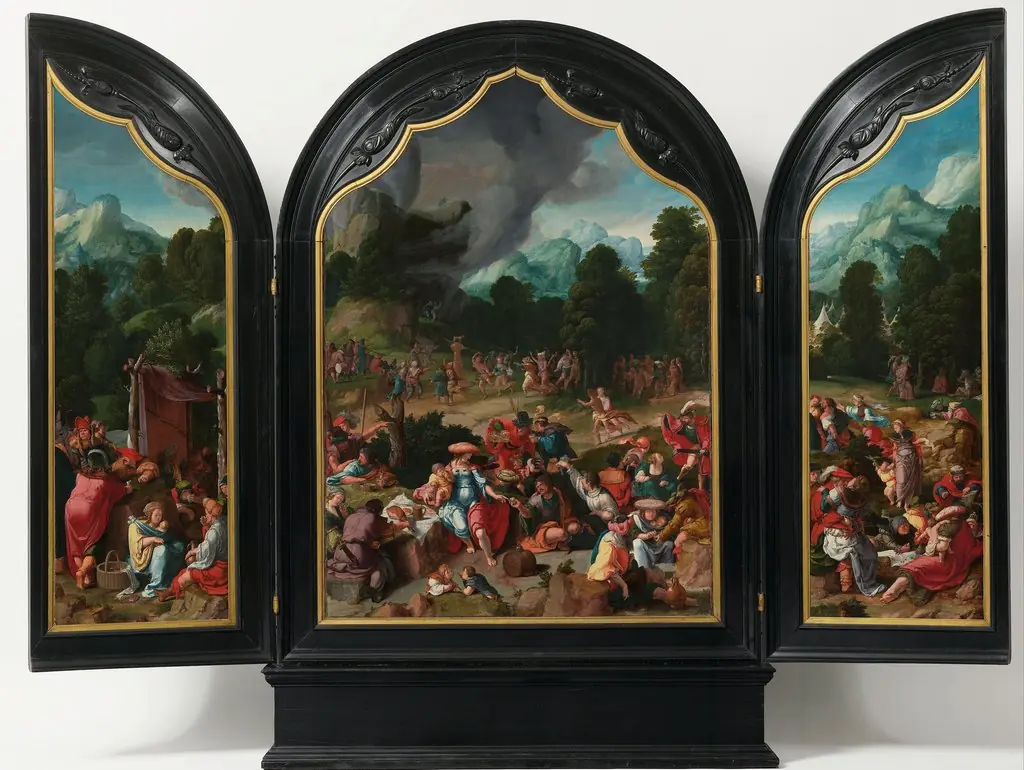 Worship of the Golden Calf
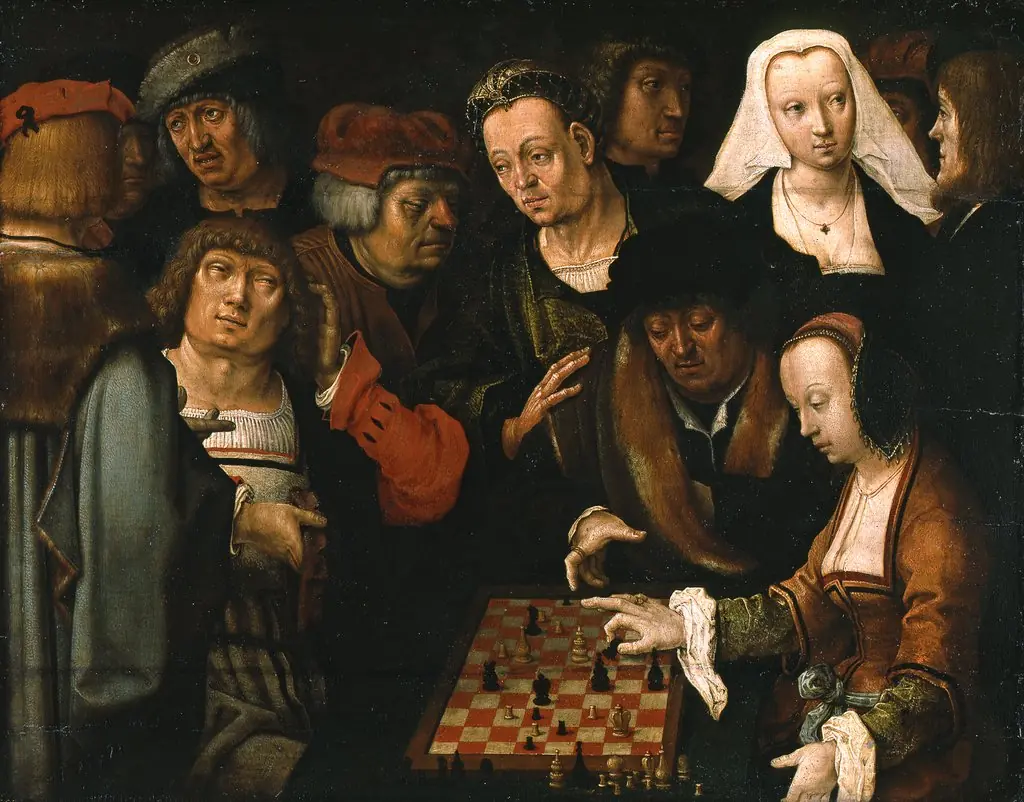 A Game of Chess
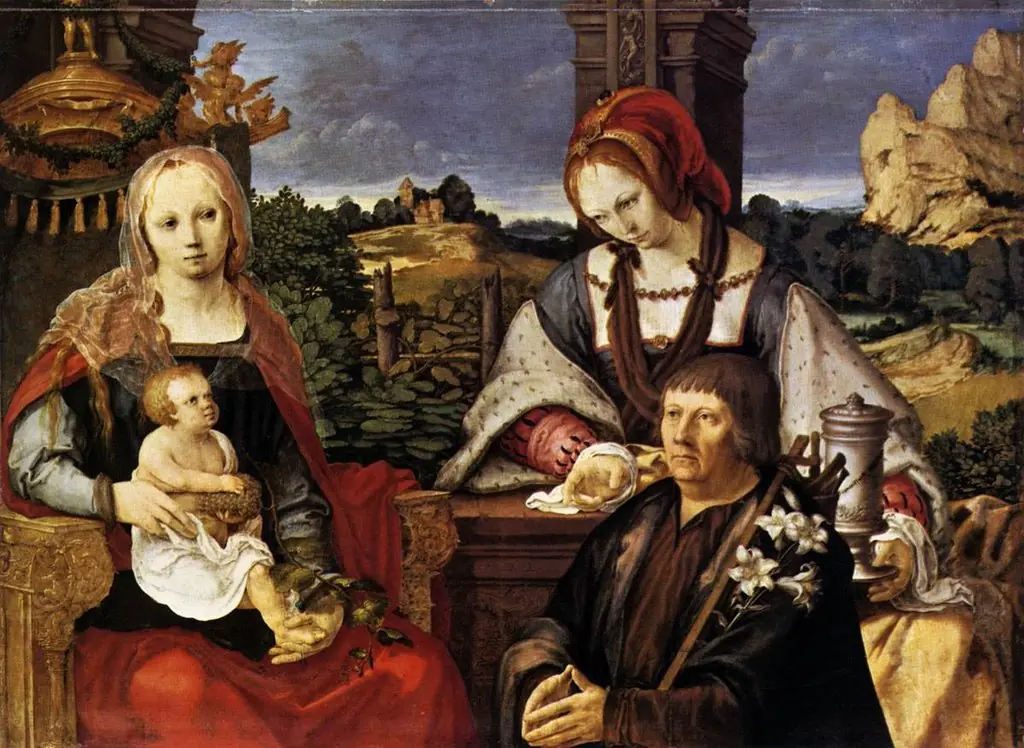 Mary with Child, St. Maria Magdalena and founder (separate outside, Inv. No. 7713)
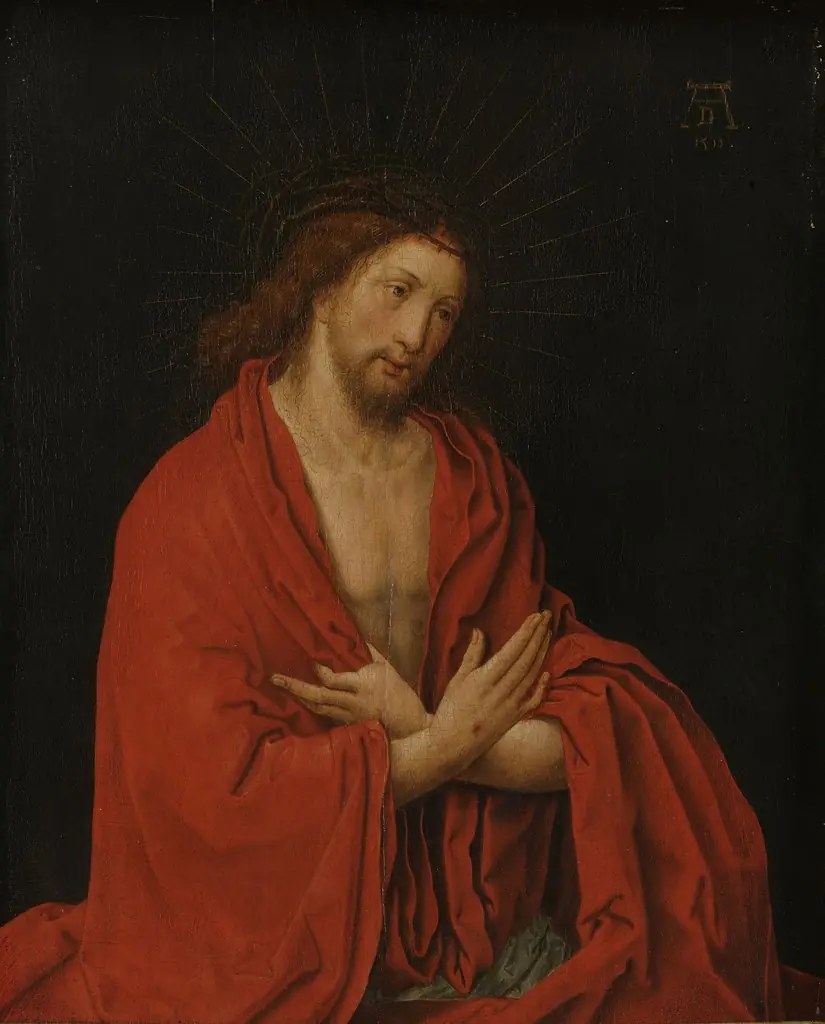 Inner left wing of a diptych with Christ as the Man of Sorrows
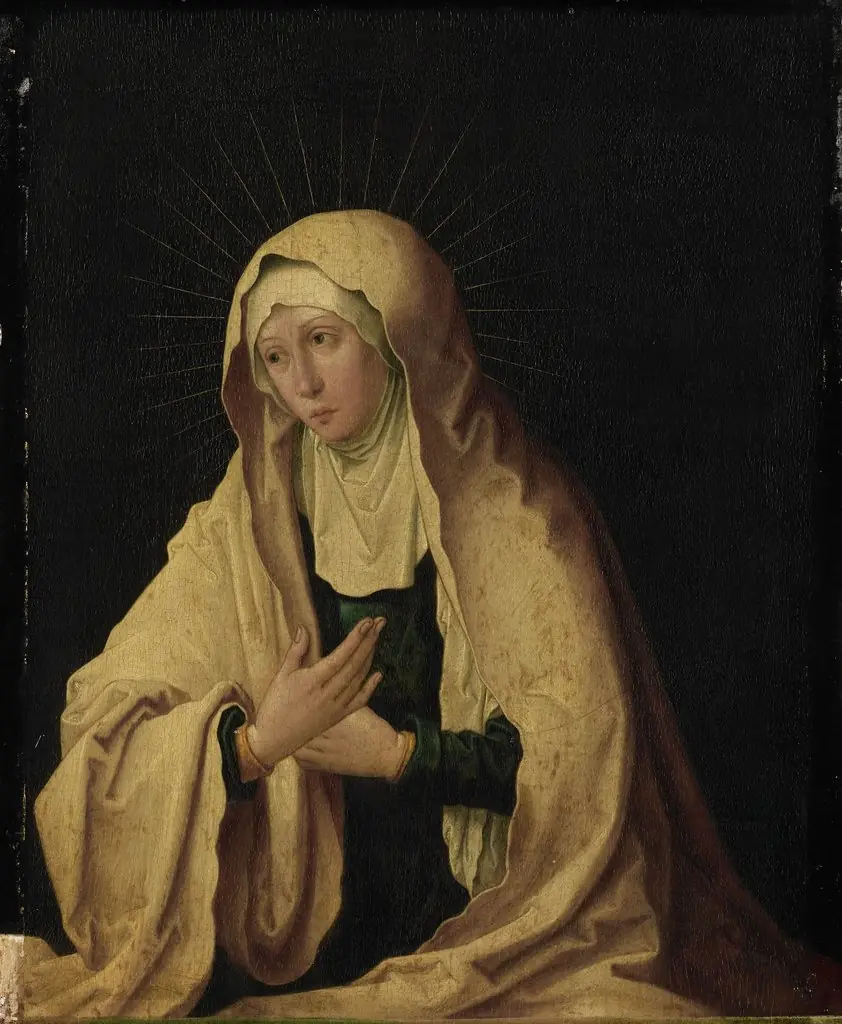 Inner right wing of a diptych with the Virgin as Mater Dolorosa
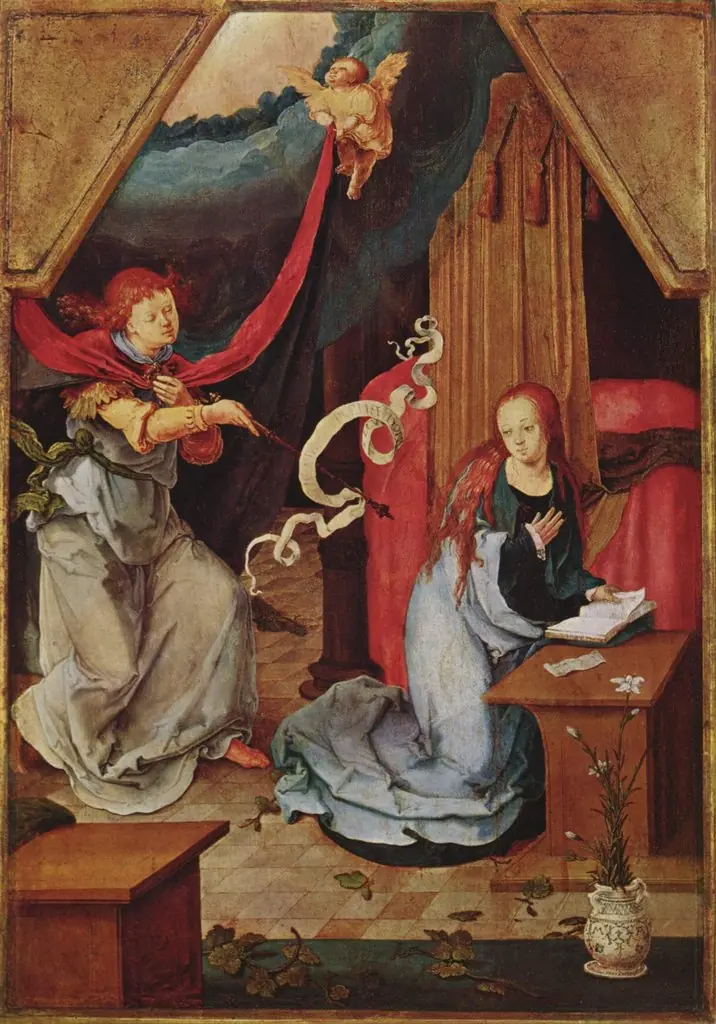 Annunciation