Artwork
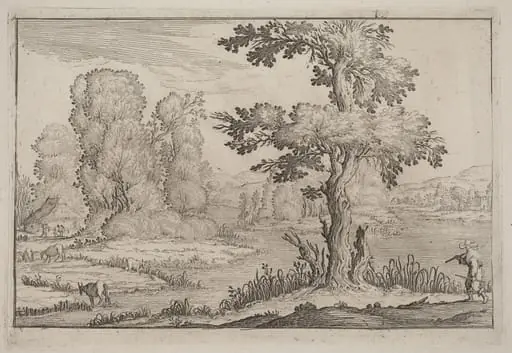
Rusticula minor, The Snipe
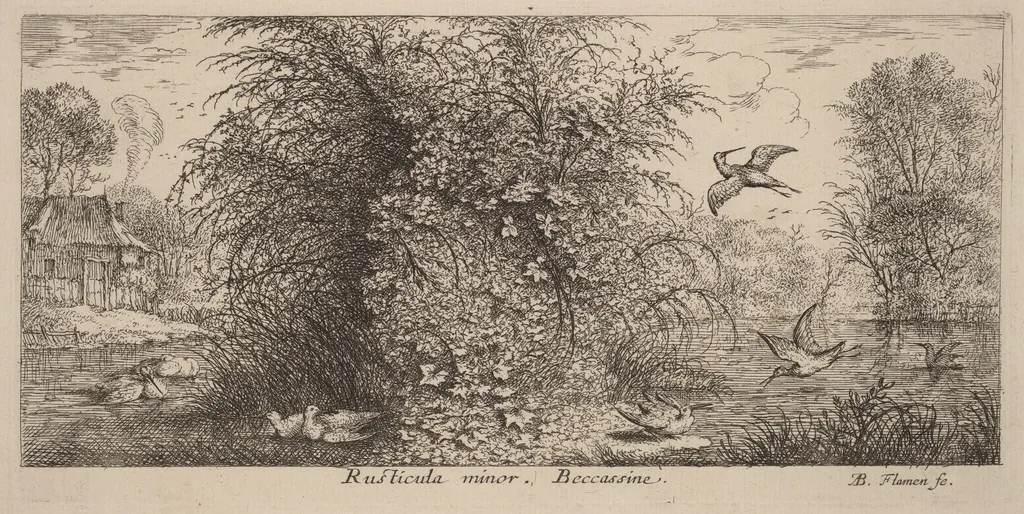
Rusticula minor, The Snipe is an ink print by the Baroque artist Albert Flamen. It dates from 1644 and is held in the collection of the National Gallery of Art.
About this work
Overview
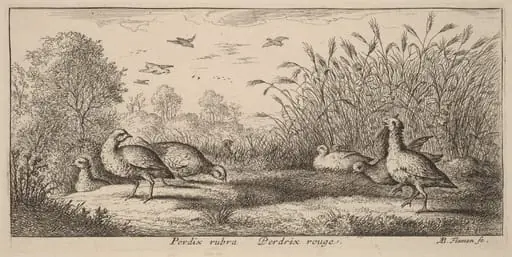
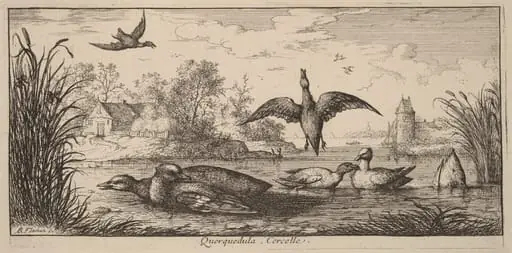
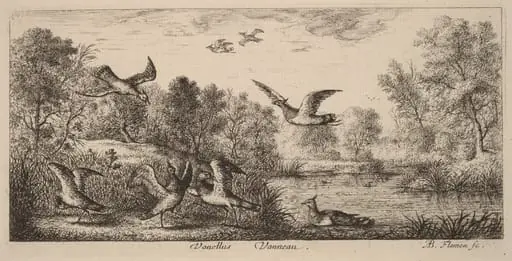
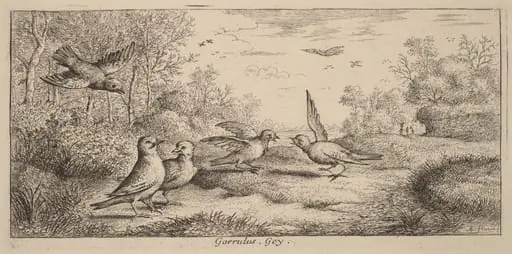
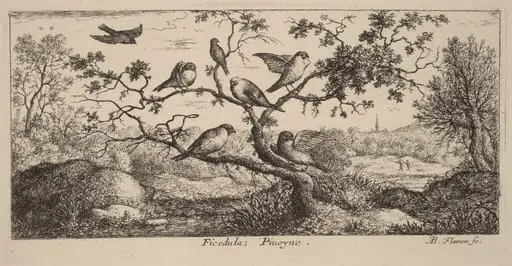
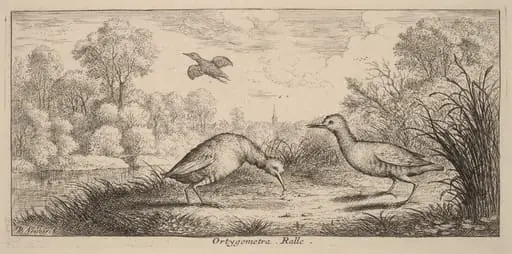
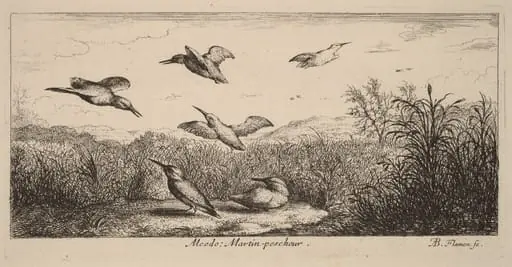
Albert Flamen’s *Rusticula minor, The Snipe* is an etching executed on laid paper in 1644. The Flemish-born artist, active in Paris, produced the work as part of his broader output that included engraving, painting, and tapestry design. The print illustrates a quiet wetland scene, centering on a small bird in flight, and reflects the 17th‑century fascination with detailed natural observation.
Subject & Meaning
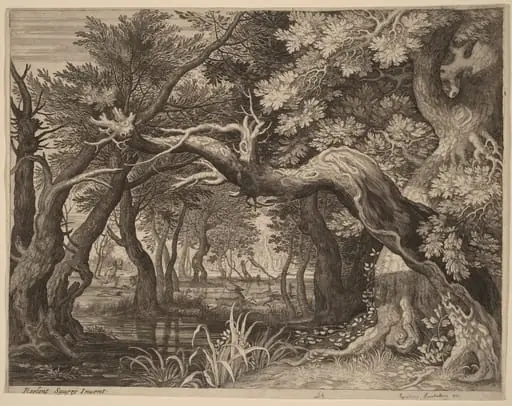
The composition presents a shallow pool populated by a few ducks, a prominent bush, and a distant house, while a snipe—a slender wading bird—takes off from the right edge. The tranquil setting and careful rendering of the bird suggest an intent to document the species within its habitat, aligning the image with contemporary scientific and illustrative interests.
Technique & Style
Flamen employed the etching process on laid paper, allowing fine lines to convey texture in water, foliage, and feather. The method produces subtle tonal variations that give depth to the landscape and a sense of movement to the bird’s wings. The overall style is naturalistic, emphasizing accurate detail over decorative embellishment.
History & Provenance
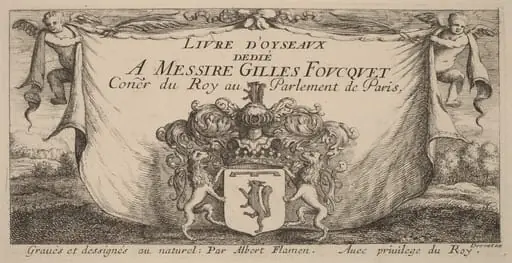
Created in the mid‑17th century, the print was likely produced for inclusion in illustrated natural history volumes, a common practice for Flamen’s work. While specific ownership records are scarce, the piece survives in museum collections that specialize in early modern prints, illustrating the artist’s role in the dissemination of scientific imagery during his Parisian period.
Artist & collection
Artist
Albert Flamen (c. 1620 – after 1669) was a Flemish engraver, painter, and tapestry designer. He was active in Paris, where he worked mainly as an illustrator on numerous publications.