Artwork
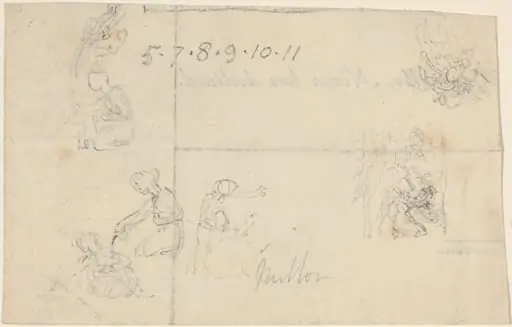
Figures Illustrating Balance and Perspective [recto]
![Figures Illustrating Balance and Perspective [recto], by John Flaxman, graphite, 1790](https://artifactworldgallery.com/img/john-flaxman--figures-illustrating-balance-and-perspective-recto--9cd0e17470828f37-w1024.webp)
Figures Illustrating Balance and Perspective [recto] is a graphite drawing by the Romanticist artist John Flaxman. It dates from 1790 and is held in the collection of the National Gallery of Art.
About this work
Overview
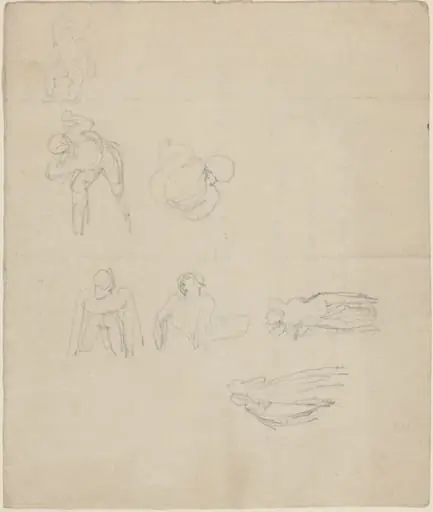
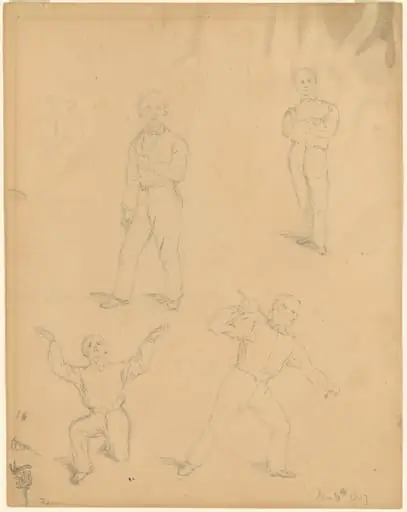
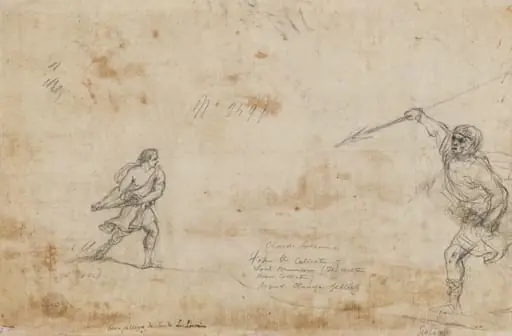
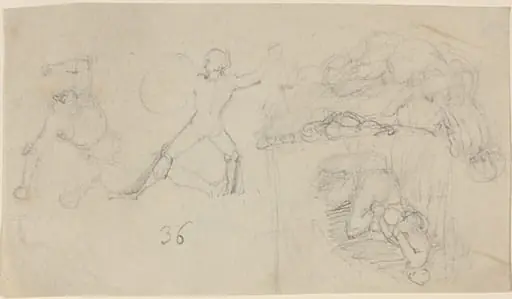
Created in 1790, this graphite drawing by English artist John Flaxman records a series of quick studies of human figures. The sheet contains several loosely rendered poses, ranging from static stances to dynamic actions such as running, leaping, and holding a pole or spear. Light, faint lines convey the fleeting nature of the sketches, which appear to be preparatory notes on balance and movement.
Subject & Meaning
The compositions focus on the mechanics of equilibrium, emphasizing how the positioning of arms and legs contributes to a figure’s stability. An ink annotation at the top reads “Balance of the figure by the arm,” indicating that Flaxman was investigating the role of limb placement in maintaining poise during various activities.
Technique & Style
Executed in graphite with occasional ink markings, the drawing exhibits a rapid, gestural hand. The strokes are intentionally loose, suggesting a study rather than a finished work. This approach aligns with Flaxman’s practice of producing preliminary sketches to explore form before committing to more elaborate compositions.
History & Provenance
John Flaxman, trained initially under the potter Josiah Wedgwood and later in Rome, produced this sheet during a period when he was establishing himself as a leading neoclassical draughtsman. The drawing likely originated as part of his personal studies for book illustrations and monument designs, though its exact ownership trail before entering a public collection remains undocumented.
Context
The work reflects Flaxman’s broader engagement with classical ideals and his interest in the human body as a vehicle for expressing harmony and proportion. His experience with funerary monuments and classical sculpture informed the emphasis on balanced poses, a concern that permeated neoclassical art in the late eighteenth century.
Artist & collection
Artist
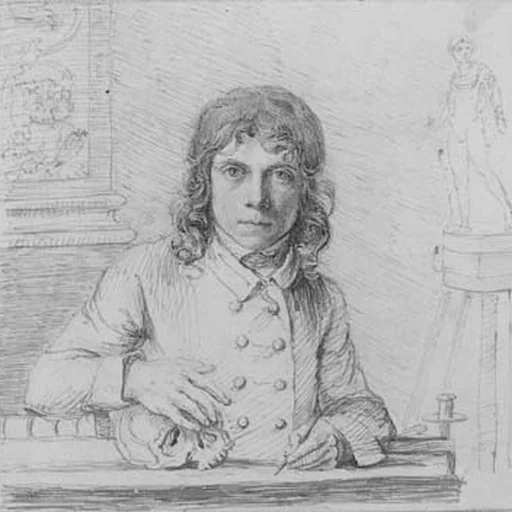
John Flaxman (6 July 1755 – 7 December 1826) was an English sculptor and draughtsman who was a leading figure in British and European Neoclassicism.

![Sheet of Studies [recto and verso], by John Flaxman](https://artifactworldgallery.com/img/john-flaxman--sheet-of-studies-recto-and-verso--3a0de97c6f7386d1-w320.webp)
![Studies of Crowing Rooster and Reclining Figures [recto and verso], by John Flaxman](https://artifactworldgallery.com/img/john-flaxman--studies-of-crowing-rooster-and-reclining-figures-recto-and-v--6ae88f69b8f5a01b-w320.webp)