Artwork
Study for Pilgrim's Progress (?)
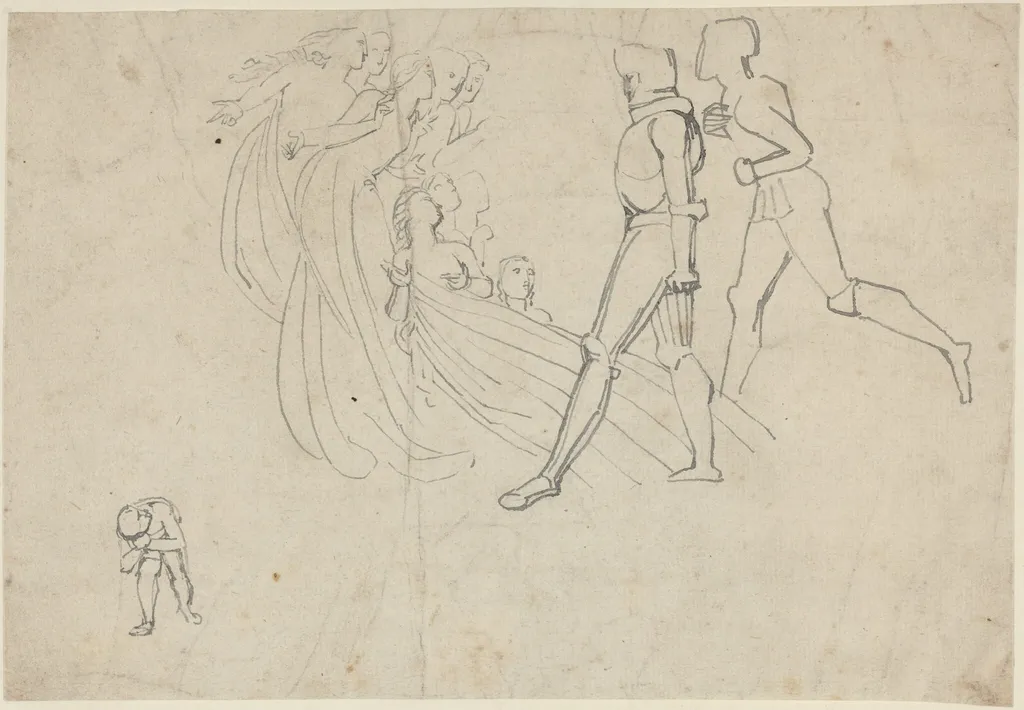
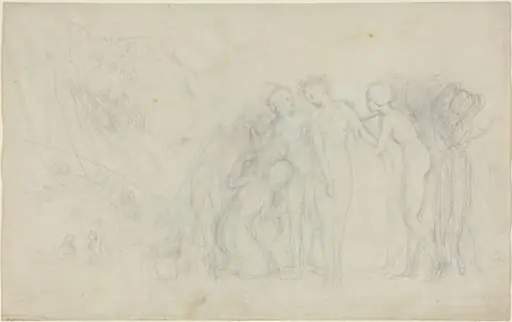
Study for Pilgrim's Progress (?) is a graphite drawing by the Romanticist artist John Flaxman. It dates from 1790 and is held in the collection of the National Gallery of Art.
About this work
Overview
John Flaxman's 1790 drawing, titled *Study for Pilgrim's Progress* (question mark), is executed in pen and gray ink over a graphite underdrawing on laid paper. The work is a preparatory sketch, characteristic of Flaxman's practice of developing compositions through rapid, gestural lines and modest shading.
Subject & Meaning
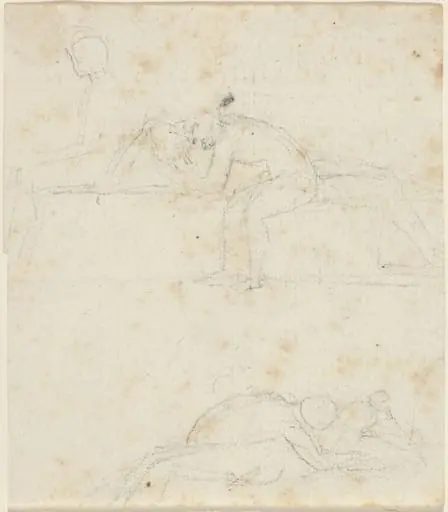
The composition depicts a small procession of figures moving in varied directions. Some participants wear long, flowing robes, while others are in simpler attire. A central figure carries a staff, and a diminutive figure is shown seated alone on the ground, suggesting a narrative of pilgrimage or spiritual journey.
Technique & Style
Flaxman employs loose, swift strokes to outline the group, allowing the drawing to function as a quick study. Light cross‑hatching creates modest tonal variation, giving a sense of movement and spatial depth without detailed rendering, a method typical of his neoclassical draftsmanship.
History & Provenance
The sketch originates from Flaxman's early period after his Roman sojourn, when he was producing book illustrations and designs for funerary monuments. It reflects his transition from modelling for Josiah Wedgwood’s pottery to a career as a leading neoclassical draughtsman in Britain.
Context
Created during the height of British neoclassicism, the drawing aligns with Flaxman's interest in classical literature and moral allegory. The subject, drawn from John Bunyan’s *Pilgrim’s Progress*, would have resonated with contemporary audiences familiar with the work’s religious and ethical themes.
Artist & collection
Artist
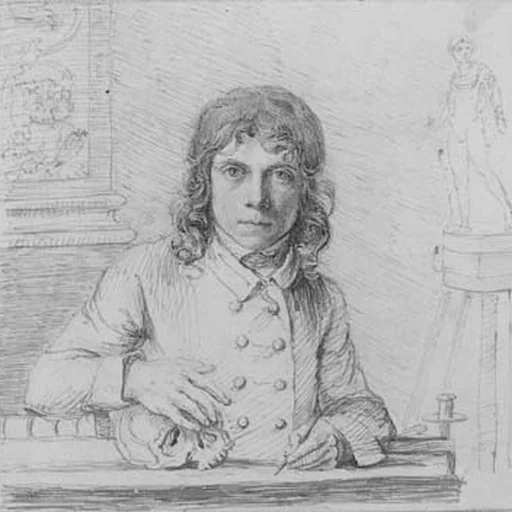
John Flaxman (6 July 1755 – 7 December 1826) was an English sculptor and draughtsman who was a leading figure in British and European Neoclassicism.

 Sheet of Sketches, including Two Warriors Fighting
![Sheet of Studies [recto and verso], by John Flaxman](https://artifactworldgallery.com/img/john-flaxman--sheet-of-studies-recto-and-verso--6fd1500085ec614c-w320.webp) Sheet of Studies [recto and verso]
Sheet of Studies [recto and verso]![Sketch of a Swordsman Standing Over His Defeated Opponent [recto], by William Blake](https://artifactworldgallery.com/img/william-blake--sketch-of-a-swordsman-standing-over-his-defeated-opponent-re--c9ecb7b4c136050a-w320.webp) Sketch of a Swordsman Standing Over His Defeated Opponent [recto]
Sketch of a Swordsman Standing Over His Defeated Opponent [recto] Figure Studies
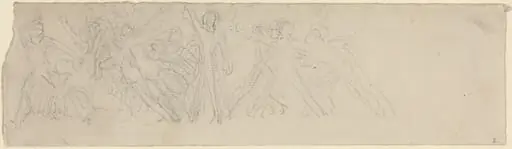 Antique Battle Scene (?)
![Sheet of Studies [recto and verso], by John Flaxman](https://artifactworldgallery.com/img/john-flaxman--sheet-of-studies-recto-and-verso--5d19d38e20f446c0-w320.webp) Sheet of Studies [recto and verso]
Sheet of Studies [recto and verso]![Studies for a Monument with Angels Reaching Down to a Praying Figure [recto and verso], by John Flaxman](https://artifactworldgallery.com/img/john-flaxman--studies-for-a-monument-with-angels-reaching-down-to-a-prayin--9d789ab993a76a50-w320.webp) Studies for a Monument with Angels Reaching Down to a Praying Figure [recto and verso]
Studies for a Monument with Angels Reaching Down to a Praying Figure [recto and verso]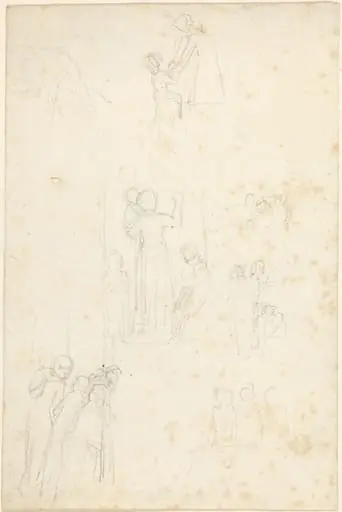 Sheet of Studies
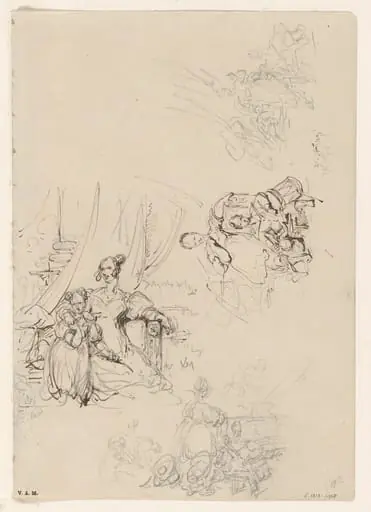 A Western woman with her children in Macau
![Studies of Crowing Rooster and Reclining Figures [recto and verso], by John Flaxman](https://artifactworldgallery.com/img/john-flaxman--studies-of-crowing-rooster-and-reclining-figures-recto-and-v--6ae88f69b8f5a01b-w320.webp) Studies of Crowing Rooster and Reclining Figures [recto and verso]
Studies of Crowing Rooster and Reclining Figures [recto and verso]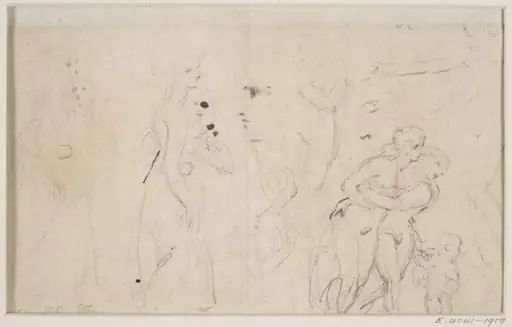 Untitled
![Studies for a Lunette [verso], by Charles Sprague Pearce](https://artifactworldgallery.com/img/charles-sprague-pearce--studies-for-a-lunette-verso--5d54507e74f08054-w320.webp) Studies for a Lunette [verso]
Studies for a Lunette [verso]