Artwork
The Thin Kitchen
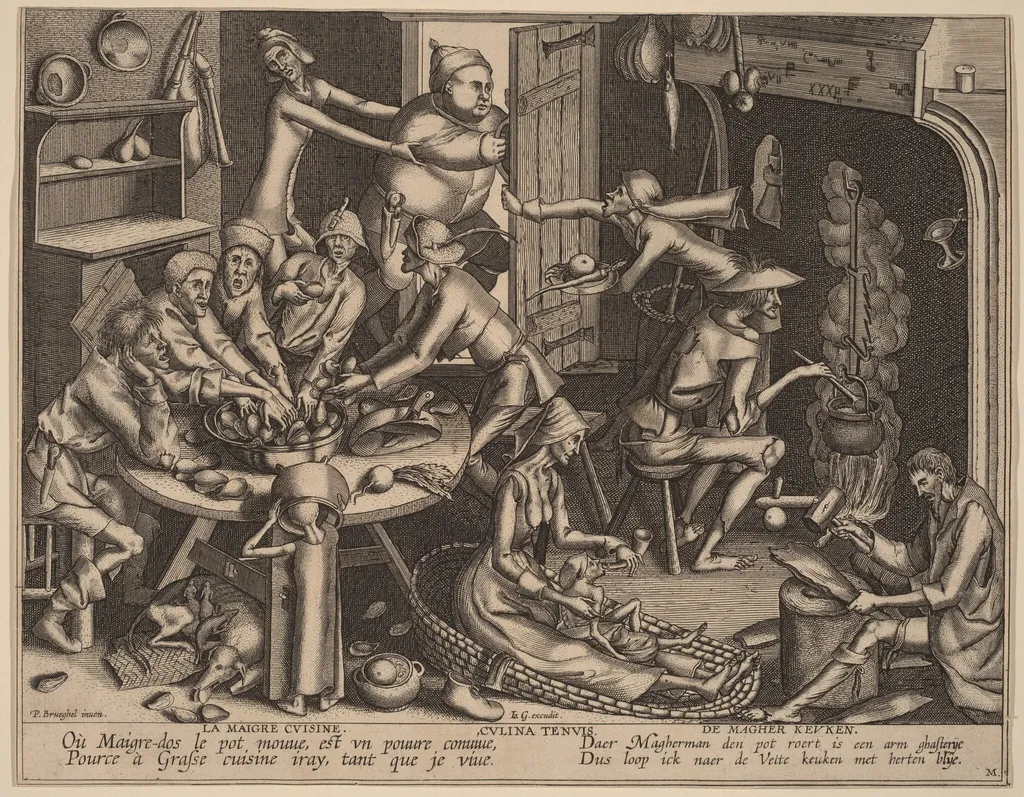
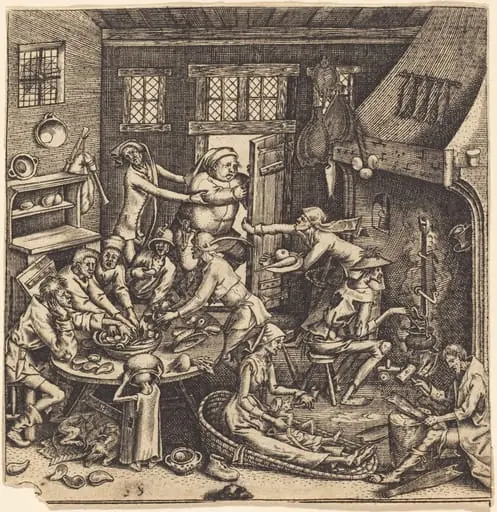
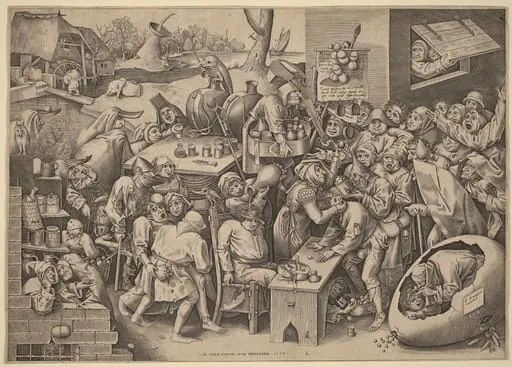
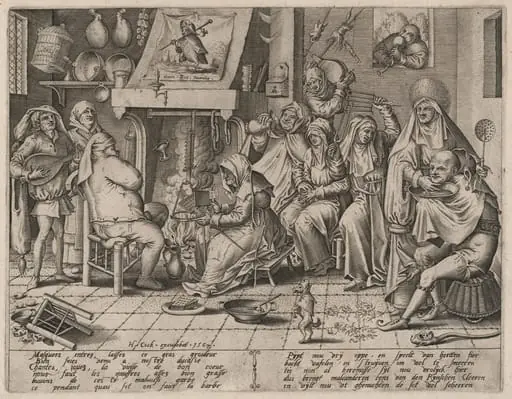
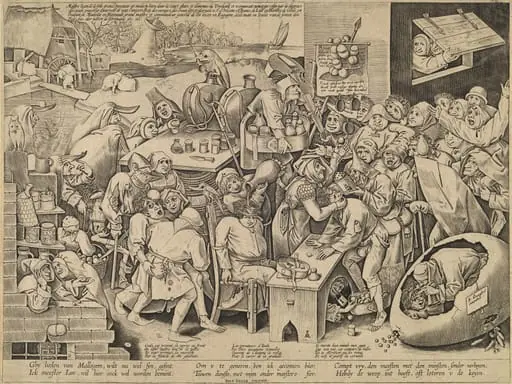
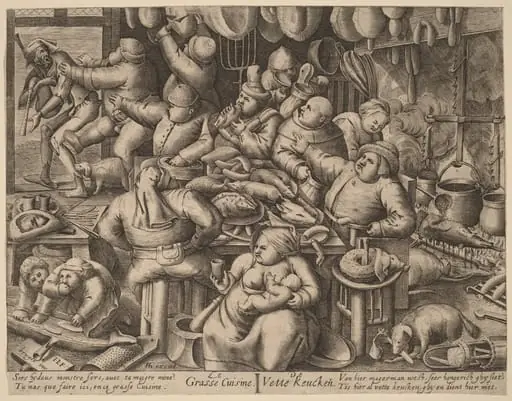
The Thin Kitchen is an ink print by the Baroque artist Flemish 17th century. It dates from 1620 and is held in the collection of the National Gallery of Art.
About this work
Overview
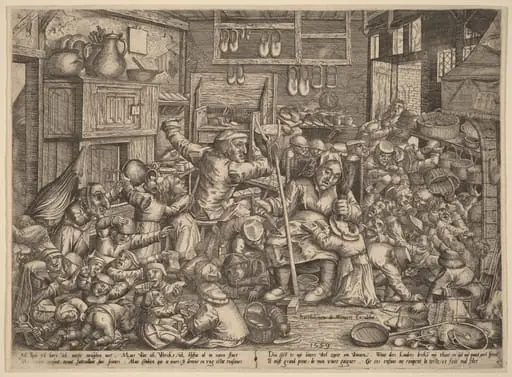
The Thin Kitchen is an engraving that depicts a densely populated kitchen interior where figures compete for food. A large man brandishes a leg of meat while others scramble for scraps, clutching bowls or bones. The space is cluttered with pots, pans, and partially eaten dishes, creating a sense of frantic activity and desperation.
Subject & Meaning
The scene presents a stark commentary on scarcity, with every expression reflecting hunger and struggle. A child clings to a woman's skirt, emphasizing vulnerability, while a defeated man stands apart, suggesting hopelessness. The title underscores the work’s warning about limited resources and the social tensions that arise when food is scarce.
Technique & Style
Executed as an engraving, the image is rendered through incised lines on a metal plate, allowing for fine detail and contrast. The artist employs dense cross‑hatching to convey texture in the kitchen’s clutter and the tension in the figures’ bodies, while the stark black‑and‑white palette heightens the drama of the chaotic tableau.
Context
Created as a print, the work reflects a period when engravings served both artistic and didactic purposes, disseminating social commentary to a broad audience. Its focus on communal hunger aligns with contemporary concerns about poverty and food distribution, situating the piece within a tradition of visual critiques of economic hardship.
Artist & collection
Artist
This artist made detailed drawings of daily life and biblical scenes using chalk, ink, and engraving.