Artwork
Peasants' Feast
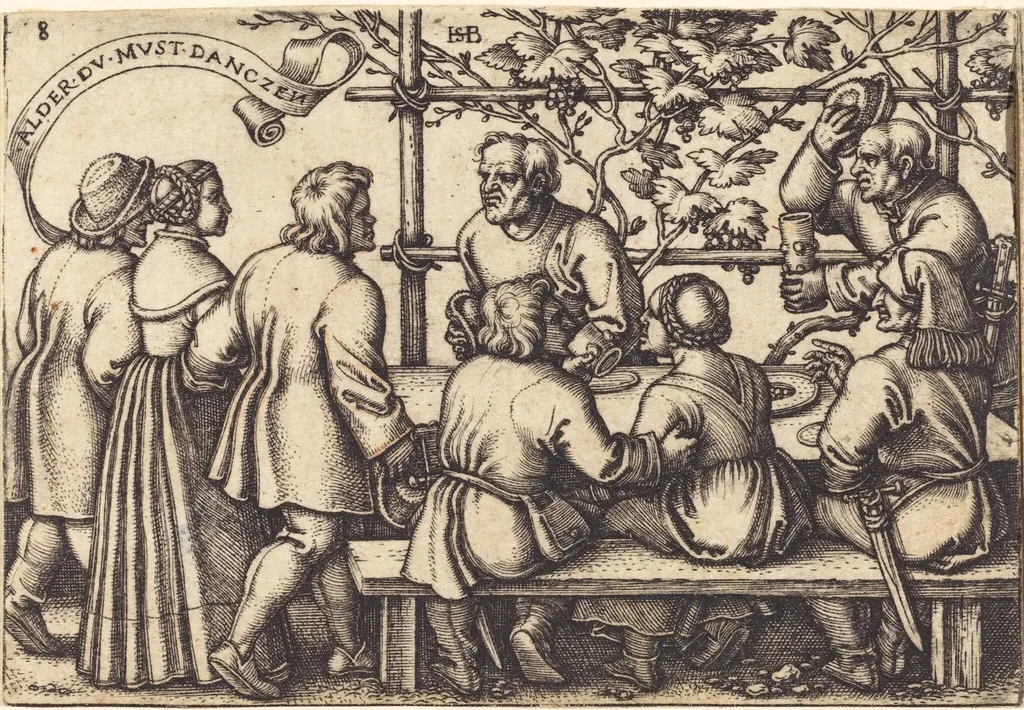
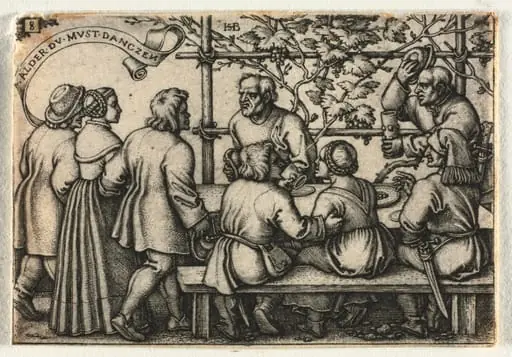
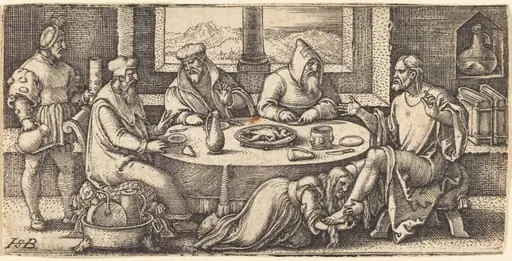
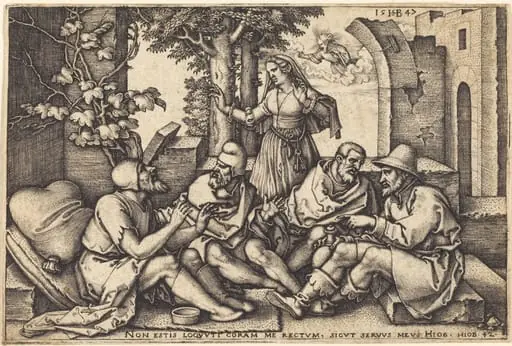
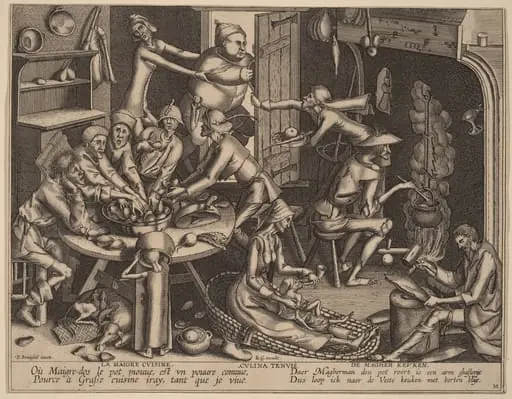
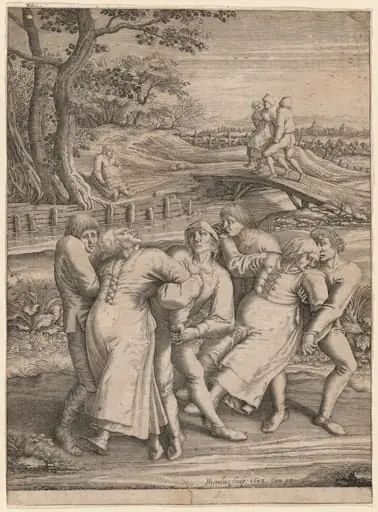
Peasants' Feast is an ink print by the Renaissance artist Sebald Beham. It dates from 1546 and is held in the collection of the National Gallery of Art.
About this work
Overview
Beham, a Nuremberg-born artist associated with the group known as the Little Masters, produced this work as part of a prolific output of small-scale prints.
Created in 1546 by Sebald Beham, *Peasants' Feast* is a black-and-white engraving that captures a moment of communal rural dining. Beham, a Nuremberg-born artist associated with the group known as the Little Masters, produced this work as part of a prolific output of small-scale prints. His technical precision and focus on everyday subjects distinguished him within the German printmaking tradition that followed Albrecht Dürer's innovations.
Subject & Meaning
The scene portrays a group of peasants gathered around a long table, sharing food and drink in an unidealized, spontaneous setting. Figures are engaged in simple actions—passing vessels, leaning on staffs, turning away—conveying a sense of unscripted daily life. There is no grand narrative or moralizing tone; instead, the work presents rural laborers with quiet dignity, emphasizing their physical presence and social interaction over symbolism.
Technique & Style
Beham employed fine, controlled lines to model form and suggest depth, characteristic of engraving’s capacity for detail. Shadows and textures are built through dense hatching and cross-hatching, giving clothing, faces, and wooden surfaces a tangible quality. The composition is tightly framed, focusing attention on the group’s interactions without background distraction, reflecting the artist’s mastery of miniature-scale composition.
History & Provenance
Beham produced this engraving during his time in Frankfurt, after leaving Nuremberg due to religious and political tensions. His works circulated widely among collectors and artisans across northern Europe, contributing to the popularity of small-format prints. While the specific early ownership of *Peasants' Feast* is undocumented, its survival in multiple institutional collections attests to its enduring presence in print archives.
Context
In mid-16th-century Germany, printmaking flourished as a medium for depicting secular life alongside religious themes. Beham’s focus on peasants aligned with a growing interest in everyday subjects, influenced by humanist curiosity and the rise of a literate middle class. Unlike idealized pastoral scenes, his work reflects a direct, unembellished observation of rural communities, resonating with broader cultural shifts in visual representation.
Legacy
Beham’s *Peasants' Feast* exemplifies the Little Masters’ contribution to printmaking as a vehicle for intimate, observational art. His technical discipline and attention to ordinary life influenced later generations of printmakers who sought realism over ornamentation. Though not widely known today, his works remain important references in the study of Northern Renaissance graphic art and the evolution of genre scenes.
Artist & collection
Artist
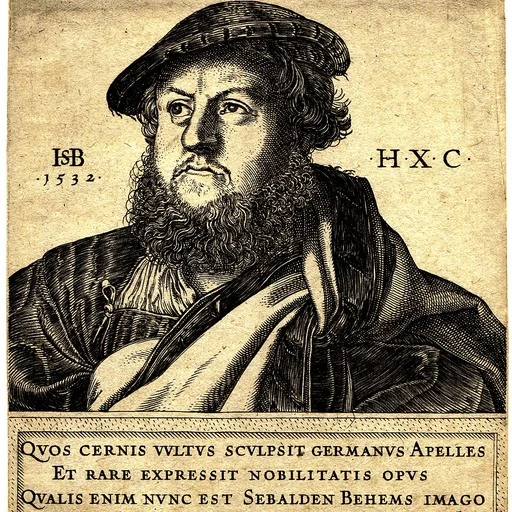
Sebald Beham (1500–1550) was a German painter and printmaker, mainly known for his very small engravings.