Artwork
Man Falling from the Sky
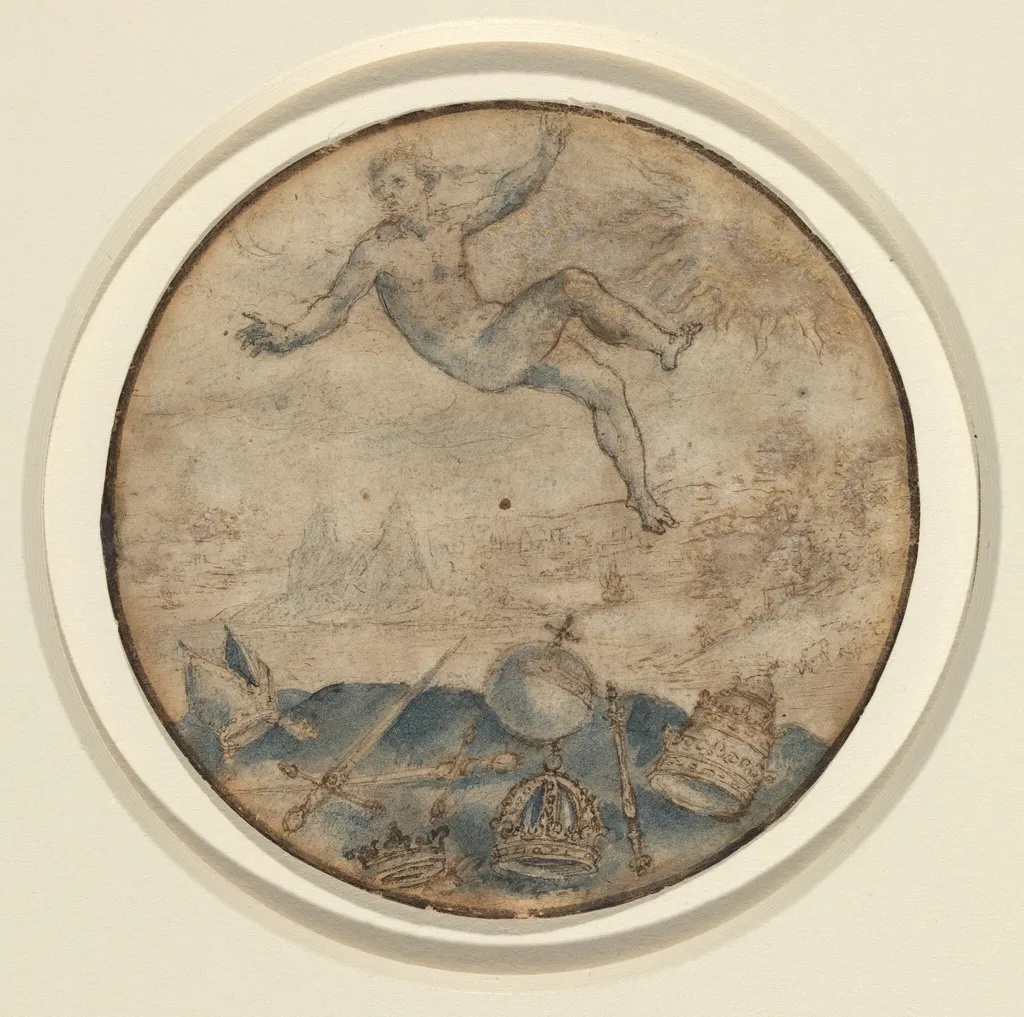
Man Falling from the Sky is an ink drawing by the Baroque artist Flemish 17th century. It dates from 1650 and is held in the collection of the National Gallery of Art.
About this work
Overview
This drawing, executed in pen and brown ink with blue wash and touches of black ink, captures a solitary figure in freefall against a vast, empty expanse.
This drawing, executed in pen and brown ink with blue wash and touches of black ink, captures a solitary figure in freefall against a vast, empty expanse. The laid paper bears faint watermark lines, suggesting its age and material origin. Delicate incisions hint at preparatory transfer work, while the loose, rapid strokes convey motion and instability. The composition emphasizes vertical descent, with minimal detail anchoring the figure in space.
Subject & Meaning
The figure, headfirst and arms outstretched, suggests an uncontrolled fall—possibly symbolic of human vulnerability or divine intervention. Below, tiny boats and distant buildings recede into the horizon, amplifying the isolation of the plummeting form. No narrative context is given, leaving interpretation open: the scene may reflect mortality, accident, or metaphysical descent, stripped of explicit allegory.
Technique & Style
The artist employed swift, fluid lines to articulate the body’s contorted motion, contrasting with the restrained, flat washes used for sea and sky. Blue ink subtly models atmosphere, while black accents define edges and depth. The sketchy treatment of background elements and the absence of fine detail reinforce spontaneity, as if the image was captured in immediate response to an imagined or observed moment.
History & Provenance
The work’s origin remains undocumented, though its materials and handling align with early modern European drawing practices. The paper’s laid texture and ink composition suggest a date between the late 16th and early 17th centuries. No known collector or institutional record precedes its current attribution, leaving its early history unresolved.
Context
Created during a period when artists increasingly explored human movement and emotional intensity, this drawing reflects a broader interest in transient states—falling, flying, or suspended motion. Though not part of a known series, its focus on bodily disruption parallels emerging themes in Mannerist and early Baroque studies of anatomy and drama.
Legacy
Though unsigned and unattributed, the drawing stands as an example of how sketch-like immediacy could convey psychological weight without narrative elaboration. Its influence, if any, is indirect, but it contributes to the understanding of how artists used minimal means to evoke profound instability, a tendency later expanded in Baroque figure studies.
Artist & collection
Artist
This artist made detailed drawings of daily life and biblical scenes using chalk, ink, and engraving.

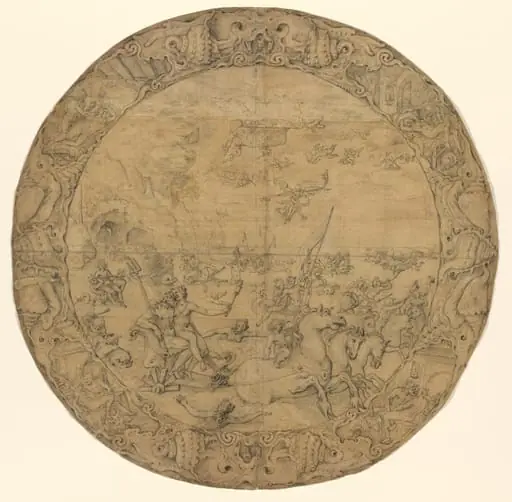 Design for a Standing Dish
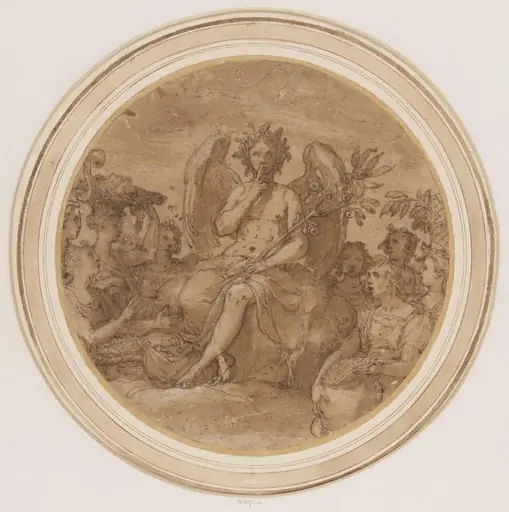 Harpocrates (or Horus), God of Silence
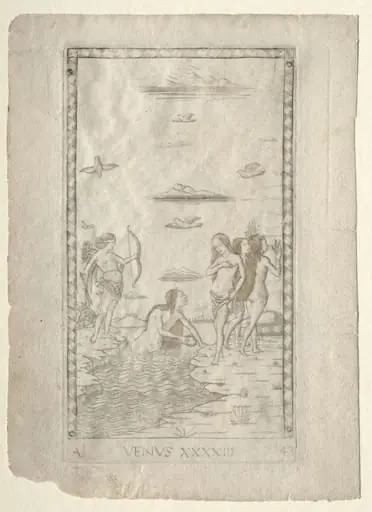 Venus (from the Tarocchi, series A: Firmaments of the Universe, #43)
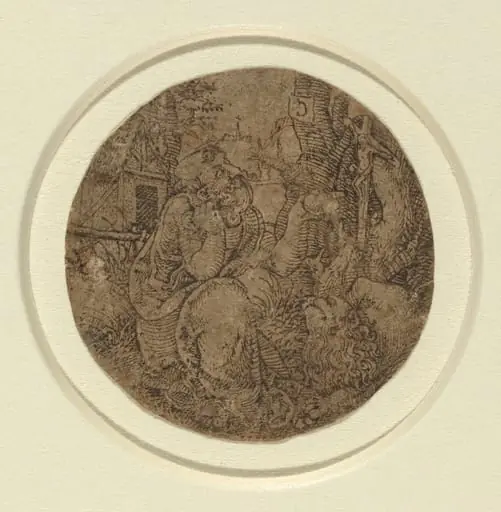 Saint Jerome
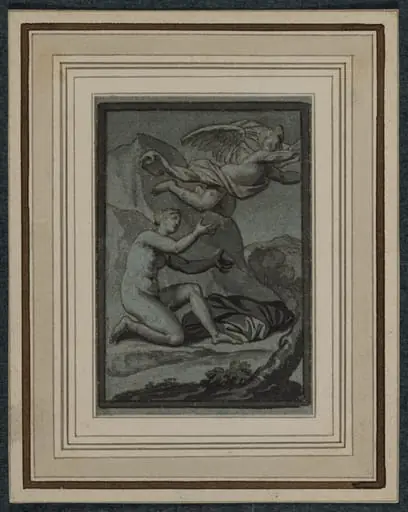 Mythological Scene
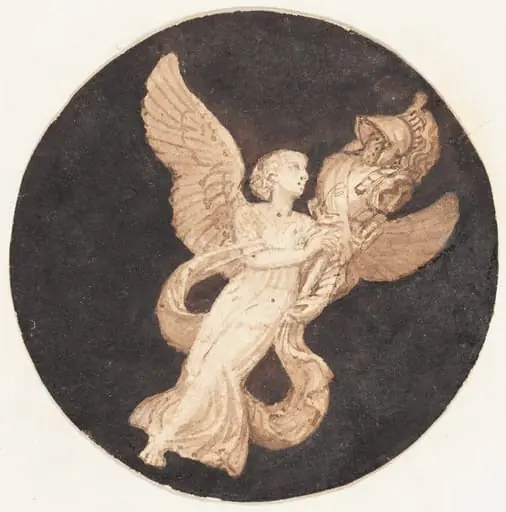 Vignette for a Title Page: "Winged Victory"
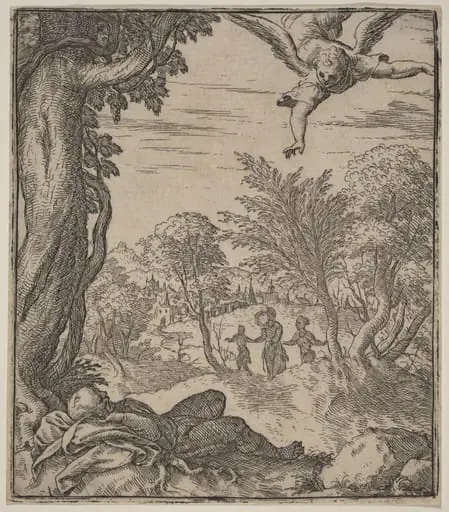 The Angel Appearing to Joseph
 Sun (from the Tarocchi, series A: Firmaments of the Universe, #44)
 Apotheosis of a Saint (recto)
 Raphael conducting Tobias
 Christ in Gethsemane (Agony in the Garden)
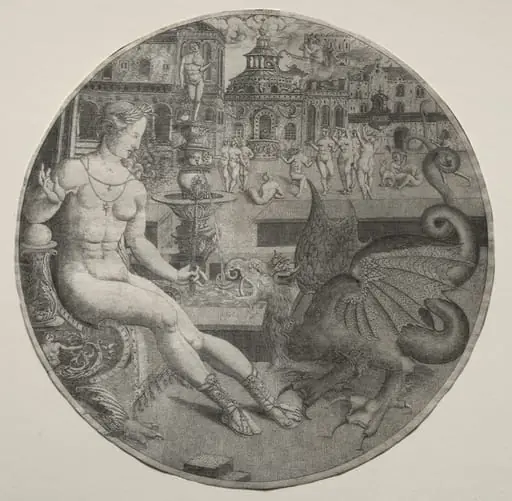 Naked Woman and a Dragon