Artwork
The Dome of the Rock, from the Mount of Olives
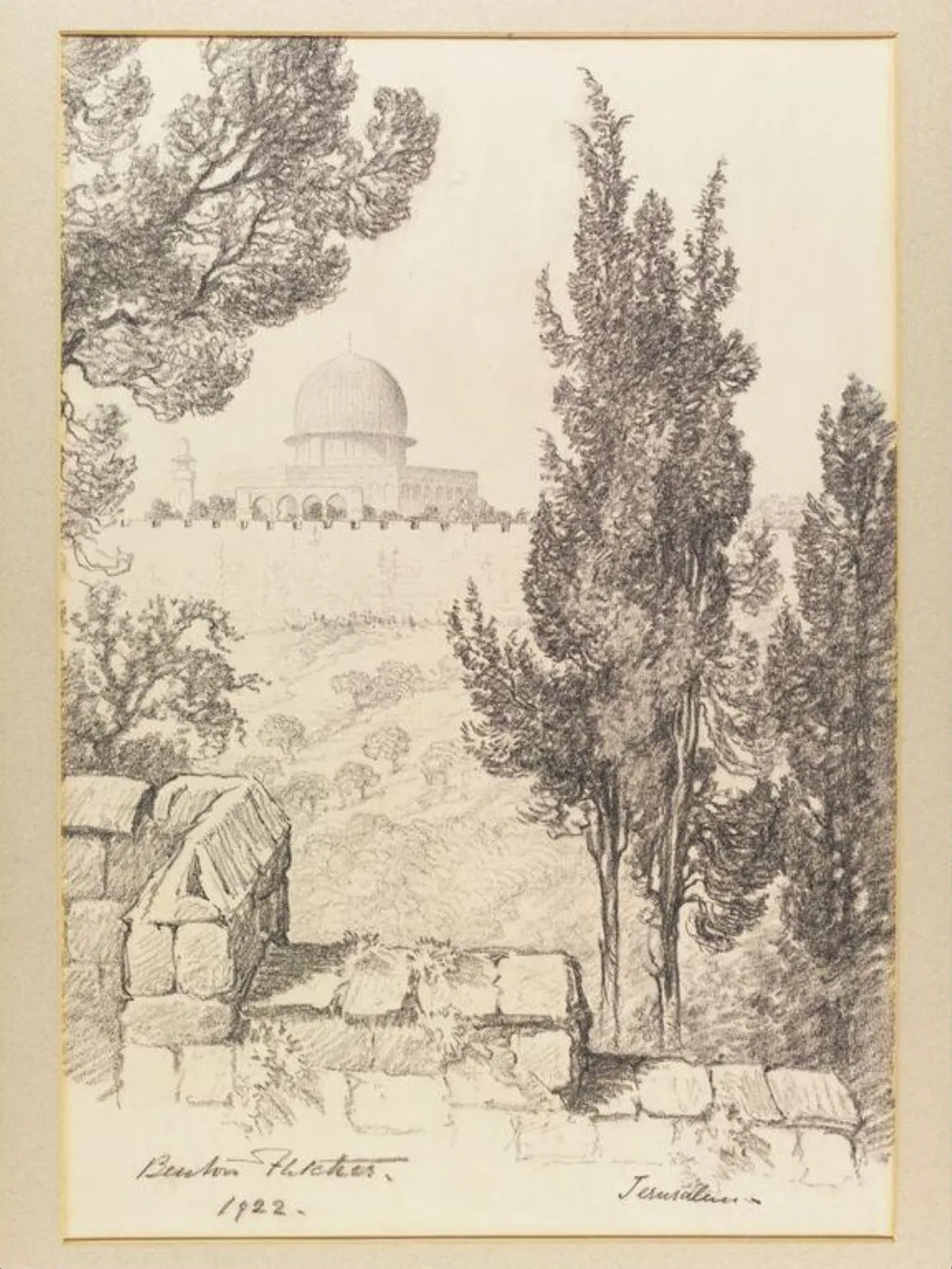
The Dome of the Rock, from the Mount of Olives is a watercolor work on paper by the Orientalist artist George Henry Benton Fletcher. It dates from 1922 and is held in the collection of the Victoria and Albert Museum.
About this work
Overview
A 1922 watercolour by George Henry Benton Fletcher depicts the Dome of the Rock as seen from the Mount of Olives. Executed in delicate black ink on light paper, the work captures the structure in soft, restrained lines, emphasizing form over detail. The piece was sold at Sotheby’s in 1968 for £10, recorded in Rodney Searight’s archives, reflecting its modest market presence at the time.
Subject & Meaning
The composition frames the Dome of the Rock as a distant, serene presence rising above a quiet, undulating landscape. Sparse foreground elements—trees, rocks, and uneven ground—anchor the view, drawing attention to the building’s elevated stillness. The scene conveys contemplative distance rather than religious symbolism, focusing on architectural presence within natural topography.
Technique & Style
Fletcher employed fine, fluid ink lines to define the dome’s smooth curvature and the irregular silhouettes of trees and rocks. The watercolour washes are minimal, preserving the paper’s light tone and enhancing the sketch’s airy quality. The technique favors observation over embellishment, with subtle tonal variations suggesting depth without heavy shading.
History & Provenance
Created in 1922 during Fletcher’s travels, the watercolour entered the commercial art market decades later when it was auctioned at Sotheby’s on January 25, 1968, for £10. Its sale is documented in Rodney Searight’s records, though no earlier ownership history is publicly known. The work remains a private collector’s item with no institutional record of acquisition.
Context
Fletcher, a British artist and collector of Islamic art, often sketched architectural sites during his journeys in the Middle East. This work aligns with early 20th-century European travel drawing traditions, where precise observation of Eastern monuments served both personal study and cultural documentation, detached from colonial spectacle.
Legacy
The watercolour contributes to a modest but persistent body of early 20th-century topographical drawings of Jerusalem. While not widely exhibited, it reflects a quiet, personal engagement with sacred architecture. Its preservation in private hands and occasional appearance in auction records suggest ongoing interest among specialists in regional art and travel sketching.
Artist & collection
Artist
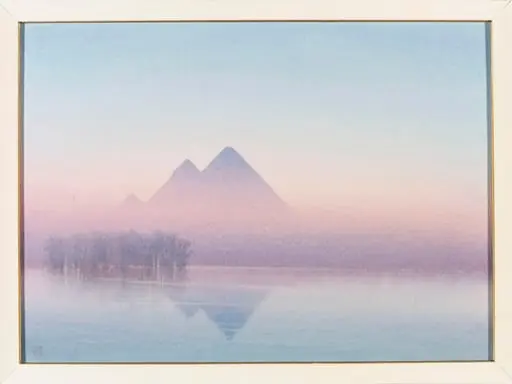
George Henry Benton Fletcher painted watercolours of ancient Egyptian and Middle Eastern sites in the early 1900s.

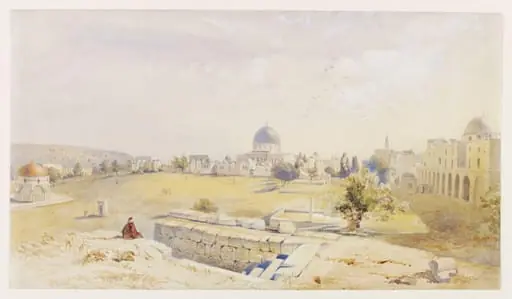 Jerusalem. Mount Moriah The Site Of The Temple now occupied by the Mosque of Omar
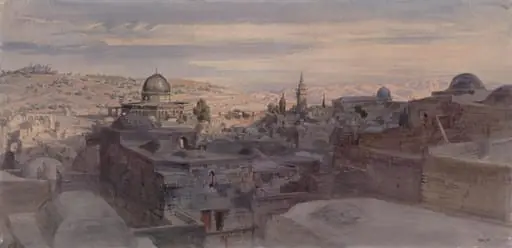 Jerusalem
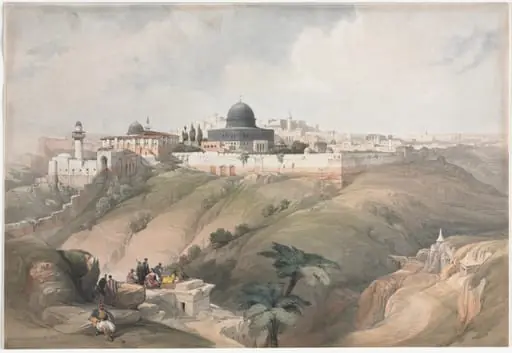 Jerusalem
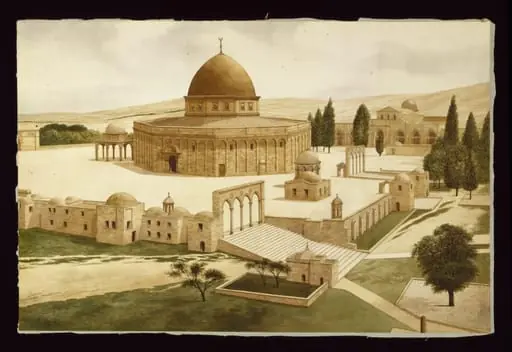 The Mosque of Omar, Jerusalem
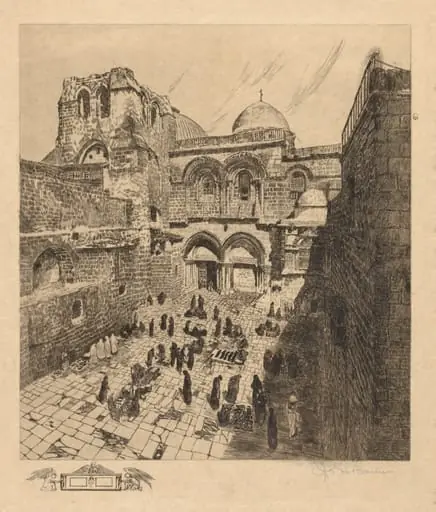 Grand Canal, Venice
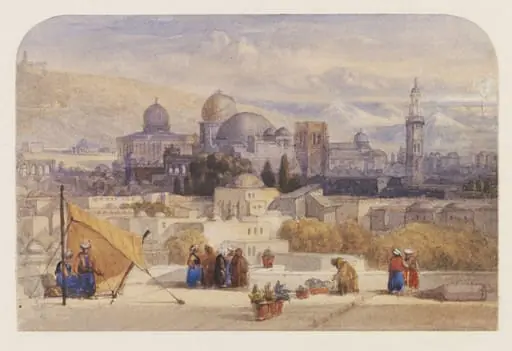 Jerusalem from the Terrace of the Latin Convent
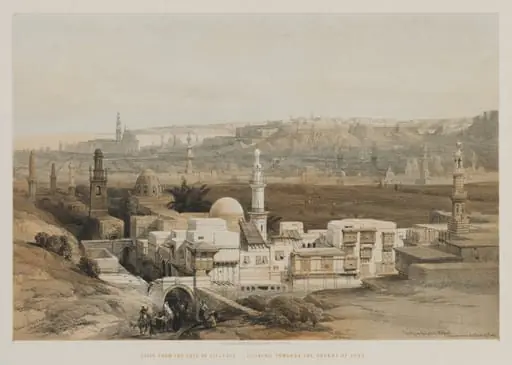 Egypt and Nubia, Volume III: Cairo from the Gate of Citzenib, Looking towards the Desert of Suez
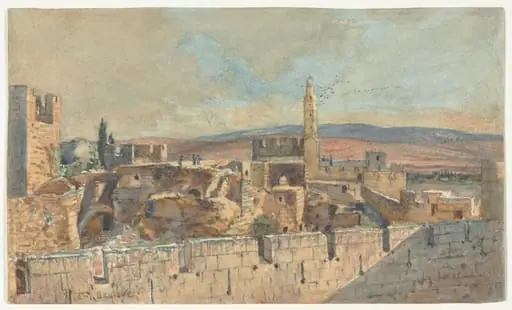 View of the Old City of Jerusalem
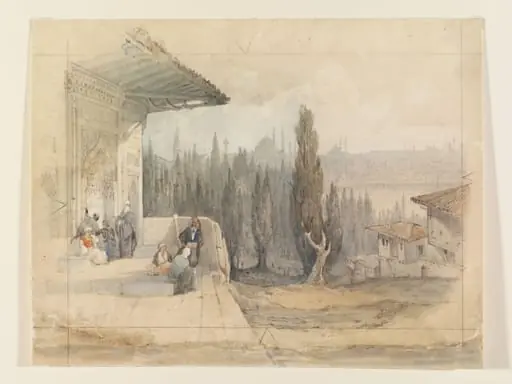 Pera
Pera