Artwork
Head of Menmare Seti I: copy of a low relief in the Great Temple of Seti I, Abydos
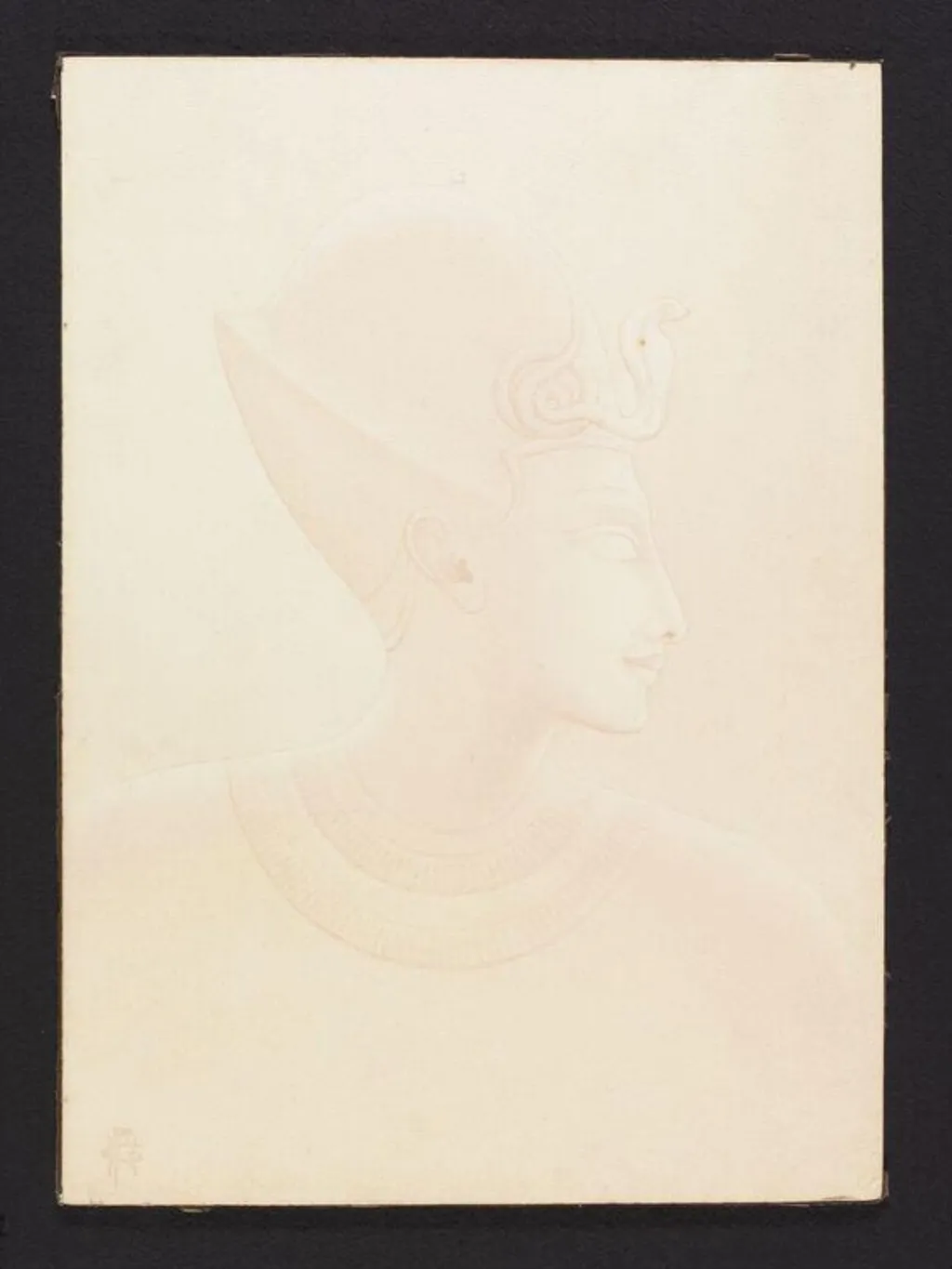
Head of Menmare Seti I: copy of a low relief in the Great Temple of Seti I, Abydos is a watercolor work on paper by George Henry Benton Fletcher. It dates from 1913 and is held in the collection of the Victoria and Albert Museum.
About this work
Overview
Created in 1913 by George Henry Benton Fletcher, this watercolour is a faithful transcription of a low-relief carving from the Great Temple of Seti I at Abydos.
Created in 1913 by George Henry Benton Fletcher, this watercolour is a faithful transcription of a low-relief carving from the Great Temple of Seti I at Abydos. Executed in delicate, muted tones on light paper, the work captures the profile of Menmare, a name associated with Seti I. Its quiet execution suggests a study rather than a polished presentation, reflecting Fletcher’s interest in documenting ancient Egyptian art with precision and restraint.
Subject & Meaning
The subject is the head of Menmare, a royal name linked to Pharaoh Seti I, rendered in the serene, idealized style typical of New Kingdom temple reliefs. The upward gaze and smooth contours convey dignity and stillness, characteristic of Egyptian portraiture meant to endure beyond mortality. Fletcher’s focus on this fragment underscores his attention to the symbolic stillness and formal harmony of ancient Egyptian iconography.
Technique & Style
Fletcher employed watercolour with a light, pencil-like touch, avoiding bold washes or dramatic contrasts. The lines are soft, the contours gentle, and the background left bare to emphasize the figure. This restrained approach mirrors the clarity and calm of the original relief, prioritizing accuracy over artistic embellishment. The technique reflects scholarly documentation rather than expressive interpretation.
History & Provenance
The watercolour was likely shown at the Fine Arts Society in London in July 1914 as part of an exhibition titled 'Water-Colours of Egypt and its Temples.' It later passed through the collection of G. Noel Butler and was sold at an auction in Honiton in 1961 for ten shillings. Its journey from a temple wall to a private collection highlights the 19th- and early 20th-century fascination with Egypt’s artistic legacy.
Context
Fletcher’s work emerged during a period when British artists and antiquarians were systematically recording Egyptian monuments, often under the auspices of institutions like the Egypt Exploration Fund. His watercolours contributed to a growing archive of visual documentation, aiding both scholarly study and public engagement with ancient Egypt at a time when photography was still limited in detail and accessibility.
Legacy
Though modest in scale, Fletcher’s watercolour remains part of a broader effort to preserve and disseminate knowledge of Egyptian temple art. Its presence in institutional collections, such as the Victoria and Albert Museum, affirms its value as a historical record. These studies continue to inform contemporary understanding of how early 20th-century observers interpreted and transmitted ancient visual culture.
Artist & collection
Artist
George Henry Benton Fletcher painted watercolours of ancient Egyptian and Middle Eastern sites in the early 1900s.

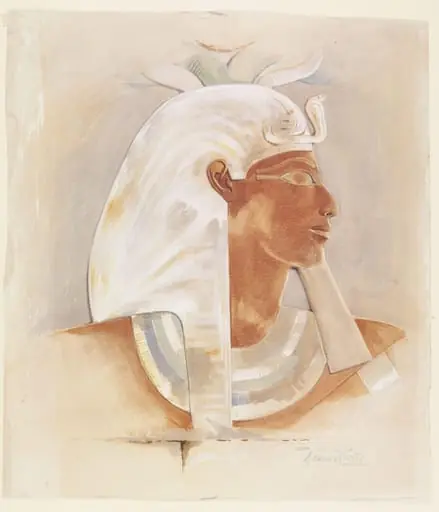 Head of Queen Makare Hatshepsut: copy of a painted low relief in the Mortuary Temple of Hatshepsut, Deir al-Bahri
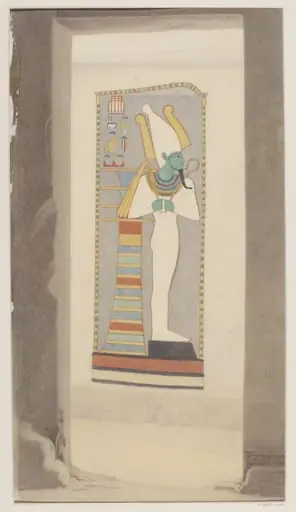 Osiris carrying a flail and crook
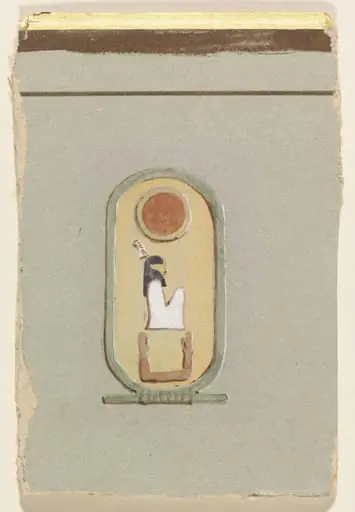 Royal Cartouche of Queen Makare Hatshepsut
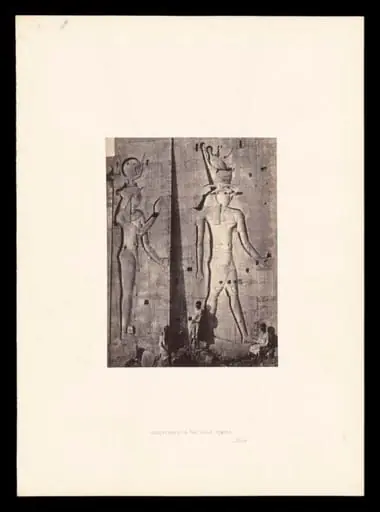 Sculptures in the Great Temple
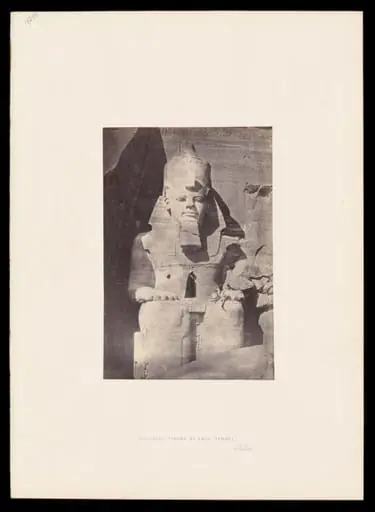 Colossal Figure at Abou Simbel, Nubia
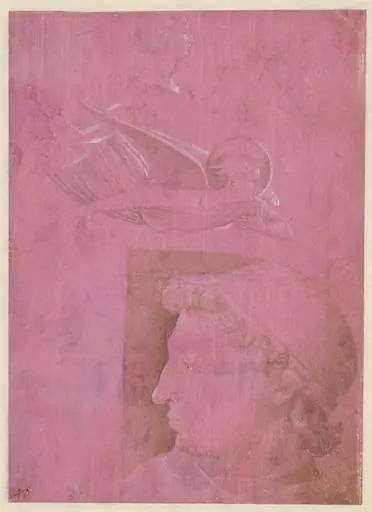 Head of a Man, Two Studies of a Woman's Profile, and a Study of An Angel (verso)
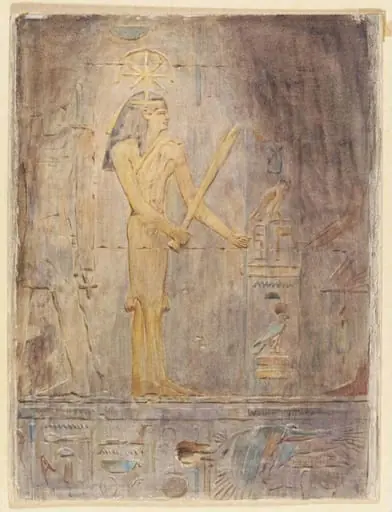 Amada Nubia
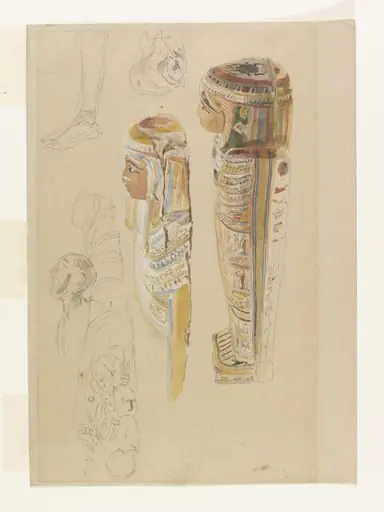 Studies of Mummy cases and Mummies
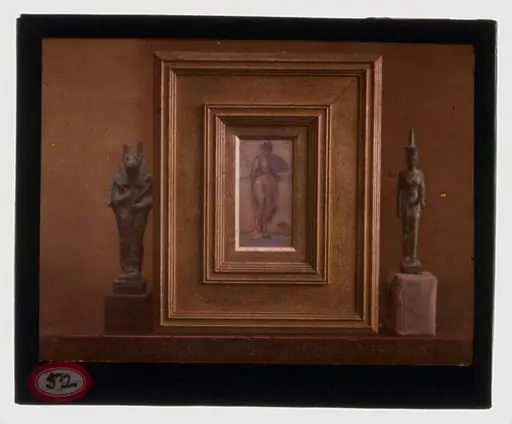 'Figure of Anubis', Egypt, 664-525 BCE, 'Resting', ca 1870-1873 by James McNeil Whistler and 'Figurine of the Goddess Neith', 664-525 BCE or later, from the Charles Lang Freer Collection
 Bust of a Woman (recto)
 An Artist sketching Egyptian Antiquities
 Head of Queen Aahmes Nefertari: copy of a painted low relief in the Mortuary Temple of Hatshepsut, Deir al-Bahri