Artwork
Phryne and the Slave
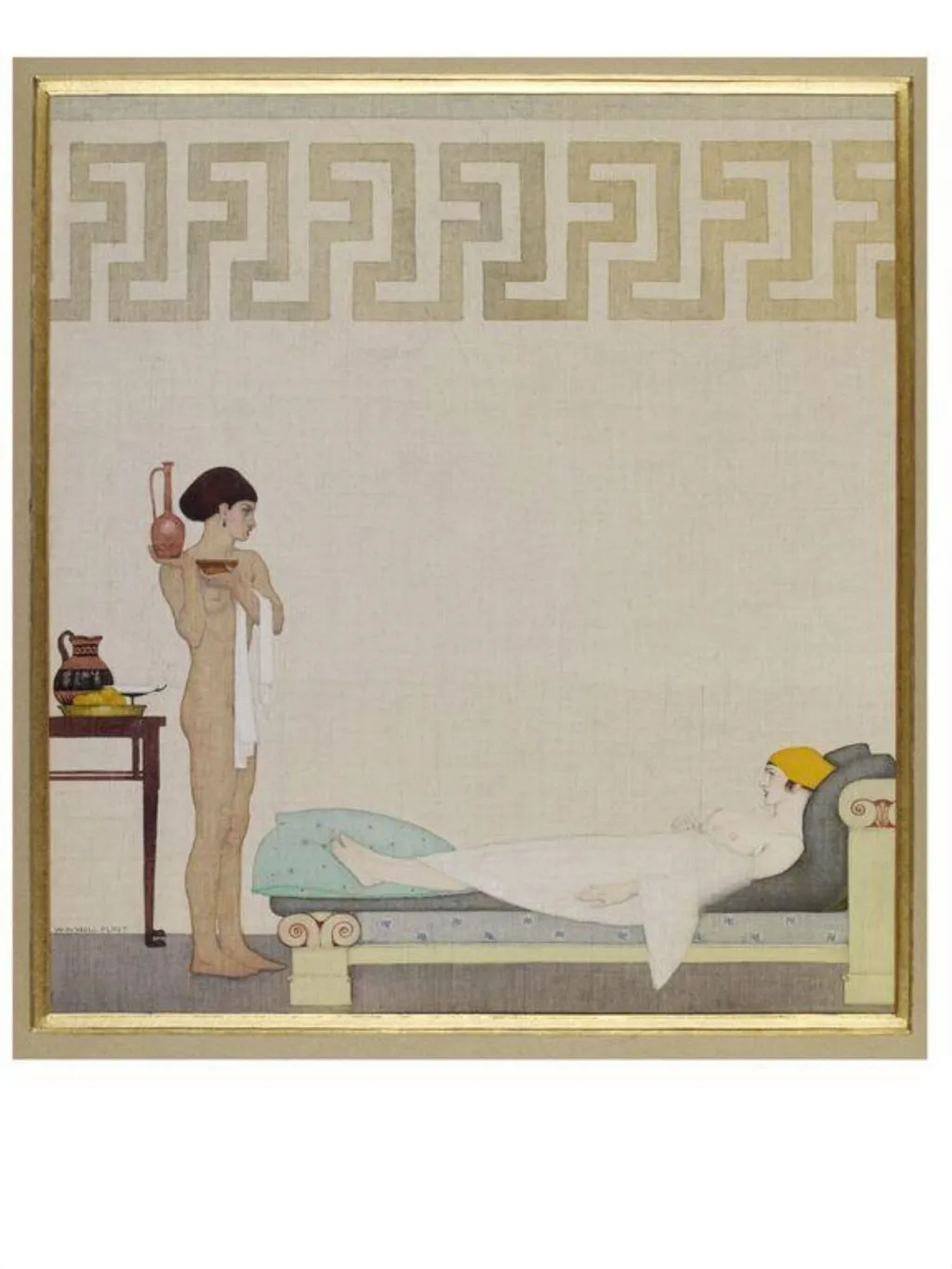
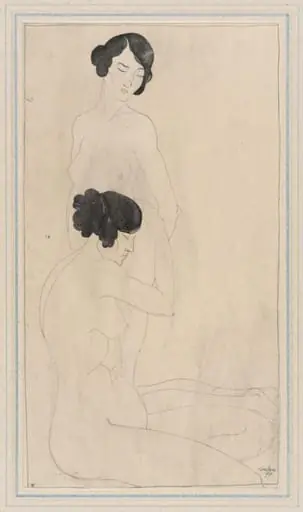
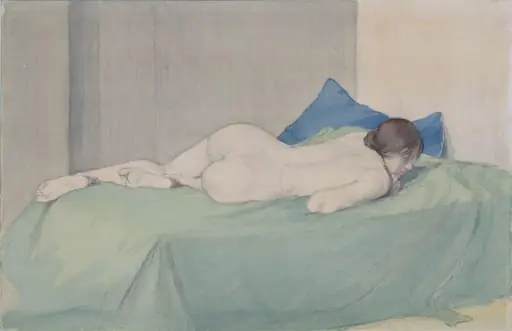
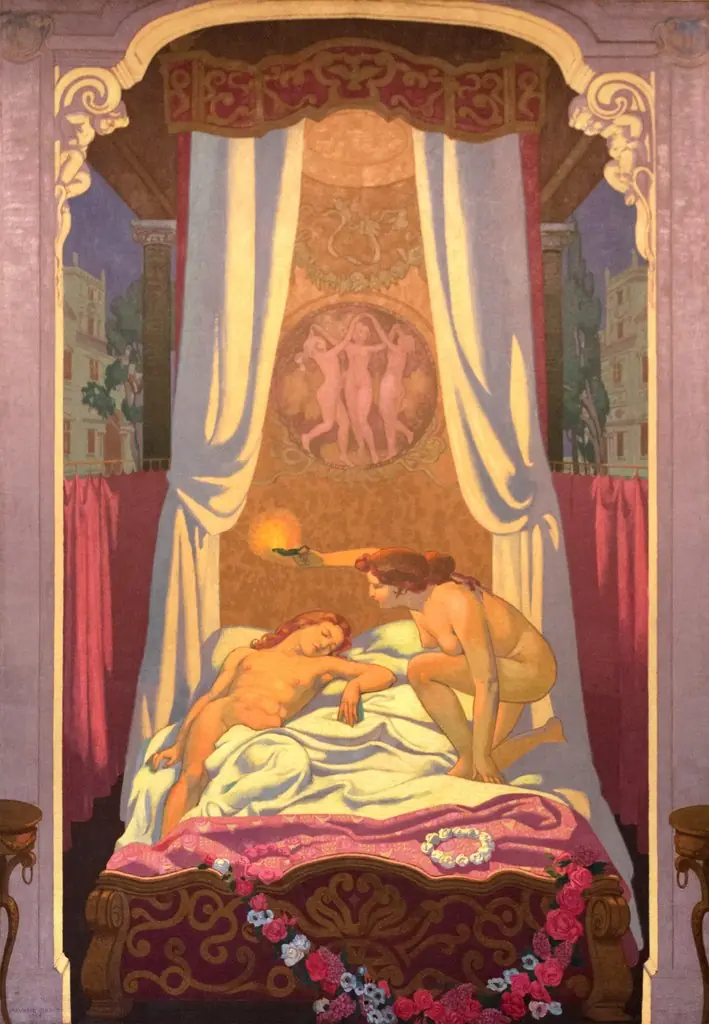
Phryne and the Slave is a watercolor work on paper by the Post-Impressionist artist Flint. It dates from 1910 and is held in the collection of the Victoria and Albert Museum. Created in 1910, this watercolour on linen presents an intimate interior scene.
About this work
Overview
Created in 1910, this watercolour on linen presents an intimate interior scene. A woman identified as Phryge reclines on a bed, while a nude female servant stands nearby holding a jug, a bowl and a cloth. A small table holds an amphora and fruit, and a man lies on a couch in the background. The composition is framed by a simple geometric border at the top of the wall.
Subject & Meaning
The work juxtaposes the classical figure of Phryge, famed for her beauty, with a domestic servant, suggesting a contrast between status and labor. The presence of everyday objects—a jug, bowl, cloth, and fruit—grounds the scene in a private, perhaps ritual, moment of service. The relaxed poses convey a quiet, unguarded instant rather than a dramatic narrative.
Technique & Style
Executed in watercolour, the artist employs a limited palette of soft, flat tones that avoid strong chiaroscuro. The medium allows for delicate washes that define forms without heavy modeling, giving the figures a gentle, almost linear quality. The geometric border at the top adds a decorative, modernist touch that frames the otherwise classical subject matter.
History & Provenance
The painting dates to the early twentieth century, a period when the artist explored historical and mythological themes through a contemporary lens. It remains catalogued under the title *Phryne and the Slave* and is listed among the artist’s works in the Flint collection, indicating its inclusion in a broader body of watercolour studies from that era.
Context
Produced at a time when European artists frequently revisited antiquity, the piece reflects an interest in merging classical iconography with everyday domestic settings. The depiction of a nude servant alongside a clothed heroine mirrors broader cultural dialogues about gender, class, and the representation of the female body in early modern art.
Artist & collection
Artist
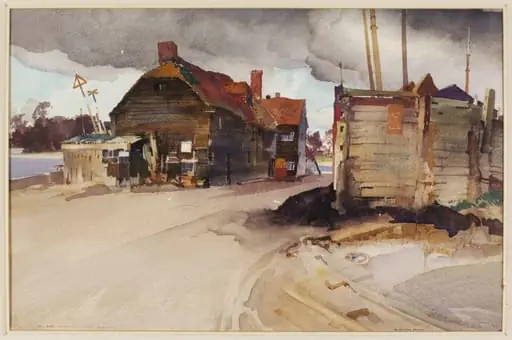
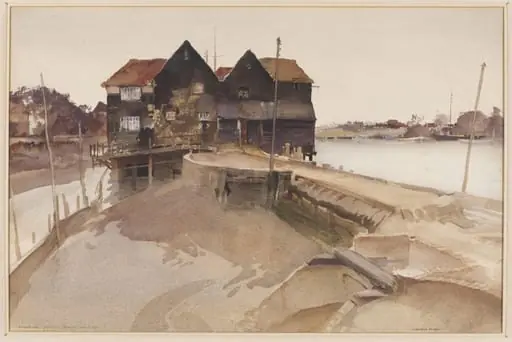
This British artist worked in watercolour around the first half of the 20th century, painting the creeks, farms, and mills near Chichester.