Artwork
The Village Well, East Marsden
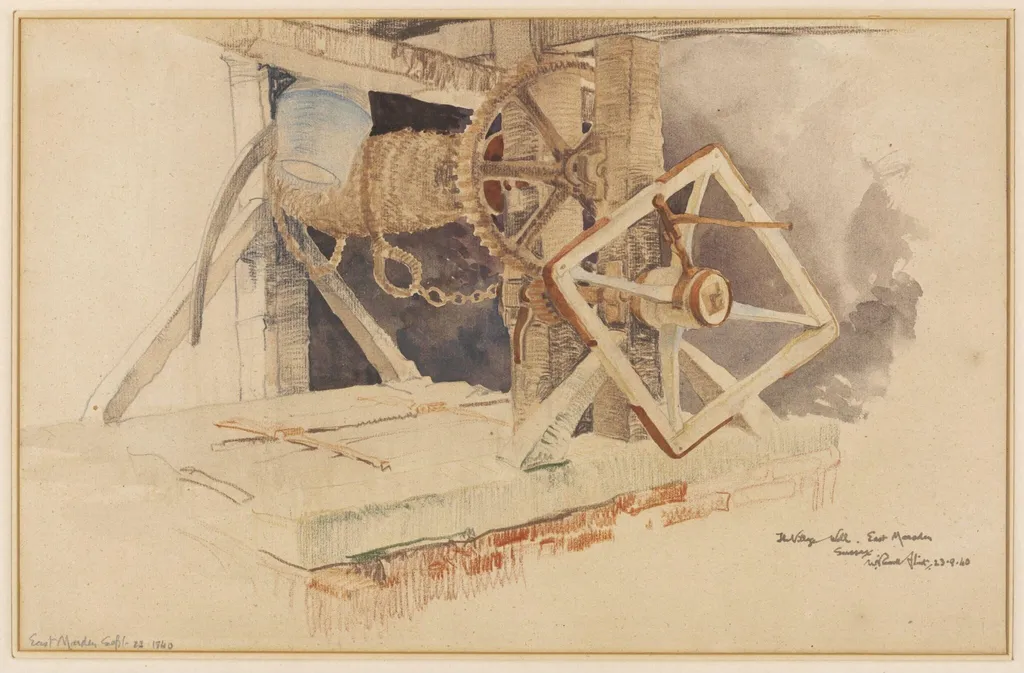
The Village Well, East Marsden is a watercolor work on paper by the Social Realist artist Flint. It dates from 23 and is held in the collection of the Victoria and Albert Museum.
About this work
Overview
The Village Well, East Marsden is a watercolour painting by Sir William Russell Flint, created in the early 1940s as part of the Recording Britain project.
Subject & Meaning
The painting depicts a village well in East Marsden, with a central composition featuring a wooden well structure, rope, and bucket. The work reflects the project's aim to document British rural life and landscapes.
Technique & Style
Flint's use of watercolour captures the delicacy of the scene, with subtle grey tones in the background suggesting either sky or a wall. The medium adds a sense of fragility to the depiction of the well and its surroundings.
History & Provenance
The painting was commissioned by the Committee for the Employment of Artists in Wartime, led by Sir Kenneth Clark, and funded by the Pilgrim Trust. It is one of over 1,500 works produced for the Recording Britain initiative.
Context
The work was created during a time of concern over wartime destruction and modernization, aiming to preserve a visual record of places considered integral to national identity.
Artist & collection
Artist
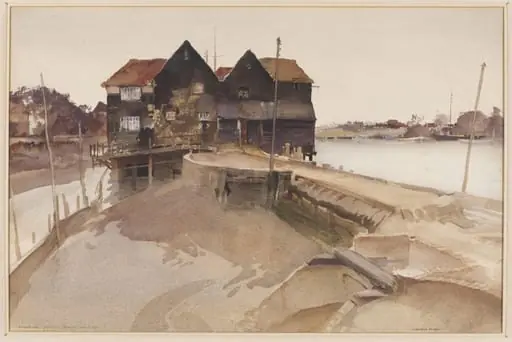
This British artist worked in watercolour around the first half of the 20th century, painting the creeks, farms, and mills near Chichester.

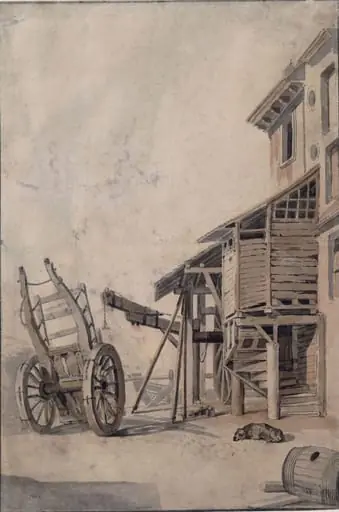 Old East India Wharf at London Bridge
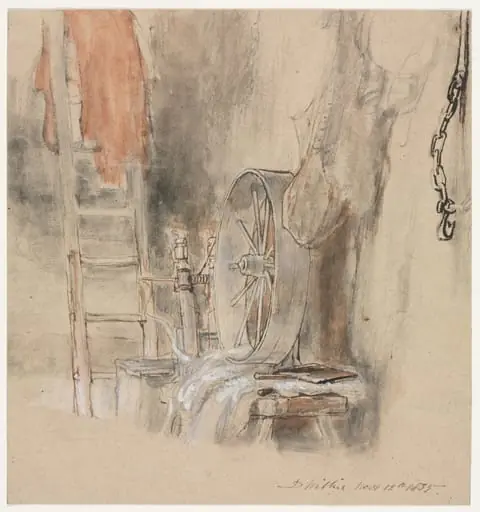 Study for "The Peep-O’-Day Boys’ Cabin, in the West of Ireland" ("The Sleeping Whiteboy")
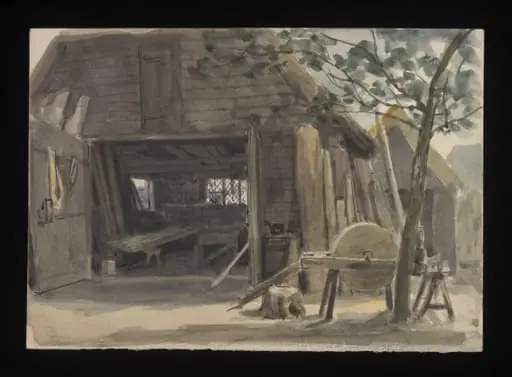 Watercolour drawing by the Grieve family, showing a workman's hut at Garlinge, Kent
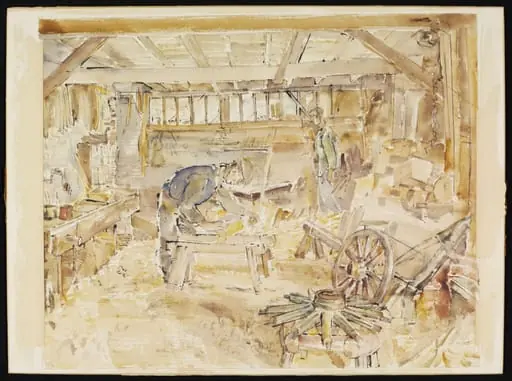 Wheelwrights at work in Mr. J. W. Brunt's Shop, Newington
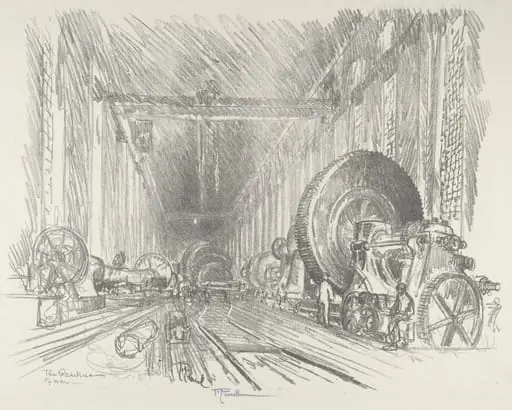 The Basilica of War
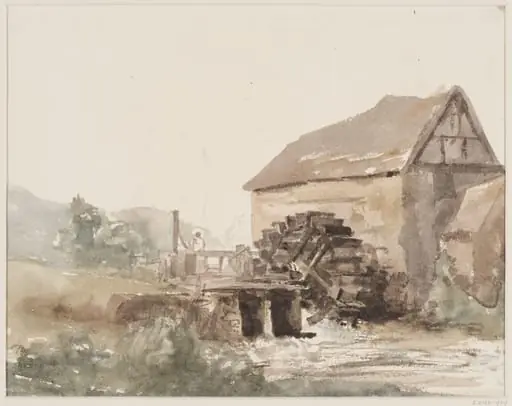 View of a water-mill near Ridware
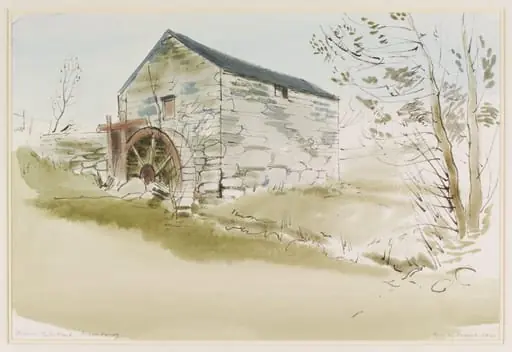 Melin Ty’n-Nant, Maentwrog, Merionethshire
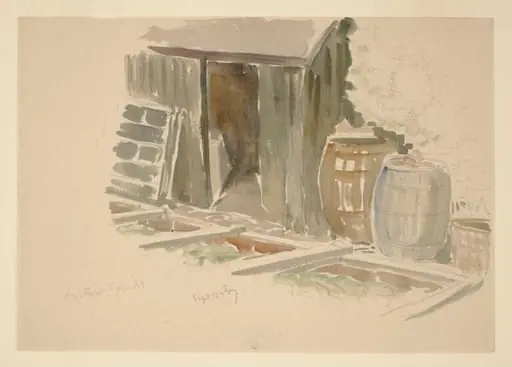 Sketch of a shed, cold frames and water butts in the garden at Gwaynynog
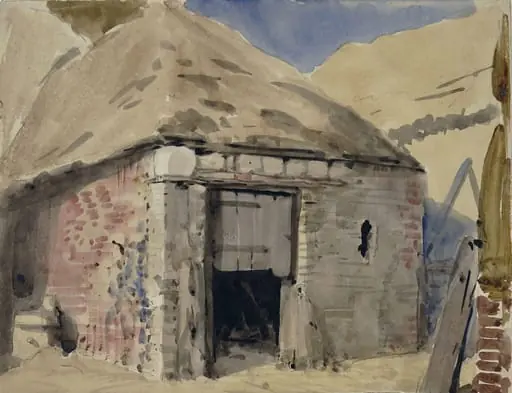 Margate: a barn
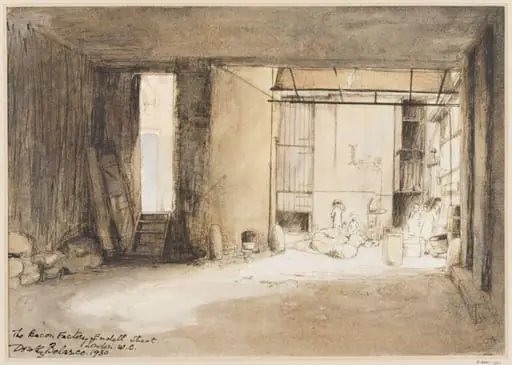 The Bacon Factory, Endell Street, London
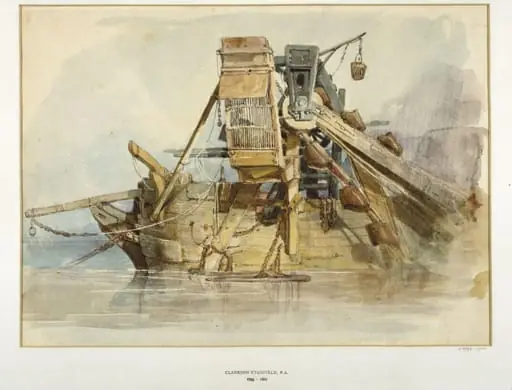 A Dredger.
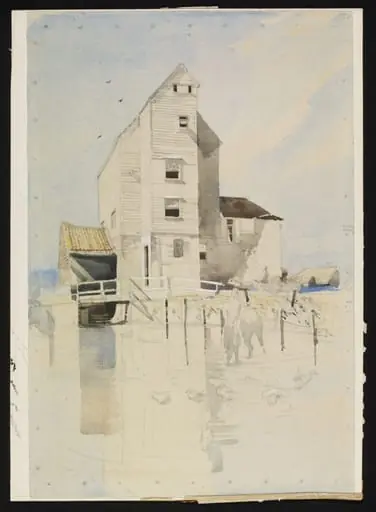 Dutch Mill at Littlebourne