Artwork
En esclavage dans le Nord
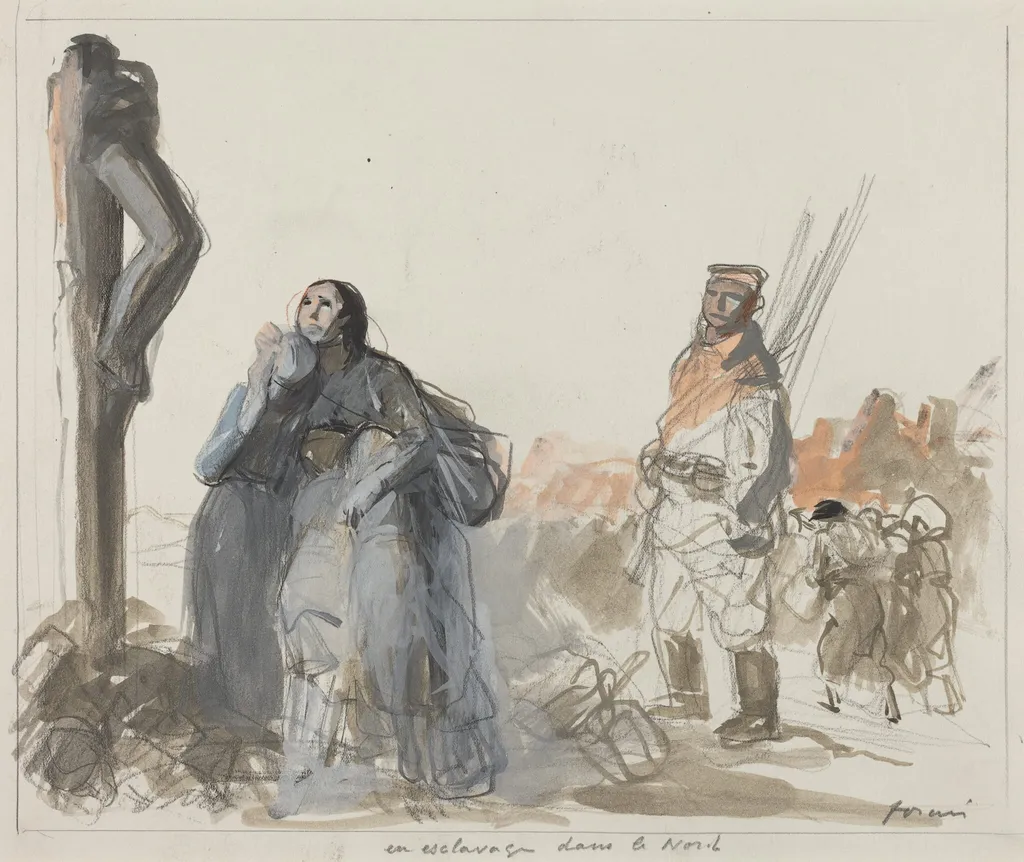
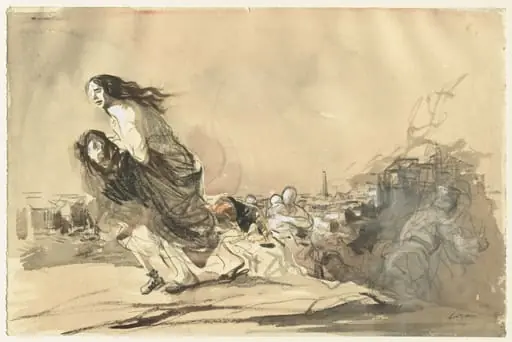
En esclavage dans le Nord is a watercolor drawing by Jean-Louis Forain. It dates from 1916 and is held in the collection of the National Gallery of Art.
About this work
Overview
The work belongs to a body of drawings responding to the human toll of war, reflecting his shift from satirical subjects to more somber, empathetic themes.
Created around 1916, *En esclavage dans le Nord* is a drawing by French artist Jean-Louis Forain, executed in black crayon and watercolor on wove paper. Though known primarily for his oils and prints, Forain turned to intimate graphic media during this period to explore social conditions. The work belongs to a body of drawings responding to the human toll of war, reflecting his shift from satirical subjects to more somber, empathetic themes.
Subject & Meaning
The scene depicts two figures: a woman in a dark robe, her hand raised to her face in distress, and a man in lighter clothing, standing with hands clasped behind him. A third, partially obscured figure looms to the left. The composition conveys emotional isolation and silent suffering, suggesting themes of oppression or displacement. The title, referencing northern enslavement, implies a metaphorical or literal confinement, possibly alluding to wartime hardship or social marginalization.
Technique & Style
Forain employed black crayon for sharp, expressive contours and watercolor washes to modulate tone and depth. The wove paper’s texture enhances the grain of the crayon, while the muted watercolor palette—dominated by earthy grays and browns—reinforces the mood of restraint and gravity. His draftsmanship is precise yet unpolished, prioritizing emotional resonance over finish, a hallmark of his later graphic work.
History & Provenance
The drawing emerged during World War I, a time when Forain increasingly turned from caricature to documentary realism. It was likely produced in France, where he remained during the conflict, documenting civilian life under duress. No public record of its early ownership exists, but it entered institutional collections in the mid-20th century, reflecting renewed scholarly interest in his non-satirical output.
Context
Created amid the global upheaval of World War I, the work aligns with a broader European artistic response to human suffering, distinct from Forain’s earlier satirical illustrations. While contemporaries like Dix or Grosz rendered war’s brutality with graphic intensity, Forain’s approach was quieter, focusing on psychological weight and restrained gesture, mirroring the subdued despair of civilian experience.
Legacy
Though overshadowed in public memory by his Impressionist peers, Forain’s later drawings, including this one, are recognized for their emotional precision and technical economy. *En esclavage dans le Nord* exemplifies his transition from social satire to humanist observation, contributing to a quieter but significant strand of early 20th-century French graphic art that emphasized empathy over spectacle.
Artist & collection

Artist
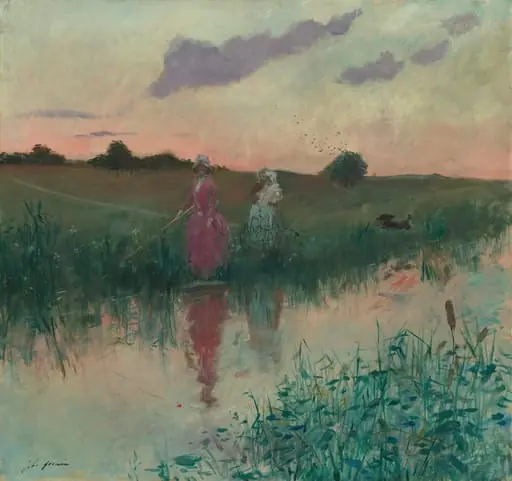
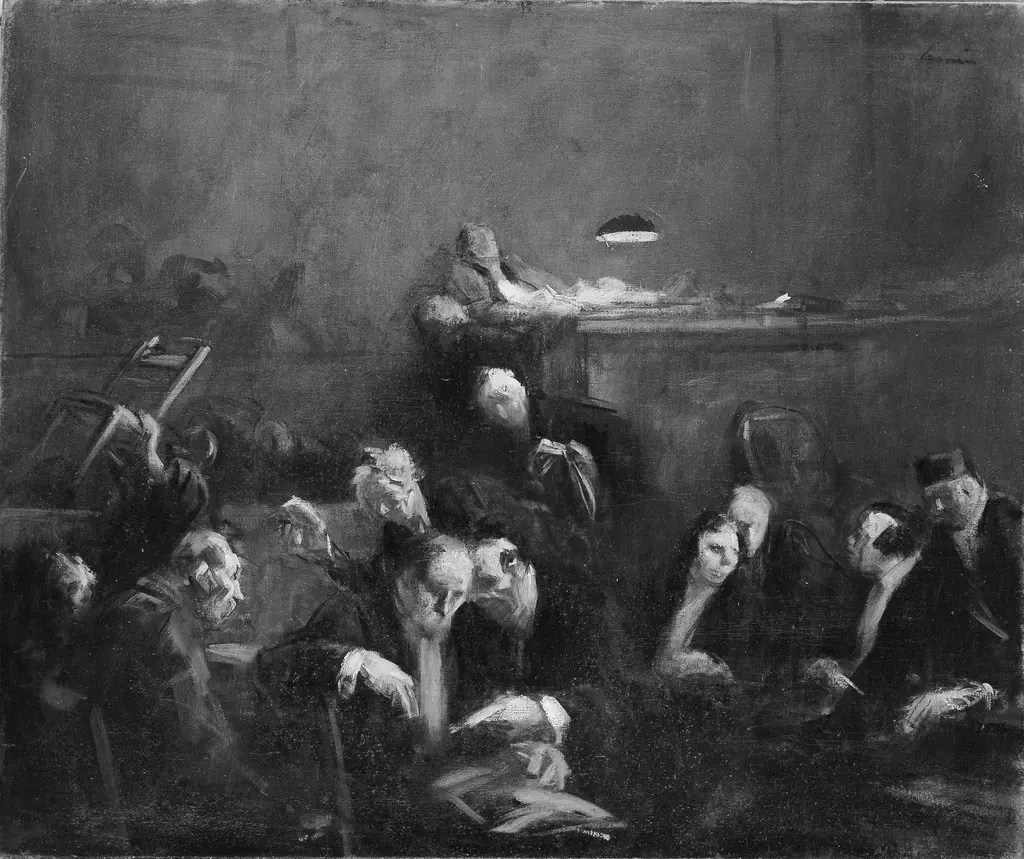
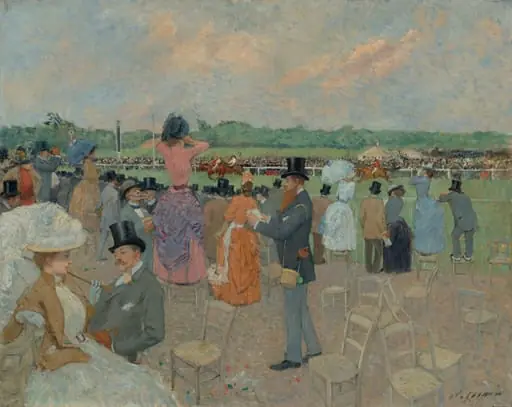
Jean-Louis Forain (French pronunciation: ; 23 October 1852 – 11 July 1931) was a French Impressionist painter and printmaker, working in media including oils, watercolour, pastel, etching and lithograph.

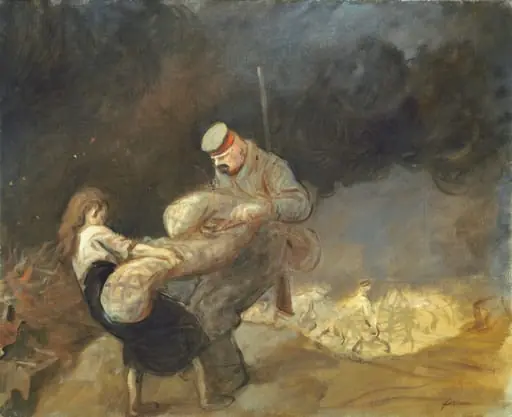
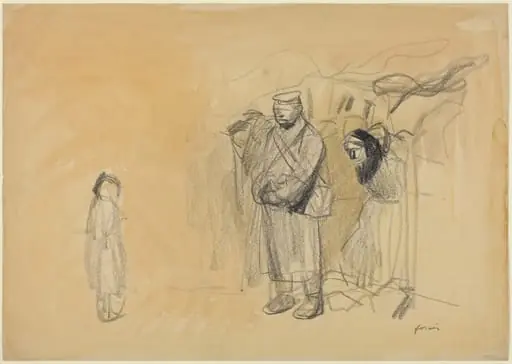 a) German Soldiers and French Child (recto); b) Woman and Child (verso)
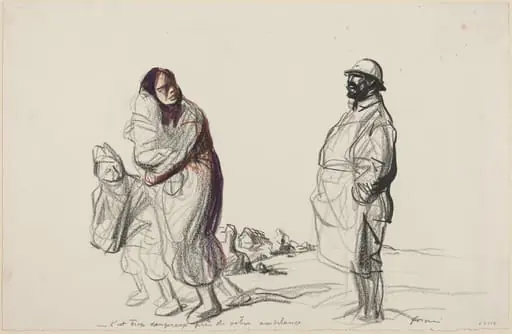 a) C'est trop dangereux pres de votre ambulance (recto); b) Study of Mother and Children (verso)
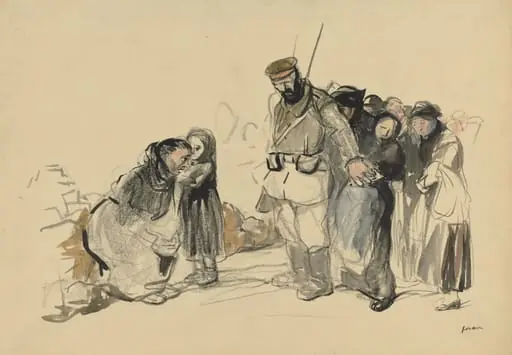 The Slavery in the North
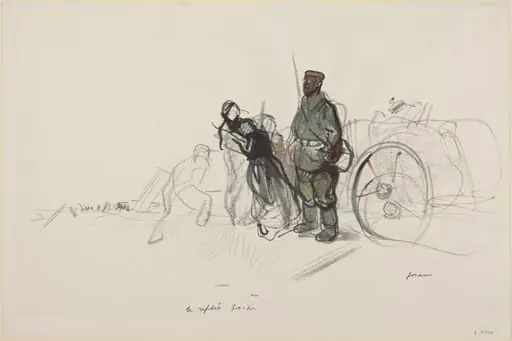 a) Le replis boche (recto); b) Sketch for the Figure of the German (verso)
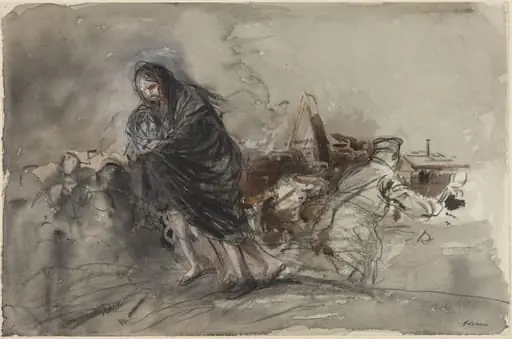 a) Après Douai (After Douai) (recto); b) Figure (verso)
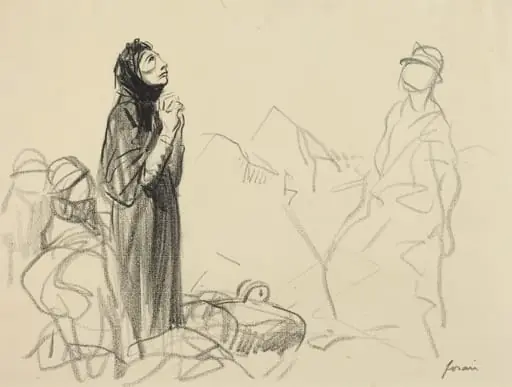 During the Armistice
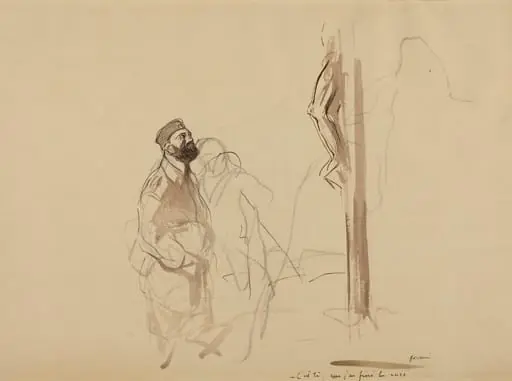 C'est la, que j'ai fini le cure
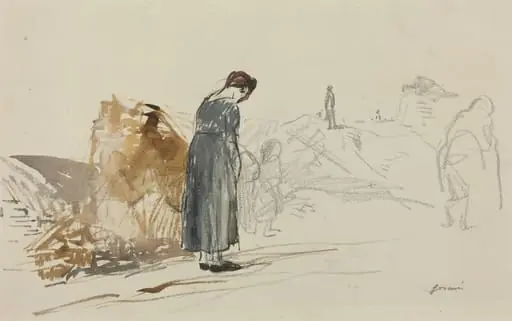 a) Les Allemandes sont partis (recto); b) Sketch of a Man (verso)
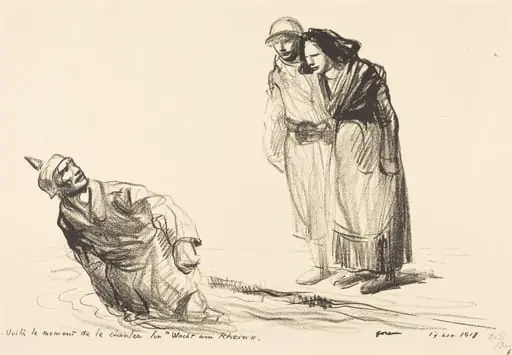 Voilà le Moment de le chantes tun "Wacht am Rhein"
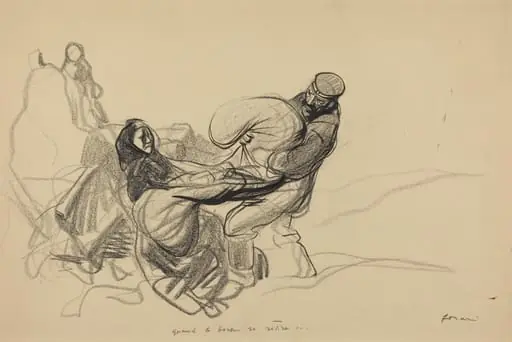 Quand le boche se retire...
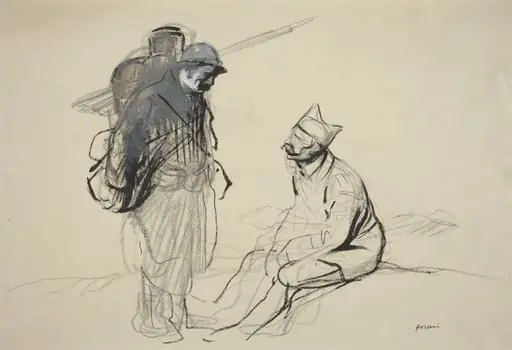 Poilu and Tommy Conversing
 "The German troups received the formal order to spare private property"