Artwork
Refugees
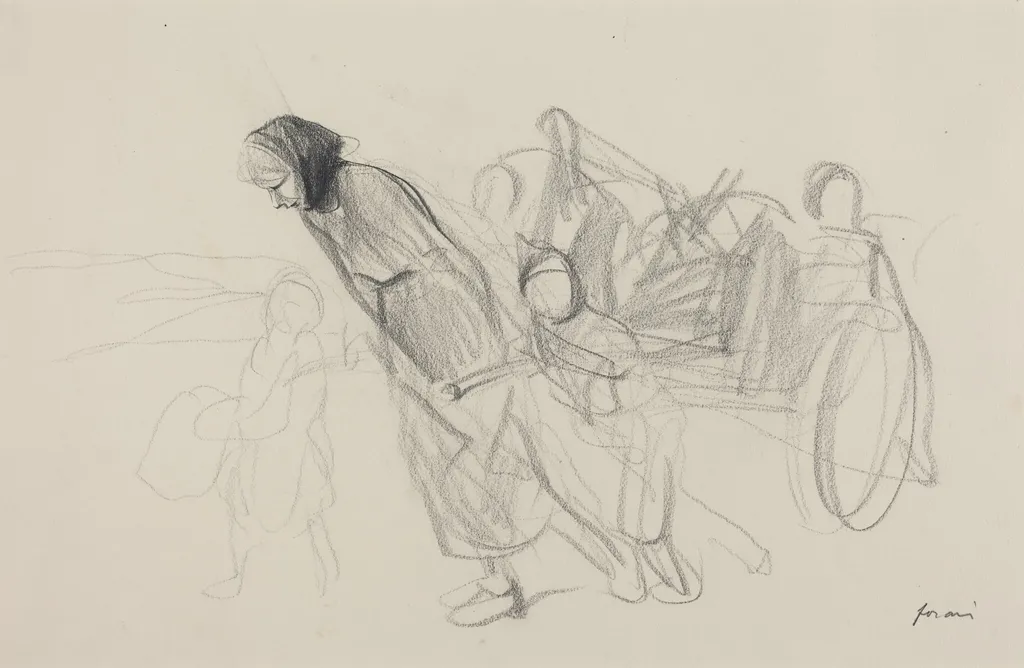
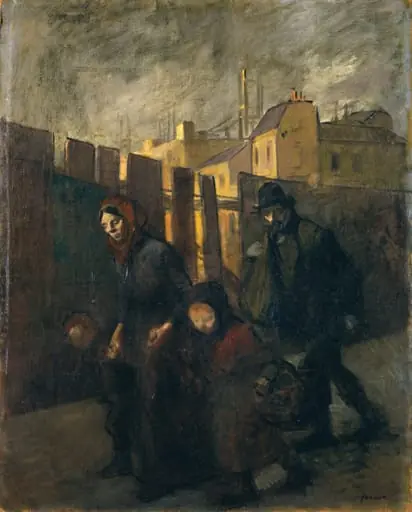
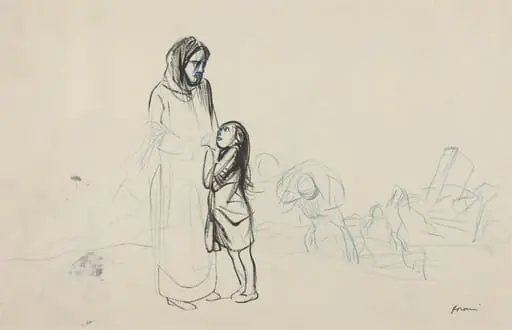
Refugees is a crayon drawing by Jean-Louis Forain. It dates from 1916 and is held in the collection of the National Gallery of Art.
About this work
Overview
Though known for his vibrant oil paintings and prints, Forain turned to rapid, monochromatic sketches during World War I to document civilian suffering.
Jean-Louis Forain created this drawing in approximately 1916 using black crayon on wove paper. Though known for his vibrant oil paintings and prints, Forain turned to rapid, monochromatic sketches during World War I to document civilian suffering. This work belongs to a series of intimate, unidealized studies of displaced people, reflecting his shift toward socially conscious subjects amid the war's humanitarian crisis.
Subject & Meaning
The drawing depicts a weary man hunched under the weight of a bundle, his posture conveying exhaustion and displacement. A second figure, barely suggested by faint, trailing lines behind him, implies the presence of others without detailing their forms. The absence of context or setting emphasizes isolation and anonymity, underscoring the quiet, widespread suffering of civilians caught in the war’s upheaval.
Technique & Style
Forain employed loose, urgent strokes of black crayon to construct form without shading or refinement. The lines are abrupt and uneven, avoiding smooth transitions to convey immediacy. The paper’s texture interacts with the medium, enhancing the raw, unfinished quality. This approach prioritizes emotional resonance over detail, aligning with the spontaneity of observational sketching rather than polished composition.
History & Provenance
Created during Forain’s active engagement with wartime themes, the drawing emerged from his personal observations of refugees fleeing conflict zones. Unlike his earlier satirical works, this piece reflects a deliberate turn toward empathy. It remained in private collections after his death and is now held in institutional archives, valued for its unembellished testimony to civilian hardship during the Great War.
Context
In 1916, France was deeply embroiled in World War I, with mass displacement and civilian trauma becoming visible across the countryside. Forain, though not a soldier, documented these effects through sketches made on-site or from eyewitness accounts. His choice of a humble medium—crayon on paper—mirrored the unvarnished reality he sought to record, contrasting with official wartime imagery that often glorified sacrifice.
Legacy
This drawing exemplifies Forain’s later commitment to social observation over commercial appeal. While he gained fame for his satirical prints, works like this reveal a quieter, more compassionate side of his practice. It stands as part of a broader archive of early 20th-century drawings that preserved the dignity of ordinary people amid catastrophe, influencing later documentary artists seeking truth over spectacle.
Artist & collection

Artist
Jean-Louis Forain (French pronunciation: ; 23 October 1852 – 11 July 1931) was a French Impressionist painter and printmaker, working in media including oils, watercolour, pastel, etching and lithograph.

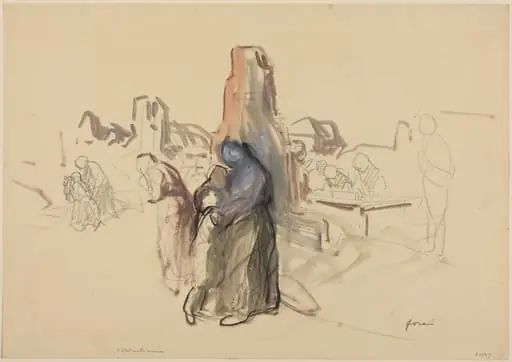 a) C'etait notre maison (recto); b) Refugees in a Landscape (verso)
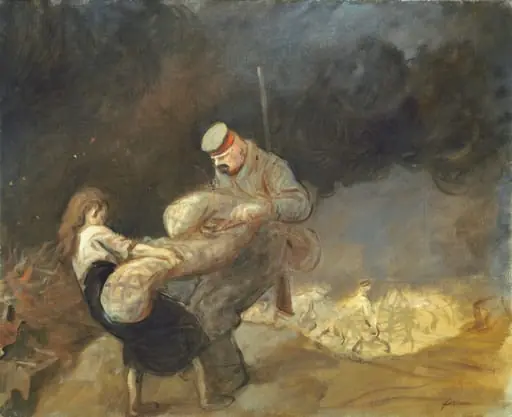
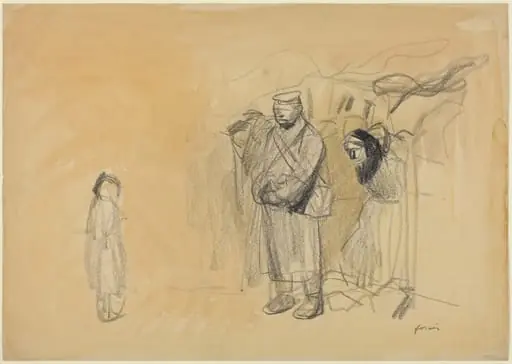 a) German Soldiers and French Child (recto); b) Woman and Child (verso)
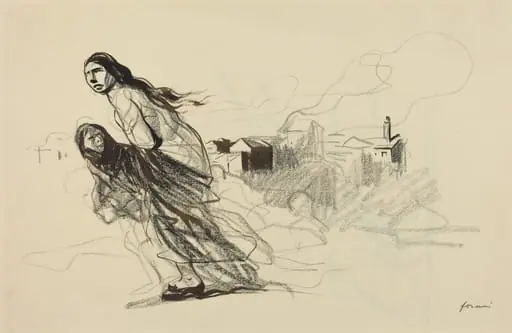 a) After Douai (recto); b) Untitled (verso)
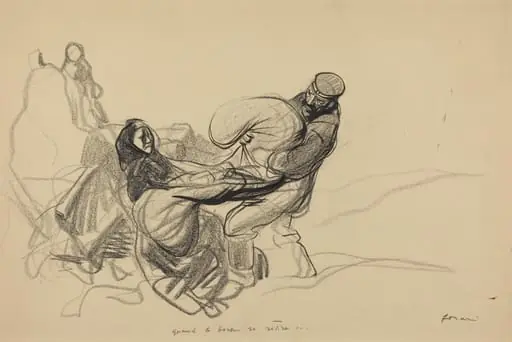 Quand le boche se retire...
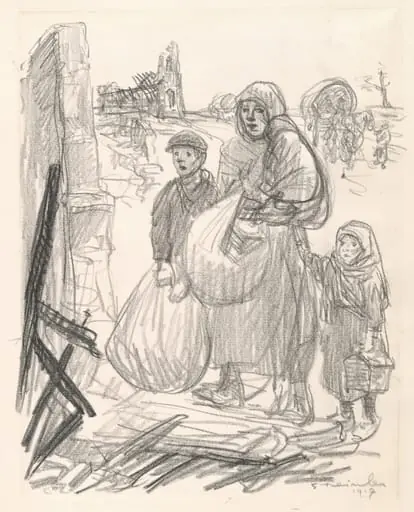 C'est ici, chez nous!
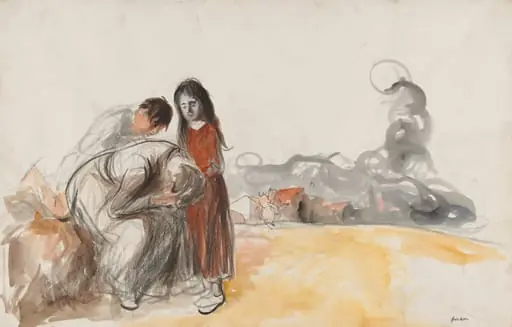 The Germans Have Gone Away
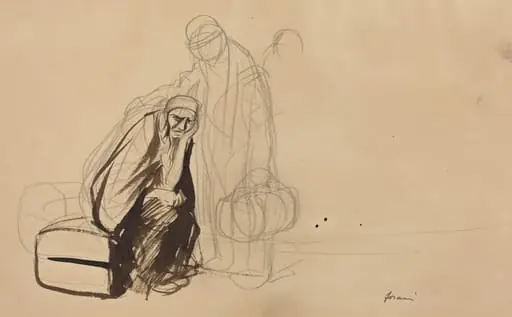 The Departure for Versailles
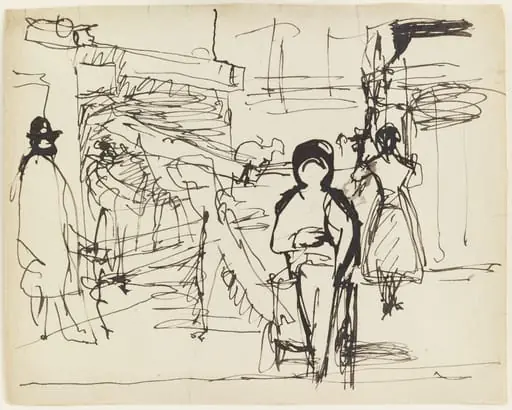 Untitled
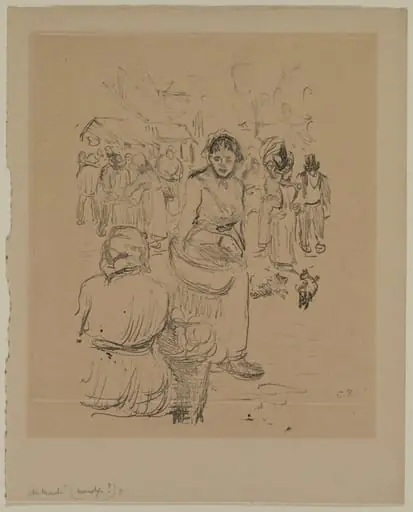 At the Market
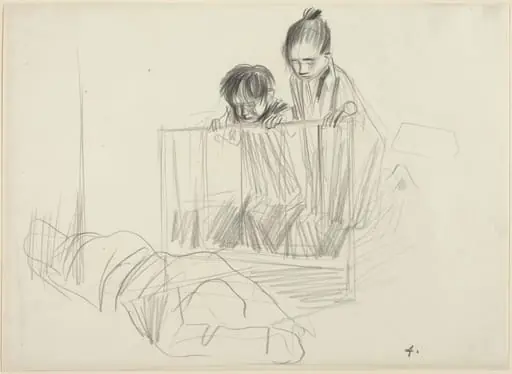 Children Looking over the Edge of a Crib
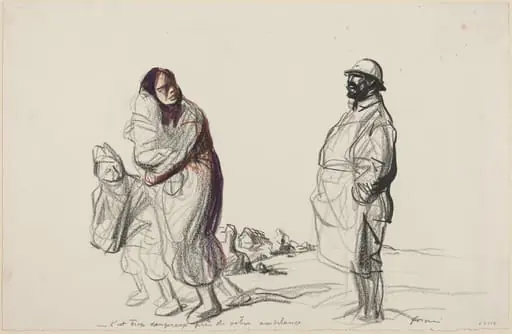 a) C'est trop dangereux pres de votre ambulance (recto); b) Study of Mother and Children (verso)
 a) Refugees (recto); b) No 2 (verso)