Artwork
Justus Lipsius
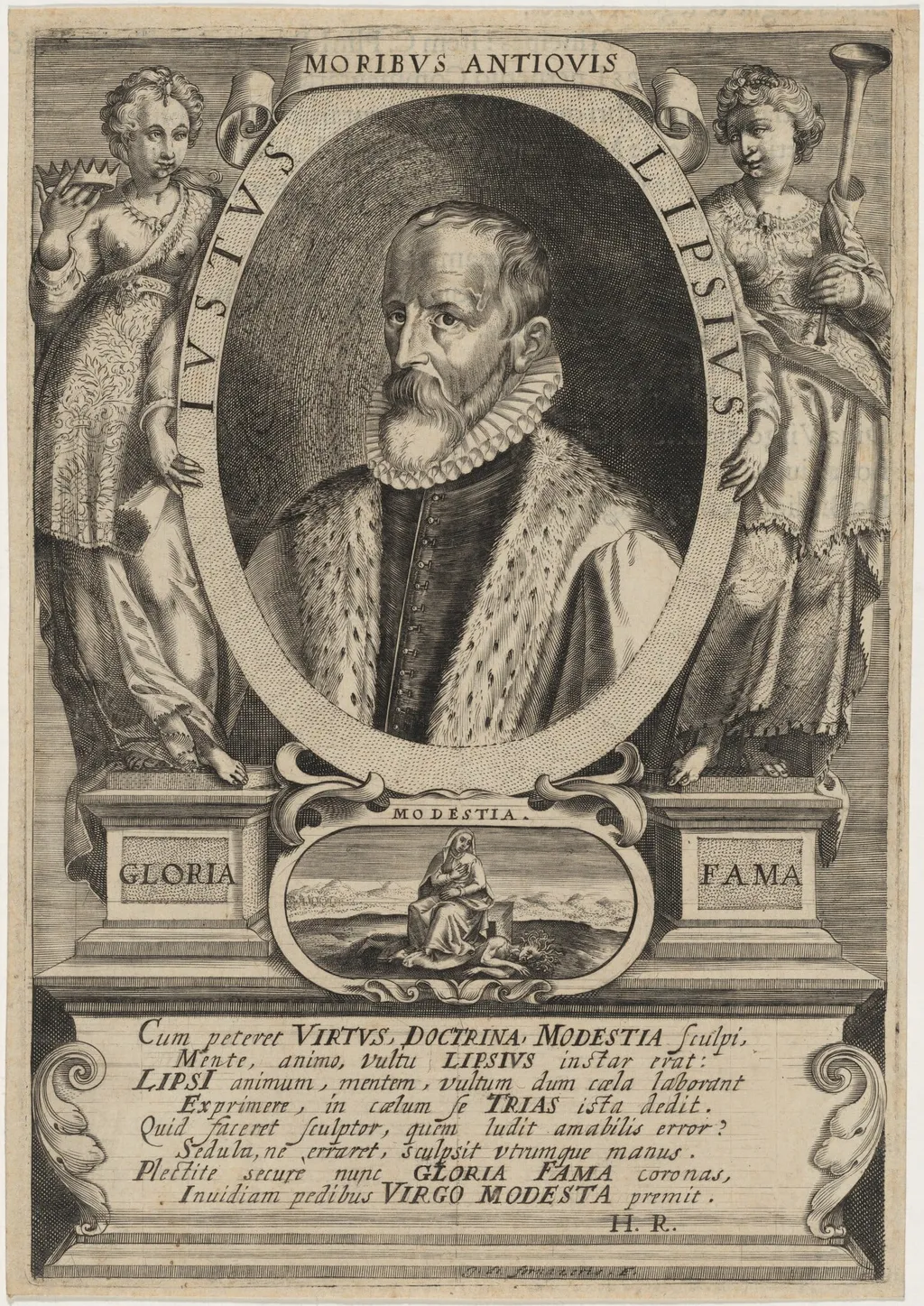
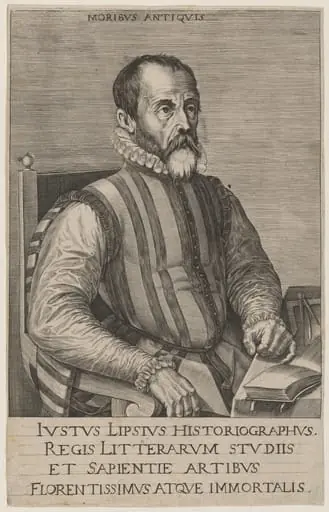
Justus Lipsius is an ink print by the Renaissance artist Jacques de Fornazeris. It dates from 1584 and is held in the collection of the National Gallery of Art.
About this work
Overview
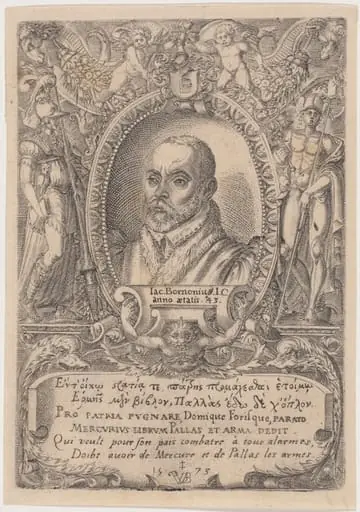
Jacques de Fornazeris produced an engraving in 1584 that presents the humanist scholar Justus Lipsius. Rendered in black and white, the print centers on a bearded figure dressed in a fur‑lined robe, seated amid a composed arrangement of allegorical elements.
Subject & Meaning
Flanking him are two winged female figures who support a banner bearing the Latin phrase *Moribus Antiquis*, suggesting a reference to ancient customs.
The central portrait shows Lipsius with a contemplative expression, his curly hair and moustache emphasizing his learned demeanor. Flanking him are two winged female figures who support a banner bearing the Latin phrase *Moribus Antiquis*, suggesting a reference to ancient customs. Below, a smaller vignette features a woman beneath a tree, accompanied by framed inscriptions such as *Gloria* and *Modestia*, likely alluding to virtues associated with the scholar.
Technique & Style
Executed as an intaglio engraving, the work relies on fine lines and cross‑hatching to model volume and convey texture, particularly in the fur lining and the delicate wings of the attendant figures. The contrast between dense shading and open spaces creates a sense of depth typical of late‑Renaissance printmaking.
History & Provenance
Created in the late sixteenth century, the print reflects the period’s practice of commemorating intellectual figures through portraiture. While specific ownership records are scarce, the engraving has been catalogued among de Fornazeris’s known works and appears in collections of early modern prints.
Context
Justus Lipsius (1547–1606) was a prominent philosopher and classical scholar whose writings on Stoicism and antiquity were widely circulated. Portraits such as this served to reinforce his reputation, linking his scholarly achievements to classical virtues embodied by the surrounding allegorical symbols.
Artist & collection