Artwork
Count Gondamor
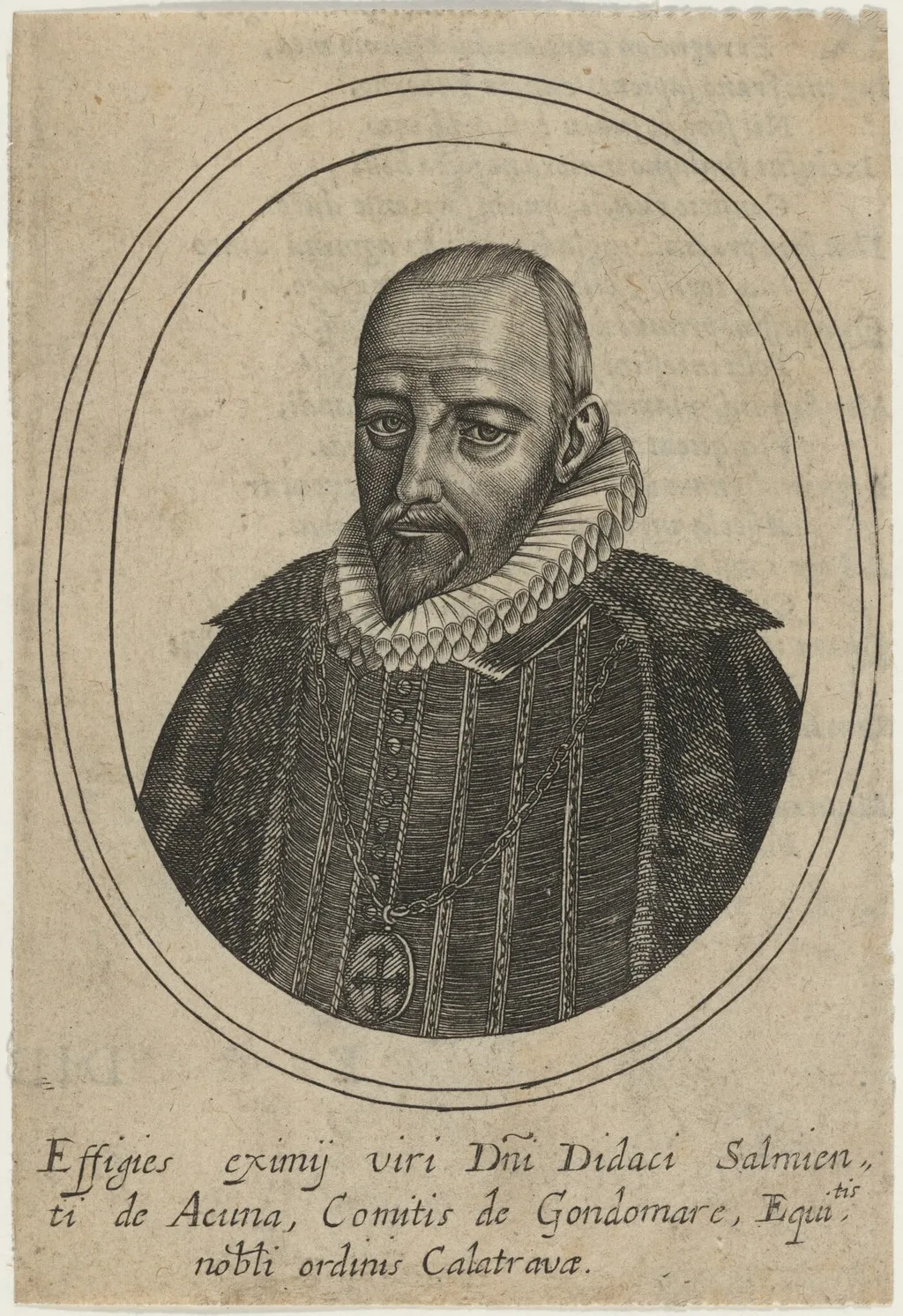
Count Gondamor is an ink print by the Romanticist artist Unknown 19th Century. It dates from 1850 and is held in the collection of the National Gallery of Art.
About this work
Overview
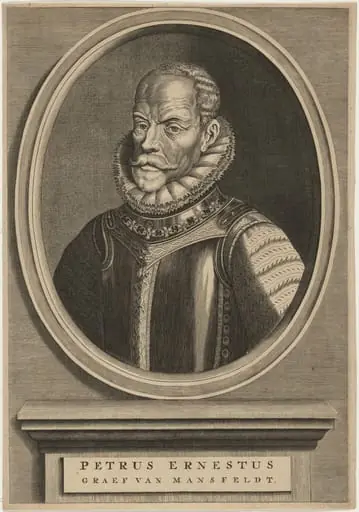
The work titled “Count Gondamor” is an engraved print that presents a portrait of a man shown from the shoulders up. Rendered in fine line work, the figure faces directly toward the viewer, his expression solemn and his gaze steady. The composition is set against a light background framed by a circular border, emphasizing the central figure.
Subject & Meaning
The portrait depicts a gentleman identified as Count Gondamor, distinguished by a receding hairline, moustache, dark attire, and a ruffled collar. A decorative chain encircles his neck, suggesting status or affiliation. The direct eye contact and serious demeanor convey a sense of authority and personal gravitas.
Technique & Style
Executed as an engraving, the image relies on intricate incised lines to model form, texture, and shading. The artist employs cross‑hatching and varied line density to create depth, particularly in the facial features and fabric folds. The circular border and light background are characteristic of portrait prints intended for clear identification.
History & Provenance
The print is catalogued as a type of portrait engraving, a common medium for disseminating images of aristocratic figures in the period. No specific date or artist is provided, and the work’s ownership trail is not recorded in the available information.
Context
Portrait engravings such as this were often used to circulate the likenesses of nobles across courts and collections, serving both documentary and decorative purposes. The inclusion of a chain and ruffled collar aligns with fashion trends among European aristocracy during the late 17th to early 18th centuries.
Artist & collection

Artist

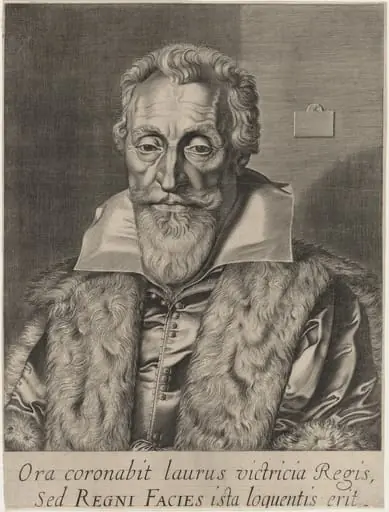
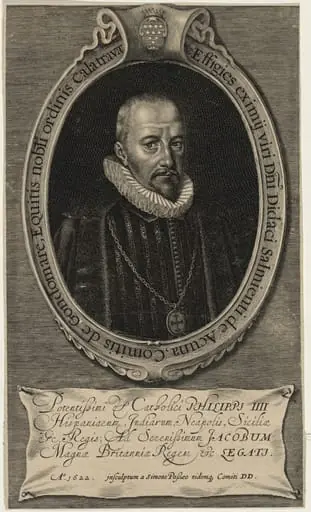 Diego Sarmiento de Acuna, Count of Gondomar
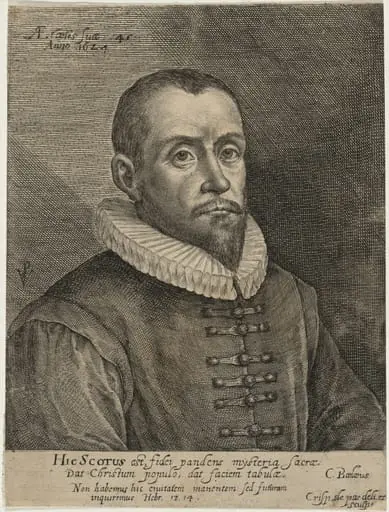 Thomas Scott
 Thomas Scott
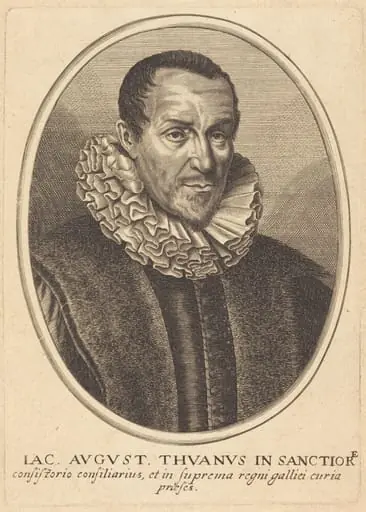 Jacques-Auguste de Thou
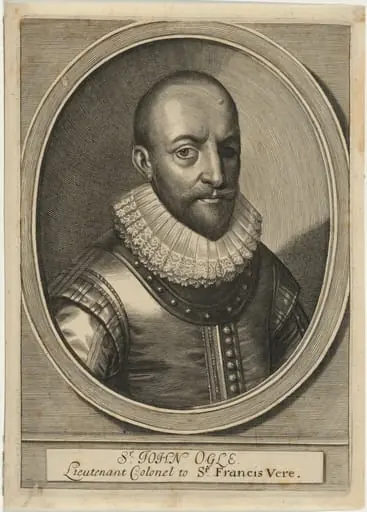 Sir John Ogle
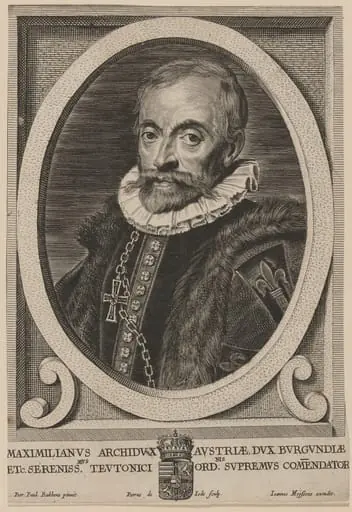 Maximilian II, Archduke of Austria
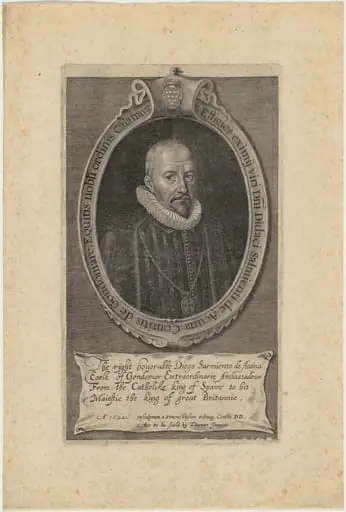 Diego Sarmiento de Acuna, Count of Gondomar
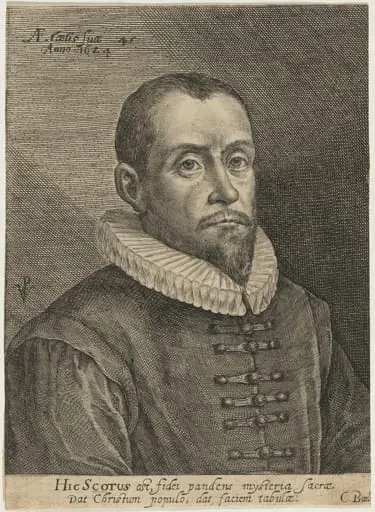 Thomas Scott
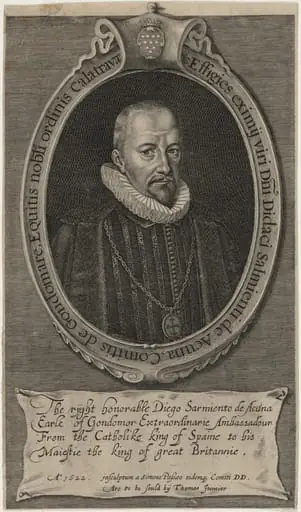 Diego Sarmiento de Acuna, Count of Gondomar
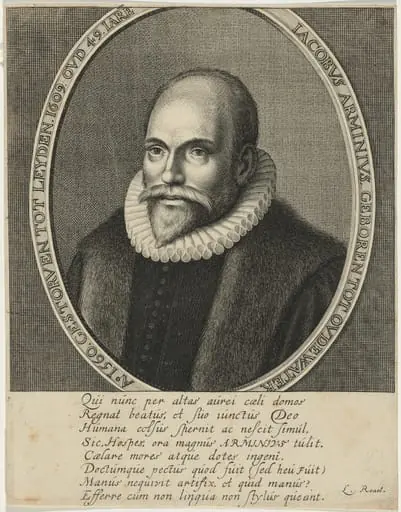 Jacobus Arminius
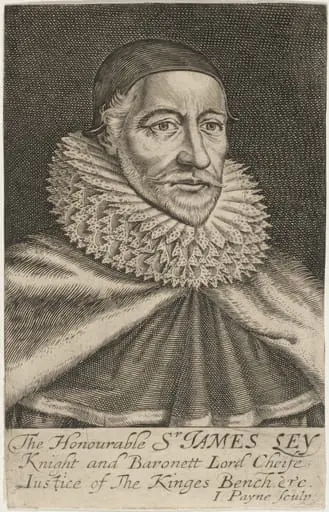 James Ley, First Earl of Marlborough
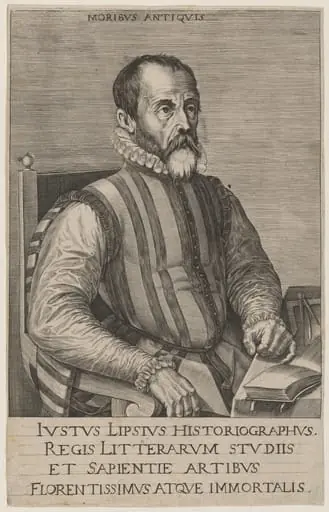 Justus Lipsius, Historian