Artwork
Orlando and Angelica Arrive at Charlemagne's Camp
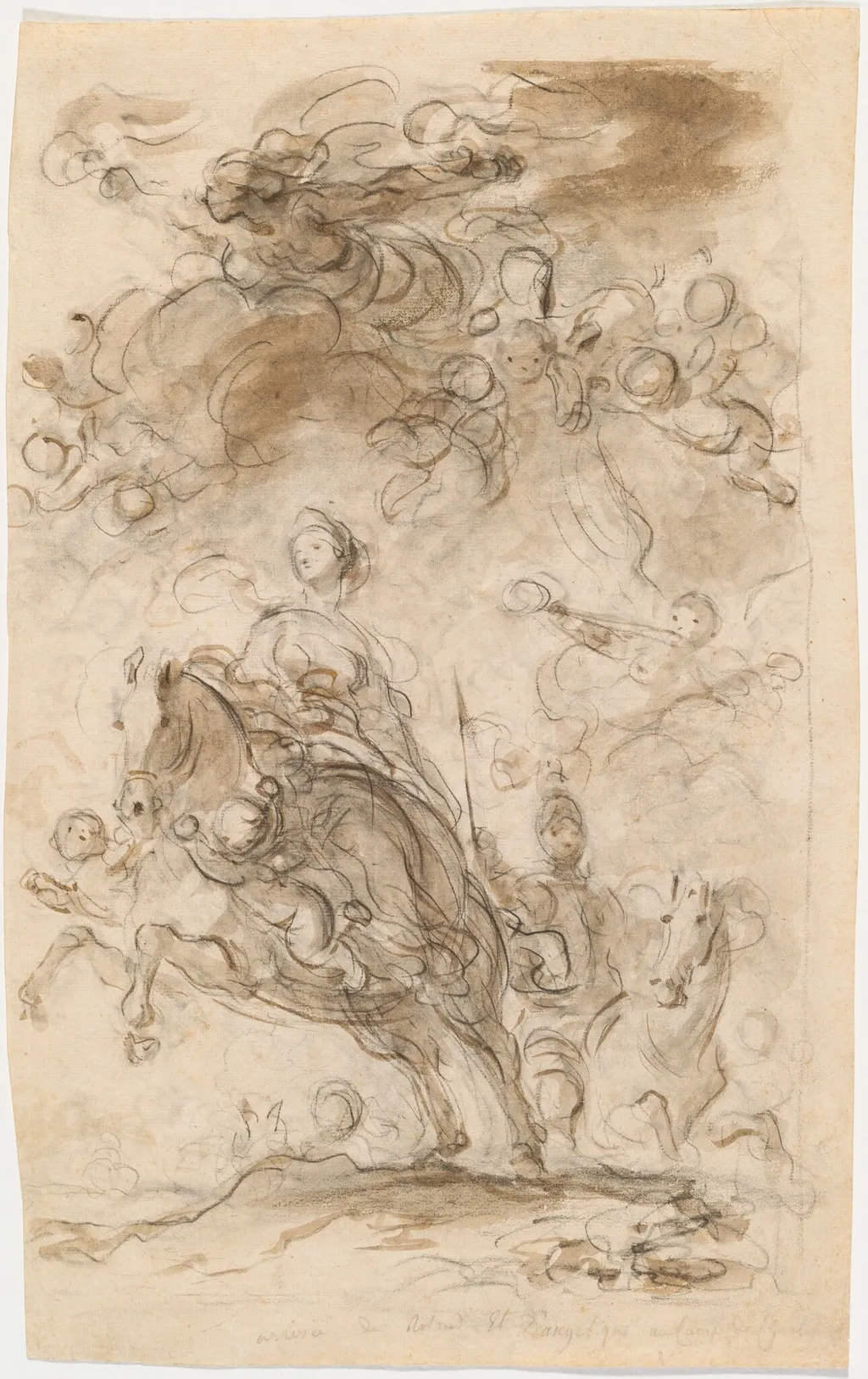
Orlando and Angelica Arrive at Charlemagne's Camp is a chalk drawing by the Baroque artist Jean Honoré Fragonard. It dates from 1769 and is held in the collection of the National Gallery of Art. Jean‑Honoré Fragonard’s drawing titled *Orlando and Angelica Arrive at Charlemagne’s Camp* dates from 1769.
About this work
Overview
Jean‑Honoré Fragonard’s drawing titled *Orlando and Angelica Arrive at Charlemagne’s Camp* dates from 1769. Executed in black chalk with stumping and a brown wash on laid paper, the work depicts a moment from the epic romance of Orlando and Angelica, set within Charlemagne’s encampment.
Subject & Meaning
The composition illustrates the literary encounter between the knight Orlando and the enchantress Angelica as they enter the legendary camp of Charlemagne. The scene captures a narrative moment drawn from the chivalric tradition, emphasizing themes of adventure and courtly intrigue.
Technique & Style
Fragonard employed a combination of black chalk for line work, stumping to soften edges, and a subtle brown wash to model forms and suggest atmospheric depth. The use of laid paper provides a textured surface that enhances the drawing’s tonal variations, reflecting the artist’s skill in handling drawing media.
History & Provenance
Created in the late eighteenth century, the drawing belongs to Fragonard’s oeuvre of literary subjects. Its provenance traces back to private collections before entering a public institution, where it has been catalogued as a representative example of his narrative drawings from the 1760s.
Artist & collection

Artist
Jean-Honoré Fragonard was born on 5 April 1732 in Grasse, the son of a glover, and moved with his family to Paris in 1738.

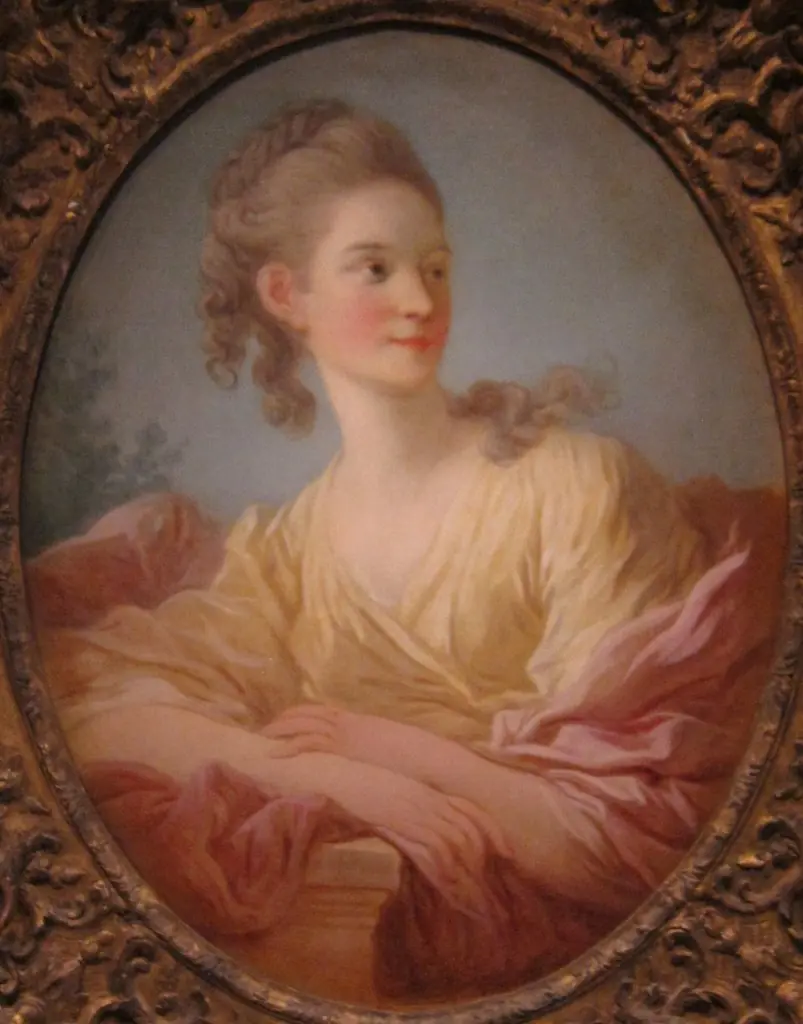
![Bradamante Tries to Catch Hold of the Hippogryph [recto], by Jean Honoré Fragonard](https://artifactworldgallery.com/img/jean-honore-fragonard--bradamante-tries-to-catch-hold-of-the-hippogryph-recto--f9c9ee68fd17e997-w320.webp) Bradamante Tries to Catch Hold of the Hippogryph [recto]
Bradamante Tries to Catch Hold of the Hippogryph [recto]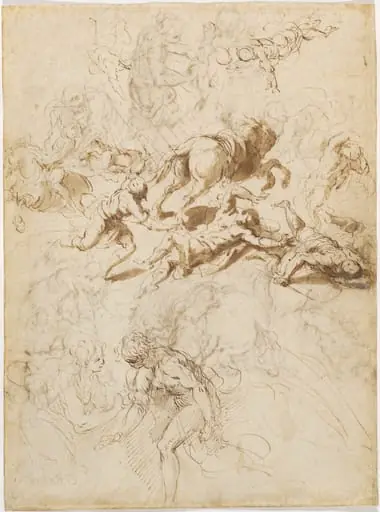 The Conversion of Saint Paul; Adam and Eve
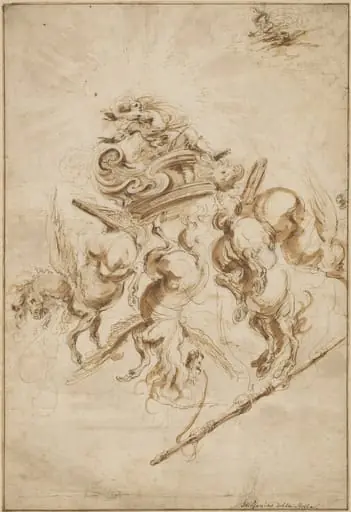 The Fall of Phaeton
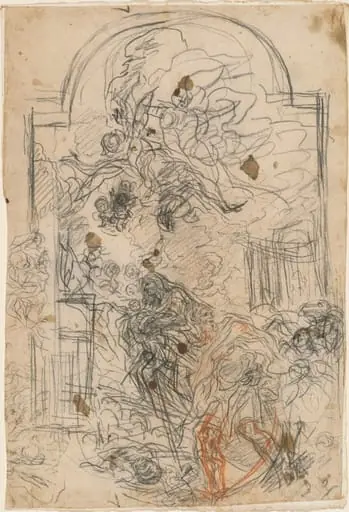 The Flight into Egypt
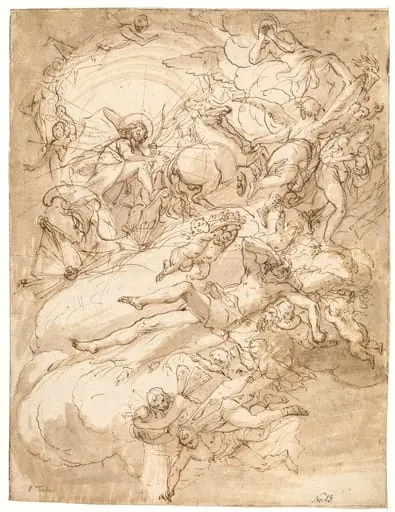 Apollo in his chariot, design for a ceiling painting
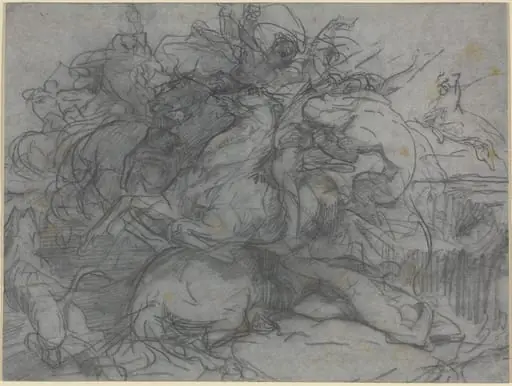 Study for "Surprise" (Battle of the Tigers)
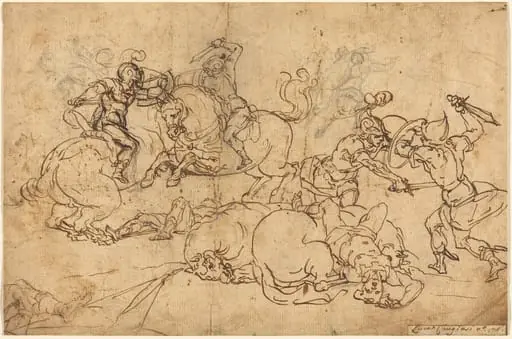 Soldiers Fighting
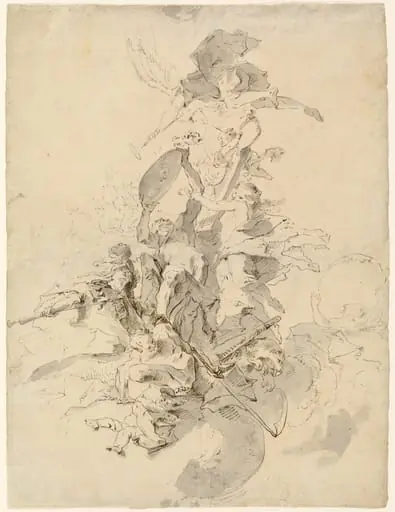 The Glorification of a Prelate
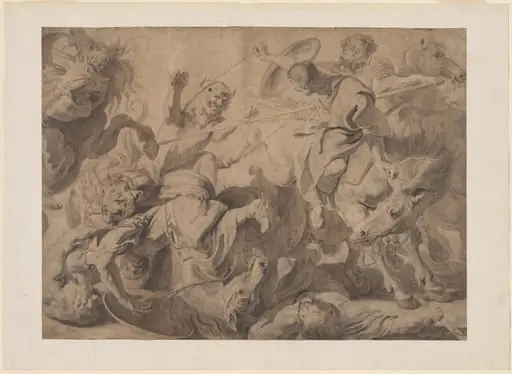 Lion Hunt
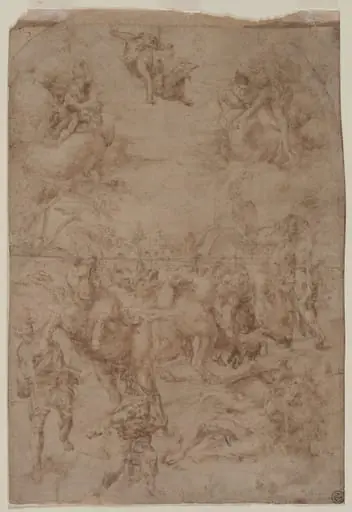 The Conversion of St. Paul
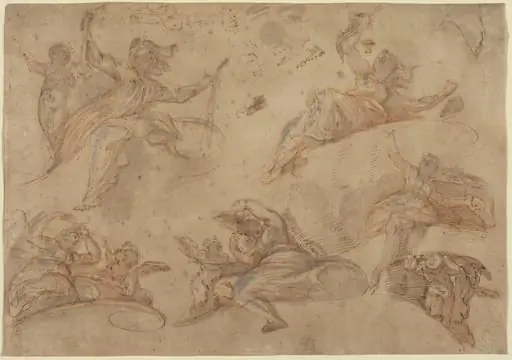 Allegorical Figures Seen from Below
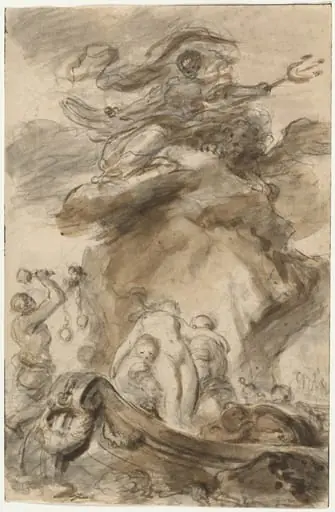 Angelica Is Exposed to the Orc