Artwork
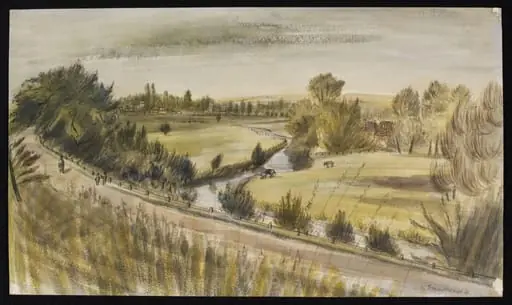
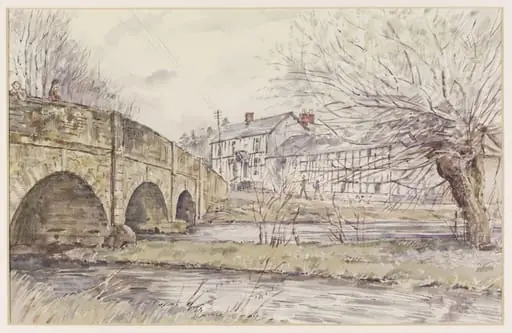
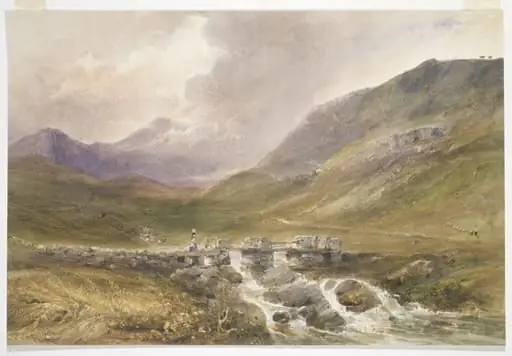
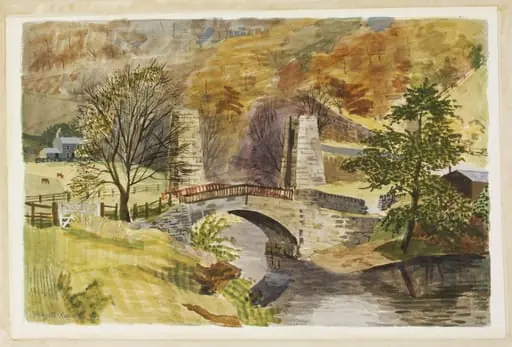
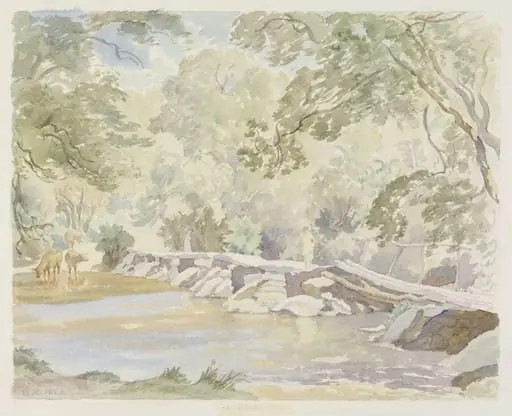
Dol-y-moch Bridge in the Maentwrog Valley, Merionethshire
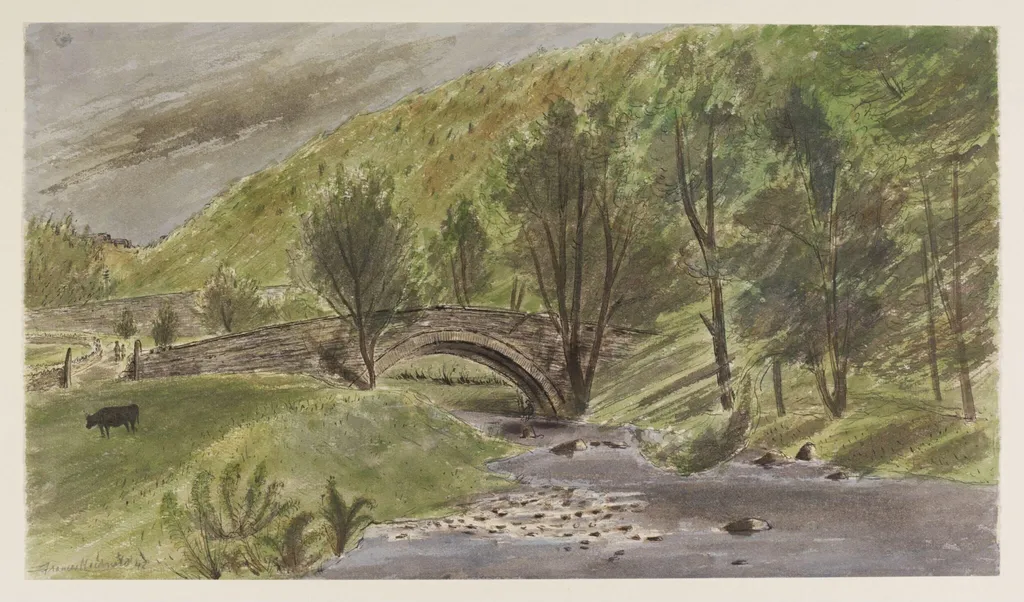
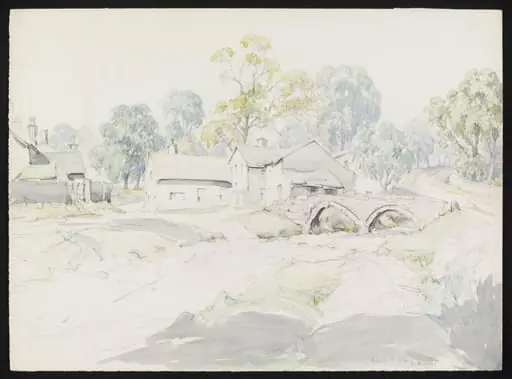
Dol-y-moch Bridge in the Maentwrog Valley, Merionethshire is a watercolor work on paper by Frances Macdonald. It is held in the collection of the Victoria and Albert Museum.
About this work
Overview
Created in 1942, this watercolour by Frances Macdonald captures a quiet rural scene in Merionethshire, Wales.
Created in 1942, this watercolour by Frances Macdonald captures a quiet rural scene in Merionethshire, Wales. It was made as part of the 'Recording Britain' initiative, a wartime project aimed at preserving visual records of the British countryside amid fears of destruction and rapid change. The work belongs to a broader effort supported by the Pilgrim Trust and overseen by Sir Kenneth Clark, documenting landscapes across England, Scotland, and Northern Ireland.
Subject & Meaning
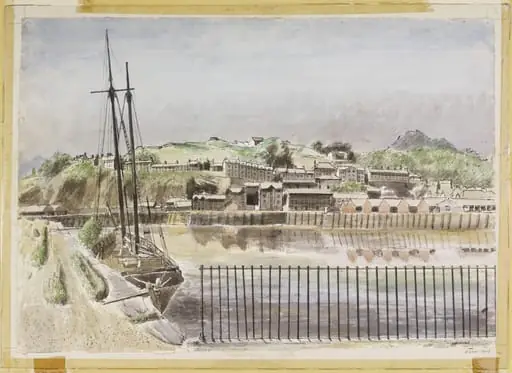
The painting depicts Dol-y-moch Bridge, a modest stone structure crossing a gentle stream in the Maentwrog Valley. A single cow grazes nearby, and distant buildings hint at sparse habitation. The scene conveys stillness and continuity, reflecting the project’s intent to honor ordinary rural life. Its quietude contrasts with the turbulence of wartime, subtly asserting the value of enduring, unassuming places.
Technique & Style
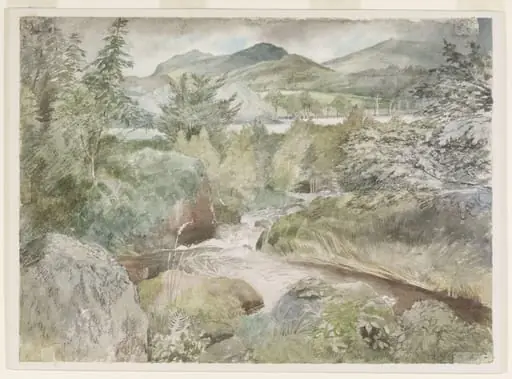
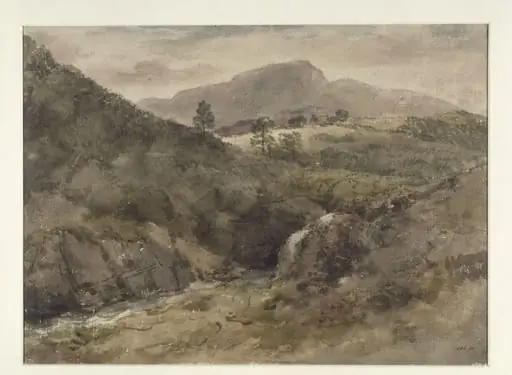
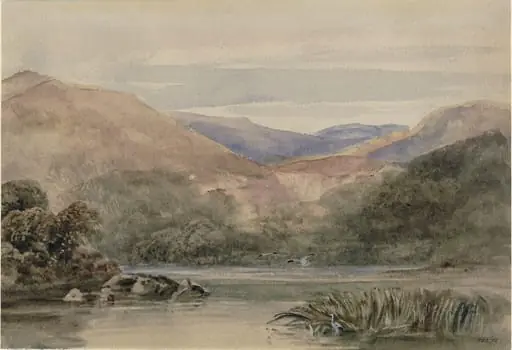
Macdonald employed loose, fluid brushwork to suggest light and atmosphere rather than define detail. The water appears translucent, rendered with minimal strokes that imply movement. Greens vary in tone from deep shadows beneath trees to pale, hazy hillsides, creating depth without heavy modeling. The composition avoids dramatic focus, instead inviting quiet observation through subtle gradations of color and form.
History & Provenance
The work was produced during the early 1940s under the 'Recording Britain' scheme, which commissioned artists to document vulnerable landscapes before they could be altered by war or modernization. It entered the Victoria and Albert Museum’s collection as part of this initiative, alongside hundreds of similar works. Its preservation reflects a deliberate effort to archive the nation’s rural character during a time of uncertainty.
Context
The 'Recording Britain' project emerged as a cultural response to the threat of aerial bombardment and industrial expansion. Artists were sent to remote areas to record scenes deemed at risk of loss. Macdonald’s painting aligns with this mission, capturing a Welsh valley not for its grandeur but for its quiet resilience. Similar efforts occurred in Scotland and Northern Ireland, forming a national visual archive rooted in local specificity.
Legacy
The painting endures as part of a significant wartime documentary effort, offering insight into how art was used to affirm cultural identity during crisis. It contributes to a broader understanding of British landscape painting in the 20th century, where observation replaced idealization. Today, it remains a quiet testament to the value placed on ordinary places during times of upheaval.
Artist & collection
Artist
Frances Macdonald MacNair (24 August 1873 – 12 December 1921) was a Scottish artist whose design work was a prominent feature of the Modern Style (British Art Nouveau style) during the 1890s.