Artwork
Aymestry
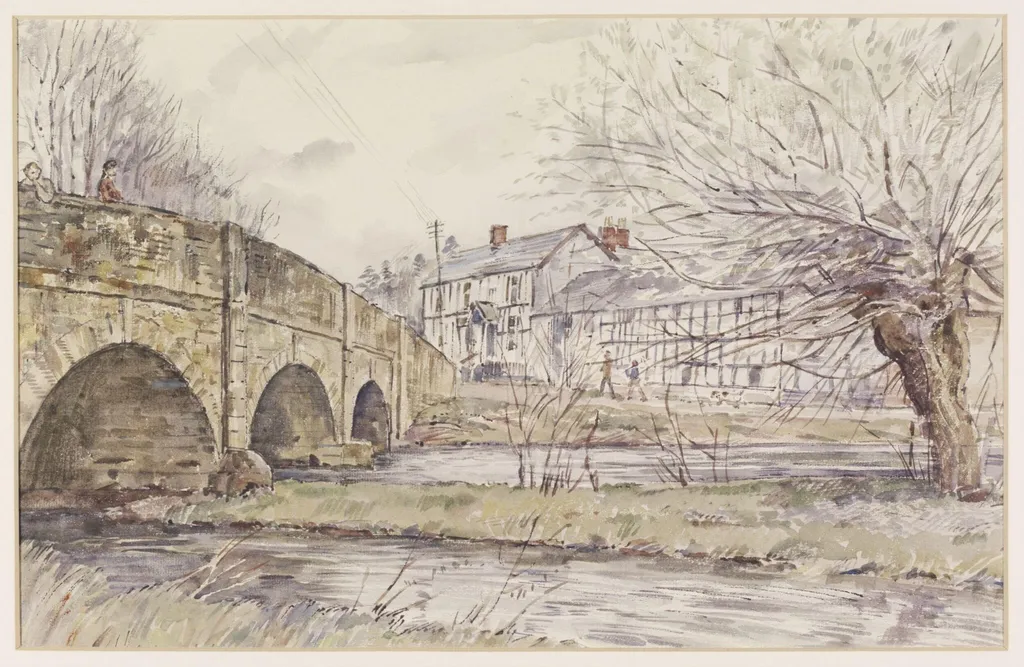
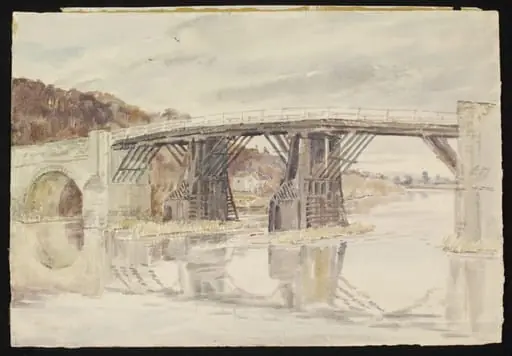
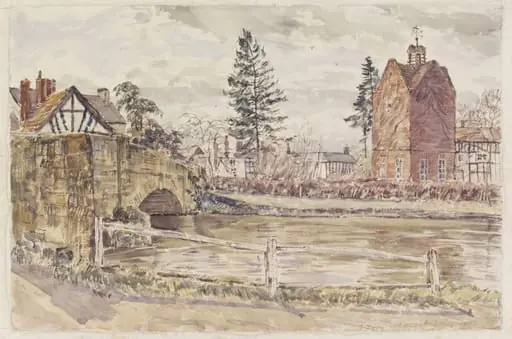
Aymestry is a watercolor work on paper by Lines. It dates from 1942 and is held in the collection of the Victoria and Albert Museum.
About this work
Overview
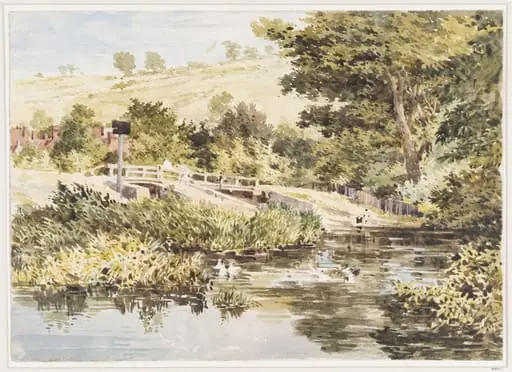
The work is a watercolour executed in 1942 by the artist known as Lines. It portrays the stone bridge spanning the River Lugg at Aymestrey in Herefordshire, with a small grassy island at the river’s centre and a cluster of black‑and‑white half‑timbered houses on the opposite bank.
Subject & Meaning
The composition captures a tranquil riverside scene: a lone figure rests on a low wall, another walks near a sloping‑roofed building, while leaf‑less trees line the bank. The calm, shallow water and muted palette emphasize the quiet, everyday character of the rural landscape.
Technique & Style
Lines employs soft, loosely applied brushstrokes to render light and shadow, creating a gentle atmospheric effect. The colour scheme is restrained, dominated by beiges, greys and pale blues, with only a subtle touch of green for the grass, typical of mid‑twentieth‑century British watercolour practice.
History & Provenance
The painting belongs to the Recording Britain project, a wartime government programme that commissioned artists to document the nation’s scenery and built environment. Initiated by Sir Kenneth Clark, the scheme sought to preserve traditional artistic techniques and record places that might be altered or lost during the conflict.
Context
Recorded Britain focused on English rural and architectural subjects, deliberately excluding most of Northern Ireland and only a limited portion of Wales and Scotland. This work reflects the broader effort to capture the visual character of England’s countryside and historic towns during World War II.
Artist & collection

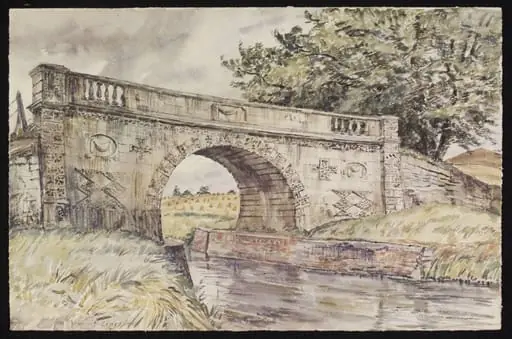 Lady Bridge over the Kennett and Avon Canal, Wilcot
 Bridge and Pigeon House, Eardisland
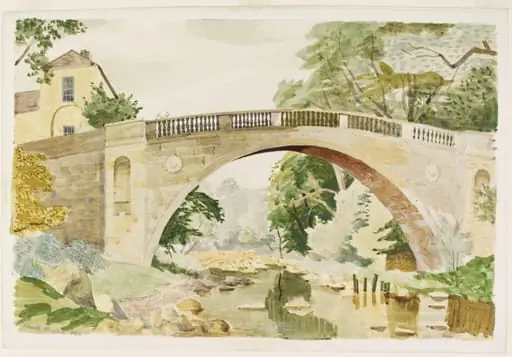 Greta Bridge
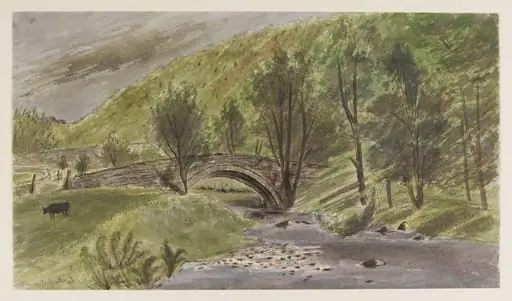 Dol-y-moch Bridge in the Maentwrog Valley, Merionethshire
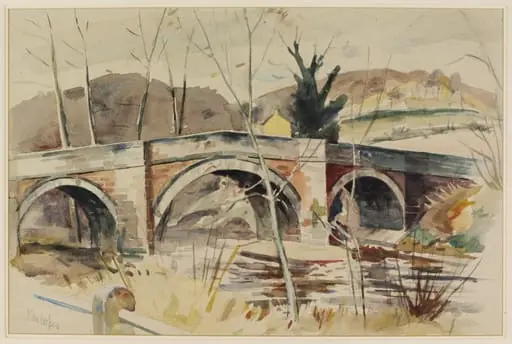 Ashberry Bridge (North side), Rievaulx
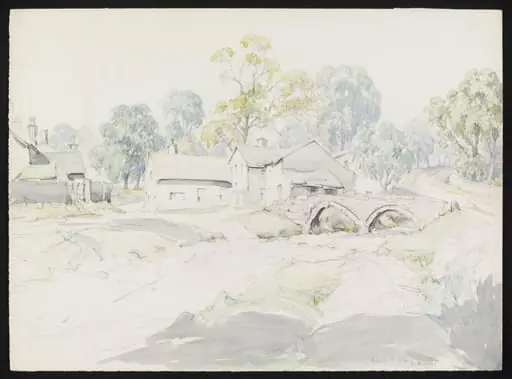 Wycoller Village
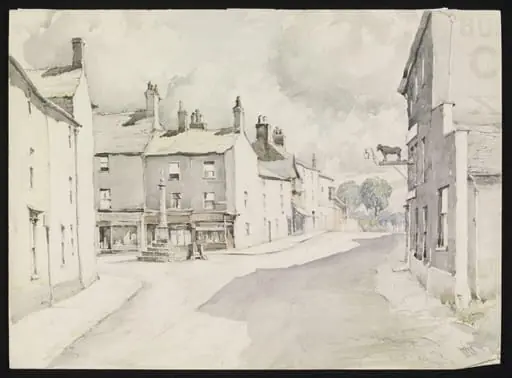 Market Place, Poulton-le-fylde, near Blackpool
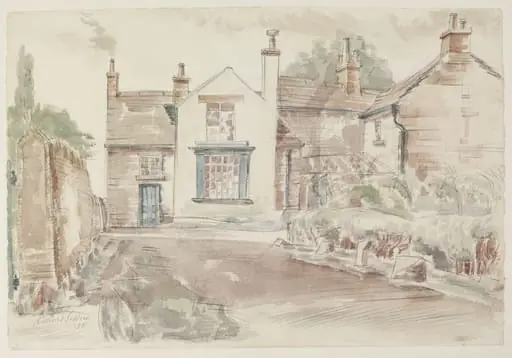 Cottages at Norton, No.1
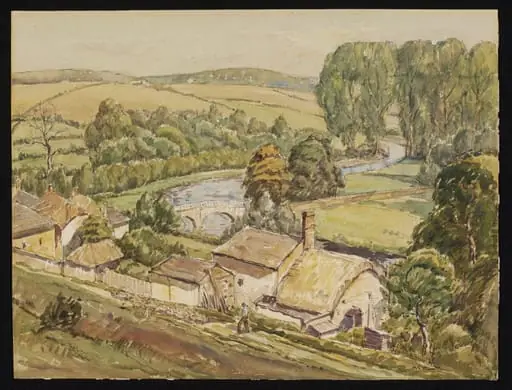 Woodford Bridge in the Avon Valley
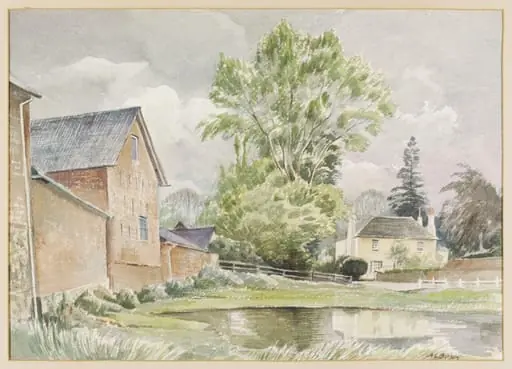 Bentworth, Near Alton
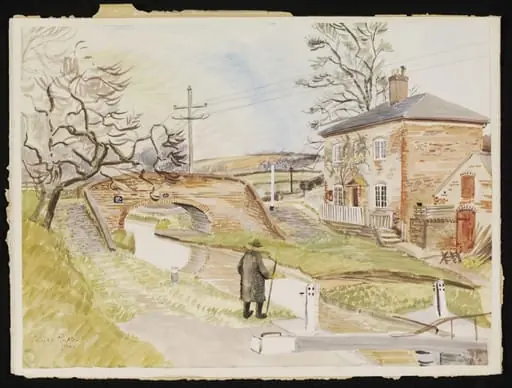 Meaford Lock, Stone
 Mill Mead, Guildford