Artwork
Allegory of Autumn
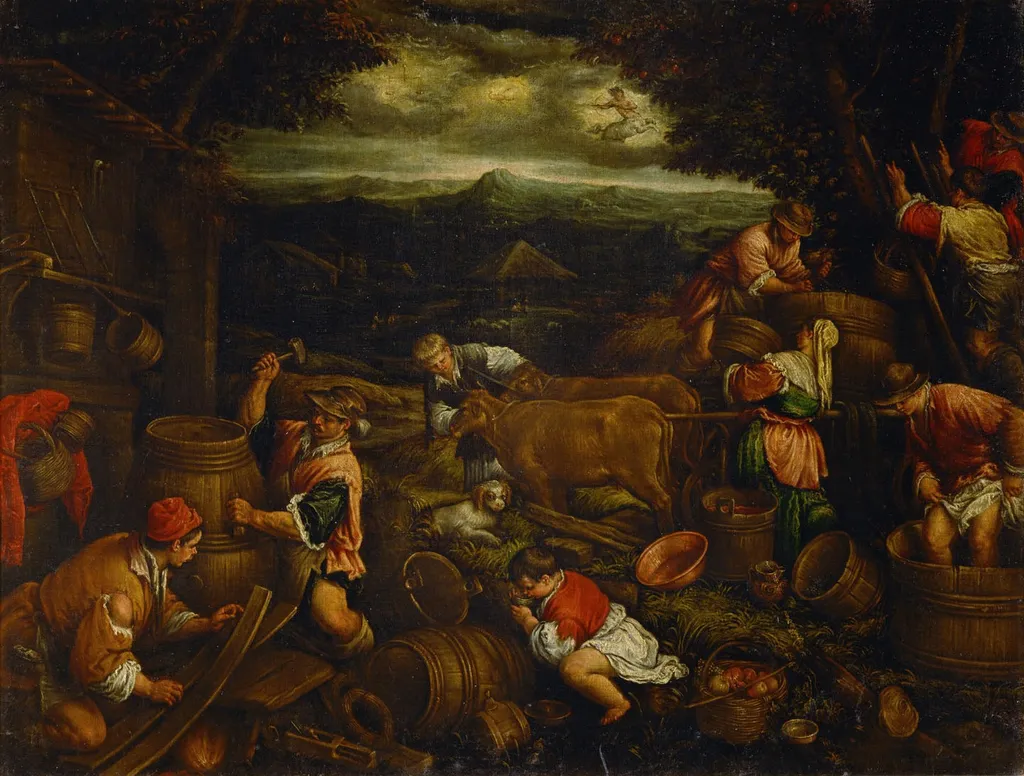
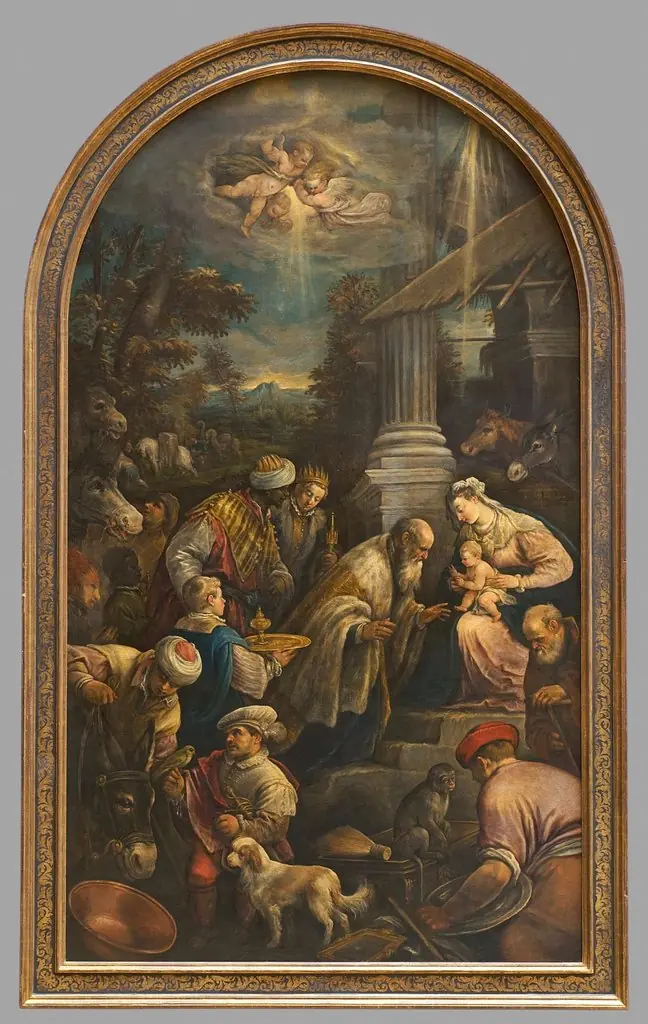
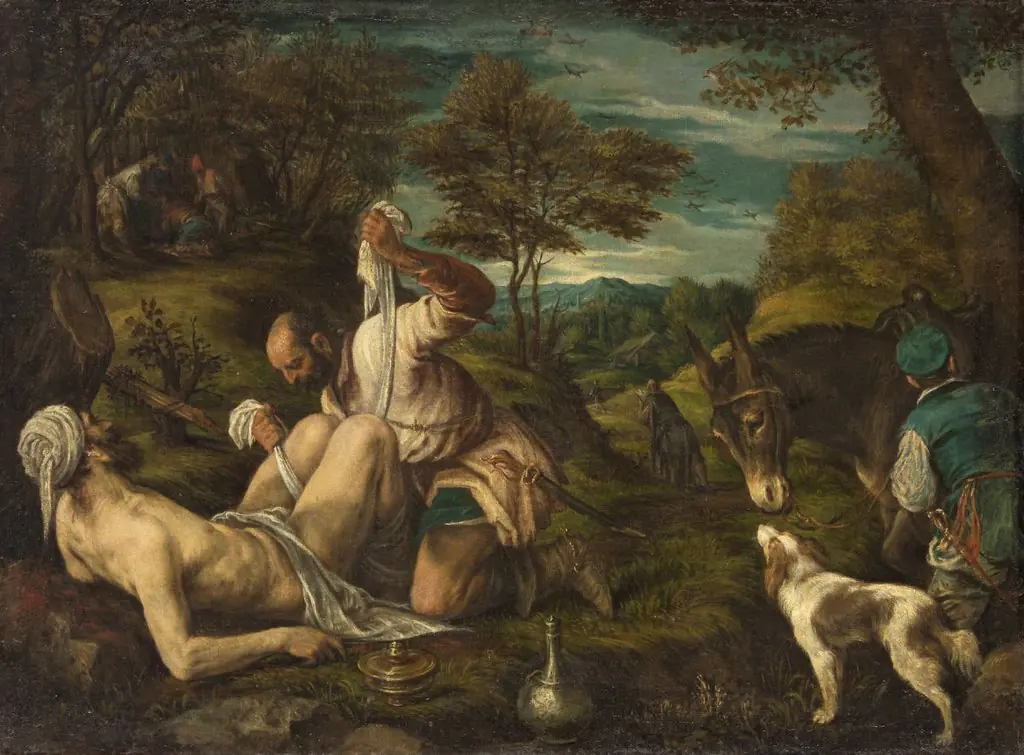
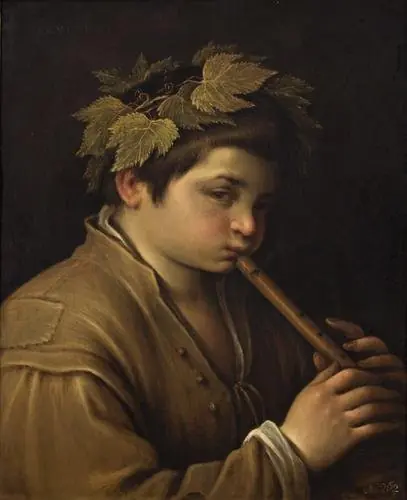
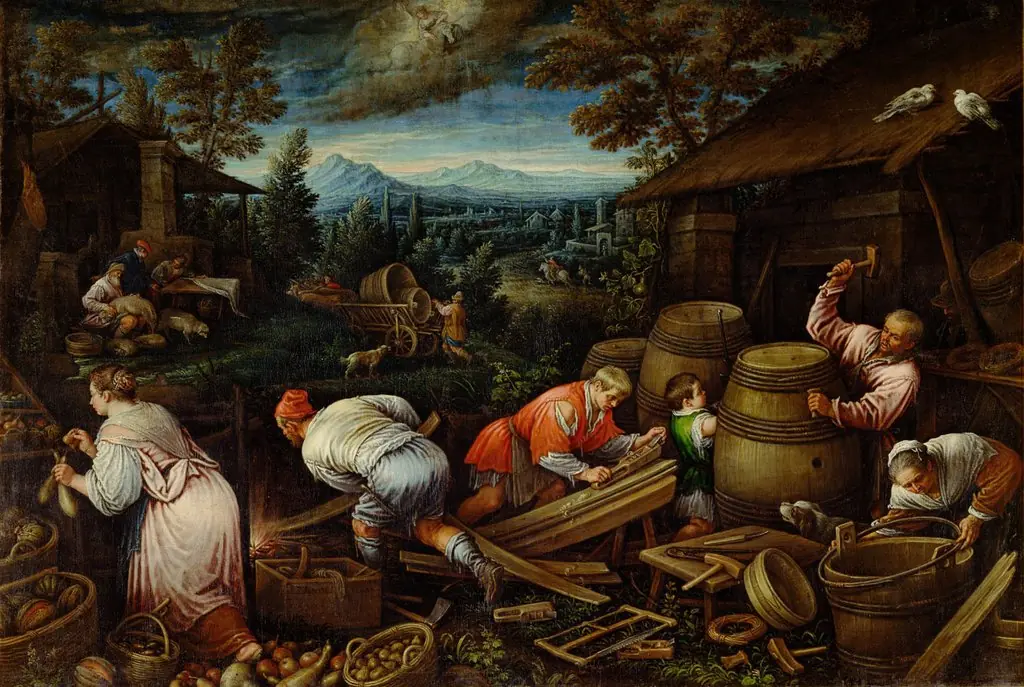
Allegory of Autumn is an oil painting by the Mannerist artist Francesco Bassano the Younger. It is held in the collection of the Kunsthistorisches Museum.
About this work
Overview
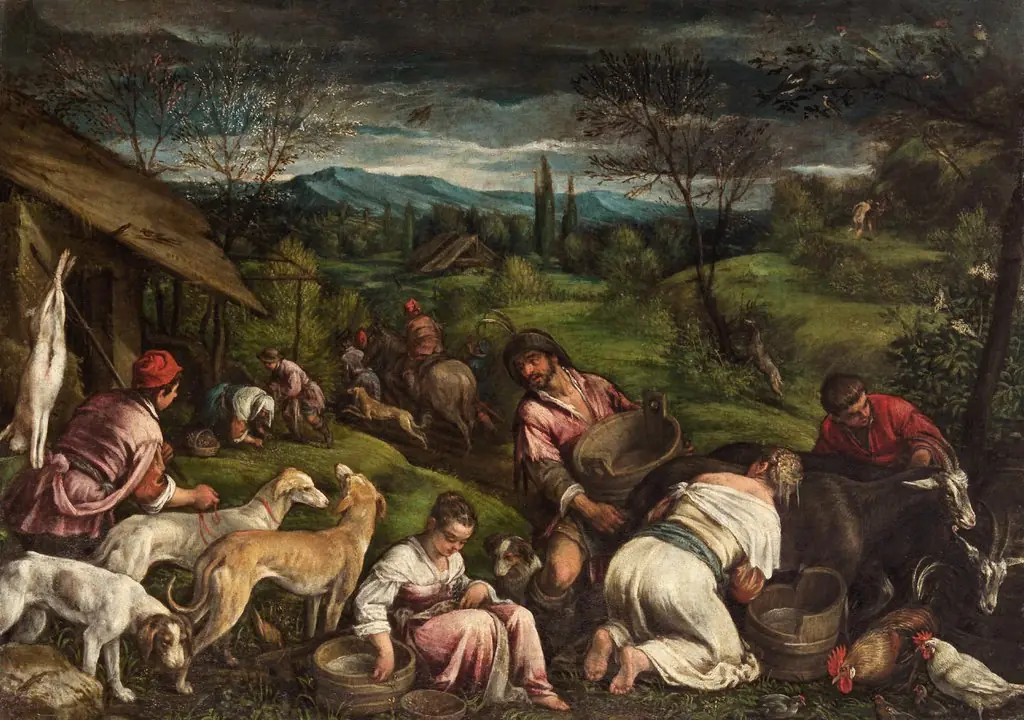
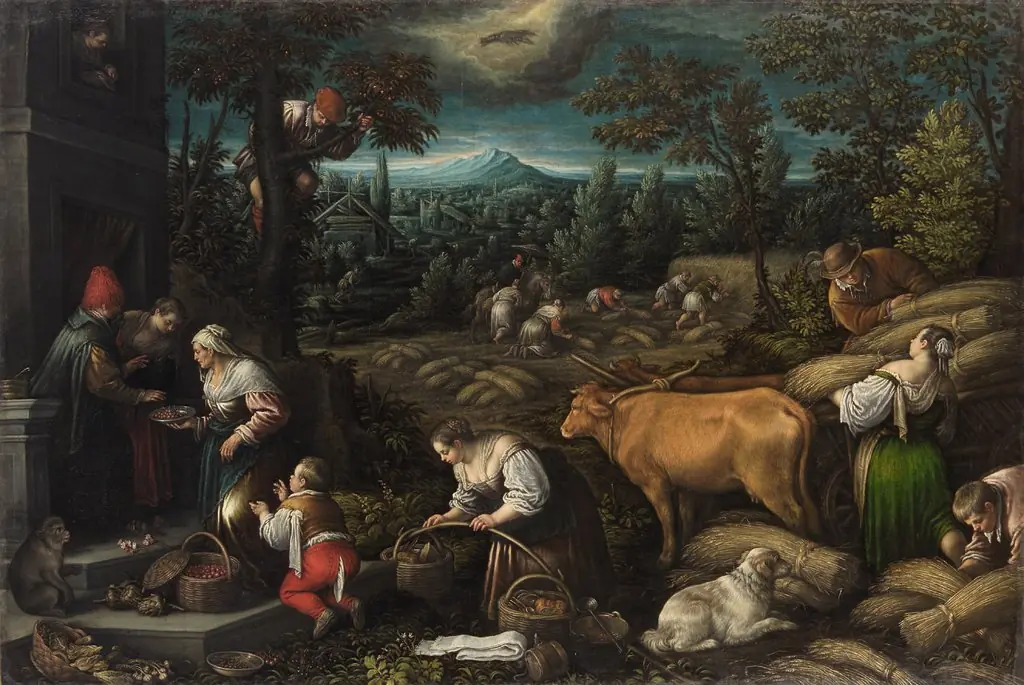
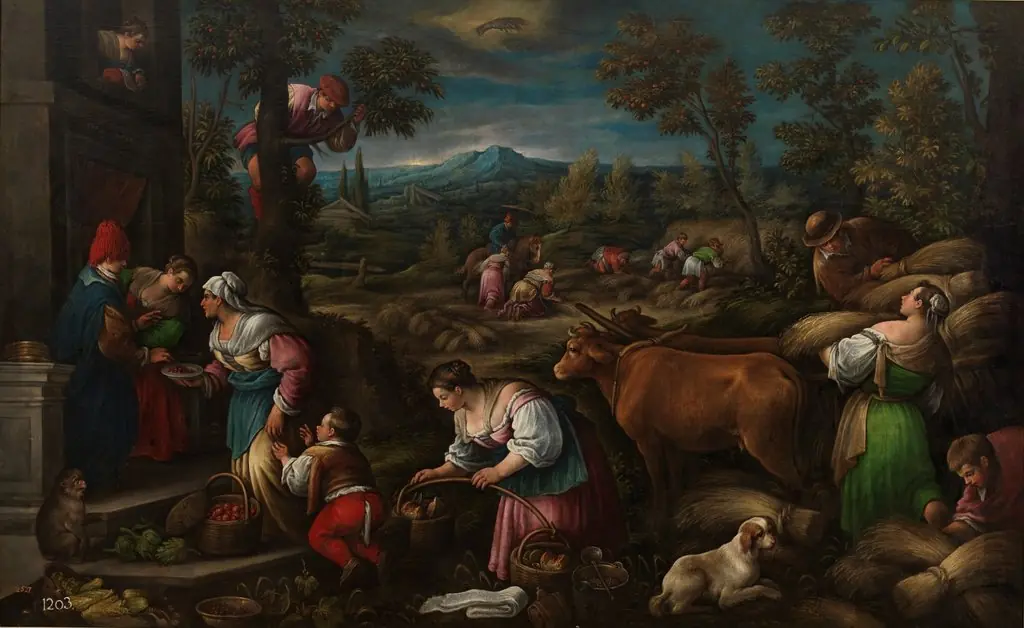
Francesco Bassano the Younger’s *Allegory of Autumn* is an oil painting completed in 1594, representative of the Mannerist period. Measuring a substantial yet intimate scale, the work depicts a harvest scene teeming with human activity. It resides in the Kunsthistorisches Museum, Vienna, where it contributes to the institution’s holdings of late Renaissance Venetian art.
Subject & Meaning
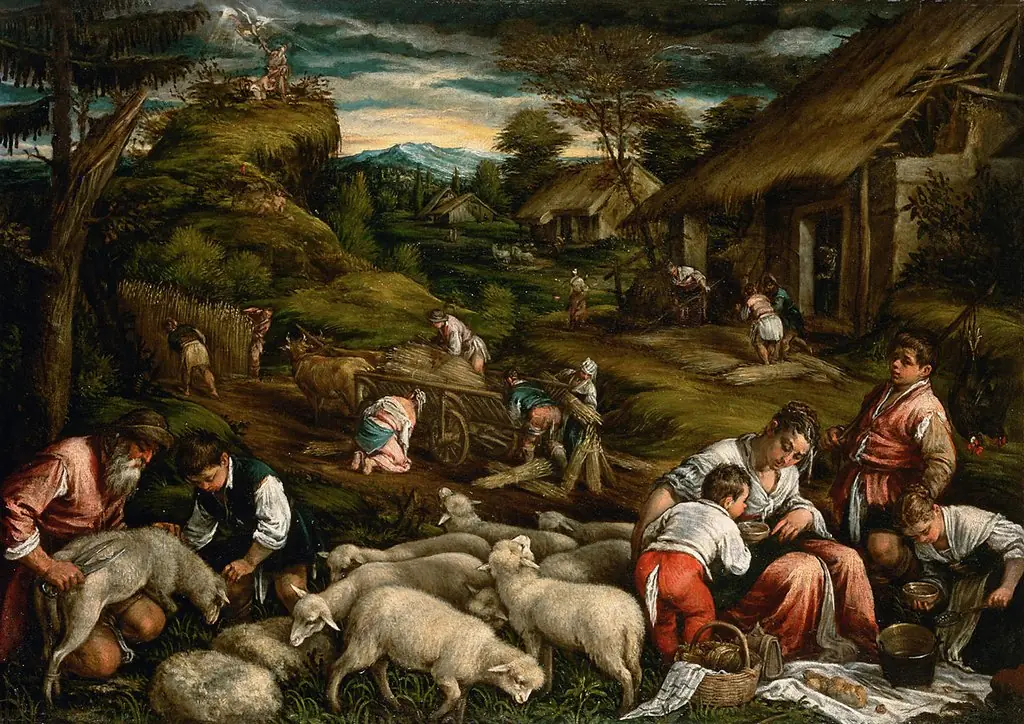
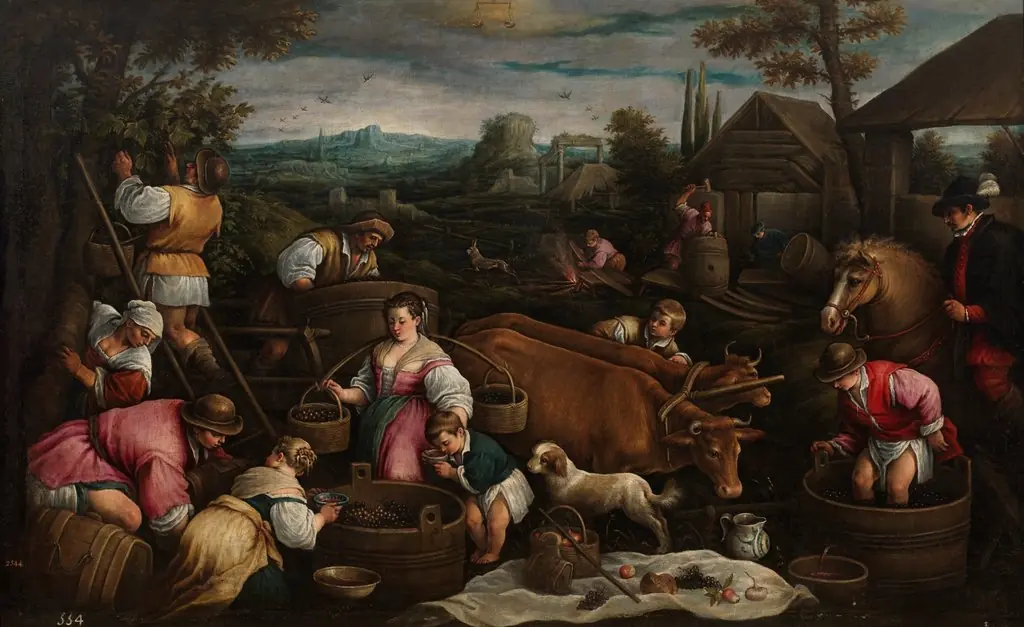
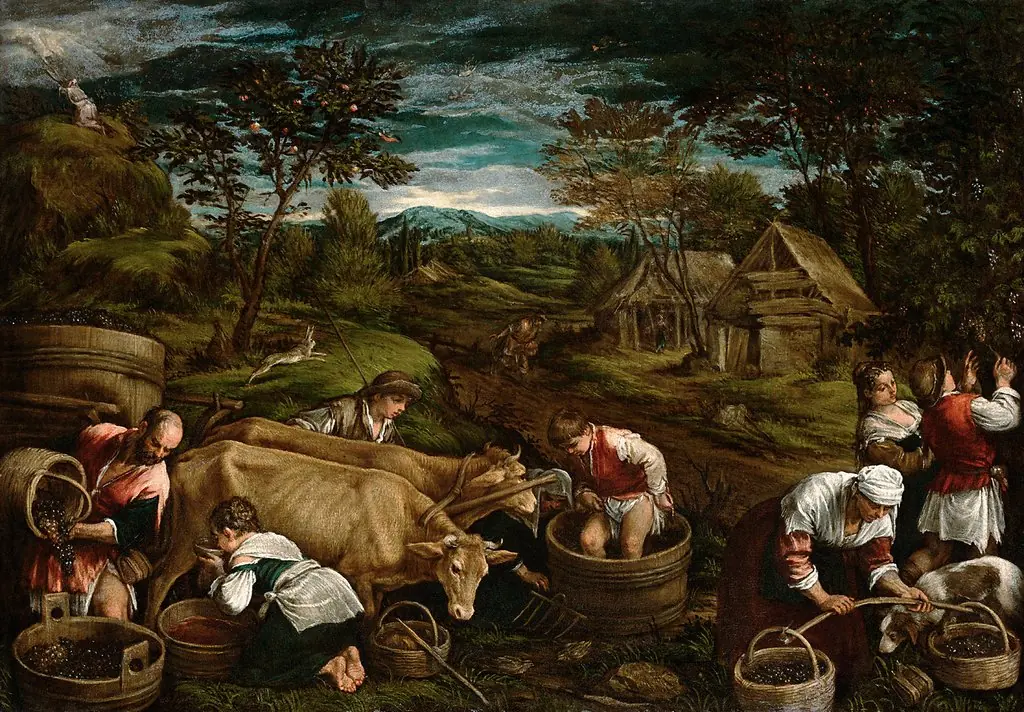
The composition centers on a rural harvest, transforming agricultural labor into a symbolic meditation on abundance and seasonal transition.
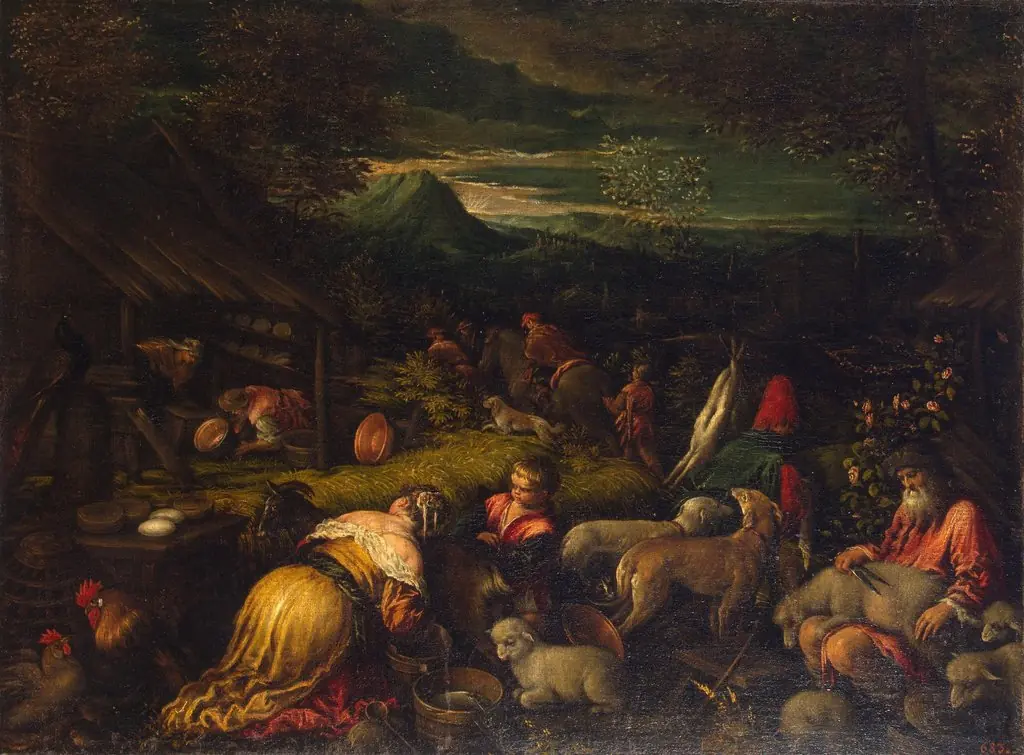
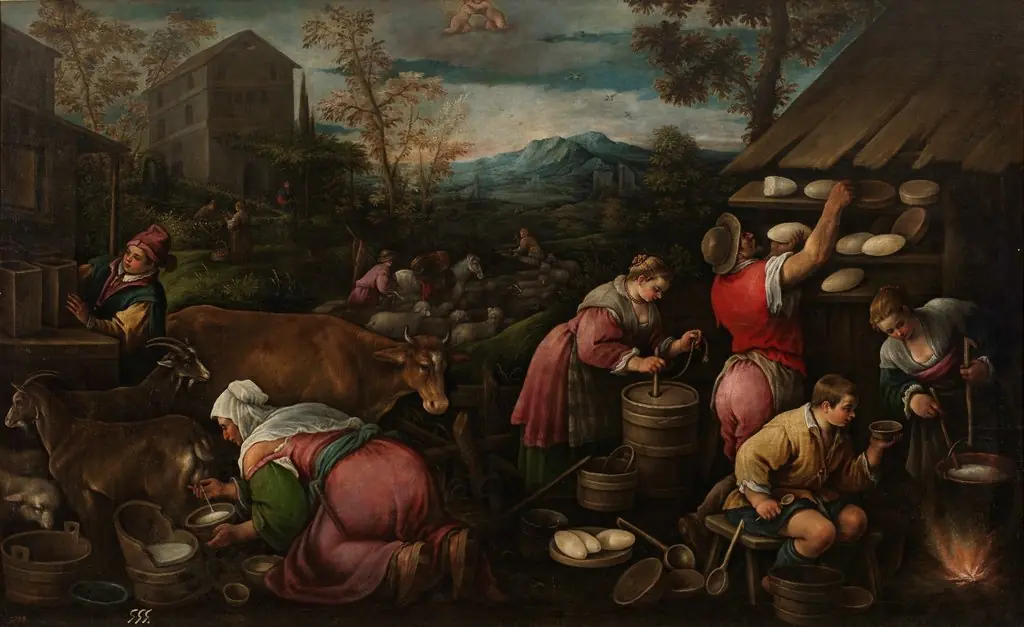
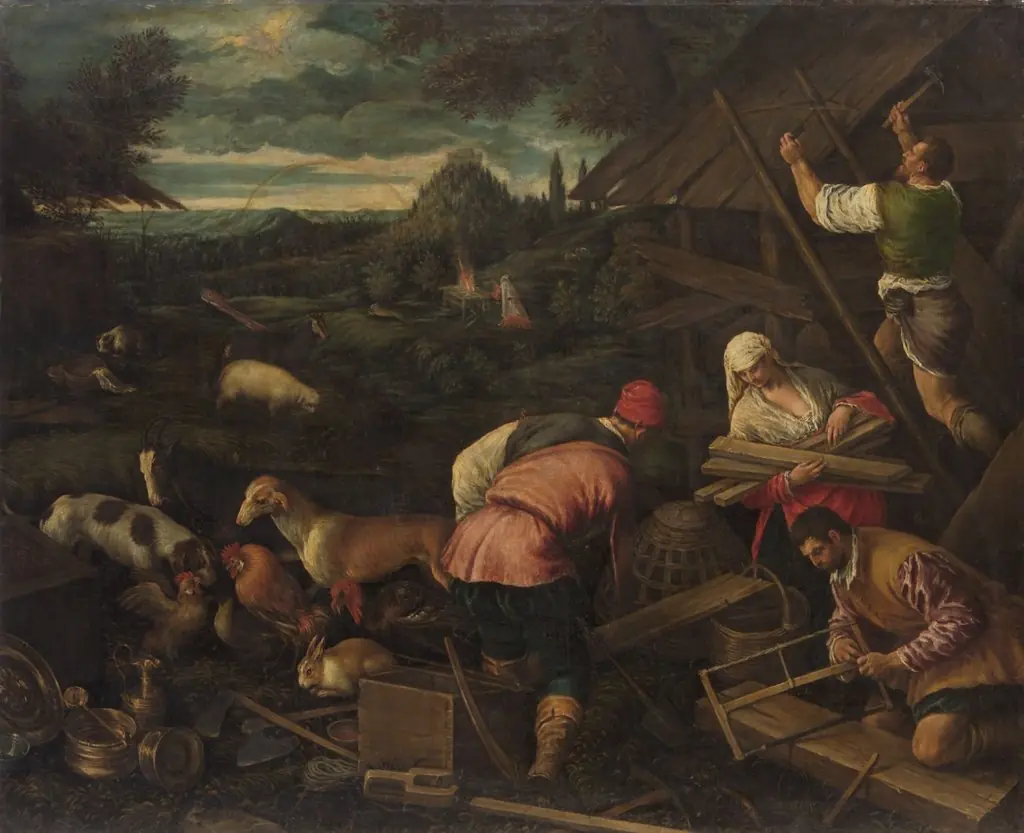
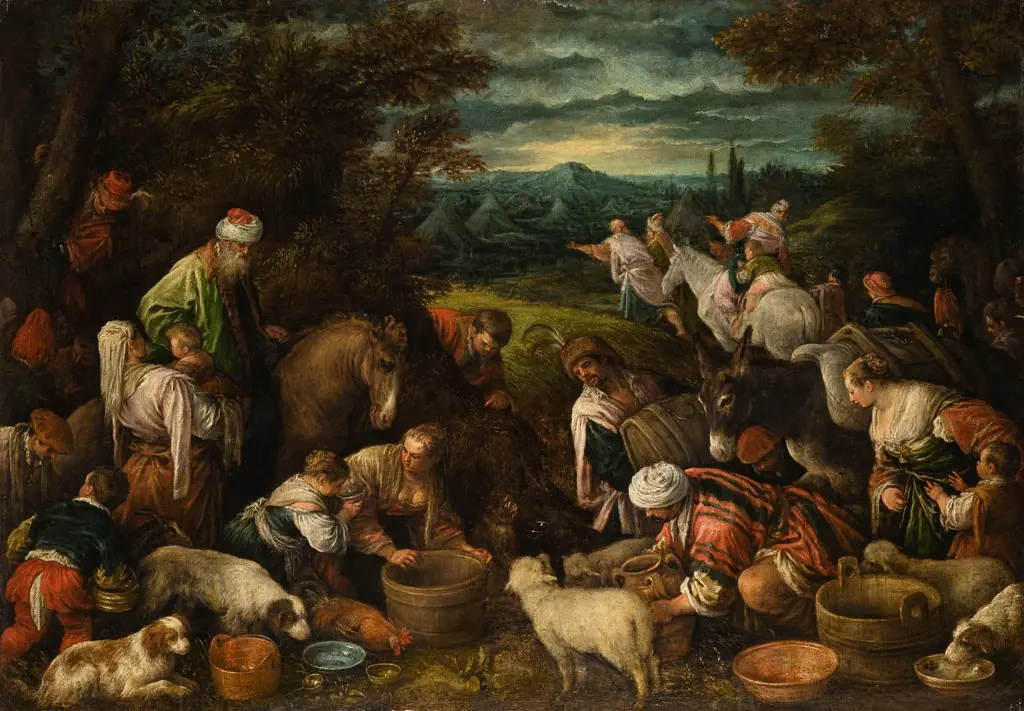
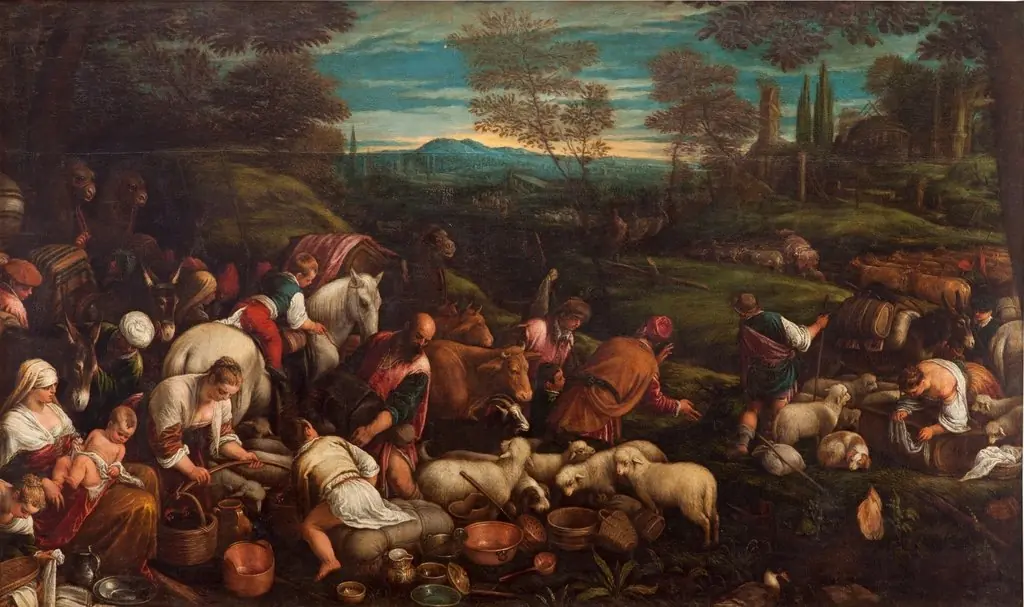
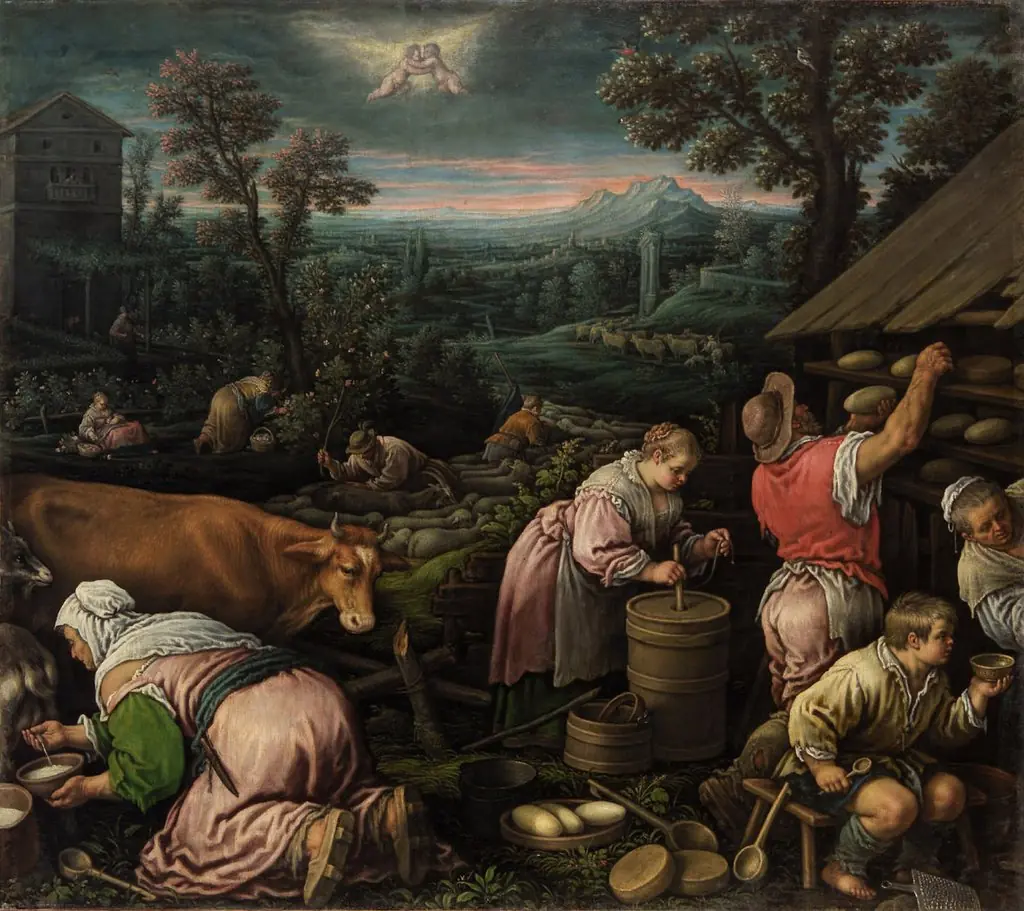
The composition centers on a rural harvest, transforming agricultural labor into a symbolic meditation on abundance and seasonal transition. Figures engage in tasks—gathering grain, tending livestock, and processing crops—while a sleeping child and scattered produce underscore the cycle of growth and rest. The nocturnal setting, illuminated by celestial light, infuses the scene with a timeless, almost mythic quality.
Technique & Style
Bassano employs a rich, earth-toned palette dominated by ochres, browns, and muted reds, evoking the warmth of autumn. Chiaroscuro—contrasting light and shadow—heightens the drama, casting figures in sharp relief against the dim backdrop. The meticulous rendering of textures, from coarse fabric to polished barrels, reflects the artist’s training in the family workshop, where naturalistic detail was prized.
History & Provenance
Executed in 1594, the painting emerged from the Bassano family’s prolific Venetian workshop, where Francesco collaborated with his father, Jacopo, and brothers. As the eldest son, Francesco later established an independent branch of the studio in Venice, expanding its reach. The work entered the Kunsthistorisches Museum’s collection through imperial acquisitions, securing its place in the canon of late Renaissance allegorical painting.
Context
The late 16th century saw Venetian artists increasingly drawn to secular themes, blending religious and allegorical traditions with genre scenes. Bassano’s *Allegory of Autumn* reflects this shift, embedding moral and seasonal symbolism within a bustling rural narrative. The Mannerist influence is evident in the dynamic composition and heightened naturalism, distinguishing it from earlier, more static representations of labor.
Legacy
Though less celebrated than his father’s works, Francesco Bassano’s contributions to Venetian painting endure through compositions like *Allegory of Autumn*. The painting exemplifies the workshop’s ability to merge devotional and secular motifs, influencing later generations of artists who sought to animate everyday scenes with allegorical depth. Its presence in a major public collection ensures ongoing study of Bassano’s technical and narrative innovations.
Artist & collection
Artist
Francesco Bassano the Younger (Italian: Francesco Bassano il Giovane; 26 January 1549 – 4 July 1592), also called Francesco Giambattista da Ponte or Francesco da Ponte the Younger, was an Italian painter of the Renaissance period.